Grand Anse BeachSeychelles Beach Guide
Wild, untouched, and not for swimming — go anyway
About
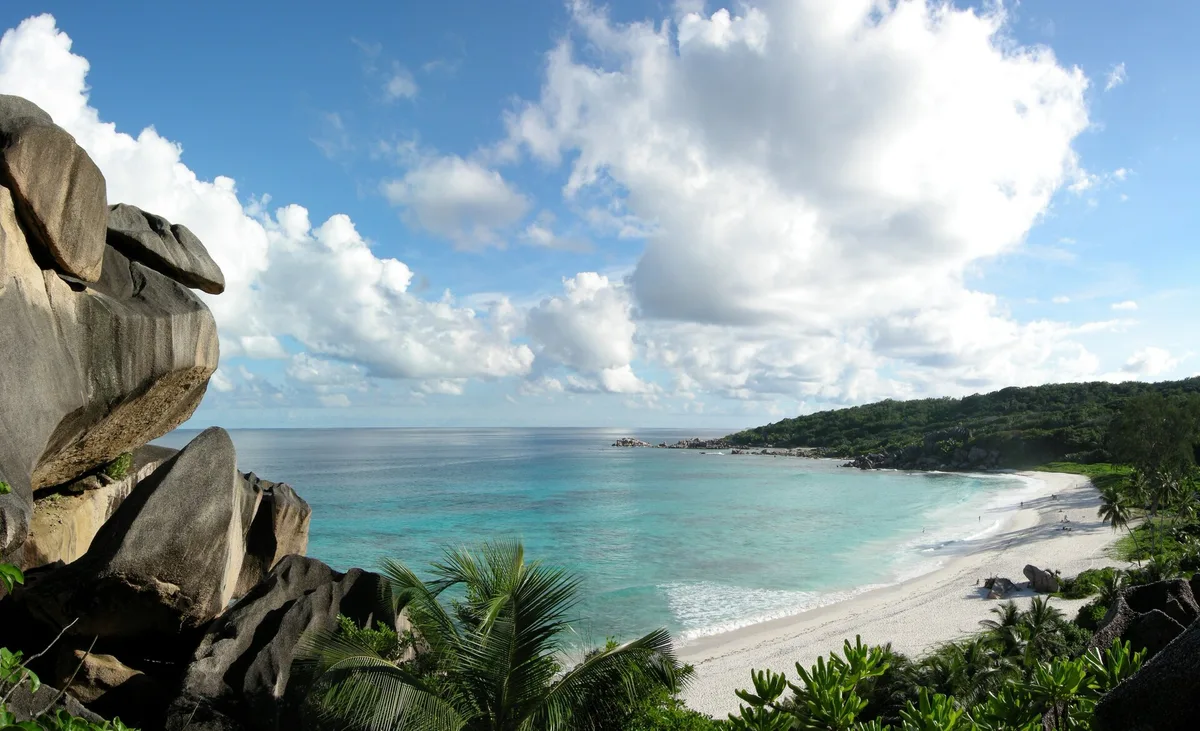
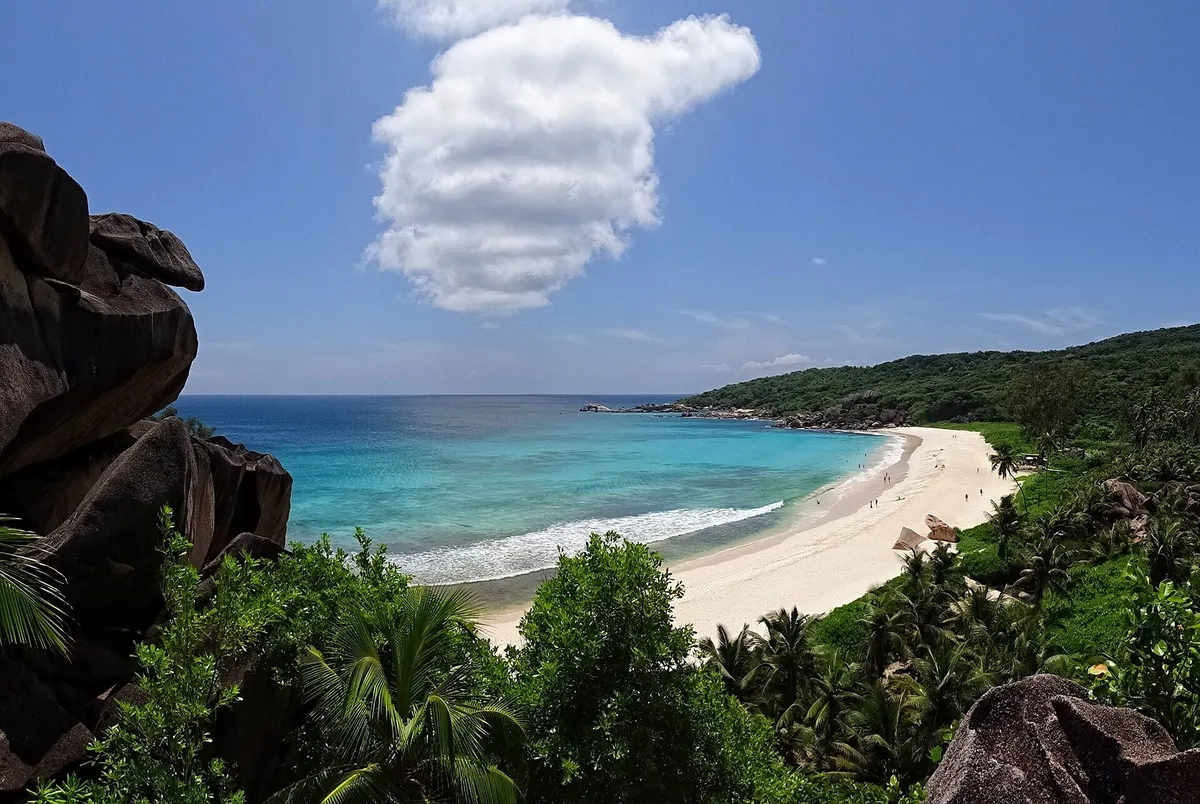
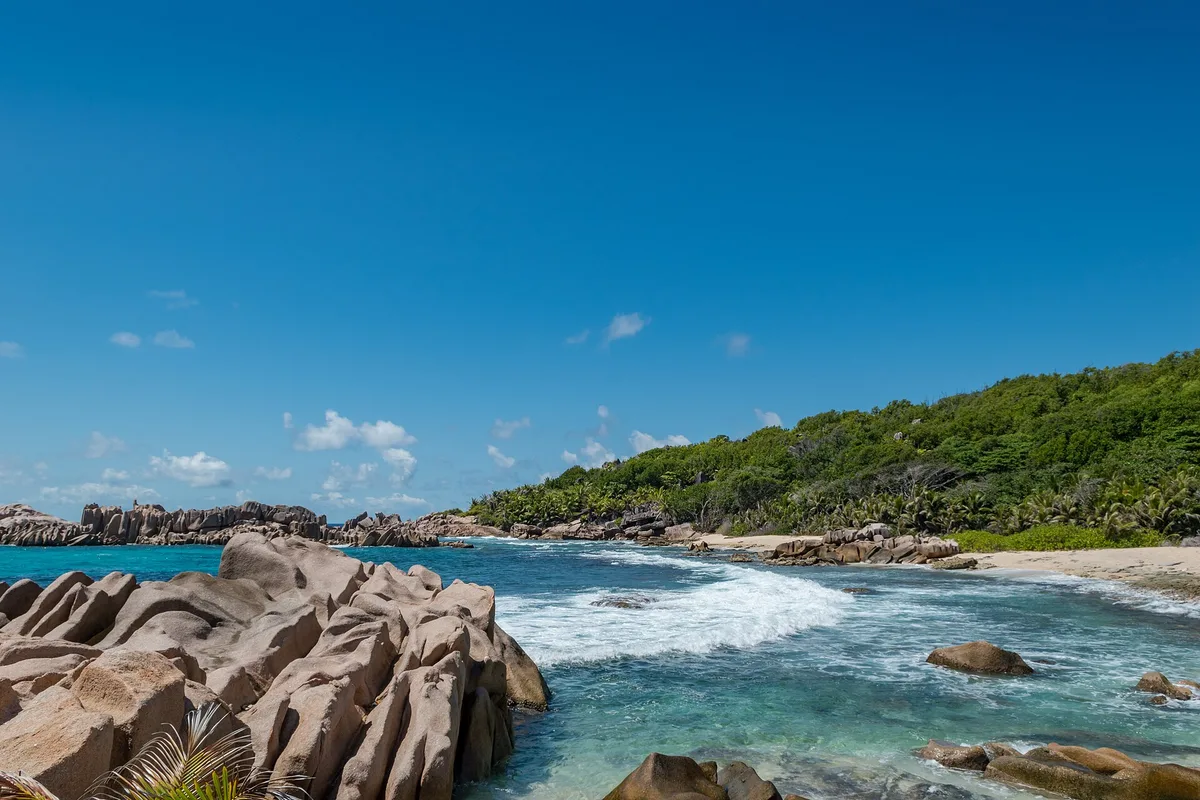
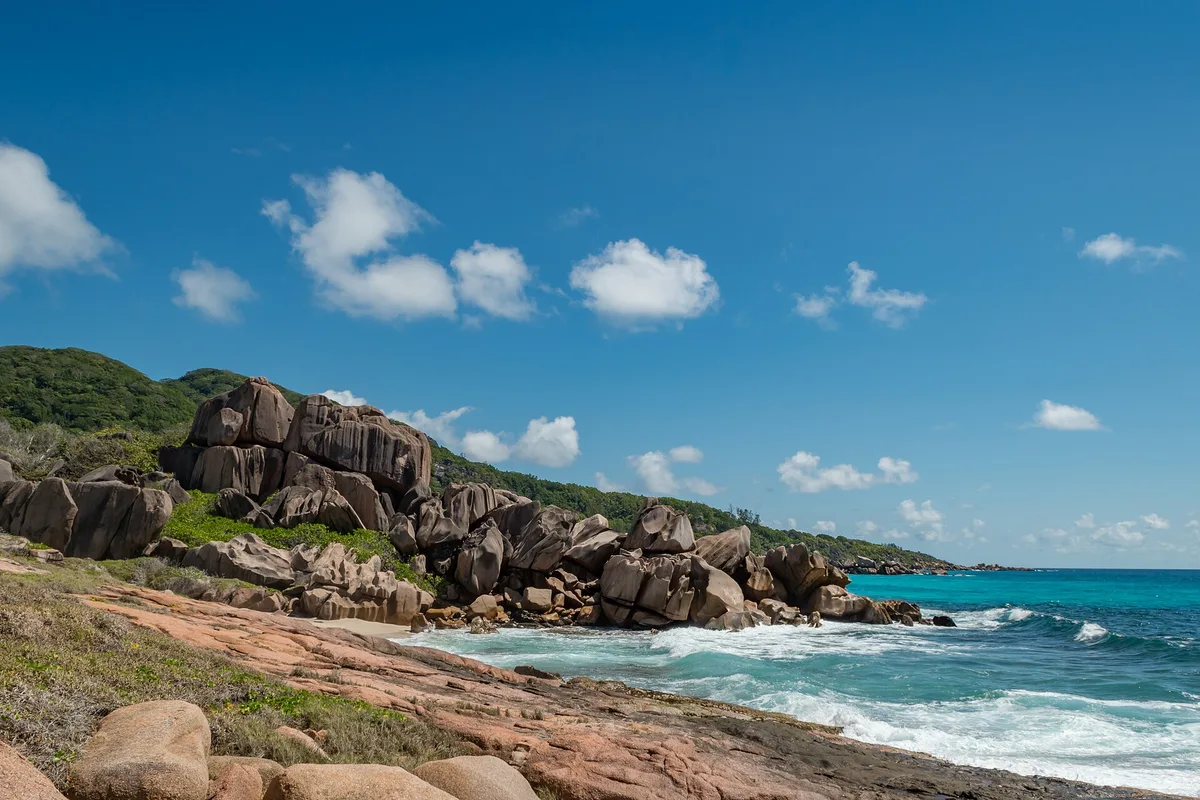
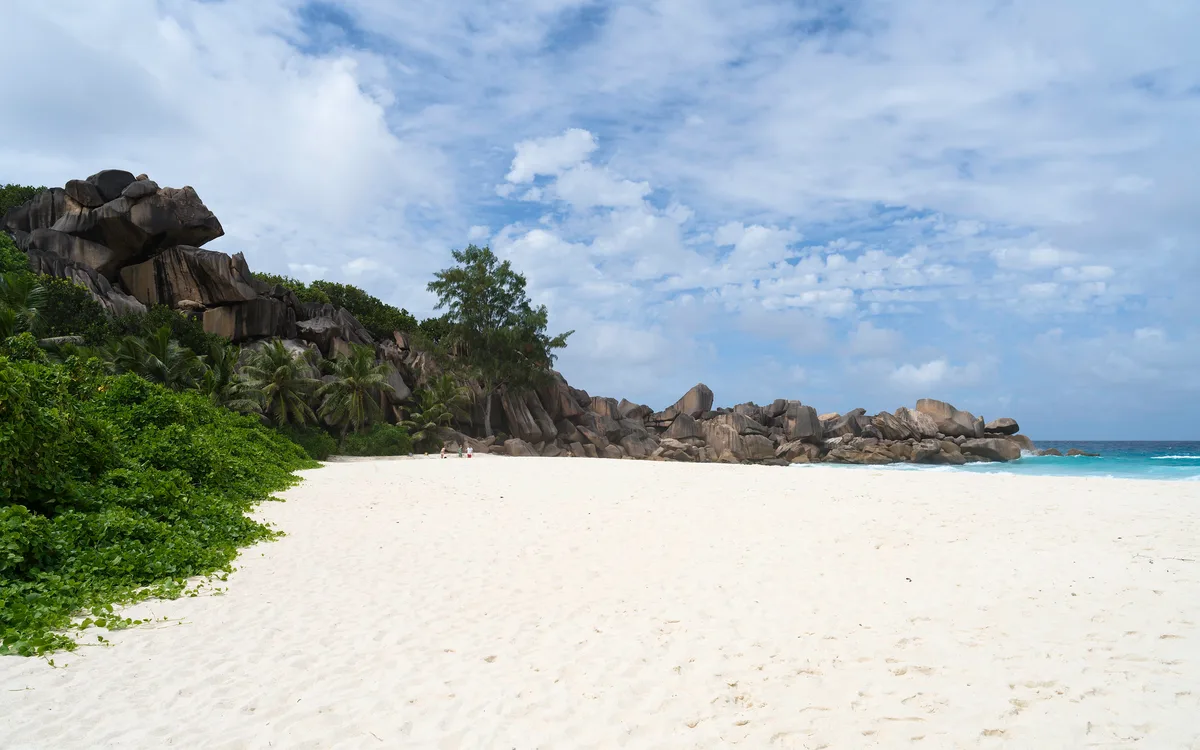
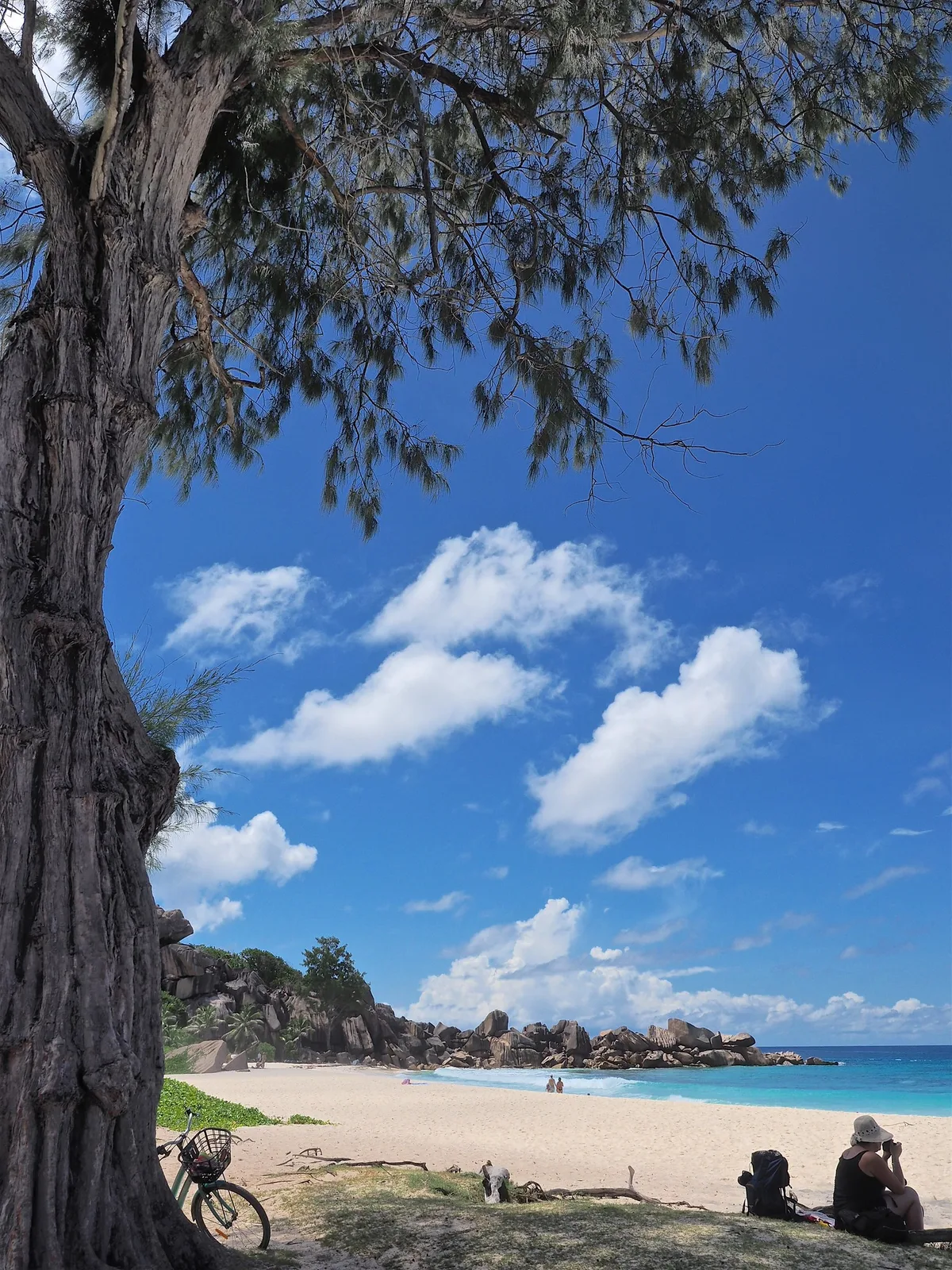
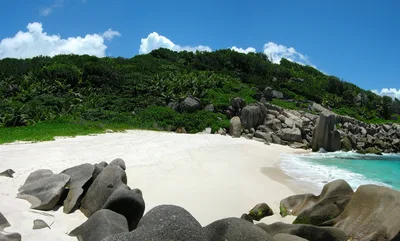
Grand Anse on La Digue is one of the Seychelles' most dramatically raw stretches of coastline — a long sweep of coarse white sand backed by a dense forest of takamaka trees, with the full force of the open Indian Ocean rolling in unbroken. The beach is fully undeveloped: no sunbeds, no vendors, no facilities of any kind. Blue water stretches to the horizon, but don't be fooled by the beauty — powerful rip currents and a heavy shore break make this one of the most dangerous beaches in the archipelago. It's quiet, wild, and genuinely unlike anything you'll find on the resort side of the island.
How to get there
Grand Anse has no road access — La Digue itself has no cars. From Praslin, take the daily ferry from Baie Sainte Anne; the crossing takes around 15 minutes. Once on La Digue, you can cycle from La Passe village in about 30 minutes or hike in roughly 45 minutes along a sandy track. Bicycles are left at the end of the track — there is no parking of any kind on the island.
Who it's for
For couples
Grand Anse is genuinely one of the most private beaches in the Seychelles — you may have the entire stretch to yourselves. The wild takamaka forest, the empty white sand, and the raw ocean atmosphere make it a powerful place to simply walk and be present, as long as you stay well clear of the water.
For families
Grand Anse is not suitable for families with young children — there are no facilities, no lifeguard, and the water is dangerous with rip currents and a heavy shore break year-round. The hike or bike ride in is manageable, but the beach itself offers no safe swimming and no shade structures beyond the tree line.
Our take
Grand Anse is not a beach you swim at — get that straight before you go. The rip currents are real, the shore break is punishing, and the red flag flies here more often than not between May and September. But none of that makes it less worth the journey. This is one of the last fully undeveloped shorelines in the inner Seychelles: no loungers, no beach bars, no footprints ahead of you. The takamaka forest at your back, the coarse white sand underfoot, and the raw blue Indian Ocean in front of you — it's a rare thing. Come in the dry season between November and April, walk the length of it, and leave it exactly as you found it.
What to do
The headland at Pointe Grand Anse, just 0.3km away, rewards a short scramble with dramatic coastal views. A snorkeling spot sits 0.7km from the beach — check conditions carefully before entering any water in this area. Nearby, the Veuve Nature Reserve (2km) is the last stronghold of the Seychelles Paradise Flycatcher, a critically endangered endemic bird worth seeking out, and L'Union Estate (2.5km) offers a working glimpse into the island's coconut and vanilla plantation history, complete with giant tortoises.
The takamaka tree forest meeting the coarse white sand at the back of the beach is the defining shot — wide angle, no filter needed.
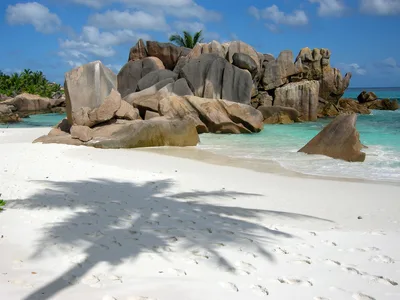
Romeo & Juliet Rock (0.8km) framed against the deep blue open ocean gives you a dramatic natural composition. Pointe Grand Anse (0.3km) offers elevated coastal perspectives that show the full exposed sweep of the bay.
Where to eat
Loutier Coco is the closest option, just 0.1km from the beach, and it's your best bet for a meal after the hike in. Belle Vue Café (1.8km) and Chez Jules (2.4km), which serves creole and cajun food, are solid choices back toward La Passe. Bring water and snacks — there is nothing on the beach itself.
Where to stay
Chloe's Cottage and Pension Michel-Villa Roche Bois are both around 1.7km away and offer a quiet, local-scale stay close to the wild south of the island. For something larger, Chateau St. Cloud (2.2km) and Ylang Ylang (2.5km) sit further toward La Passe village.
Photography
Shoot early morning when the low angle light catches the coarse white sand and the takamaka tree line casts long shadows across the beach — the absence of any infrastructure means nothing interrupts the frame. The Romeo & Juliet Rock formation (0.8km) offers a striking foreground element against the deep blue open ocean backdrop.
Good to know
Do NOT enter the water — rip currents are present year-round, the shore break is strong, and there is no lifeguard on site. Red flag conditions are common, especially from May through September when the southeast trade winds intensify; avoid those months entirely if you're hoping for a pleasant visit. Camping is not permitted on the beach. Dogs are welcome with no restrictions, and the beach is public and unmanaged, so pack out everything you bring in.
GAMES
🕹️ Five minutes of sand?
Three daily games — including the UV simulator set to this beach.
Map
Nearby places
Loutier Coco
Belle Vue Café
Lanbousir
Zerof
Chez Jules
Chloe's Cottage
Pension Michel-Villa Roche Bois
Chateau St. Cloud
Diguoise Guesthouse
Ylang Ylang
Things to see around La Digue
Veuve Nature Reserve
Last stronghold of the Seychelles Black Paradise Flycatcher, a critically endangered endemic bird
L'Union Estate
Historic coconut and vanilla plantation with giant tortoises and colonial copra house
Praslin Island – Vallée de Mai
UNESCO World Heritage Site with endemic Coco de Mer palms, accessible by ferry from La Passe
GIFT
🎁 Gift this beach
Its exact coastline, your date, your words — on a print or a PDF you print yourself.
Grand Anse Beach
THAT DAY
Grand Anse Beach, Seychelles Inner Islands
© OpenStreetMap contributors
Clean & decorative, or “That day” with the real sky of your date.
Shipping included 3-6 business days
A question before you order? Contact us
Delivered within minutes on the confirmation page and by email: a ZIP with all 4 print sizes (30×40 cm, 12×16″, 50×70 cm, 18×24″), each as a high-resolution PDF and PNG (300 dpi), plus a screen version. Print at home or at any print shop.
Please complete the delivery address.
Please accept the Terms of Sale.
Almost there — the shop opens very soon.
Secure payment · Printed locally in 30+ countries · 7 languages
Frequently asked
The information on this page is provided for guidance only and may evolve. Access conditions, safety and infrastructure can change without notice. Always check official sources before traveling.
Nearest beaches
Reviews of this beach
- No reviews yet, what a shame — leave yours and share your experience.
Photo credits
Sources and licenses for the photos shown above.
- Photo 1 — Tobias Alt, Tobi 87 · source · CC BY-SA 4.0
- Photo 2 — Bjørn Christian Tørrissen · source · CC BY-SA 4.0
- Photo 3 — dronepicr · source · CC BY 2.0
- Photo 4 — dronepicr · source · CC BY 2.0
- Photo 5 — bubusbubus · source · CC BY 2.0
- Photo 6 — alfaltendorf · source · CC BY-SA 2.0