Westward Ho! BeachUnited Kingdom Beach Guide
Golden sands, a pebble ridge, and Atlantic surf
About
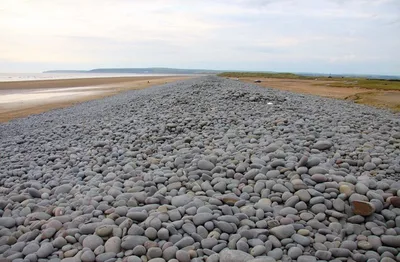
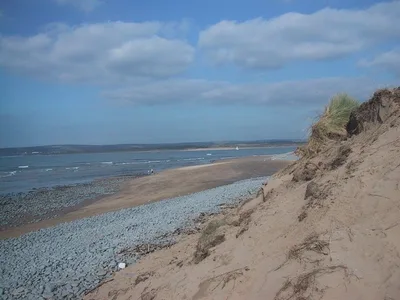
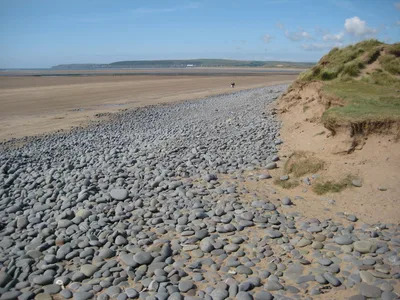
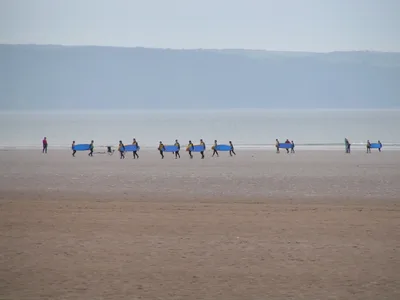
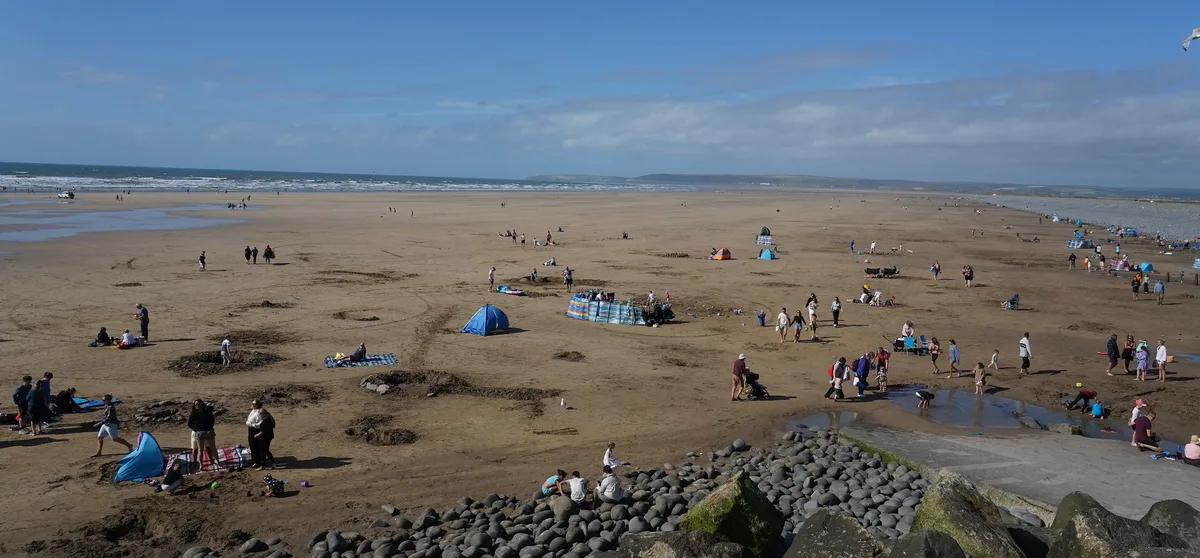
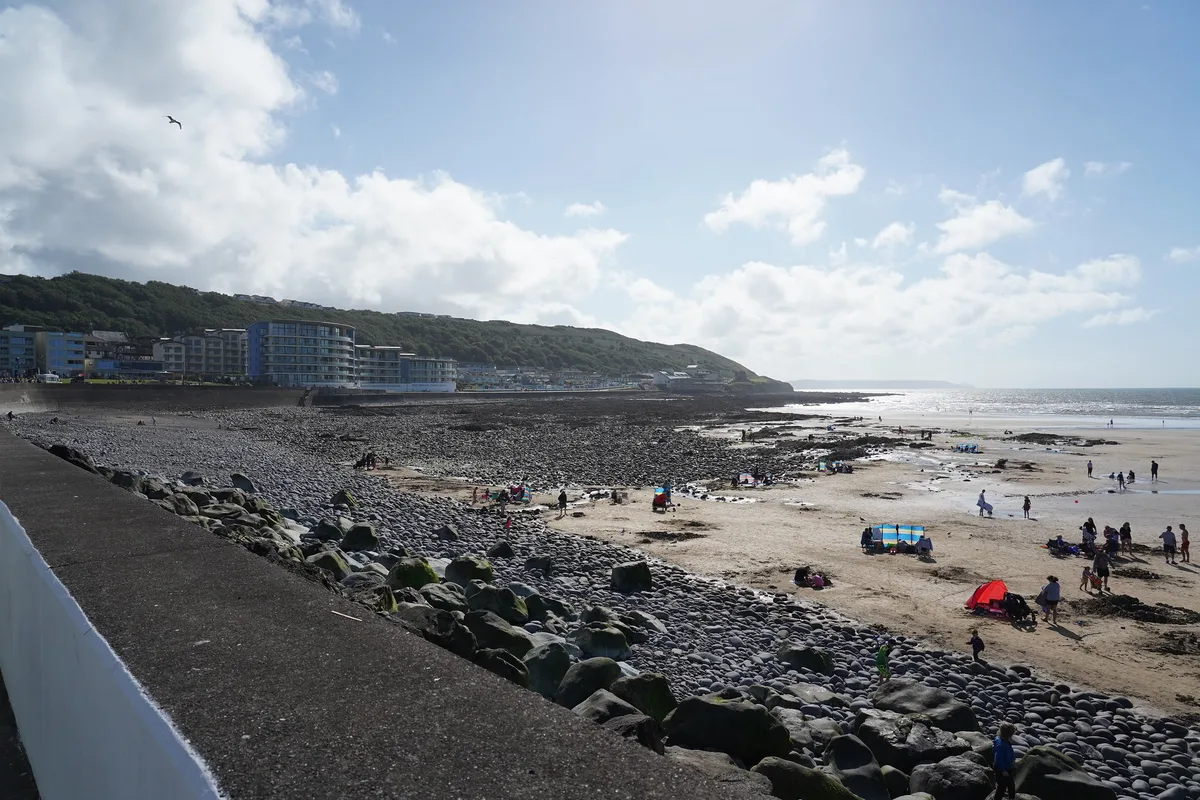
Westward Ho! Beach stretches roughly 3,200 metres of golden sand along the North Devon coast, backed by the remarkable Victorian storm pebble ridge — a natural sea defence that has shaped this shoreline for generations. Behind the beach, Northam Burrows Country Park adds a sweep of coastal grassland and dunes that soften the transition from sea to town. The blue Atlantic rolls in with surf breaks that fire at mid-tide, giving the beach a lively, open-ocean energy without the intensity of Devon's more famous surf spots. It's relaxed, dog-friendly year-round, and carries the singular distinction of being the only town in the United Kingdom whose name contains an exclamation mark.
How to get there
From Bideford it's a straightforward 10-minute drive; from Barnstaple allow around 25 minutes. Seafront pay-and-display car parks sit close to the beach, with additional options at Northam Burrows and a free car park at Seafield — seasonal pricing runs from roughly £6 to £13 per day. Motorhome overnight parking is permitted in the main long-stay car park. A National Trust ferry also serves the area, crossing in approximately 6 minutes, making it a pleasant alternative arrival if you'd rather skip the car entirely.
Who it's for
For couples
A low-tide evening walk the full length of the golden sand, with the pebble ridge on one side and the open blue Atlantic on the other, is quietly spectacular — and the moderate visitor numbers mean you'll rarely feel hemmed in.
For families
Safe swimming conditions, easy beach access, and a dog-friendly policy year-round make this a genuinely practical family destination; the flat sand at low tide is easy for small children, and Northam Burrows Country Park next door adds a ready-made afternoon adventure when the tide comes in.
Our take
Strong currents are present at Westward Ho! Beach and warning signs are posted — always swim between the flags and take those signs seriously, not as background noise. With that said, this is one of North Devon's most characterful beaches: 3,200 metres of golden sand, a genuinely unique Victorian pebble ridge, and a country park on the doorstep. The exclamation mark in the town's name is a historical quirk, but the beach itself earns a quieter kind of enthusiasm — it's unpretentious, dog-friendly, and far less hectic than Croyde or Saunton down the coast. The surf breaks at mid-tide are real, the access is easy, and the Lundy Island ferry from nearby Bideford adds an optional adventure that most visitors overlook. Come between June and September, check the pebble ridge conditions after any storm, and give the winter months a hard pass.
What to do
Northam Burrows Country Park, just 0.5 km from the beach, is ideal for a post-swim walk through coastal grassland with good birdwatching along the dune system. The Lifeboat House, 2.3 km away, is worth a look for a slice of North Devon maritime history. Kenwith Valley nature reserve sits 3.9 km inland for anyone wanting a woodland contrast to the open shore. From Bideford, 5 km away, you can catch a ferry to Lundy Island — a remote Bristol Channel outpost with puffin colonies roughly 19 km offshore.
The Victorian pebble ridge is the beach's most distinctive subject — shoot along its length at low tide with the golden sand and blue Atlantic in the background for a composition you won't find anywhere else in England.
The boundary between Northam Burrows Country Park and the beach, with dune grasses in the foreground and the full arc of the shoreline behind, rewards a wide-angle frame in the warm light of a June morning.
Where to eat
For a proper sit-down meal, The Spice (Indian, 4.7 km) and Belluno (Italian, 4.9 km) are the closest options to the beach. If you want fish and chips after a surf session, Squires is 7.5 km away — a Devon classic worth the short drive.
Where to stay
Tantons Hotel (4.9 km) and The Pines (5.9 km) are the nearest bases, both within easy reach of the beach. If you want a full resort experience, Woolacombe Bay Hotel is about 14.7 km along the coast and sits near another of North Devon's celebrated beaches.
Photography
The Victorian pebble ridge at golden hour — especially looking south along the full 3,200-metre sweep of golden sand — gives a dramatic foreground against the blue Atlantic. For a wider landscape shot, the elevated edge of Northam Burrows Country Park frames both the beach and the dune system in a single composition, best in the soft morning light of June or July.
Good to know
Always swim between the flags when lifeguards are present — strong currents can be present along this stretch of coast and warning signs are posted for good reason. Before walking the pebble ridge, check current access conditions: storm damage can alter the ridge, and this dynamic environment warrants caution. Dogs are generally welcome year-round, but check whether any seasonal zone restrictions apply before you arrive. Avoid the beach between November and February — Atlantic storms batter this exposed coast, pebble ridge erosion risk rises sharply, and most facilities close.
GAMES
🕹️ Five minutes of sand?
Three daily games — including the UV simulator set to this beach.
Map
Nearby places
The Spice
Belluno
Squires
Meraki Pizza Co
The Mad Hatters
Tantons Hotel
The Pines
Imperial Hotel
Woolacombe Bay Hotel
The Rocks
Lifeboat House
Kenwith Valley nature reserve
Flagpole Dune (37m originally)
Things to see around Westward Ho!
Northam Burrows Country Park
Coastal grassland and dune system behind the beach, popular for walking and birdwatching.
Bideford
Historic port town with a medieval long bridge over the Torridge estuary and a pannier market.
Lundy Island
Remote Bristol Channel island with puffin colonies, accessible by ferry from Bideford.
GIFT
🎁 Gift this beach
Its exact coastline, your date, your words — on a print or a PDF you print yourself.
Westward Ho! Beach
THAT DAY
Westward Ho! Beach, British Coast
© OpenStreetMap contributors
Clean & decorative, or “That day” with the real sky of your date.
Shipping included 3-6 business days
A question before you order? Contact us
Delivered within minutes on the confirmation page and by email: a ZIP with all 4 print sizes (30×40 cm, 12×16″, 50×70 cm, 18×24″), each as a high-resolution PDF and PNG (300 dpi), plus a screen version. Print at home or at any print shop.
Please complete the delivery address.
Please accept the Terms of Sale.
Almost there — the shop opens very soon.
Secure payment · Printed locally in 30+ countries · 7 languages
Frequently asked
The information on this page is provided for guidance only and may evolve. Access conditions, safety and infrastructure can change without notice. Always check official sources before traveling.
Nearest beaches
Other relaxed beaches in United Kingdom
Reviews of this beach
- No reviews yet, what a shame — leave yours and share your experience.
Photo credits
Sources and licenses for the photos shown above.
- Photo 1 — Steve Daniels · source · CC BY-SA 2.0
- Photo 2 — Sarah Charlesworth · source · CC BY-SA 2.0
- Photo 3 — Philip Halling · source · CC BY-SA 2.0
- Photo 4 — Rob Purvis · source · CC BY-SA 2.0
- Photo 5 — kitmasterbloke · source · CC BY 2.0
- Photo 6 — kitmasterbloke · source · CC BY 2.0