Perranporth BeachUnited Kingdom Beach Guide
Three miles of golden sand, Atlantic surf, real adventure
About
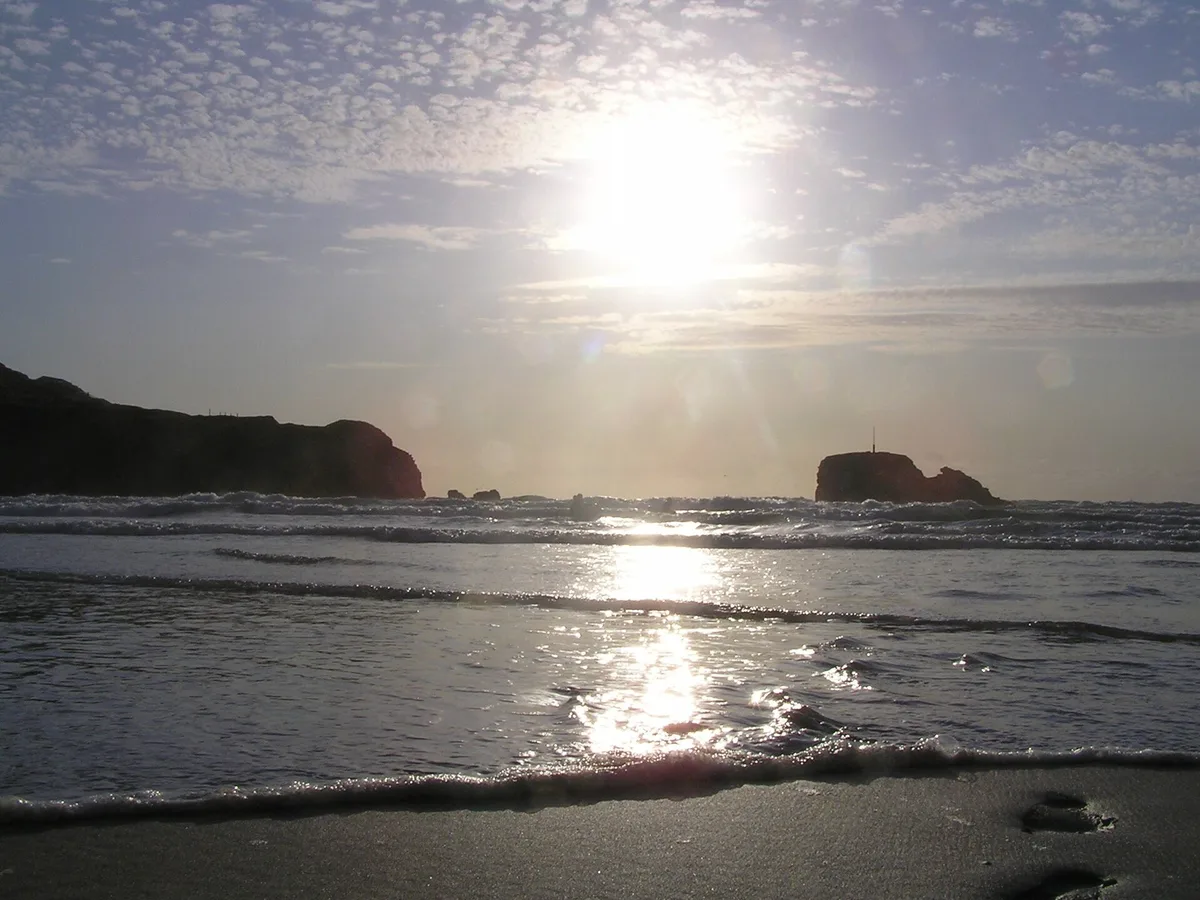
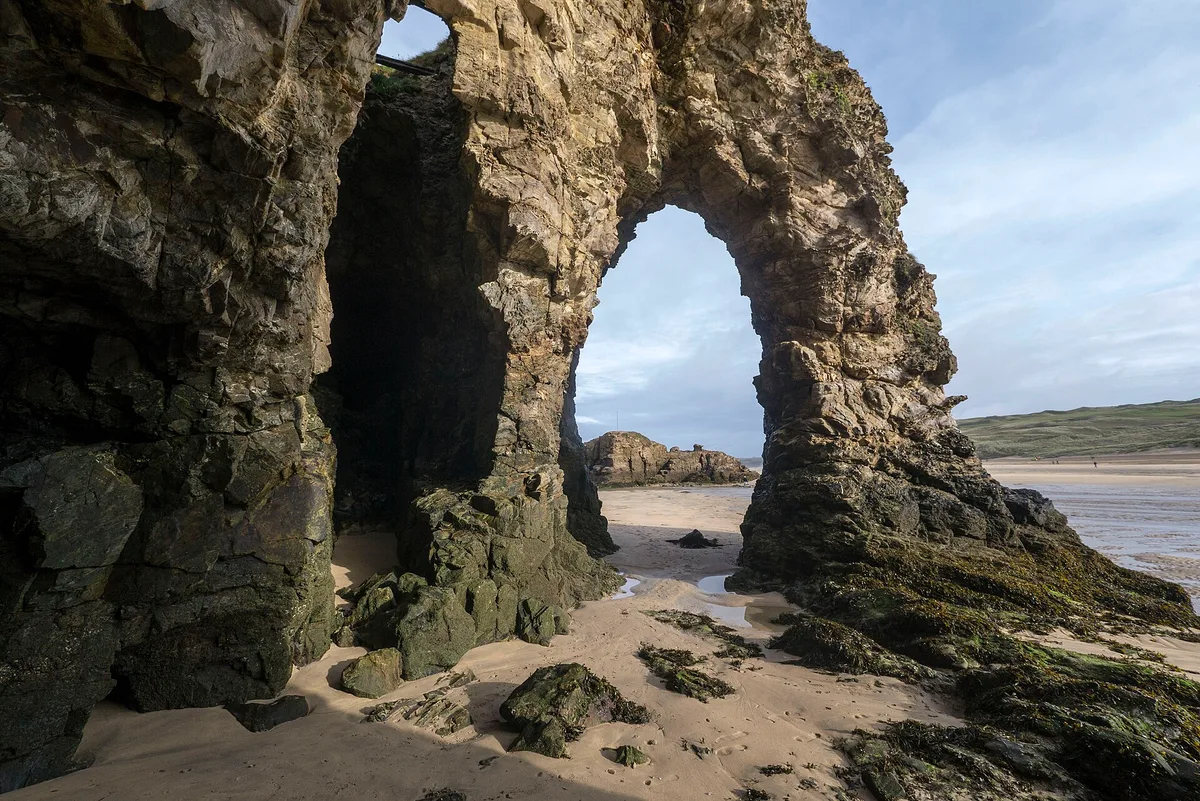
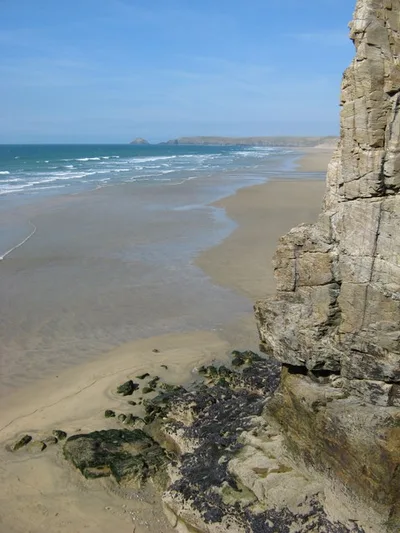
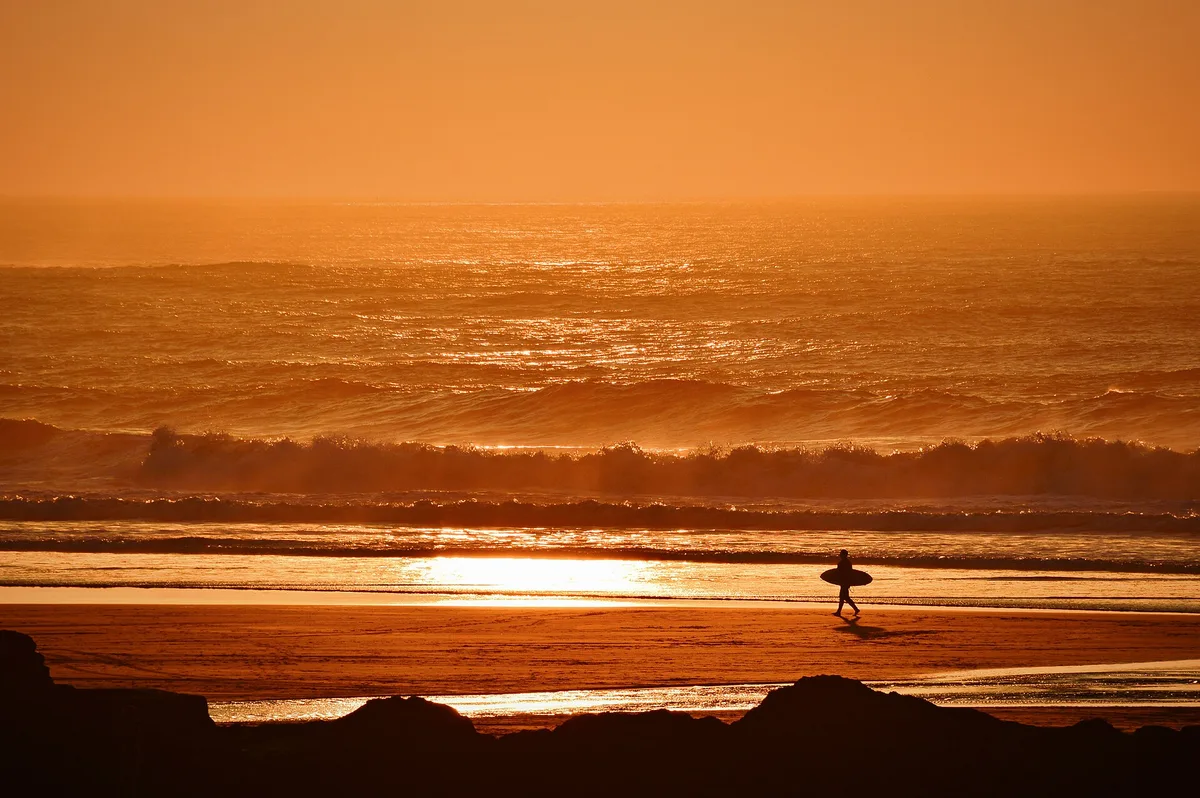
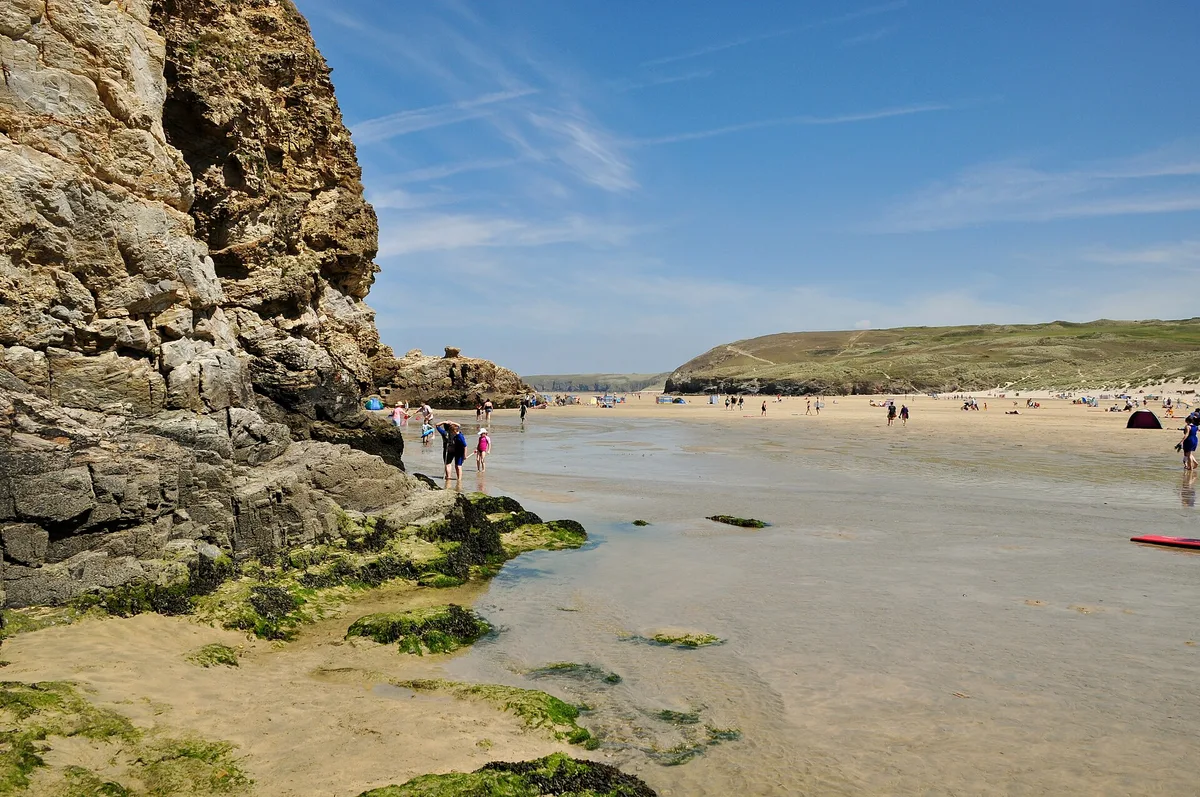
Perranporth Beach stretches nearly five kilometres of unbroken golden sand along Cornwall's Atlantic-facing coast, making it one of the longest beaches in England. The turquoise water catches the light on clear days, while consistent swell rolls in from the open ocean, drawing surfers and bodyboarders year-round. Behind the beach, one of one of Cornwall's largest dune systemss rises in pale ridges — a landscape that feels wilder than your average seaside resort. Chapel Rock punctuates the shoreline, and the rocky outcrops at Droskyn headland reveal pools teeming with life at low tide. It's a family favourite, but the Atlantic doesn't play gentle — respect it and it rewards you.
How to get there
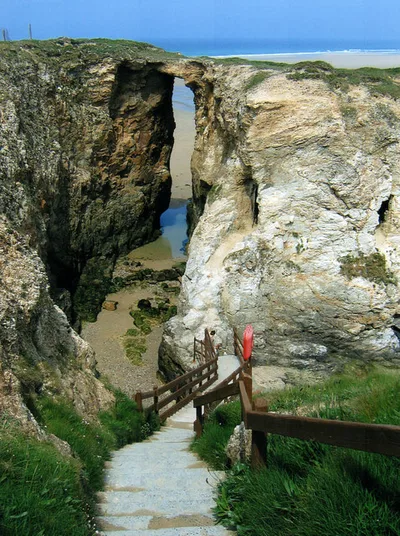
From Truro, it's a 15-minute drive or a 25-minute hourly bus ride. By car, a pay-and-display car park sits at the beach entrance — budget approximately £5–12 per day and arrive early in summer, as it fills quickly. There's no entry fee for the beach itself. Access to the sand is easy, though soft sand and the dune system make the approach difficult for wheelchair users.
Who it's for
For couples
Low tide on a weekday morning, when the rock pools at Droskyn are quiet and the golden sand stretches almost empty in both directions — it's a genuinely different experience from the busy summer afternoons.
For families
The RNLI lifeguard patrol, easy beach access, and the vast golden sand give families plenty of room to spread out; the Droskyn rock pools add a ready-made low-tide activity that keeps kids occupied for hours.
Our take
Perranporth is the real thing — a long, exposed Atlantic beach that doesn't pretend to be a sheltered cove. The rip currents here are a genuine hazard: swim between the RNLI flags without exception, and keep an eye on the tide near Droskyn headland. Get that right and you have nearly five kilometres of golden sand, consistent surf, and a dune system that backs the whole thing like a natural amphitheatre. It gets busy in July and August — arrive early or visit in June and September when the weather holds and the beach breathes. Avoid November through February entirely: Atlantic storms make conditions dangerous and most facilities close. The nearby ruins at Perran Round and St Piran's Oratory give the place a depth that most beach destinations simply don't have.
What to do
The Droskyn headland rock pools are worth exploring at low tide — give yourself an hour and you'll find plenty. Just 1.5km away, Perran Round is one of the best-preserved medieval Celtic open-air theatres in England, a genuinely unusual detour. Further into the dunes at 2.5km, St Piran's Oratory holds the remains of one of the oldest Christian buildings in Britain, half-buried in sand and easy to miss if you don't know it's there. The RNLI lifeguard patrol operates seasonally, so check their flag system before entering the water.
The view north from Droskyn headland captures the full golden arc of sand meeting turquoise Atlantic water — best at low tide when the beach is widest.
Chapel Rock at sunrise makes a strong lone-subject shot, especially when mist sits over the dune system behind it. The dunes themselves, Cornwall's largest, photograph well in raking late-afternoon light when the shadows define their ridges.
Where to eat
The Summerhouse is the closest option at just 0.3km from the beach, ideal for a post-surf stop. No.4 Breakfast & Bistro, 0.4km away, covers fish and regional Cornish dishes if you want something more substantial. For something different, Piran Thai and Jaipur Indian Cuisine are both within 0.5km — useful when you've had enough pasties.
Where to stay
Most accommodation sits a few kilometres out: Goose Rock Hotel is the nearest at 6.3km, followed by Lowena at 8.5km and The Ridge at 8.7km. Treheveras Guest House and the Eliot Hotel (Leisureplex) round out the options at around 9km, giving you a quiet base away from the peak-season activity on the beach.
Photography
Shoot from the Droskyn headland at golden hour for the full sweep of golden sand and turquoise water stretching north — the three-mile unbroken strip is at its most dramatic from elevation. Early morning before the daytrippers arrive gives you clean foreground sand and the dune system glowing in low light.
Good to know
Always swim between the RNLI lifeguard flags — rip currents are a documented hazard here and the Atlantic swell can be powerful year-round. Be aware that incoming tides can cut off sections near Droskyn headland, so check tide times before exploring the rock pools. Dogs are welcome but restricted to designated zones between May and September — look for local signage on arrival. Open fires are not permitted anywhere on the beach.
GAMES
🕹️ Five minutes of sand?
Three daily games — including the UV simulator set to this beach.
Map
Nearby places
The Summerhouse
No.4 Breakfast & Bistro
Piran Thai
Jaipur Indian Cuisine
Massala Tandoori Perranporth
Goose Rock Hotel
Lowena
The Ridge
Treheveras Guest House
Eliot Hotel (Leisureplex)
Coastguard's Lookout
Children's Soft Play
Things to see around Perranzabuloe
Perran Round
Medieval Cornish open-air theatre, one of the best-preserved Celtic rounds in England.
St Piran's Oratory
Remains of one of the oldest Christian buildings in Britain, buried in the dunes.
Truro Cathedral
Victorian Gothic Revival cathedral, the only cathedral built in England in the 19th century.
GIFT
🎁 Gift this beach
Its exact coastline, your date, your words — on a print or a PDF you print yourself.
Perranporth Beach
THAT DAY
Perranporth Beach, British Coast
© OpenStreetMap contributors
Clean & decorative, or “That day” with the real sky of your date.
Shipping included 3-6 business days
A question before you order? Contact us
Delivered within minutes on the confirmation page and by email: a ZIP with all 4 print sizes (30×40 cm, 12×16″, 50×70 cm, 18×24″), each as a high-resolution PDF and PNG (300 dpi), plus a screen version. Print at home or at any print shop.
Please complete the delivery address.
Please accept the Terms of Sale.
Almost there — the shop opens very soon.
Secure payment · Printed locally in 30+ countries · 7 languages
Frequently asked
The information on this page is provided for guidance only and may evolve. Access conditions, safety and infrastructure can change without notice. Always check official sources before traveling.
Other beaches in the region
More beaches in British Coast
Reviews of this beach
- No reviews yet, what a shame — leave yours and share your experience.
Photo credits
Sources and licenses for the photos shown above.
- Photo 1 — ogwen · source · CC BY-SA 3.0
- Photo 2 — Bryan Ledgard · source · CC BY 2.0
- Photo 3 — Roy Hughes · source · CC BY-SA 2.0
- Photo 4 — Ulrich Hartmann · source · CC BY-SA 2.0
- Photo 5 — Adel Gordon adelgordon · source · CC0
- Photo 6 — Lewis Clarke · source · CC BY-SA 2.0