Traigh Eais BeachUnited Kingdom Beach Guide
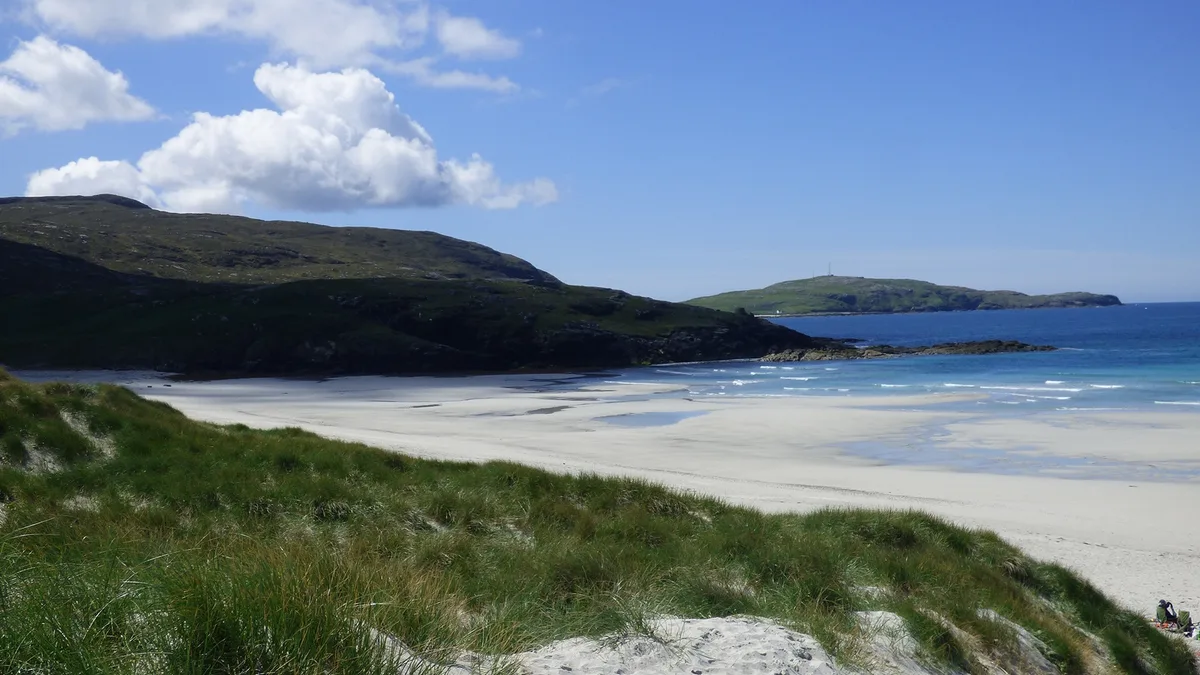
Wild Atlantic white sand, quiet and gloriously overlooked
 🎁 Gift idea: the star map of your most beautiful night↓
About
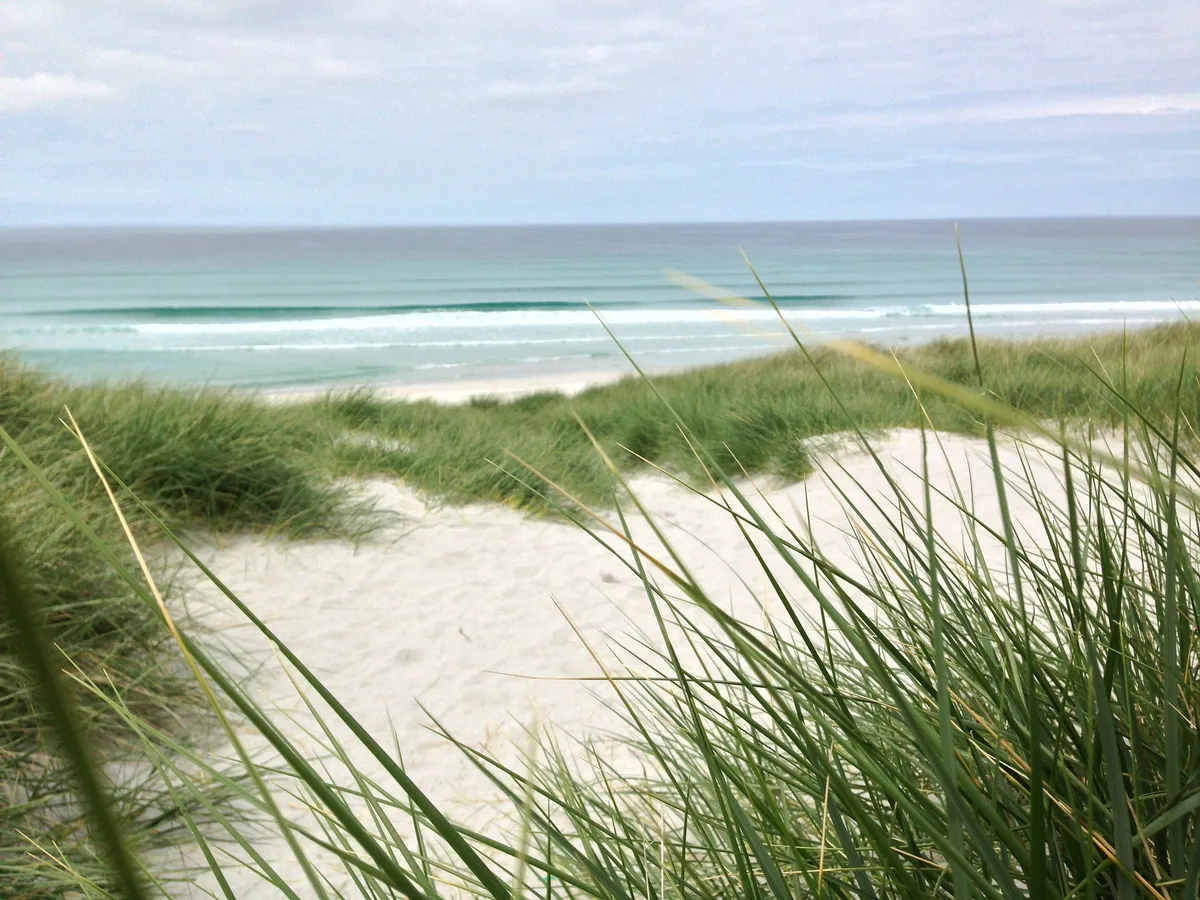
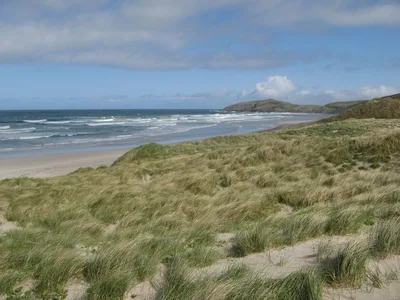
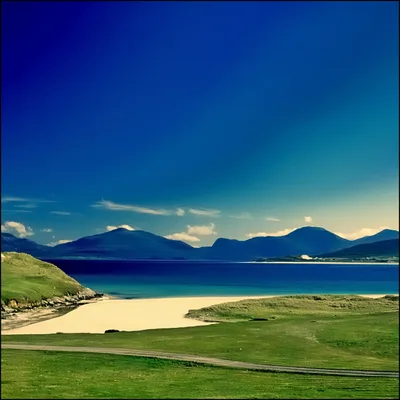
Traigh Eais stretches for roughly 2,188 metres of white sand along the west-facing Atlantic coast of Barra, in the Outer Hebrides. The blue ocean rolls in with real force here — this is open Atlantic, not a sheltered bay, and the swell makes itself known. An intact dune system backs the beach, holding the landscape in a state that feels untouched, and the whole scene carries a wild, unhurried energy that's increasingly rare. Tourists largely pass it by, which means on most days you'll have the sand almost to yourself. It's the kind of place that rewards the curious traveller who takes the minor detour.
How to get there
From Castlebay, Barra, follow the A888 — the drive takes around 20 minutes. Free parking is available at Traigh Mhòr airport car park, from which a walk across to the beach begins; the terrain from the car park is flat, though the beach itself involves soft sand underfoot. There is no entry fee. Dogs are welcome on the beach.
Who it's for
For couples
The quietness of Traigh Eais is its real draw for couples — a long, largely empty sweep of white sand with Atlantic waves as the only soundtrack, and almost no other visitors to interrupt it. Walk the length of the beach at low tide for the full effect.
For families
The easy access from the car park and the dog-friendly policy make this workable for families, and the nearby Traigh Mhòr beach airport — just 0.8 kilometres away — gives children something genuinely unusual to watch. Keep younger ones well back from the water's edge given the Atlantic swell and possible rip currents.
Our take
Traigh Eais is a genuinely wild beach — and that word is not decorative. The Atlantic swell is real, rip currents are a documented hazard in surf conditions, and you should treat the water with caution rather than confidence. That said, if you're not swimming, this is one of the most rewarding beaches in the Outer Hebrides: 2,188 metres of white sand, an intact dune system, and almost no other visitors on most days. The proximity to Traigh Mhòr — the world's only scheduled commercial beach airport runway — adds a surreal and genuinely unmissable detour. Come between June and September, stay out of the water unless you know exactly what you're doing, and leave the dunes exactly as you found them. Worth the detour.
What to do
Just 0.8 kilometres away sits Traigh Mhòr — the world's only scheduled commercial beach airport runway, where you can watch small aircraft land and take off directly on the sand, timed to the tides. A short distance away, Saint Barr's Church is worth a visit for a quiet moment of Hebridean history. Further afield, Kisimul Castle — a medieval island fortress in Castlebay harbour and the seat of Clan MacNeil — makes for a compelling half-day excursion, as does Dùn Bhàrr, a Neolithic chambered cairn on the hillside above Borve.
The dune crests looking west over the white sand and blue Atlantic give the widest, most dramatic frame — go at golden hour for warm light on the sand.
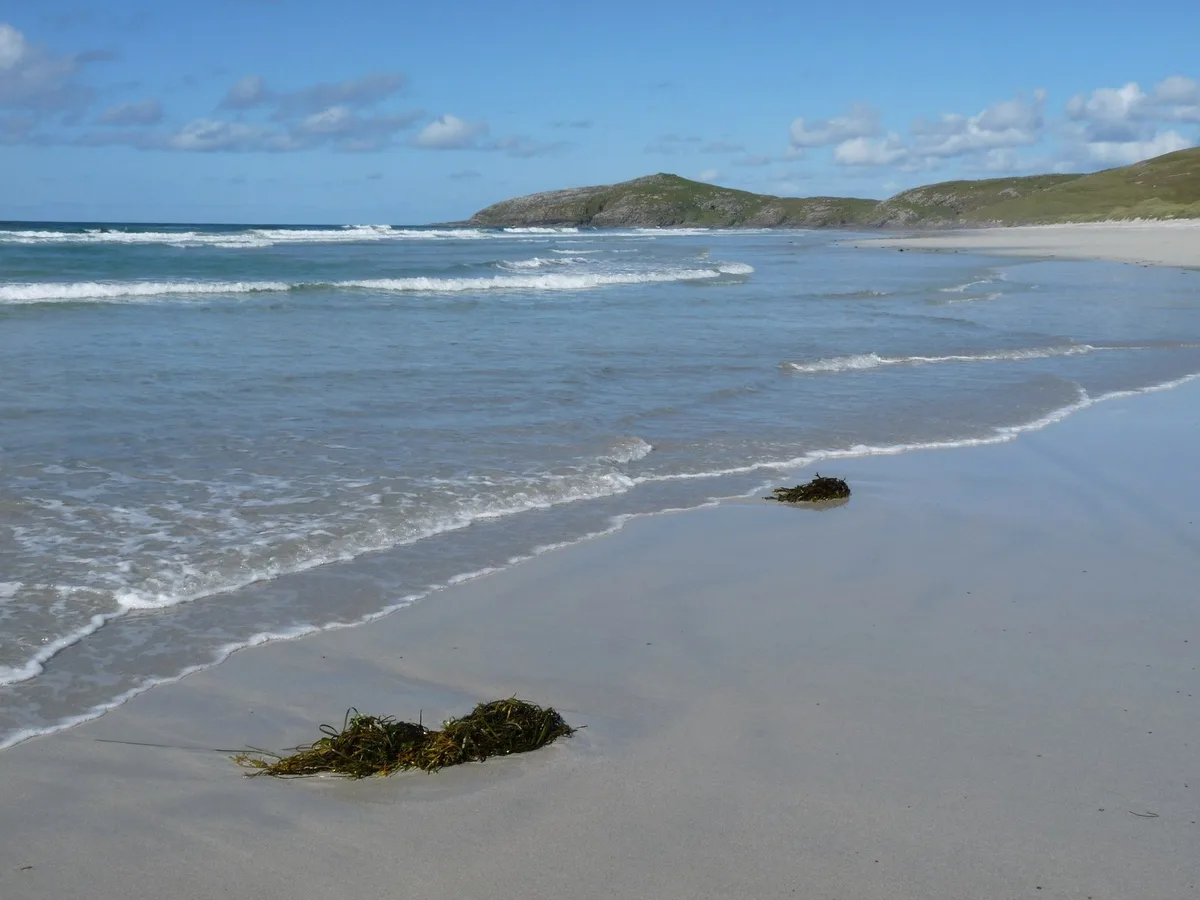
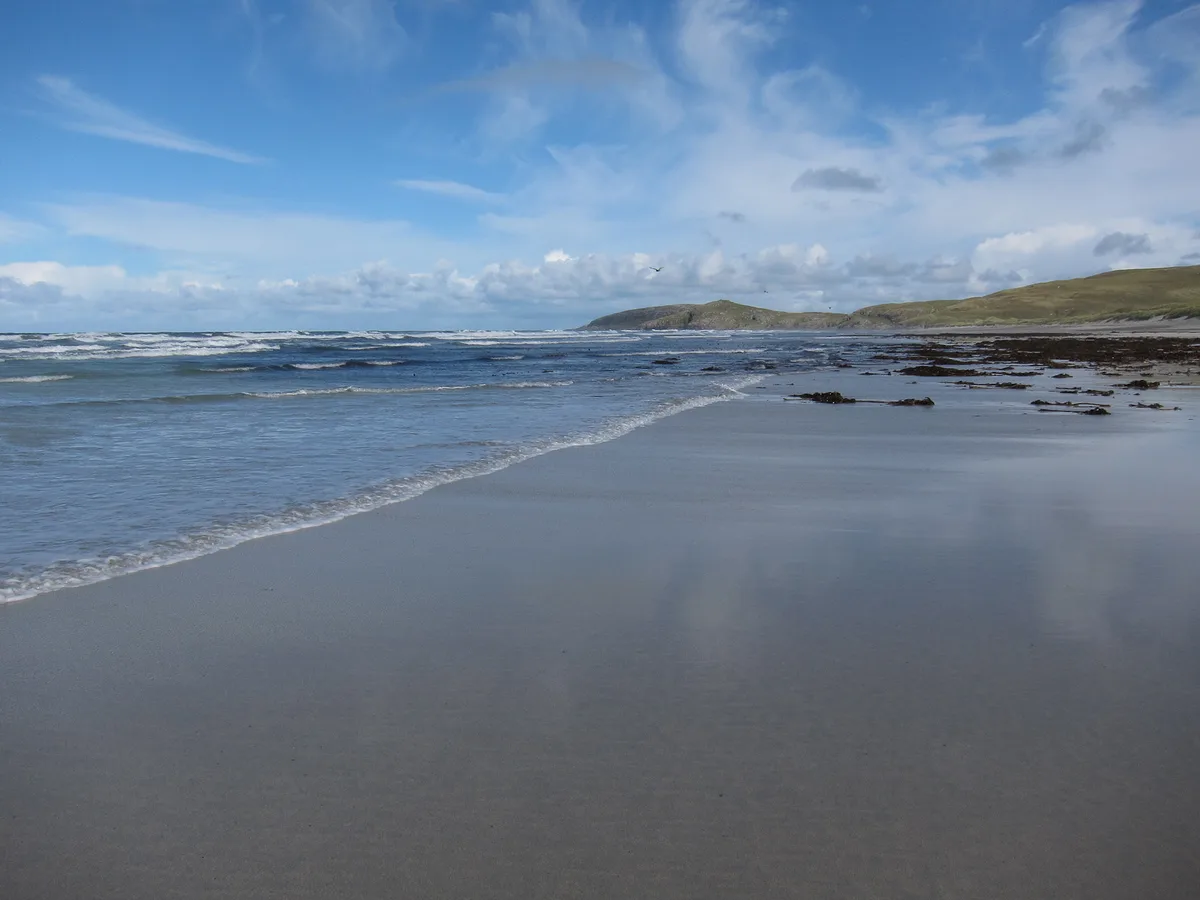
The tideline itself, where the white sand meets the incoming Atlantic, works well for low-angle shots that emphasise the scale and wildness of the beach.
Where to eat
For a proper meal after the beach, the Restaurant at Castlebay Hotel is the main option, around 8.3 kilometres away in Castlebay. Cafe Kisimul, also in Castlebay at roughly 8.4 kilometres, is known for its curry — an unexpected and welcome find on a Hebridean island. Bring your own snacks to the beach; there's nothing on-site.
Where to stay
The closest options are camping-focused: Barra Sands Campsite at 2.3 kilometres and Scurrival Campsite at 2.9 kilometres are close to the beach. Croft Number 2 Camping & Caravanning Site is another option at 3.1 kilometres, while Heathbank at 3.9 kilometres and the Castlebay Hotel at 8.3 kilometres offer more conventional stays.
Photography
The dune system casts long shadows across the white sand, and the contrast between the pale sand and the blue ocean makes for striking images. The dune ridges themselves make a strong foreground element, framing the wide beach and open sky beyond.
Good to know
Do not walk on the dune faces — the vegetation binding this dune system is fragile and easily damaged, so keep to established paths and the beach itself. This is an exposed Atlantic coast: strong swell can arrive without much warning, and rip currents are possible in surf conditions — assess the sea carefully before entering the water and treat any surf with real respect. Avoid visiting between November and February, when Atlantic storms and very short daylight hours make the experience genuinely unpleasant and potentially hazardous. The flat walk from the car park is manageable for most, but the soft sand on the beach itself can be tiring for those with limited mobility.
GAMES
🕹️ Five minutes of sand?
Three daily games — including the UV simulator set to this beach.
Map
Nearby places
Restaurant at Castlebay Hotel
Cafe Kisimul
Barra Sands Campsite
Scurrival Campsite
Croft Number 2 Camping & Caravanning Site
Heathbank
Castlebay Hotel
Saint Barr's Church
Kisimul Castle
Traigh Mhòr (Barra Airport Beach)
Kisimul Castle
Dùn Bhàrr (Dun Bharpa)
Things to see around Barra
Traigh Mhòr (Barra Airport Beach)
World's only scheduled commercial beach airport runway, 800m away.
Kisimul Castle
Medieval island castle in Castlebay harbour, seat of Clan MacNeil.
Dùn Bhàrr (Dun Bharpa)
Neolithic chambered cairn on the hillside above Borve.
GIFT IDEA · MARCEL ET LES BLONDES
🎁 Give a moment, not a thing
What’s the occasion?
 💑 Dating anniversaryTwo dates, two starry skies
 💍 Wedding anniversaryCotton, silver, golden…
 🎂 BirthdayTheir own newspaper front page
 👶 New babyThe stars on the day they were bornValentine’s DayOur two moons, as a print
Shipping €5, free from €49 · made to order, shipped within 48 hAlso: our engraved wooden bracelets, €23.90 →
Frequently asked
The information on this page is provided for guidance only and may evolve. Access conditions, safety and infrastructure can change without notice. Always check official sources before traveling.
Nearest beaches
Other wild beaches in United Kingdom
More beaches in Scottish Islands
Reviews of this beach
- No reviews yet, what a shame — leave yours and share your experience.
Photo credits
Sources and licenses for the photos shown above.
- Photo 1 — Sandy Gerrard · source · CC BY-SA 2.0
- Photo 2 — John Proctor · source · CC BY-SA 2.0
- Photo 3 — Alan Reid · source · CC BY-SA 2.0
- Photo 4 — Hugh Venables · source · CC BY-SA 2.0
- Photo 5 — CaptainOates · source · CC BY 2.0
- Photo 6 — Jonathan Wilkins · source · CC BY-SA 2.0