Tangalle BeachSri Lanka Beach Guide
Wild golden shores, working harbour, and nesting turtles
About
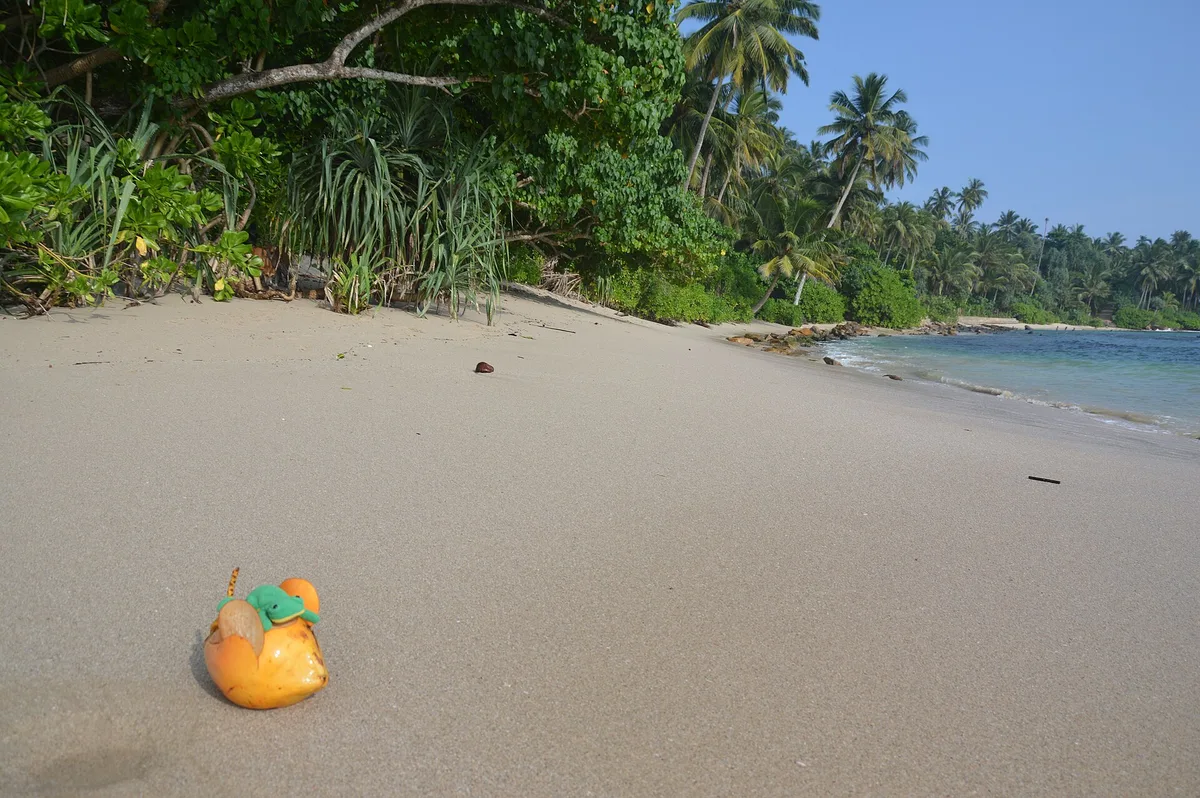
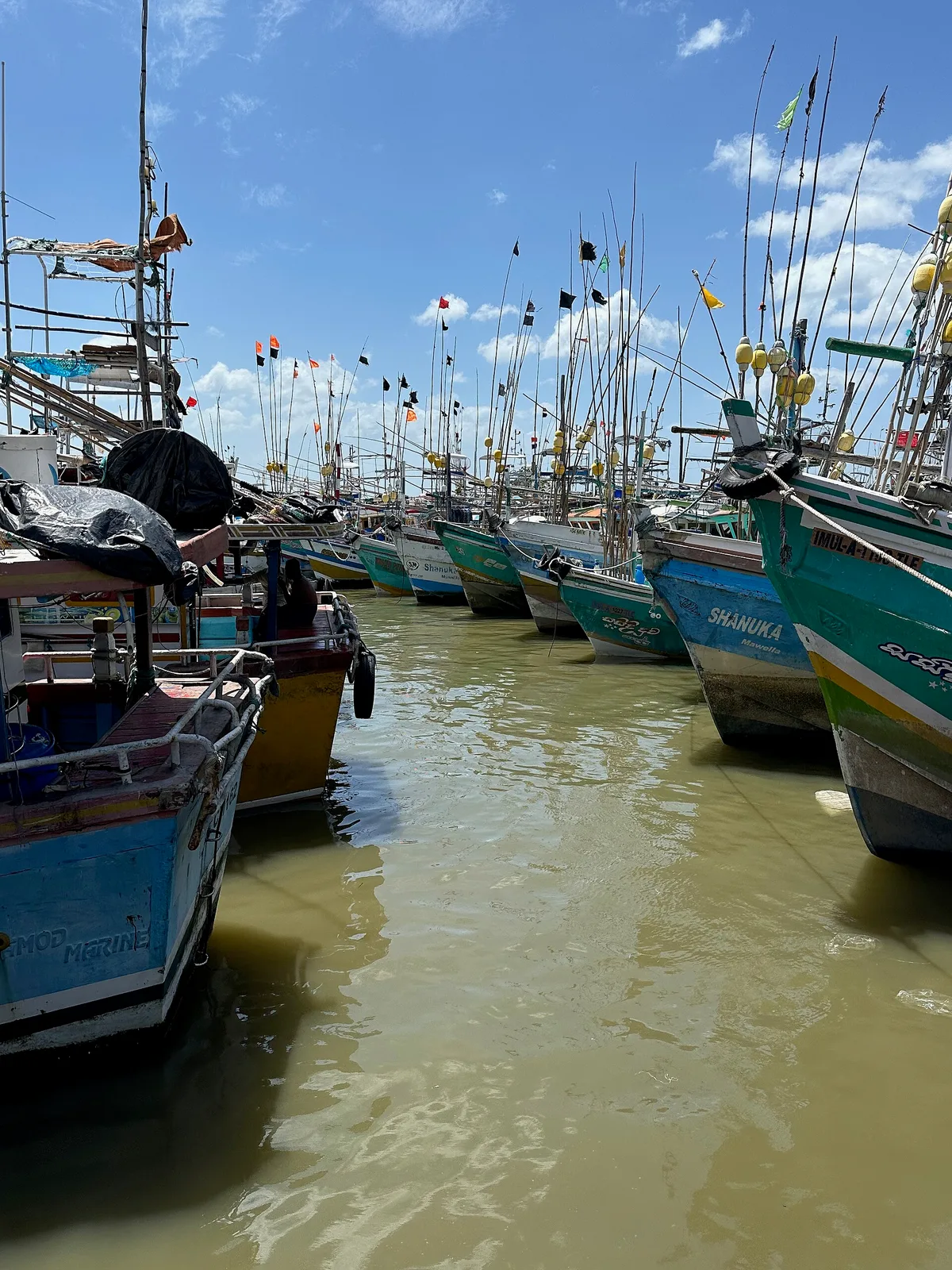
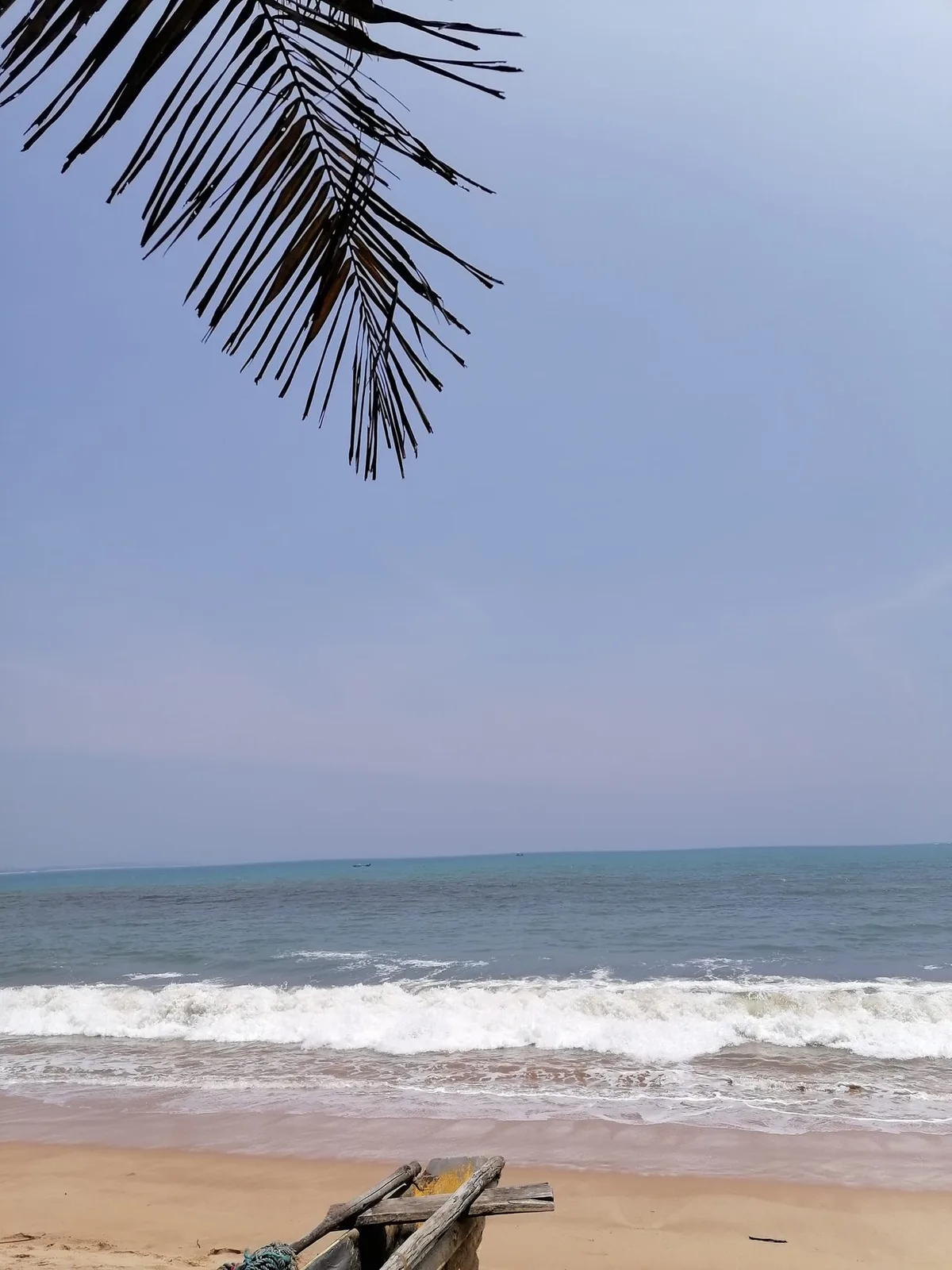
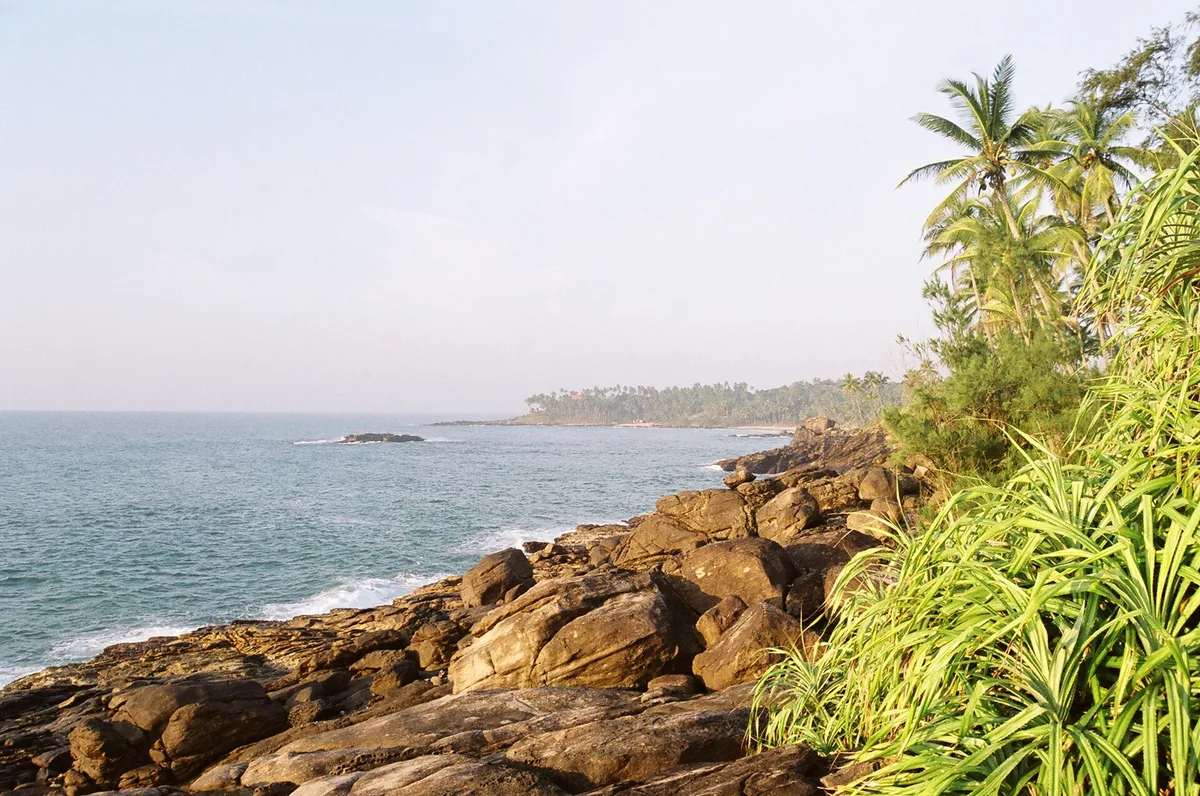
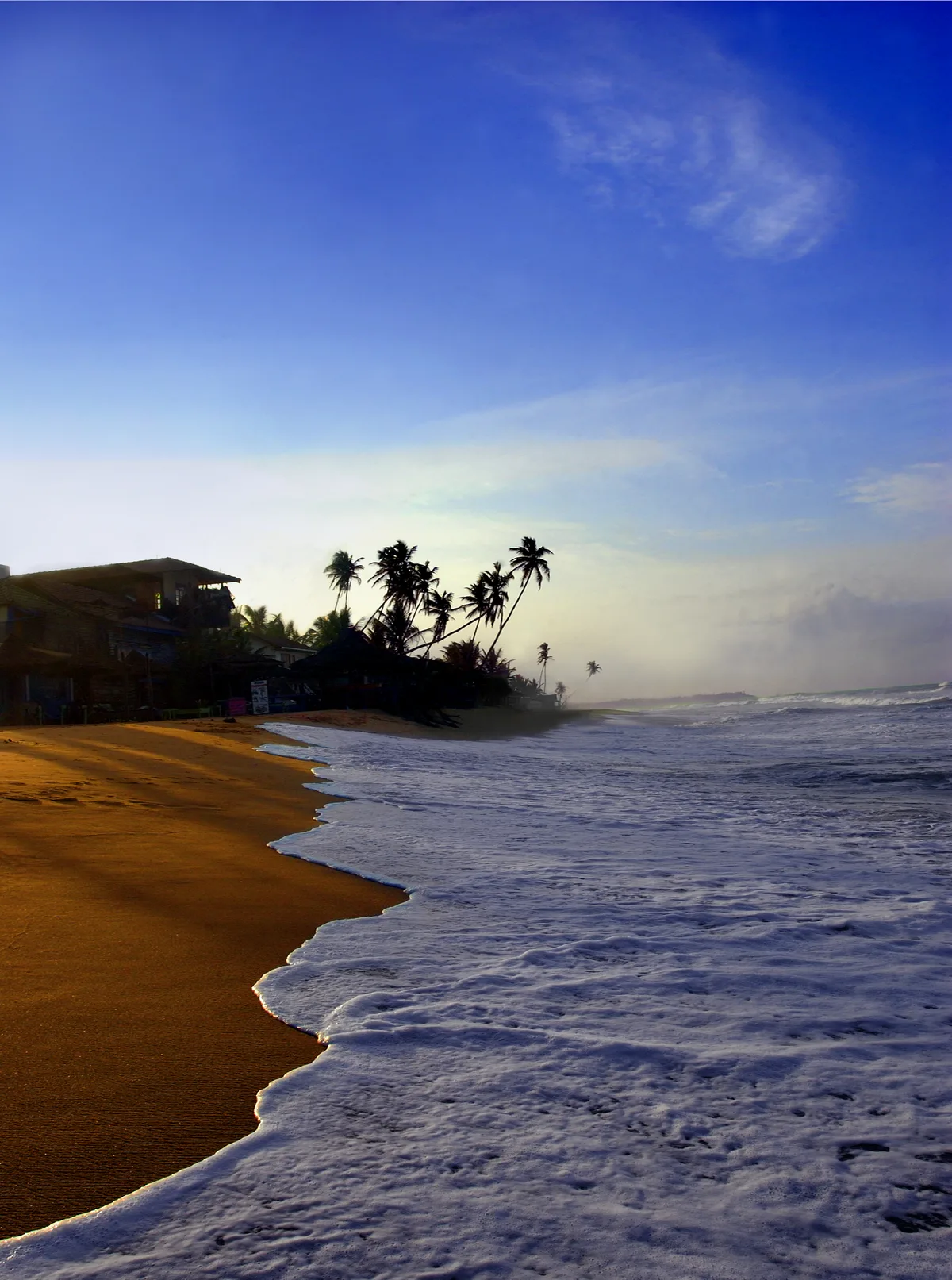
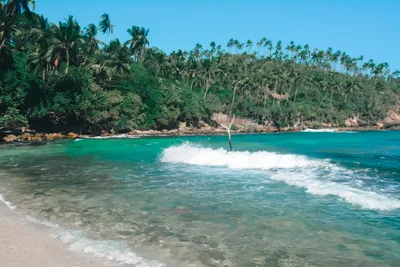
Tangalle stretches roughly 2,500 metres along Sri Lanka's Southern Province, a wide sweep of golden sand backed by the open Indian Ocean. The water is deep blue and unprotected — no reef breaks the swell, so the surf runs hard and the beach carries a genuinely wild energy. At the western end, a working fishing harbour punctuates the shoreline with colour and noise; at the eastern end, the beach softens into a lagoon estuary mouth where turtles come ashore to nest. It's photogenic, raw, and honest about what it is: a place where the sea is in charge.
How to get there
Tangalle is easy to reach by car — about 38 minutes from Matara and 52 minutes from Hambantota on daily routes. The nearest major airport is Mattala Rajapaksa International (HRI), roughly 46 km away; seaplane access is also available for those coming from Colombo. Parking is available near the harbour and beach access points — a mix of roadside and paid facilities at approximately LKR 100 per hour. There is no entry fee to the beach itself, but note that the sand is coarse and there is no paved beach access, making it harder going for wheelchairs or pushchairs.
Who it's for
For couples
Tangalle suits couples who want atmosphere over amenities — a long golden beach, a dramatic working harbour, and the quiet ritual of watching the ocean do its thing without a resort soundtrack in the background.
For families
Families should approach Tangalle with clear eyes: the open beach is not safe for children to swim, there is no paved access, and the coarse sand is rough underfoot. Families with older children interested in turtle conservation or the fishing harbour will find it genuinely engaging; those with toddlers or non-swimmers expecting a splash-friendly beach should look elsewhere.
Our take
Tangalle is not a beach you come to for a swim. The rip currents are real, year-round, and have no lifeguard standing between you and them — that fact leads every conversation about this place. What Tangalle does offer is something rarer on the Sri Lankan south coast: a working harbour that hasn't been tidied up for tourism, a long arc of golden sand that feels genuinely wild, and a turtle nesting stretch that connects the beach to something larger than a holiday. Come in the dry season — November through April — and you'll find moderate visitor numbers, good light, and a place that rewards observation over participation. Skip the monsoon months entirely. The Rekawa Turtle Conservation Project nearby is worth planning your whole trip around. Tangalle is for photographers, eco-tourists, and anyone who finds an honest, unpolished coastline more interesting than a manicured one.
What to do
The Rekawa Turtle Conservation Project, 15 km east, runs legitimate guided night turtle-watching at one of Sri Lanka's most important nesting beaches — book ahead and go with the official guides. Mulkirigala Rock Temple, 16 km away, is an ancient cave complex cut into a granite outcrop with Buddhist murals and wide panoramic views worth the climb. Closer to town, Hummanaya Blow Hole at 8.4 km and Mawella Beach at 6.6 km make easy half-day detours, while the Kalametiya Bird Sanctuary at 16.3 km rewards patient visitors with migratory waterbirds over a coastal lagoon.
The fishing harbour at first light delivers the most striking frames — colourful wooden boats, golden sand, and deep blue water with no tourist infrastructure in the way.
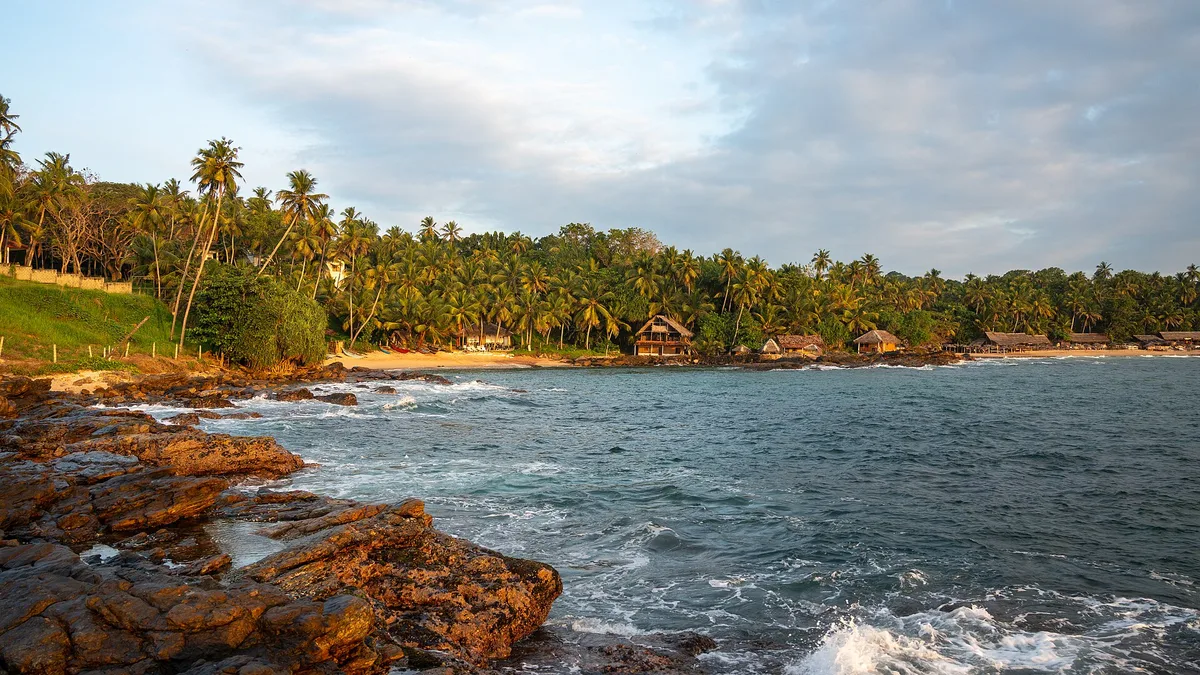
The lagoon estuary mouth at the eastern end of the beach offers a quieter, more atmospheric shot, particularly at dusk when the light turns warm and the surf rolls in uninterrupted.
Where to eat
Kundiya Restaurant, Kingfish Restaurant, and harbour road Restaurant are all within 100 metres of the beach and reflect the working-harbour setting — expect fresh catch and straightforward local cooking. Amurasan Beach Restaurant and Hydra are both within 200 metres if you want to linger longer over a meal with a sea view. The cluster of options near the harbour means you won't need to travel far between the water and a plate of rice and curry.
Where to stay
Arundella Beach Inn sits just 100 metres from the shore and is the closest base for early-morning harbour watching. Sinhagiri Hotel & Restaurant and Blue Breze are both within 200 metres, offering simple rooms at the heart of things. If you prefer a little more distance from the harbour activity, Ocevia Rooms & Restaurant and The Ocean Breeze Villa are both around 500 metres away.
Photography
The working harbour at dawn is the strongest shot on this beach — fishing boats returning against a golden-sand foreground and deep blue water behind. The lagoon estuary mouth at the eastern end rewards patience at dusk, especially during turtle nesting season when the light drops and the beach empties.
Good to know
Do NOT enter the water anywhere along the main beach — strong rip currents run year-round and there are no lifeguards on duty; swimming is dangerous and should be avoided entirely on the open shore. From October through April, no artificial lights are permitted on the beach after dark to protect nesting turtles — this is a strict local rule, not a suggestion. Respect the fishing operations near the harbour: boats launch and land throughout the day and the working area is not a spectator zone. If you visit between May and September, expect heavy rain and dangerous surf driven by the Southwest monsoon — this stretch is best skipped entirely in those months.
GAMES
🕹️ Five minutes of sand?
Three daily games — including the UV simulator set to this beach.
Map
Nearby places
Kundiya Restaurant
Kingfish Restaurant
harbour road Restaurant
Amurasan Beach Restaurant
Hydra
Arundella Beacch Inn
Sinhagiri Hotel & Restaurant
Blue Breze
Ocevia Rooms & Restaurant
The Ocean Breeze Villa
Rekawa Turtle Conservation Project
Mulkirigala Rock Temple
Kalametiya Bird Sanctuary
Things to see around Tangalle
Rekawa Turtle Conservation Project
Legitimate guided night turtle-watching at one of Sri Lanka's most important nesting beaches
Mulkirigala Rock Temple
Ancient cave temple complex on a granite outcrop with Buddhist murals and panoramic views
Kalametiya Bird Sanctuary
Coastal lagoon sanctuary hosting migratory waterbirds and resident species
GIFT
🎁 Gift this beach
Its exact coastline, your date, your words — on a print or a PDF you print yourself.
Tangalle Beach
THAT DAY
Tangalle Beach, Southern Province
© OpenStreetMap contributors
Clean & decorative, or “That day” with the real sky of your date.
Shipping included 3-6 business days
A question before you order? Contact us
Delivered within minutes on the confirmation page and by email: a ZIP with all 4 print sizes (30×40 cm, 12×16″, 50×70 cm, 18×24″), each as a high-resolution PDF and PNG (300 dpi), plus a screen version. Print at home or at any print shop.
Please complete the delivery address.
Please accept the Terms of Sale.
Almost there — the shop opens very soon.
Secure payment · Printed locally in 30+ countries · 7 languages
Frequently asked
The information on this page is provided for guidance only and may evolve. Access conditions, safety and infrastructure can change without notice. Always check official sources before traveling.
Nearest beaches
Reviews of this beach
- No reviews yet, what a shame — leave yours and share your experience.
Photo credits
Sources and licenses for the photos shown above.
- Photo 1 — žába · source · CC BY 3.0
- Photo 2 — Josep Renalias Lohen11 · source · CC BY 4.0
- Photo 3 — Dilantha Lokugeeganage · source · CC BY-SA 4.0
- Photo 4 — Satdeep Gill · source · CC BY 4.0
- Photo 5 — Diana Montero Melis · source · Public Domain
- Photo 6 — Colby Otero from Brooklyn, USA · source · CC BY 2.0