Rubha Hunish BeachUnited Kingdom Beach Guide
Scotland's wild northern edge — raw, remote, rewarding
 🎁 Gift idea: the star map of your most beautiful night↓
About
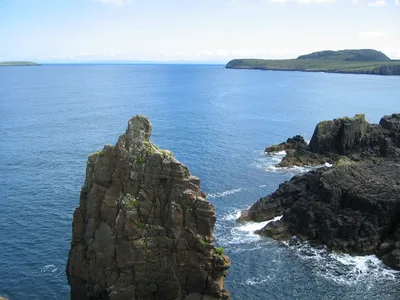
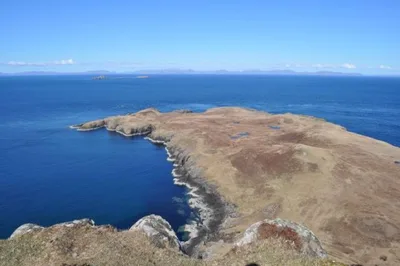
Rubha Hunish is the northernmost tip of the Isle of Skye, a place where the land runs out and the Atlantic takes over. This is no sandy retreat — it's a rocky cove of dark basalt, battered by open ocean, with blue water churning against ancient sea stacks below dramatic clifftops. On a clear day, the Outer Hebrides stretch across the horizon like a low pencil line. The MBA coastguard bothy perched above the descent is one of Scotland's most atmospheric shelters, and the geology here — layered basalt columns, eroded headlands — is as striking as anything on Skye. It's wild in every sense of the word.
How to get there
Rubha Hunish is reached on foot only — plan for a roughly two-hour hike from either the Shulista or Duntulm car park. Both starting points offer free informal roadside parking, though spaces are limited, so arrive early in peak season. There is no entry fee. The descent to the cove itself is steep and badly eroded in places — treat it as a serious hill walk, not a casual stroll.
Who it's for
For couples
For couples who want solitude and scale, Rubha Hunish delivers both — the clifftop walk, the bothy, and the vast blue horizon make for a genuinely memorable day with almost no other visitors around.
For families
The steep, eroded descent and dangerous water make Rubha Hunish unsuitable for young children or anyone who needs a straightforward outing — this one is better saved for older, experienced hikers in the family.
Our take
Do not come to Rubha Hunish expecting a beach day — there is no sand, swimming is dangerous, and the path down is not for the unprepared. Come instead for what it actually is: the raw, geological end of Skye, a clifftop walk with genuine exposure, and one of the most remote and atmospheric spots in Scotland. The bothy alone is worth the effort if you've booked ahead. Visit between June and September, check the weather carefully before you go, and keep dogs on a lead on the steep descent. This is a place that asks something of you — and pays back in kind.
What to do
Three kilometres south, the clifftop ruins of Duntulm Castle — once a stronghold of Clan MacDonald — are worth a stop on your way out or back. The Museum of Island Life at Kilmuir, eight kilometres away, gives real context to the crofting landscape you'll walk through. For the dramatic landslip scenery of the Trotternish ridge, Quiraing is fifteen kilometres south and one of Skye's most distinctive geological spectacles.
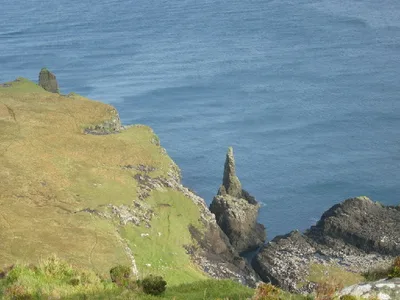
The clifftop descent point, with the basalt sea stack rising from blue water below, is the defining shot at Rubha Hunish — best in late afternoon light when shadows define the rock layers.
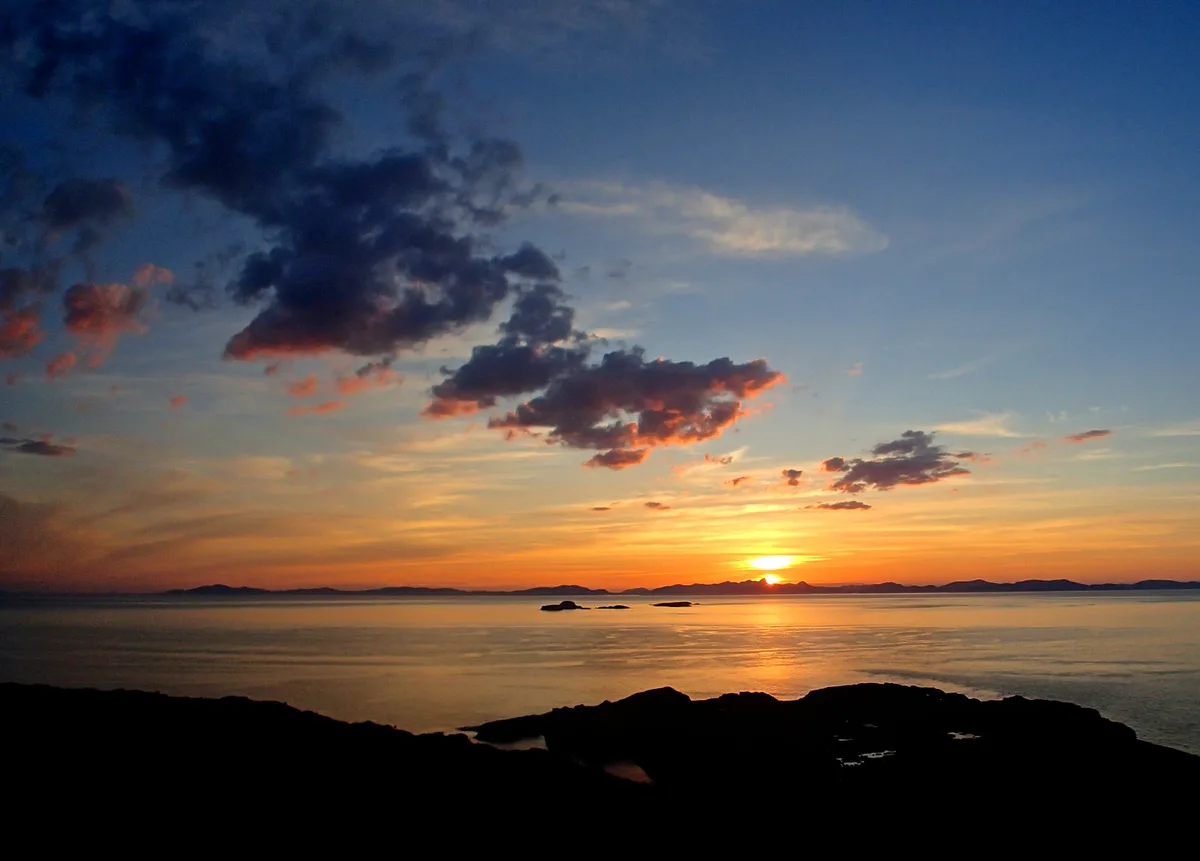
The MBA bothy framed against the open ocean and the Outer Hebrides on the horizon is a second strong composition, particularly in the long summer evenings of June and July.
Where to eat
The nearest dining option is The Pier Restaurant, roughly 12.9 kilometres away — plan your timing around it, because there is absolutely nothing to eat at the headland itself. Bring your own food and water for the hike; this is remote Scotland and self-sufficiency is the baseline.
Where to stay
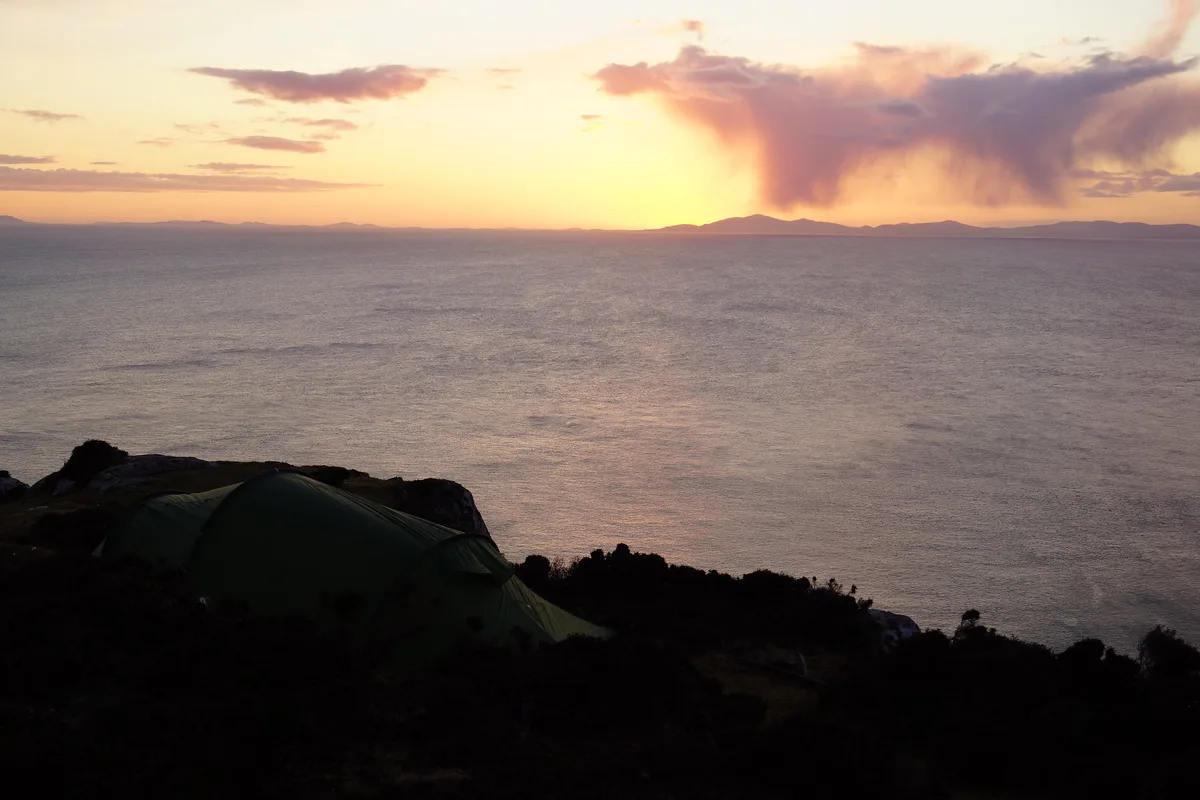
The Uig Hotel, 12.9 kilometres from the headland, is the closest base for an overnight stay in the area. Alternatively, if you want to sleep at the headland itself, the MBA coastguard bothy is an extraordinary option — but book through the Mountain Bothies Association well in advance.
Photography
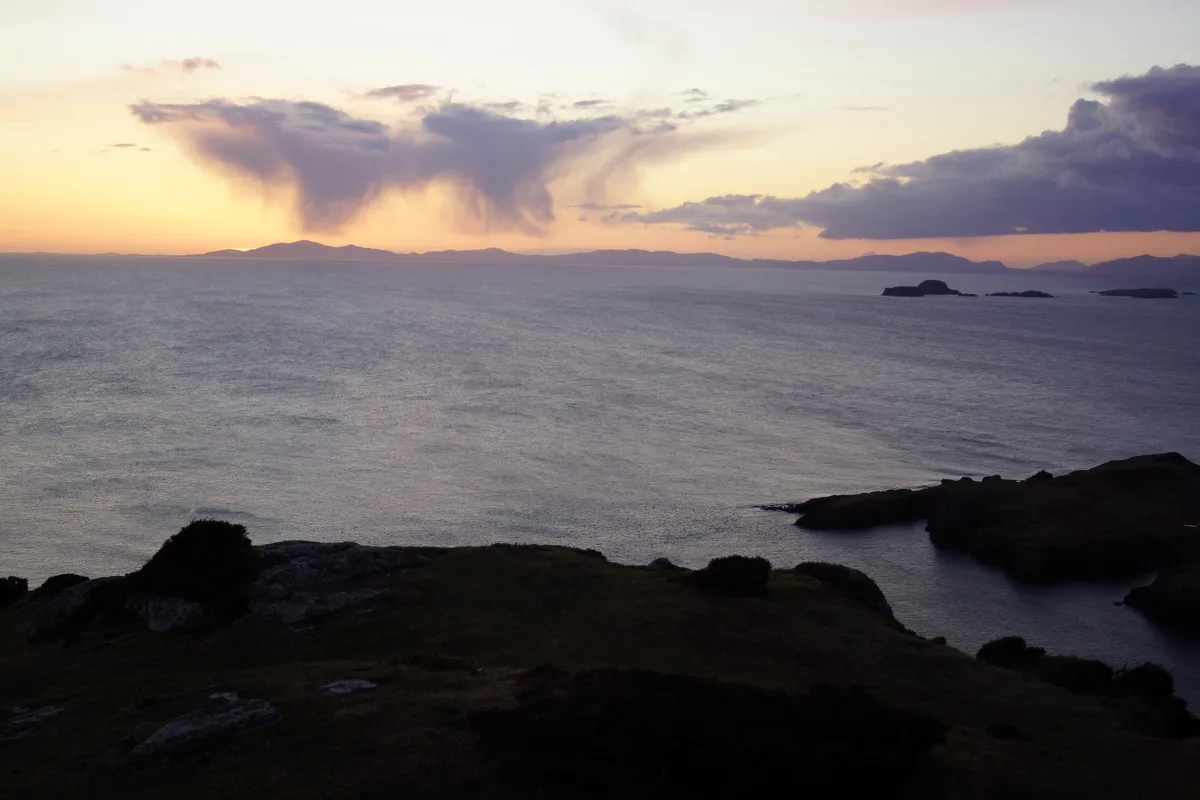
The basalt sea stack and clifftop edge at the descent point deliver the most dramatic compositions — shoot in the long golden light of a June or July evening when the Outer Hebrides are visible on the horizon. The bothy itself, set against the open ocean, makes a compelling foreground subject in morning light with the sea stacks behind.
Good to know
Do not enter the water under any circumstances — this is an exposed rocky cove with strong currents, and swimming here is genuinely dangerous. The descent path becomes hazardous when wet; turn back if conditions deteriorate and never attempt it in winter months. Fires are strictly prohibited at Rubha Hunish. If you plan to stay overnight in the MBA coastguard bothy, you must book in advance through the Mountain Bothies Association — it cannot be used on a drop-in basis.
GAMES
🕹️ Five minutes of sand?
Three daily games — including the UV simulator set to this beach.
Map
Nearby places
The Pier Restaurant
Uig Hotel
Things to see around Kilmuir
Duntulm Castle
Ruined clifftop castle, former stronghold of Clan MacDonald of Sleat.
Museum of Island Life
Open-air museum of traditional Skye crofting life at Kilmuir.
Quiraing
Dramatic landslip landscape on the Trotternish ridge with unique rock formations.
GIFT IDEA · MARCEL ET LES BLONDES
🎁 Give a moment, not a thing


What’s the occasion?

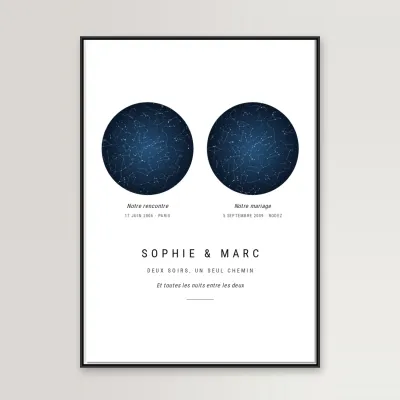 💑 Dating anniversaryTwo dates, two starry skies
 💍 Wedding anniversaryCotton, silver, golden…
 🎂 BirthdayTheir own newspaper front page
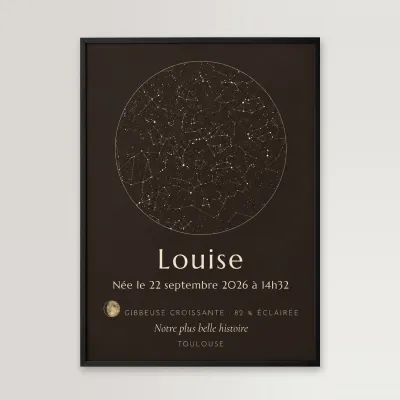 👶 New babyThe stars on the day they were bornValentine’s DayOur two moons, as a print
Shipping €5, free from €49 · made to order, shipped within 48 hAlso: our engraved wooden bracelets, €23.90 →
Frequently asked
The information on this page is provided for guidance only and may evolve. Access conditions, safety and infrastructure can change without notice. Always check official sources before traveling.
Nearest beaches
Other wild beaches in United Kingdom
More beaches in Scottish Islands
Reviews of this beach
- No reviews yet, what a shame — leave yours and share your experience.
Photo credits
Sources and licenses for the photos shown above.
- Photo 1 — John Allan · source · CC BY-SA 2.0
- Photo 2 — Robert Struthers · source · CC BY-SA 2.0
- Photo 3 — Yssso · source · CC BY-SA 2.0
- Photo 4 — Yssso · source · CC BY-SA 2.0
- Photo 5 — Masa Sakano · source · CC BY-SA 2.0
- Photo 6 — John Allan · source · CC BY-SA 2.0