Manguinho BeachCape Verde Beach Guide
Golden sands, glassy lagoon, wading birds at the edge of the world
About
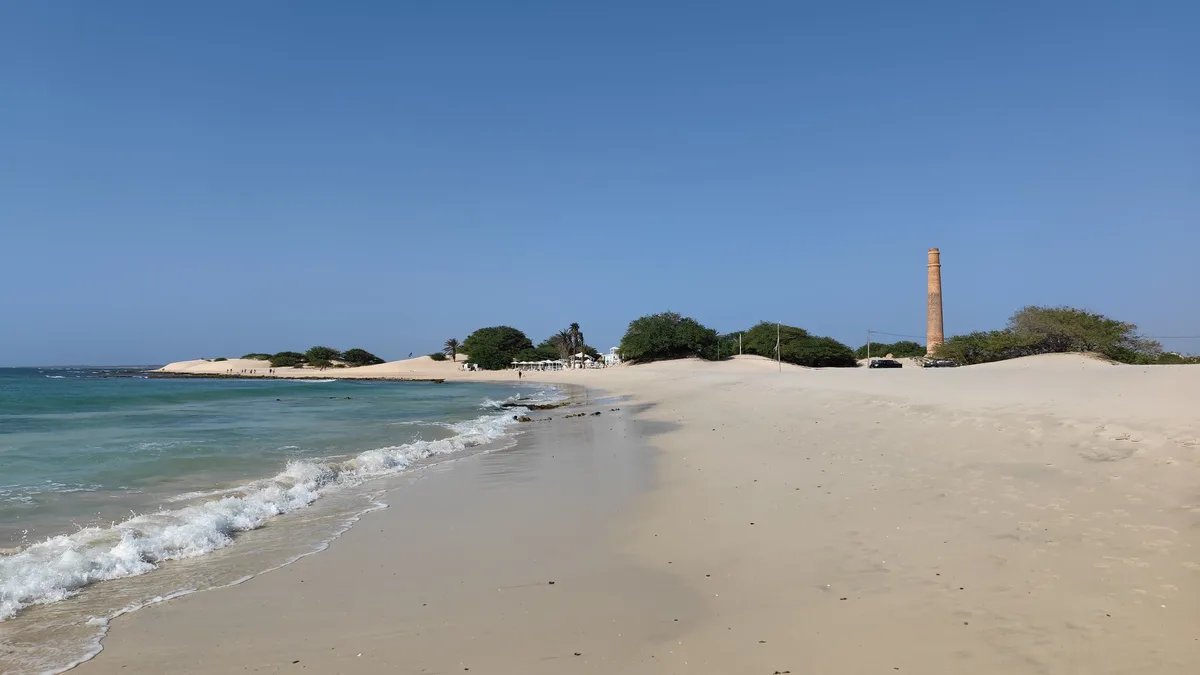
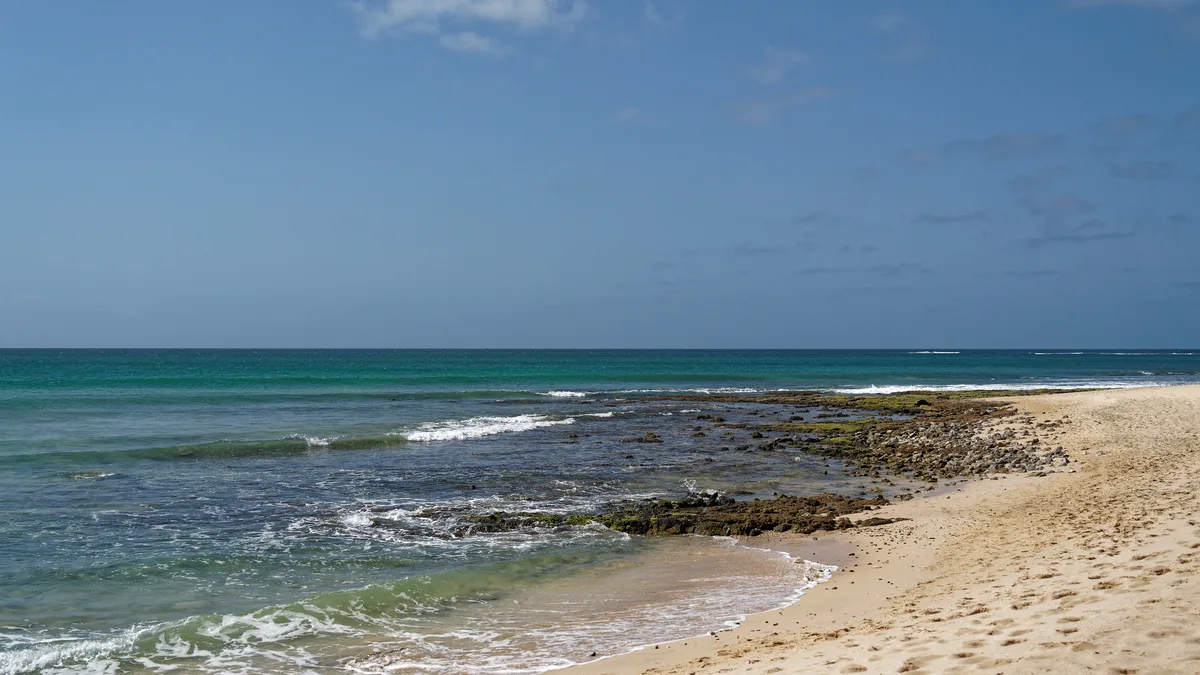
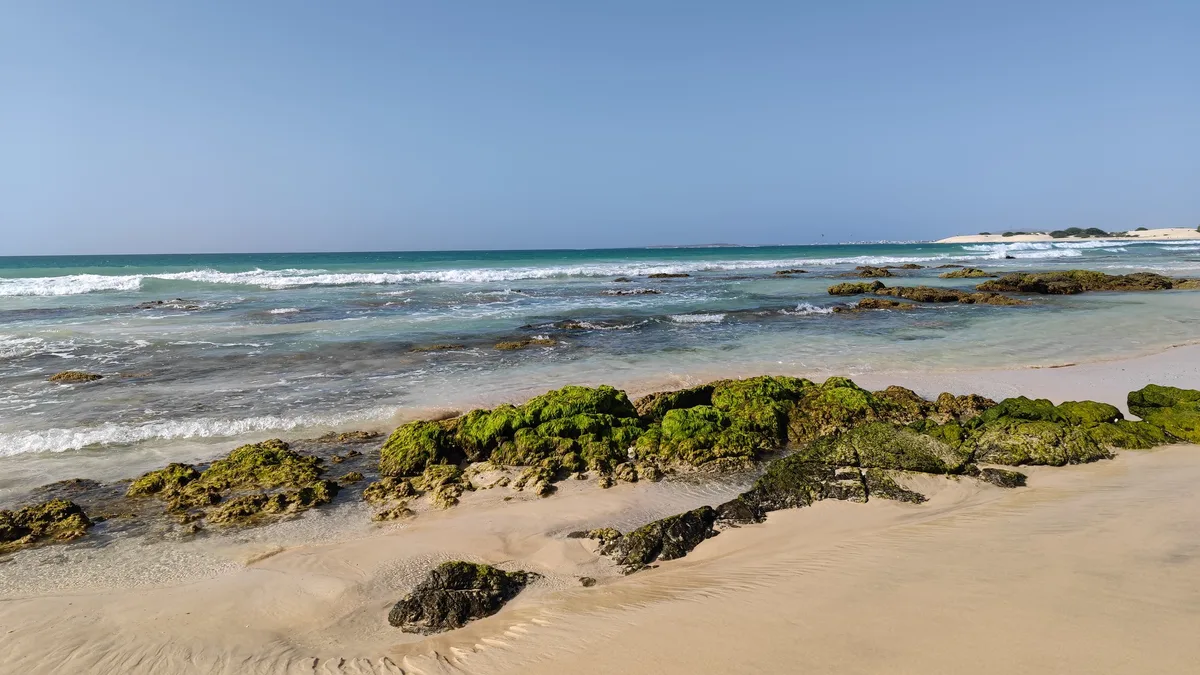
Praia de Manguinho stretches for roughly 7.7 kilometres of golden sand along the Boa Vista coast near Rabil village. A sandbar-closed lagoon mouth creates a glassy inner pool that mirrors the sky, while tidal mudflats draw congregations of wading birds that pick their way through the shallows in near-silence. The water runs emerald where the sea meets the sand, and there is no tourist infrastructure whatsoever — no sunbeds, no beach bars, no signage. That absence is the point. The vibe is unhurried and local, the kind of place where the loudest sound is the wind off the Atlantic.
How to get there
From Rabil village, follow the dirt track out toward the coast — the drive takes around 10 minutes by car and is manageable daily. There is no formal parking area; roadside parking is informal only, so leave your vehicle sensibly and expect a short walk across soft sand and mudflat to reach the water's edge. The terrain is flat but the soft sand and mudflat surface means the final approach is slow going, and there is no formal access infrastructure for visitors with mobility needs.
Who it's for
For couples
Manguinho's near-total absence of other visitors and its long, unhurried shoreline make it a genuinely private escape — walk the full golden-sand sweep, watch the birds work the mudflats, and have the glassy lagoon pool almost entirely to yourselves.
For families
The flat terrain and safe swimming on the open-beach side suit families who want space to spread out without the pressure of a busy resort beach — just come prepared with everything you need, since there is no infrastructure on site and the mudflats require closed shoes for younger explorers.
Our take
Praia de Manguinho is safe for swimming on the open-beach side, and that's worth saying upfront — but swimming isn't really why you come here. You come for the scale, the silence, and the birds. Nearly 7.7 kilometres of golden sand with zero tourist infrastructure is a rarity on any island, and the sandbar-closed lagoon with its glassy inner pool is a genuinely distinctive feature of this stretch of coast. The flip side is real: no shade, no water, no facilities of any kind, and a muddy approach at low tide. Skip August and September — the lagoon stagnates and the smell will cut the visit short. Time it right, between November and April in the dry season, and you'll have this quiet, atmospheric beach almost entirely to yourself.
What to do
The beach itself rewards slow exploration — birdwatching along the tidal mudflats and lagoon edge is the headline activity, and the glassy inner pool makes for exceptional photography at low light. About 3 kilometres away, Rabil Pottery Village is one of the few surviving craft centres on Boa Vista and worth an hour of your time. Further afield, Deserto de Viana sits just 4.6 kilometres away and pairs well with a morning at Manguinho. If you want a contrasting beach, Praia de Chaves on the northwest coast is 12 kilometres away and offers a very different, more open-ocean experience.
The sandbar at the lagoon mouth is the standout frame — shoot across the glassy inner pool toward the open sea for a shot that looks like two worlds colliding.
The tidal mudflats at low tide, dotted with wading birds against the golden sand and emerald water, reward patience and a longer lens. The sheer unbroken length of the beach, empty in both directions, makes for a powerful minimalist wide shot in the hour after sunrise.
Where to eat
The closest option is Perola d Chaves, just 0.1 kilometres from the beach — handy for a meal before or after. A short drive further brings you to Mogambo, Kulinarium, and Toscana (Italian) all around 1.1 kilometres away, plus Las Dunas with its international menu at 1.2 kilometres. There is absolutely nothing to eat or drink on the beach itself, so bring water and snacks for the day.
Where to stay
Ca' Nicola is the nearest base, around 4.8 kilometres from the beach, followed by the Boa Vista hotel at 5.1 kilometres — both close enough for an easy morning run to the shore. If you want something more remote, Spinguera sits 14.8 kilometres away and suits travellers who prefer to be well off the tourist trail.
Photography
The sandbar-closed lagoon mouth at golden hour is the money shot — the glassy inner pool reflects the sky in a way that makes the scene look almost unreal, and the wading birds add natural foreground interest. Come at low tide in the early morning for the widest mudflat exposure and the softest light; the long, unbroken sweep of golden sand stretching into the distance works well with a wide lens.
Good to know
Never disturb the wading birds on the mudflats — this is a local rule, not a suggestion, and the birds are the main reason to come. At low tide the tidal flats turn muddy, so wear shoes you don't mind getting dirty and check the tide before you head out. Avoid August and September entirely: tidal exchange drops to a minimum in late summer and the lagoon can become stagnant and genuinely malodorous — it's not a pleasant experience. The beach is otherwise safe for swimming in the open-sea zone.
GAMES
🕹️ Five minutes of sand?
Three daily games — including the UV simulator set to this beach.
Map
Nearby places
Perola d Chaves
Mogambo
Kulinarium
Toscana
Las Dunas
Deserto de Viana
Vigia
Things to see around Rabil
Rabil Pottery Village
Traditional pottery-making village, one of the few craft centres on Boa Vista
Praia de Baluarte
Northeast-tip beach with colonial ruin and exposed reef shelf
Praia de Chaves
The island's main long beach on the northwest coast
GIFT
🎁 Gift this beach
Its exact coastline, your date, your words — on a print or a PDF you print yourself.
Manguinho Beach
THAT DAY
Manguinho Beach, Cape Verde
© OpenStreetMap contributors
Clean & decorative, or “That day” with the real sky of your date.
Shipping included 3-6 business days
A question before you order? Contact us
Delivered within minutes on the confirmation page and by email: a ZIP with all 4 print sizes (30×40 cm, 12×16″, 50×70 cm, 18×24″), each as a high-resolution PDF and PNG (300 dpi), plus a screen version. Print at home or at any print shop.
Please complete the delivery address.
Please accept the Terms of Sale.
Almost there — the shop opens very soon.
Secure payment · Printed locally in 30+ countries · 7 languages
Frequently asked
The information on this page is provided for guidance only and may evolve. Access conditions, safety and infrastructure can change without notice. Always check official sources before traveling.
Nearest beaches
Reviews of this beach
- No reviews yet, what a shame — leave yours and share your experience.
Photo credits
Sources and licenses for the photos shown above.
- Photo 1 — Kurt-Georg · source · CC BY-ND 2.0
- Photo 2 — Miguel Discart & Kiri Karma · source · CC BY-SA 2.0
- Photo 3 — Kurt-Georg · source · CC BY-ND 2.0