Fontão BeachCape Verde Beach Guide
Wild volcanic shore where a freshwater spring meets the Atlantic
About
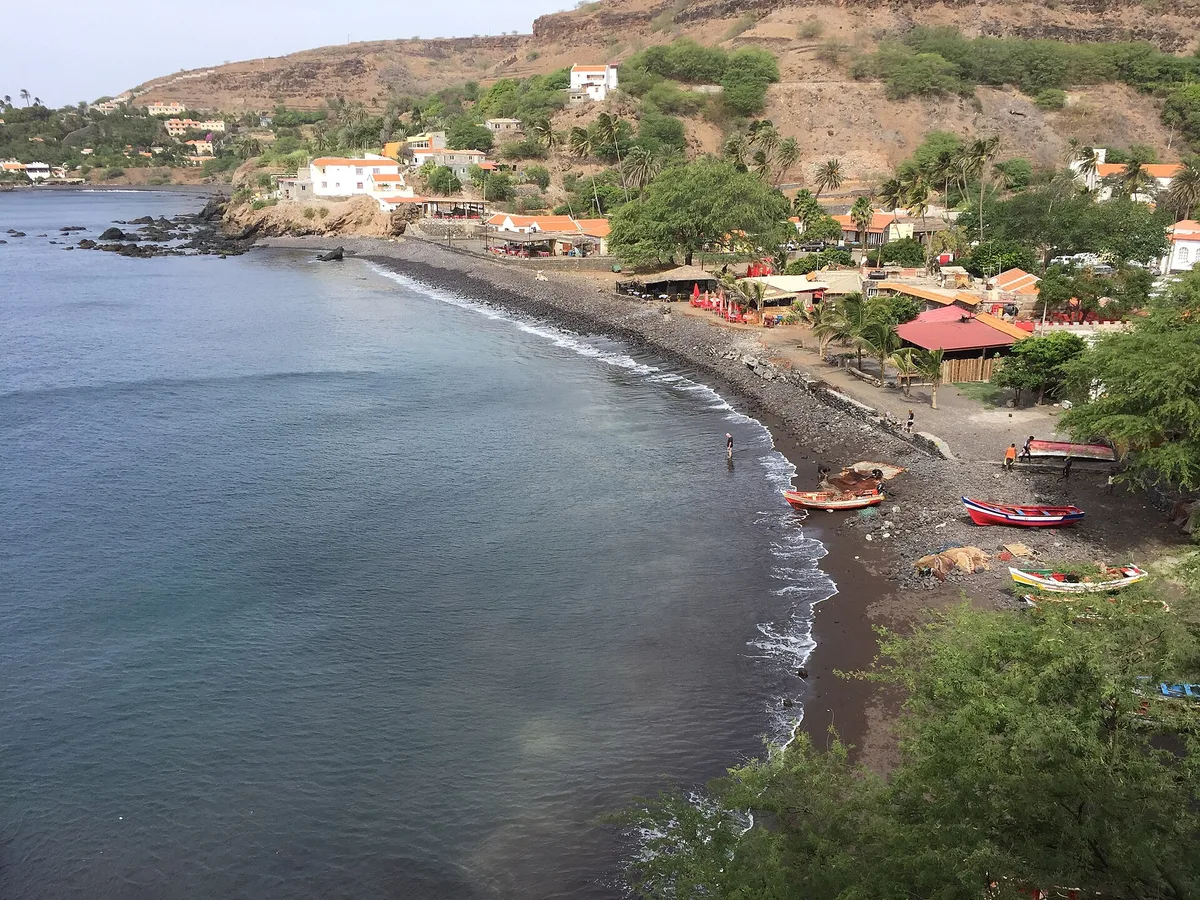
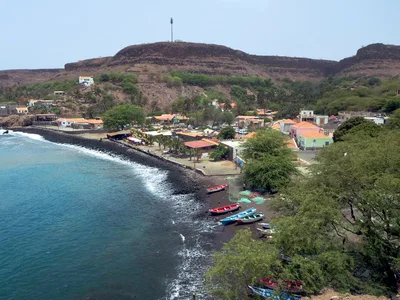
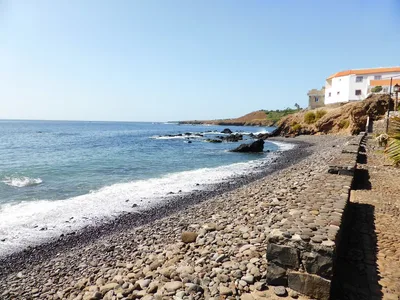
Praia de Fontão sits on the west coast of Santiago, Cape Verde, facing the open Atlantic with a raw, uncompromising energy. The beach is short and striking — coarse black volcanic sand meeting deep blue ocean, framed by arid cliff terrain that feels more geological expedition than beach day. What makes it genuinely unusual is the freshwater spring that emerges at the cliff base, an anomaly on this dry island that draws geologists and curious wanderers alike. There's no infrastructure here: no sunbeds, no snack bars, no lifeguards — just wind, dark sand, and strong surf. It's wild in the truest sense, and it stays empty.
How to get there
From Cidade Velha, the drive takes around 30 minutes along a rough track that leads toward the valley head — a car will get you close, but the final approach involves cliff terrain that is effectively inaccessible for anyone with limited mobility. There is no formal parking area; you'll leave your vehicle on the rough track near the valley head. No entry fee applies, but the terrain demands solid footwear and a degree of physical confidence.
Who it's for
For couples
If you and your partner want complete solitude and a genuinely wild landscape to yourselves, Fontão delivers — just come for the scenery and the spring, not a swim. The dramatic black sand and cliff backdrop make it an atmospheric stop on a longer Santiago road trip.
For families
Praia de Fontão is not suitable for families with children — the difficult terrain, dangerous surf, and complete absence of facilities make it a poor choice for a family beach day. The nearby UNESCO ruins of Cidade Velha offer a far more rewarding and accessible outing for all ages.
Our take
Do not come to Praia de Fontão expecting a beach day — the surf is dangerous, there are no rescue services, and swimming is off the table. That said, if you want to see something genuinely rare on a Cape Verde island, this is it: a freshwater spring pushing out of volcanic cliff on a wild, empty, black-sand shore facing the full force of the Atlantic. The geology alone justifies the rough drive from Cidade Velha. Come in the dry season between November and April, wear proper shoes, bring your own water, and treat this as a landscape visit rather than a beach trip. Skip July through September without hesitation — the swells are at their worst and there is no margin for error here.
What to do
The freshwater spring at the cliff base is the centrepiece — take time to find it and understand why it exists in such an arid landscape. From Fontão, Cidade Velha (Ribeira Grande) is within reach: a UNESCO World Heritage Site and the first European colonial city in the tropics, its ruins and the 16th-century Fortaleza Real de São Filipe are well worth the detour. The Pelourinho da Cidade Velha and a historic cistern are also close by for those interested in Cape Verde's layered colonial history.
The freshwater spring emerging at the base of the volcanic cliff is the most photogenic and unusual subject on the beach — shoot it tight against the dark rock for maximum contrast.
The black sand foreground with the open blue Atlantic behind rewards a wide-angle frame, especially in morning light when the cliffs cast long shadows across the shore. The arid cliff terrain itself, viewed from the track above the valley, gives a dramatic sense of scale.
Where to eat
There are no facilities at the beach itself, so eat before you go. Back in Cidade Velha, Penedinho and Old City - Santiago Fishing are right in the centre, with Praça do mar and Bar restaurante do Mundo just 100 metres away. Espaço Batuku, a short 200-metre walk, rounds out a solid set of local options for a post-visit meal.
Where to stay
Baía do Coral is the closest option at 0.5km, followed by Limeira at 0.6km — both convenient for an early-morning visit before the Atlantic wind picks up. For more choice, Encosta Azul, Hotel Vulcão, and Hotel Pôr de Sol are all within 1.6km of the beach.
Photography
The contrast between the coarse black volcanic sand and the deep blue Atlantic is most dramatic in the low morning light, when shadows define the cliff texture and the spring's outlet is easier to spot. Position yourself at the cliff base looking west for a frame that captures the geological strangeness — dark sand, blue ocean, arid rock — in a single shot.
Good to know
Do not enter the water — strong surf makes swimming dangerous, and there are no rescue services of any kind on site. Visit Praia de Fontão for the landscape, the geological spring, and the solitude, not for swimming. Avoid July, August, and September entirely: Atlantic swells on this west-facing coast are at their strongest and the conditions become even more hazardous. Bring everything you need — food, water, sun protection — because there is absolutely nothing here once you leave the road.
GAMES
🕹️ Five minutes of sand?
Three daily games — including the UV simulator set to this beach.
Map
Nearby places
Penedinho
Old City - Santiago Fishing
Praça do mar
Bar restaurante do Mundo
Espaço Batuku
Baía do Coral
Limeira
Encosta Azul
Hotel Vulcão
Hotel Pôr de Sol
Cidade Velha (Ribeira Grande)
Porto Mosquito Beach
Fortaleza Real de São Filipe
Things to see around Ribeira Grande de Santiago
Cidade Velha (Ribeira Grande)
UNESCO World Heritage Site — first European colonial city in the tropics.
Porto Mosquito Beach
Calm west-coast cove suitable for swimming and diving.
Fortaleza Real de São Filipe
16th-century Portuguese fort overlooking Cidade Velha.
GIFT
🎁 Gift this beach
Its exact coastline, your date, your words — on a print or a PDF you print yourself.
Fontão Beach
THAT DAY
Fontão Beach, Cape Verde
© OpenStreetMap contributors
Clean & decorative, or “That day” with the real sky of your date.
Shipping included 3-6 business days
A question before you order? Contact us
Delivered within minutes on the confirmation page and by email: a ZIP with all 4 print sizes (30×40 cm, 12×16″, 50×70 cm, 18×24″), each as a high-resolution PDF and PNG (300 dpi), plus a screen version. Print at home or at any print shop.
Please complete the delivery address.
Please accept the Terms of Sale.
Almost there — the shop opens very soon.
Secure payment · Printed locally in 30+ countries · 7 languages
Frequently asked
The information on this page is provided for guidance only and may evolve. Access conditions, safety and infrastructure can change without notice. Always check official sources before traveling.
Nearest beaches
Other wild beaches in Cape Verde
Reviews of this beach
- No reviews yet, what a shame — leave yours and share your experience.