Copacabana BeachBrazil Beach Guide
Rio's golden icon — lively, legendary, handle with care
About
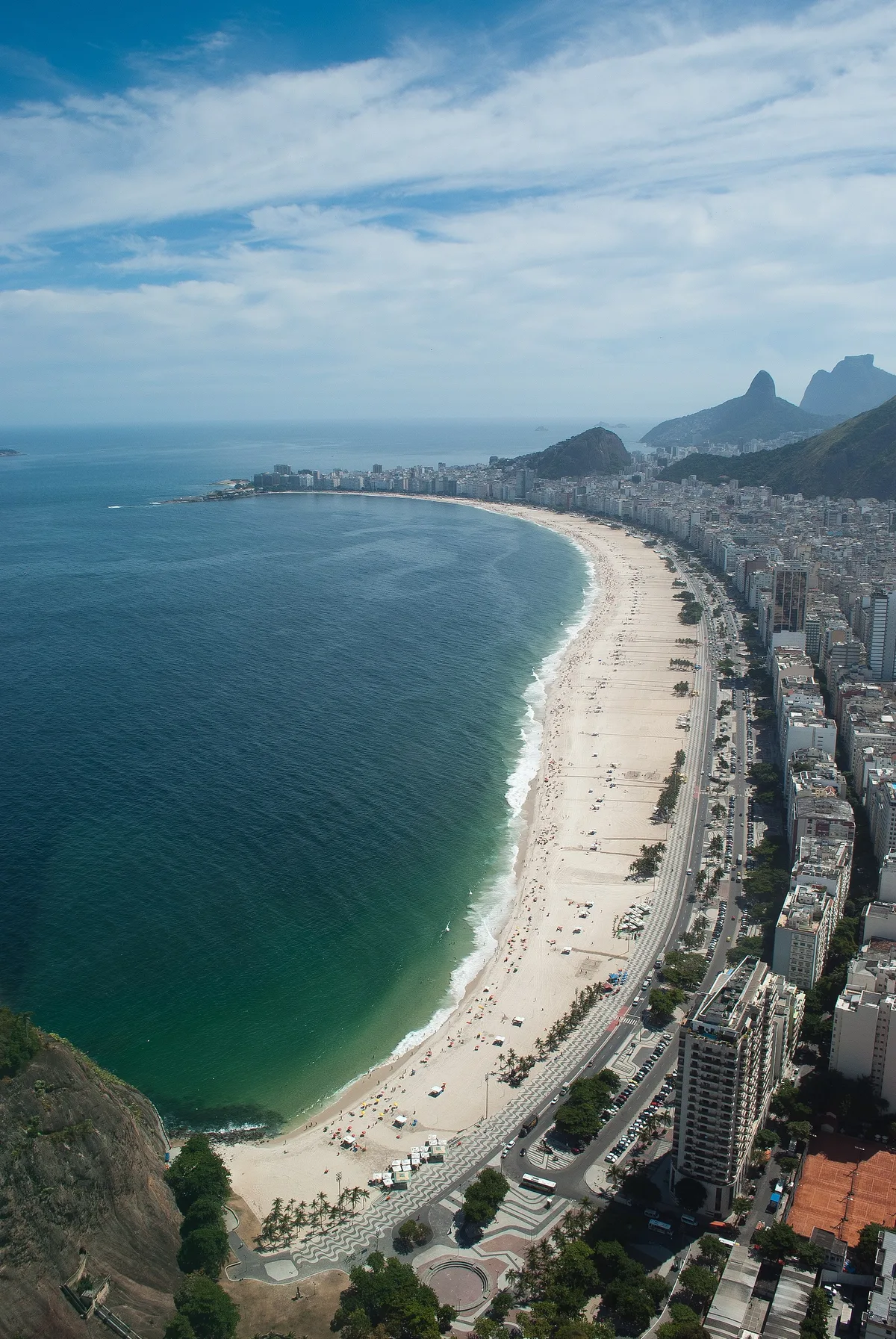
Praia de Copacabana stretches along the Brazilian Atlantic in Rio de Janeiro, its golden sand backed by the famous mosaic-patterned promenade of Avenida Atlântica. The blue water catches the light dramatically, but this is an open-ocean beach — powerful and unforgiving beneath the postcard surface. Volleyball nets dot the sand, vendors work the shoreline, and the energy rarely drops below full volume. Come New Year's Eve, millions gather here for one of the planet's most spectacular fireworks displays. It's urban, iconic, and utterly alive.
How to get there
The easiest way in is the metro from Rio de Janeiro city center — around 11 minutes, with trains running every five minutes. Buses, taxis, rideshares, and bicycles all connect from various points across the city. If you drive, parking is available on Avenida Atlântica and surrounding cross streets, with a mix of street spots and private lots — but expect it to be scarce and expensive during peak times. There is no entry fee to access the beach.
Who it's for
For couples
An evening walk along the mosaic boardwalk of Avenida Atlântica, with the blue ocean on one side and the lit-up city on the other, makes for a genuinely memorable night out — no planning required.
For families
Posto 4 offers a central, well-serviced stretch of golden sand with lifeguard presence, but parents should keep young children well clear of the water given the strong currents and variable water quality.
Our take
Copacabana is not a beach you discover — it's a beach you reckon with. The golden sand and blue water are real, the energy is real, and so are the hazards. Strong currents and riptides are present; swim only near lifeguard posts and skip the water entirely after heavy rain. That said, as an urban beach experience, it's hard to match: the promenade, the volleyball, the proximity to the rest of Rio, and the sheer scale of New Year's Eve put it in a category of its own. Come in the dry season — May through October — for the best conditions. Treat the ocean with respect, keep your wits about you on the sand, and Copacabana delivers exactly what it promises.
What to do
The beach is divided into numbered postos — Posto 4 and Posto 3 are the main social hubs, each with their own distinct visitors and atmosphere. From Posto 3, it's only about 0.6 km to the Ticket Office for the Trem do Corcovado, making a combined beach-and-Christ-the-Redeemer day very doable. Volleyball is practically a religion here, and you'll find games running at almost any hour on the sand.
The sweeping curve of the shoreline shot from the elevated ends of the beach gives you that classic Rio frame — golden sand, blue Atlantic, city skyline all in one.
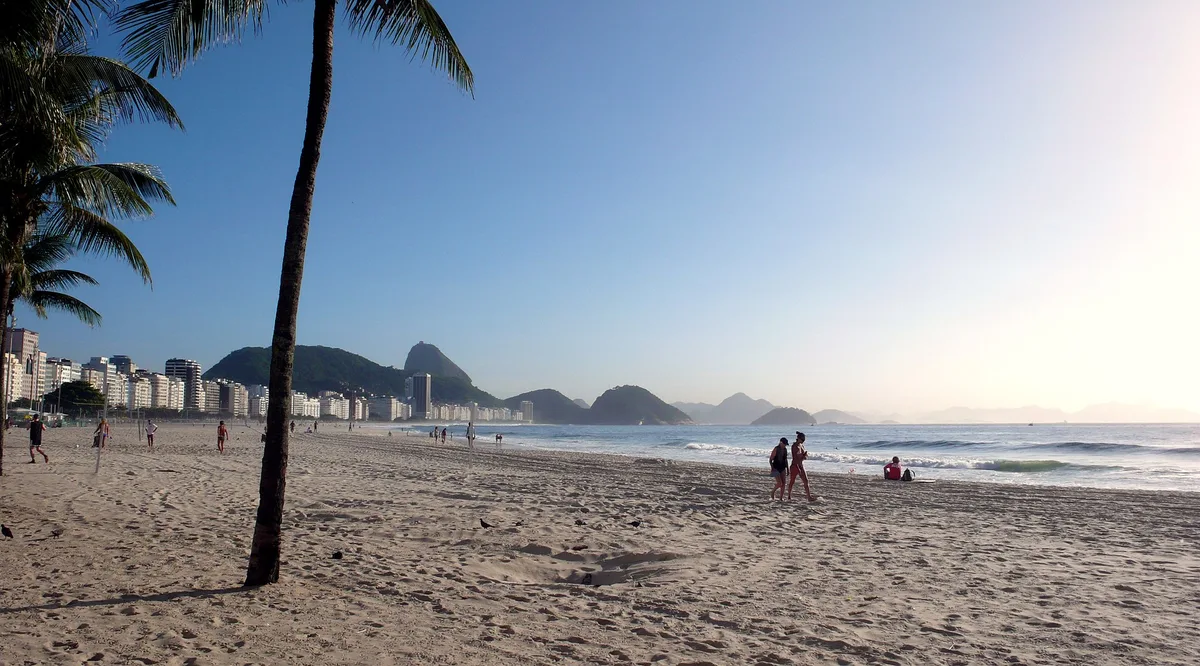
The black-and-white mosaic wave pattern of the Avenida Atlântica promenade is one of Brazil's most recognizable design icons and photographs beautifully in the early morning light. New Year's Eve transforms the entire beach into a wall-to-wall spectacle that is, factually, one of the most photographed events on the planet.
Where to eat
Balada Mix and Ceviche! are both within 0.2 km for a quick bite or a proper sit-down meal close to the waterfront. Fagulha Grill e Pizza Copa and Rincão do Tchê — a solid steak house — are just 0.3 km away if you want something more substantial after a long beach day. Santa Satisfação rounds out the nearby options with Italian, sandwiches, and chicken dishes.
Where to stay
The JW Marriott Hotel, Windsor California Copacabana Hotel, and Mercure Rio Boutique Copacabana are all within 0.2 mi — you can practically step off the sand into the lobby. The Toledo hotel sits 0.3 km away for a slightly more compact option. Staying this close means early-morning beach access before the day visitors arrive.
Photography
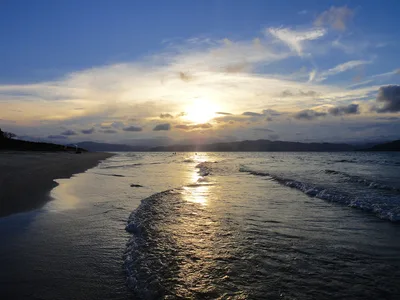
Shoot from the promenade at dawn when the golden sand is still quiet and the blue Atlantic catches the low light cleanly. For the classic wide-angle view of the curved shoreline, the elevated vantage points at either end of the beach give you the full sweep of the bay.
Good to know
Strong currents and riptides are common at Copacabana — do not underestimate them, and always swim near a lifeguard post. After heavy rain, water quality can deteriorate significantly due to pollution; check local reports before entering the water. The dry season runs May through October and offers the most reliable conditions for beach days. Keep valuables secured and stay aware of your surroundings, especially after dark.
GAMES
🕹️ Five minutes of sand?
Three daily games — including the UV simulator set to this beach.
Map
Nearby places
Balada Mix
Ceviche!
Fagulha Grill e Pizza Copa
Rincão do Tchê
Santa satisfação
JW Marriot Hotel
Windsor California Copacabana Hotel
Hotel Windsor California
Mercure Rio Boutique Copacabana
Toledo
GIFT
🎁 Gift this beach
Its exact coastline, your date, your words — on a print or a PDF you print yourself.
Copacabana Beach
THAT DAY
Copacabana Beach, Brazilian Atlantic
© OpenStreetMap contributors
Clean & decorative, or “That day” with the real sky of your date.
Shipping included 3-6 business days
A question before you order? Contact us
Delivered within minutes on the confirmation page and by email: a ZIP with all 4 print sizes (30×40 cm, 12×16″, 50×70 cm, 18×24″), each as a high-resolution PDF and PNG (300 dpi), plus a screen version. Print at home or at any print shop.
Please complete the delivery address.
Please accept the Terms of Sale.
Almost there — the shop opens very soon.
Secure payment · Printed locally in 30+ countries · 7 languages
Frequently asked
The information on this page is provided for guidance only and may evolve. Access conditions, safety and infrastructure can change without notice. Always check official sources before traveling.
Nearest beaches
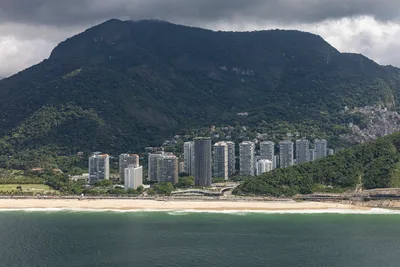
Other lively beaches in Brazil
More beaches in Brazilian Atlantic
Reviews of this beach
- No reviews yet, what a shame — leave yours and share your experience.