Sidi Ifni BeachMorocco Beach Guide
Art Deco ghost town meets wild Atlantic shore
About
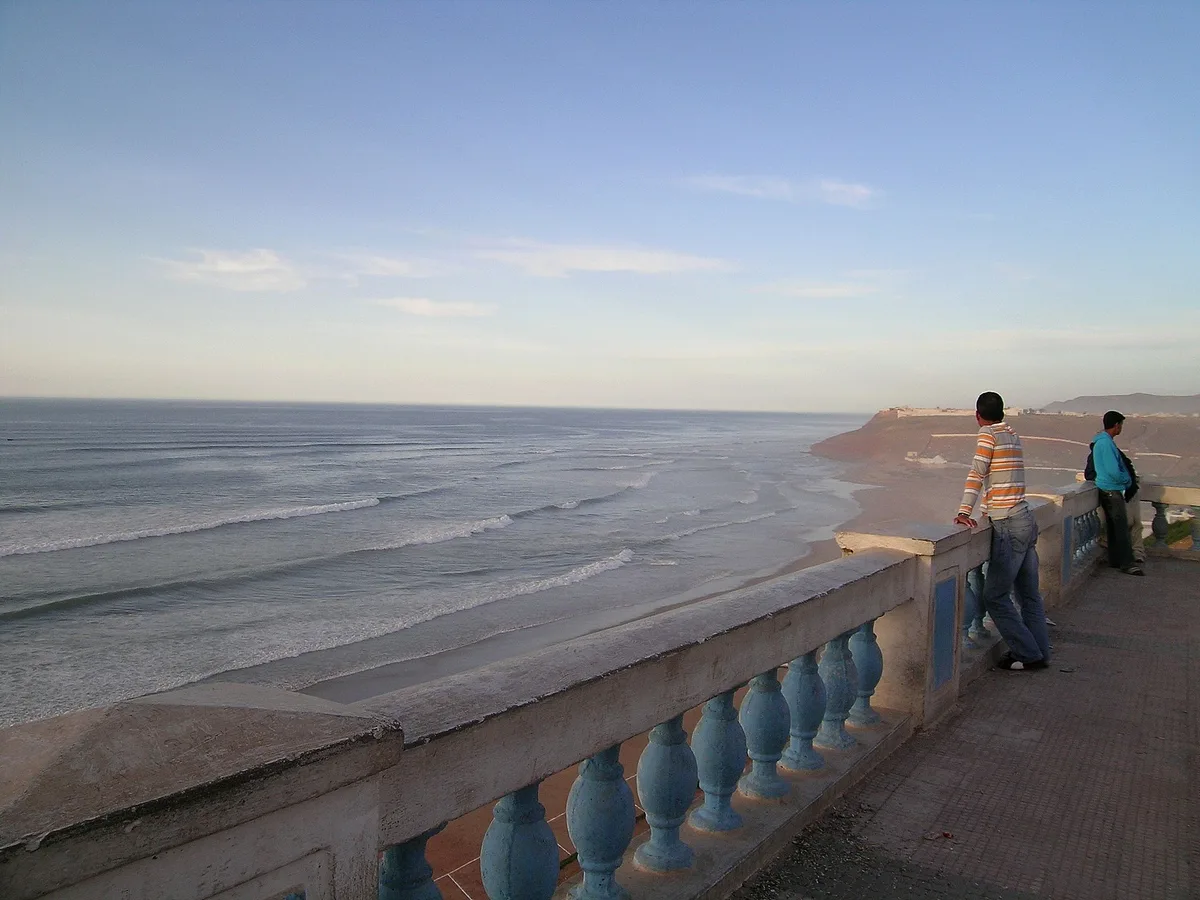
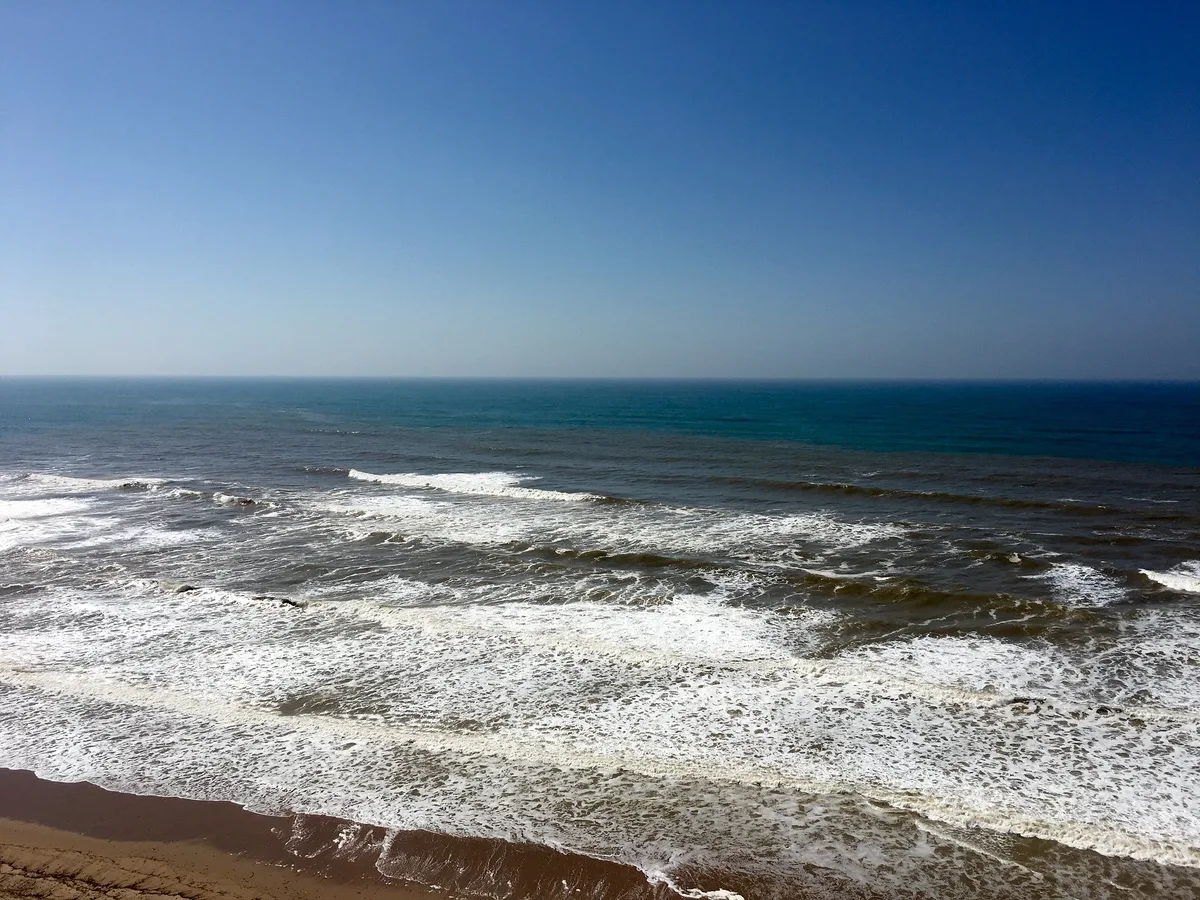
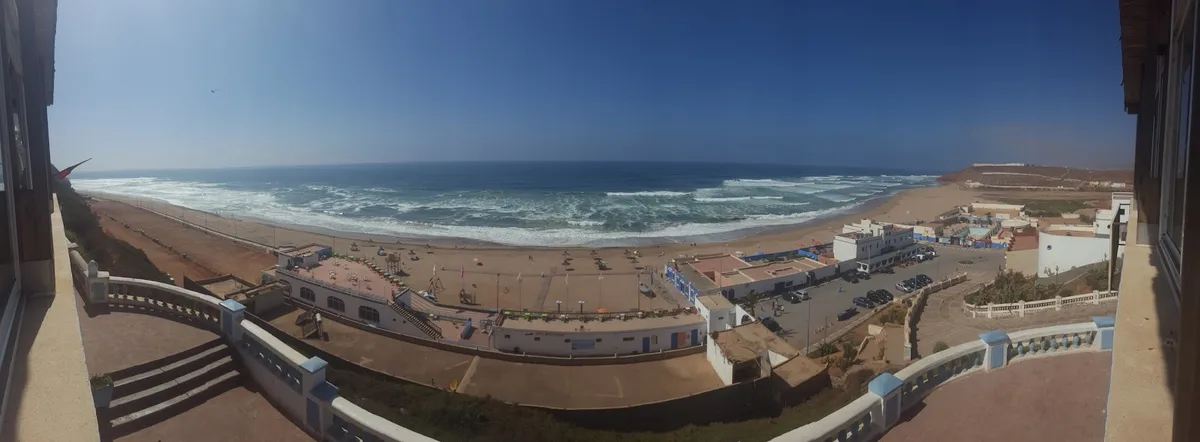
Plage de Sidi Ifni stretches along the Moroccan Atlantic coast in the former Spanish enclave of Sidi Ifni, backed by one of North Africa's most improbable streetscapes — a 1930s–1960s Art Deco town that time half-forgot. The dark golden sand runs for roughly 8 km, wide and open, with turquoise water that looks inviting but conceals a powerful shore break and persistent undertow. A derelict colonial sea crane stands at the water's edge like a rusting monument to the town's layered past, making the beach as photogenic as it is humbling. The vibe is unhurried and quiet — you'll share the sand with local fishermen and the occasional surfer rather than tour groups. It's a place that rewards curiosity more than sunbathing.
How to get there
From Agadir, the drive south takes around 2 hours 45 minutes on the Atlantic coastal road — scenic and straightforward by car. One to two daily buses also connect Agadir to Sidi Ifni, with a journey time of roughly 3 hours 45 minutes. Free parking is available in town close to the beach access points. There is no entry fee, but note that town streets are steep and there is no formal beach infrastructure once you reach the sand.
Who it's for
For couples
The quiet atmosphere, photogenic colonial backdrop, and long stretches of dark golden sand make this a compelling stop for couples who prefer atmosphere and history over beach-club amenities. Sunset along the waterfront, with the Art Deco skyline behind you, is genuinely hard to replicate elsewhere in Morocco.
For families
Families should visit for the cultural experience and the extraordinary Art Deco town rather than the beach itself — swimming is dangerous due to powerful shore break and undertow, so young children must be kept away from the water at all times. The flat beach promenade area and nearby restaurants make a relaxed afternoon on dry land very manageable.
Our take
Let's be direct: you do not come to Plage de Sidi Ifni to swim. The shore break and undertow are genuinely dangerous, and the water should be admired from a safe distance on the sand. What you do come for is one of the most atmospheric beach settings in Morocco — a long sweep of dark golden sand fronting turquoise Atlantic water, with a crumbling Spanish colonial crane standing sentinel and an Art Deco town rising behind it all. The quiet here is real, not a marketing promise. If you're driving the Atlantic coast between Agadir and Tiznit, this is the stop that will stay with you longest — not for the beach itself, but for the strange, layered beauty of a place that history seems to have paused mid-sentence. Come between June and September for the best conditions, and avoid the October-to-March window when the shore break intensifies further.
What to do
The Sidi Ifni Art Deco Town Centre, just 0.3 km from the beach, is the headline attraction — a remarkably preserved grid of Spanish colonial buildings from the 1930s to 1960s that genuinely stops you in your tracks. Surfers head 4.2 km to the Spot de surf du port for better and more defined wave conditions. About 8.3 km up the coast, Legzira Arc delivers one of Morocco's most dramatic coastal rock formations. If you have a day to spare, Tiznit Medina — 75 km away — is a walled town famed for its silver jewellery.
The derelict colonial sea crane against the open Atlantic is the unmissable frame — shoot it from the beach at low tide with the dark golden sand in the foreground.
The Art Deco town centre facades, 0.3 km from the shore, offer a completely different but equally striking set of compositions, especially in the warm light of early morning.
Where to eat
Mar Pequeño, Nomad, and Cafe Restaurant Tagoute are all within 0.1 km of the beach and cover everything from casual plates to sit-down meals. Ocean Miramar and Ilel seafood are a short 0.2 km walk away, with Ilel specialising in the fresh Atlantic catch you'd expect from a working fishing town. Options are modest but genuine — this isn't a resort strip.
Where to stay
Hôtel Belle Vue and Midi Ifni, Logis la Marine are both within 0.1 km of the beach, putting you right in the heart of the Art Deco quarter. Hôtel Suerte Loca and Hôtel Aït Baâmrane are 0.3 km away, while Hôtel Ére Nouvelle sits 0.6 km out if you prefer a quieter position above the town.
Photography
The derelict colonial sea crane silhouetted against the turquoise Atlantic is the defining shot — arrive at golden hour when the low light catches the dark golden sand and the rusting ironwork glows. For architecture, the Art Deco town centre 0.3 km away rewards a morning walk before the haze builds.
Good to know
Do not enter the water. Powerful shore break and undertow are common here, making swimming genuinely dangerous — strong currents and waves are frequent, and lifeguard service may be inconsistent or absent. Always check local conditions before approaching the waterline, and keep children well back from the surf. Nudity is not permitted on the beach, and you must respect the colonial heritage structures — do not climb or deface the derelict sea crane or surrounding buildings.
GAMES
🕹️ Five minutes of sand?
Three daily games — including the UV simulator set to this beach.
Map
Nearby places
Mar Pequeño
Nomad
Cafe Restaurant Tagoute
Ocean Miramar
Ilel seafood
Hôtel Belle Vue
Midi Ifni, Logis la Marine
Hôtel Suerte Loca
Hôtel Aït Baâmrane
Hôtel Ére Nouvelle
Spot de surf du port
Legzira Arc
Things to see around Sidi Ifni
Sidi Ifni Art Deco Town Centre
Remarkably preserved Spanish colonial Art Deco architecture from the 1930s–1960s.
Aglou Plage
Beach with troglodyte fishermen's cave dwellings in sandstone cliffs.
Tiznit Medina
Walled medina town known for silver jewellery.
GIFT
🎁 Gift this beach
Its exact coastline, your date, your words — on a print or a PDF you print yourself.
Sidi Ifni Beach
THAT DAY
Sidi Ifni Beach, Moroccan Atlantic
© OpenStreetMap contributors
Clean & decorative, or “That day” with the real sky of your date.
Shipping included 3-6 business days
A question before you order? Contact us
Delivered within minutes on the confirmation page and by email: a ZIP with all 4 print sizes (30×40 cm, 12×16″, 50×70 cm, 18×24″), each as a high-resolution PDF and PNG (300 dpi), plus a screen version. Print at home or at any print shop.
Please complete the delivery address.
Please accept the Terms of Sale.
Almost there — the shop opens very soon.
Secure payment · Printed locally in 30+ countries · 7 languages
Frequently asked
The information on this page is provided for guidance only and may evolve. Access conditions, safety and infrastructure can change without notice. Always check official sources before traveling.
Other beaches in the region
Other relaxed beaches in Morocco
More beaches in Moroccan Atlantic
Reviews of this beach
- No reviews yet, what a shame — leave yours and share your experience.
Photo credits
Sources and licenses for the photos shown above.
- Photo 1 — Hugues · source · CC BY-SA 2.0
- Photo 2 — Eyewall ZRH · source · CC BY-SA 2.0
- Photo 3 — Abdeaitali · source · CC BY-SA 4.0