Pors Hir BeachFrance Beach Guide
Wild Breton cove earned by a cliff-path hike
About
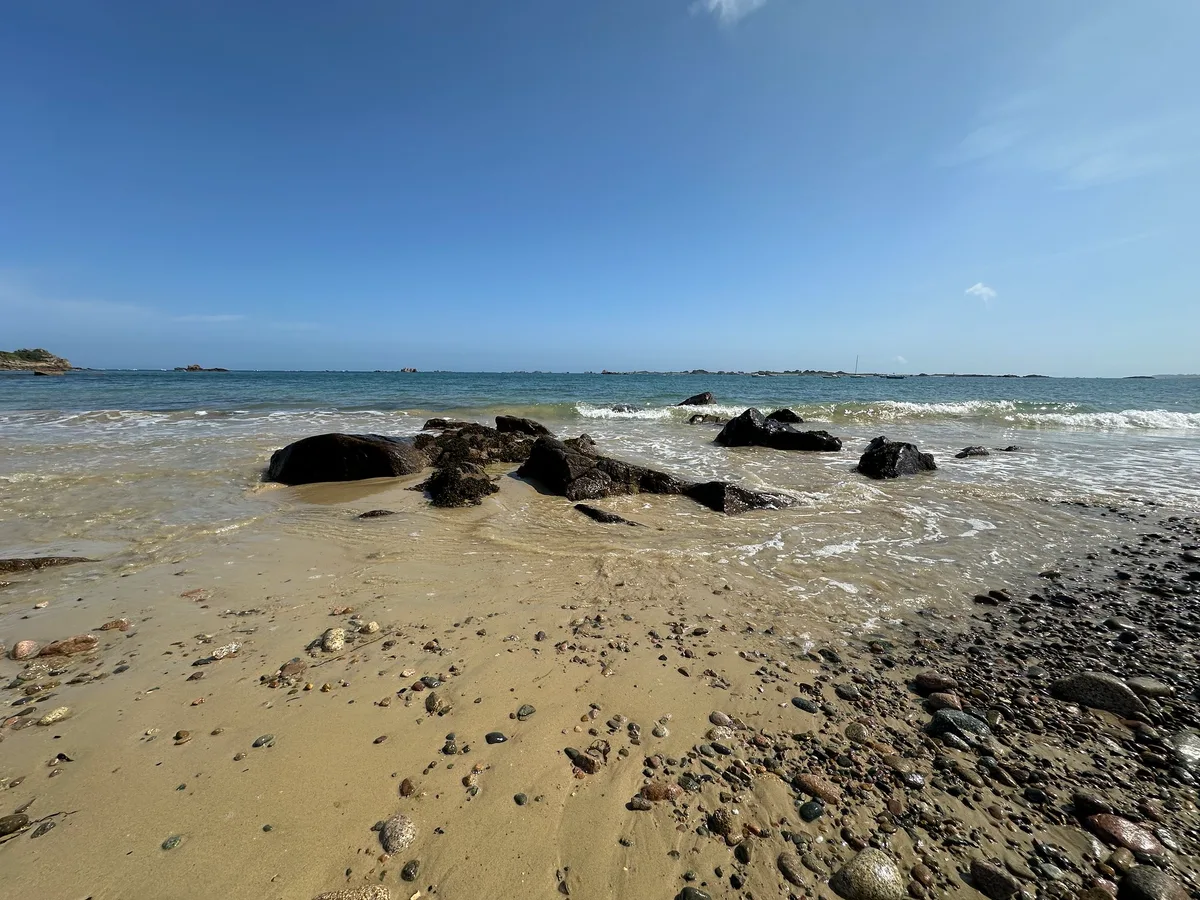
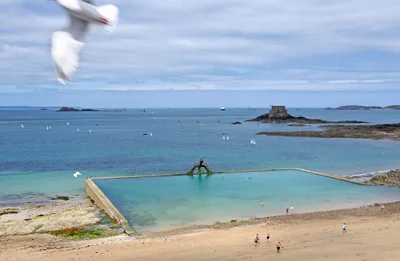
Plage de Porz Hir sits on La Petite Île off the Plougrescant commune in northern Brittany, reached only by a cliff path that keeps visitor numbers reassuringly low. The beach stretches roughly 120 metres of golden sand, framed by heather-covered headlands that turn violet in late summer. Turquoise water laps the shore with surprising clarity for this latitude, and the surrounding granite cliffs give the whole scene a raw, elemental quality. There are zero facilities here — no toilets, no snack bar, no lifeguard — so what you get is pure, unmediated Breton coastline. The wild vibe is the point.
How to get there
The only way in is on foot: hike the cliff path from Pleumeur-Bodou, a walk of roughly 15 minutes daily. There is no parking at beach level — leave your vehicle roadside near the cliff path start. No entry fee applies, but the path is steep and genuinely demanding; factor that into your planning before you set off.
Who it's for
For couples
The steep hike filters out casual visitors, so couples who make the effort are often rewarded with near-solitude on a golden-sand cove backed by heather — bring a picnic and stay as long as you like. It's a genuinely remote, quiet escape that rewards those willing to earn it.
For families
The steep cliff path is unsuitable for young children and there are no facilities on-site, so this beach is not recommended for families with small kids or anyone with limited mobility. Older, sure-footed teenagers who can handle a demanding trail may enjoy the adventure.
Our take
Plage de Porz Hir is not a beach you stumble upon — you earn it with a steep 15-minute cliff path, and that barrier is precisely what keeps it empty and extraordinary. There is no lifeguard, no café, no shower, and no parking at the sand; come fully prepared or don't come at all. Swimming carries a moderate risk rating and should be approached with caution, particularly given the absence of any safety cover. What you get in return is 120 metres of golden sand, turquoise water, and heather headlands with almost no one else around — a combination that is genuinely rare on any European coastline. Visit between June and September for the best conditions; the cliff path turns hazardous in wet Atlantic weather and is best avoided entirely from November through February. Dogs are welcome with no restrictions, which makes it a fine destination for walkers with a four-legged companion. Worth the detour — but only if you go in with open eyes about what it demands.
What to do
A short walk of 0.8 km brings you to Pointe du Château, a dramatic granite promontory worth the detour for its coastal panoramas. Le Gouffre, 1.5 km away, is a striking natural rock formation that channels Atlantic swells into a narrow chasm — impressive even on calm days. The Cimetière Marin de Plougrescant, 2 km out, is a quietly moving maritime cemetery that puts the sea-faring history of this coastline into perspective. For a longer excursion, Île Grande (4 km) offers a bird reserve and megalithic standing stones connected to the mainland by bridge.
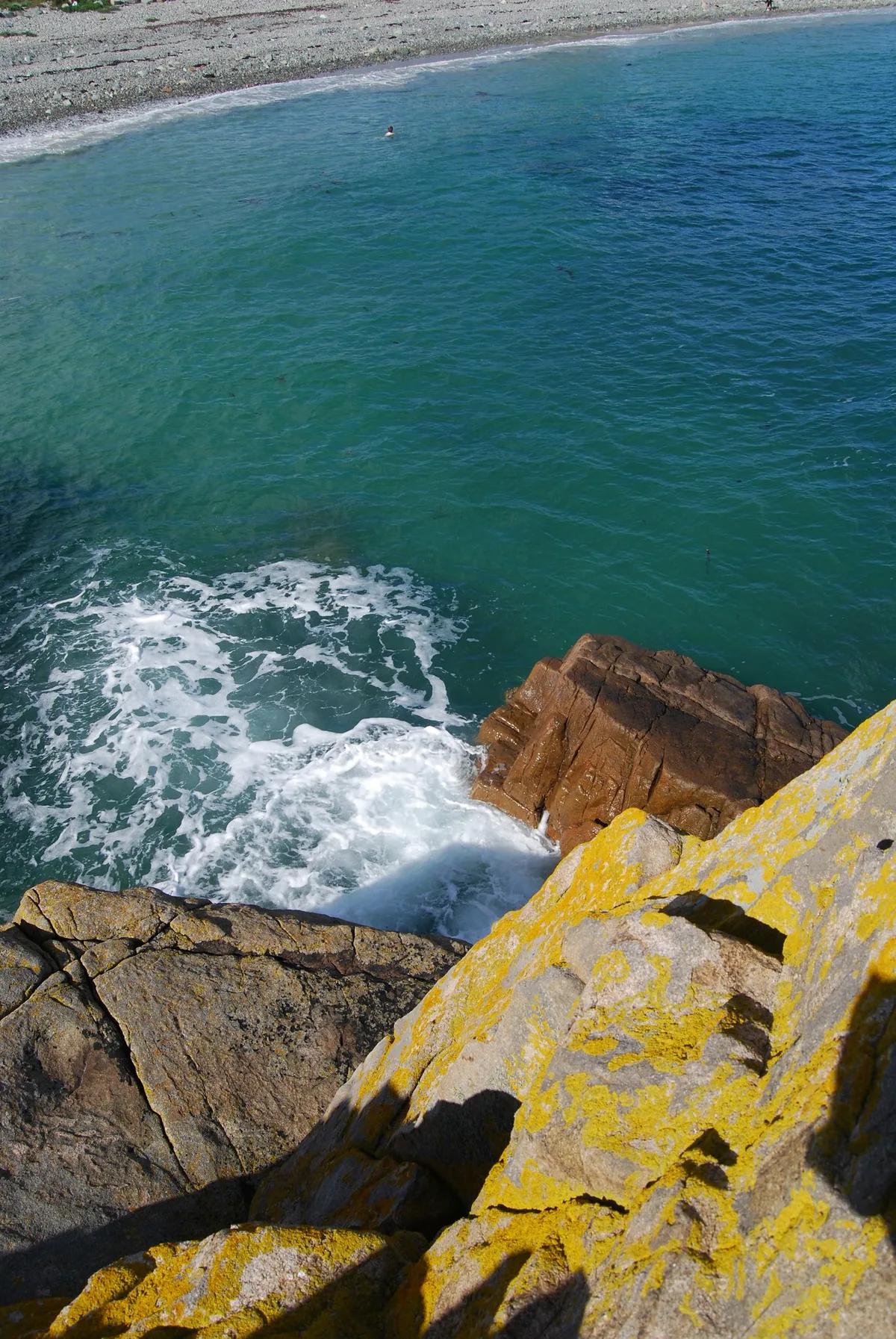
The cliff path overlook is the standout frame: golden sand, turquoise water, and heather in a single shot — shoot mid-morning before any haze builds.
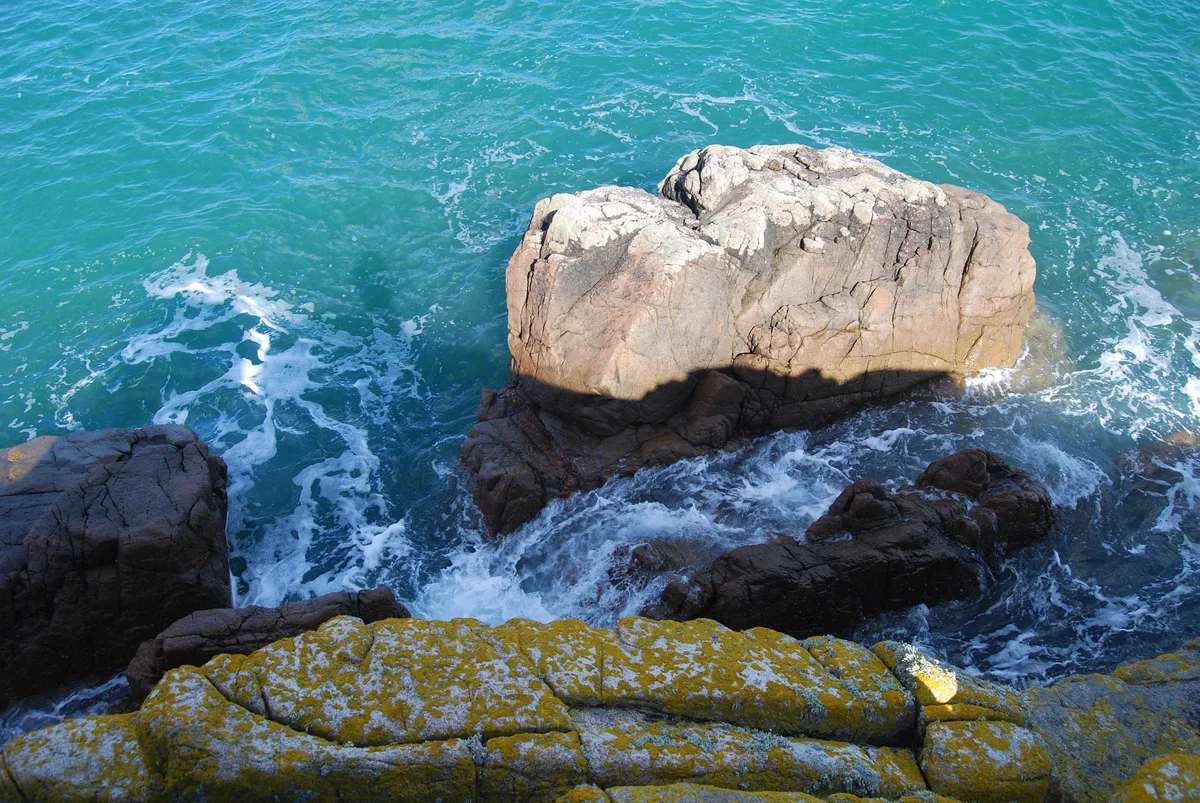
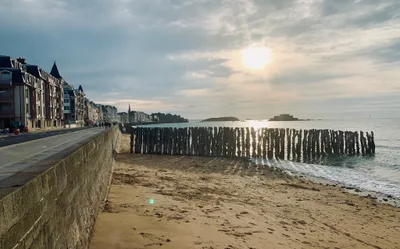
The granite rock formations at the water's edge reward a closer angle, especially at low tide when the texture and colour contrast with the clear water is at its sharpest.
Where to eat
For post-hike crêpes, Krampouz Café is just 1 km from the cliff path start, and Ty Gouffre — also 1 km away — serves fresh local seafood. If you're willing to drive a little further, La Cabane à Huîtres (4.5 km) specialises in oysters, which is about as Breton as lunch gets. Bring your own picnic for the beach itself; there is nothing to buy on-site.
Where to stay
Grand Hotel is the closest lodging option at 7.6 km, offering a comfortable base for exploring this stretch of the Côte de Granit Rose. Le Crustacé, 8.1 km away, is another nearby choice. Both require a short drive to reach the cliff path start each morning.
Photography
The best shots come from the cliff path itself, looking down over the arc of golden sand against turquoise water with heather in the foreground — arrive in the morning when the light hits the cove from the east. The heather headland in late summer (August–September) adds a layer of violet colour that frames the beach dramatically from above.
Good to know
No lifeguard is on duty at any time, and there are no facilities whatsoever, so arrive self-sufficient with water, food, and a first-aid kit. The cliff path is steep and unsuitable for young children or elderly visitors; it is completely inaccessible for wheelchairs. Avoid the beach between November and February — Atlantic winter storms make the path actively dangerous in wet conditions. Leave no trace: pack out everything you bring in, and leave the heather headland exactly as you found it.
GAMES
🕹️ Five minutes of sand?
Three daily games — including the UV simulator set to this beach.
Map
Nearby places
Krampouz Café
Ty Gouffre
Le Merle Moqueur
La Cabane à Huîtres
L'instant T
Grand Hotel
Le Crustacé
Things to see around Pleumeur-Bodou
Île Grande
Island connected by bridge with bird reserve and megalithic standing stones
Radôme de Pleumeur-Bodou
Giant white dome housing France's first transatlantic telecommunications station, now a museum
Côte de Granit Rose
Famous pink granite coastline toward Perros-Guirec
GIFT
🎁 Gift this beach
Its exact coastline, your date, your words — on a print or a PDF you print yourself.
Pors Hir Beach
THAT DAY
Pors Hir Beach, Brittany
© OpenStreetMap contributors
Clean & decorative, or “That day” with the real sky of your date.
Shipping included 3-6 business days
A question before you order? Contact us
Delivered within minutes on the confirmation page and by email: a ZIP with all 4 print sizes (30×40 cm, 12×16″, 50×70 cm, 18×24″), each as a high-resolution PDF and PNG (300 dpi), plus a screen version. Print at home or at any print shop.
Please complete the delivery address.
Please accept the Terms of Sale.
Almost there — the shop opens very soon.
Secure payment · Printed locally in 30+ countries · 7 languages
Frequently asked
The information on this page is provided for guidance only and may evolve. Access conditions, safety and infrastructure can change without notice. Always check official sources before traveling.
Nearest beaches
Other wild beaches in France
More beaches in Brittany
Reviews of this beach
- No reviews yet, what a shame — leave yours and share your experience.