Loya BeachFrance Beach Guide
Wild flysch coast where the tide sets the rules
About
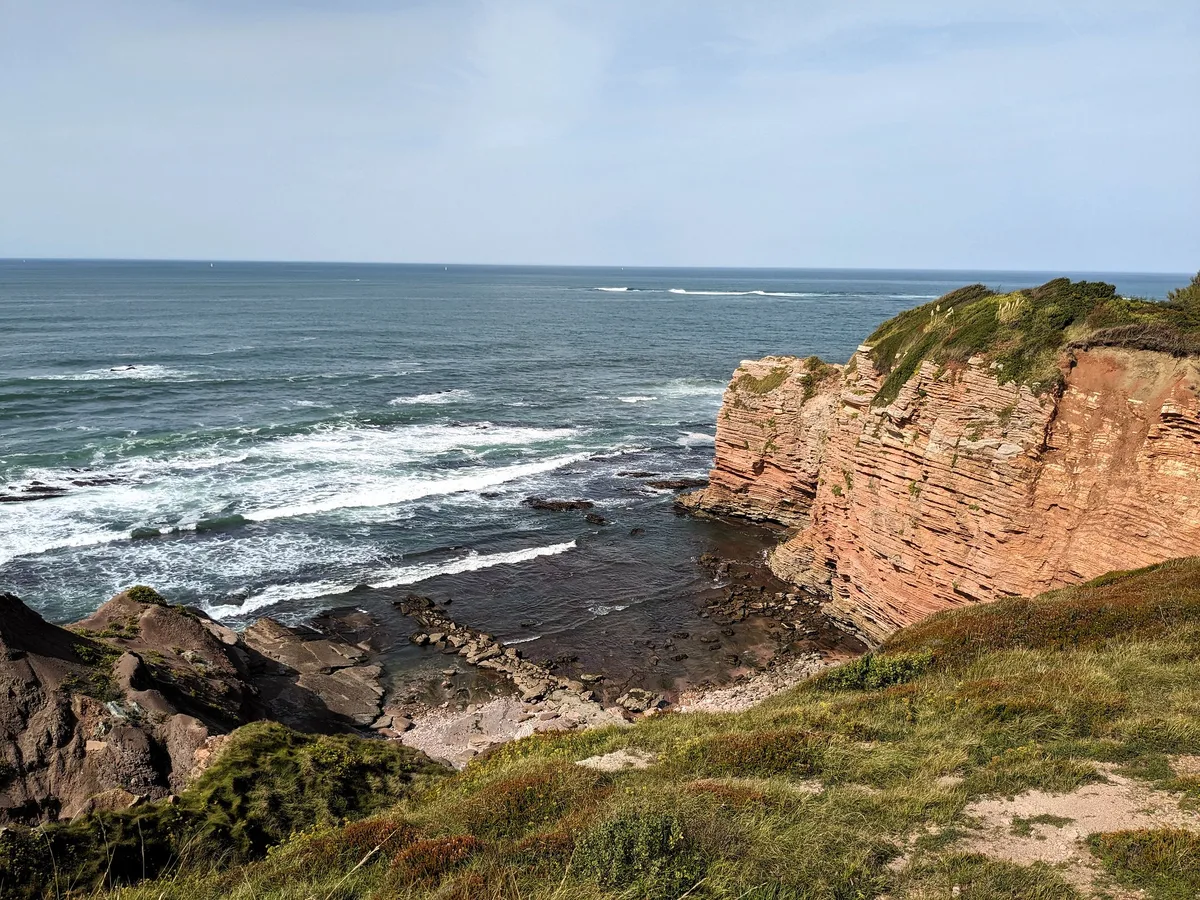
Plage de Loya sits on the Basque coast near Hendaye, a raw and virtually unvisited pocket of shoreline carved into dramatic flysch geological strata. There's no sand to speak of — at high tide the rocks take over completely, leaving only blue Atlantic water and ancient layered stone. Access depends entirely on the tide, and the coastal rock scramble to reach it keeps almost everyone away. It's wild in the truest sense: no facilities, no lifeguard, no management presence. Dogs are welcome with no restrictions, and the silence here is something you won't find on any signposted beach nearby.
How to get there
Reach Plage de Loya on foot only — there's no road access and no parking at the site itself. Park in Hendaye and walk south along the coastal path from south of Pointe Sainte-Anne; the hike takes around 30 minutes. Access to the beach is tide-dependent: you can only reach it within 2 hours either side of low tide, so check tide tables before you leave. The rock scramble requires sure footing and appropriate footwear — this beach is completely inaccessible by wheelchair.
Who it's for
For couples
For couples who want genuine solitude, Loya delivers — virtually unvisited, wild, and dramatic without any of the performance of a popular beach. Time your visit to low tide, scramble out together, and you'll likely have the entire rocky cove to yourselves.
For families
Plage de Loya is not suitable for families with young children or anyone with limited mobility — the rock scramble access is demanding, swimming is dangerous, and there are no facilities of any kind. Families are better served by the beaches closer to Hendaye town.
Our take
Do not come here expecting a beach day — Plage de Loya is a geological spectacle with a strict tidal gatekeeper, and the Atlantic here is not safe to swim in under any circumstances. That said, for anyone willing to check the tide tables, lace up proper footwear, and commit to a 30-minute coastal hike from Hendaye, the reward is extraordinary: flysch strata that read like pages of Earth's history, blue water crashing against ancient rock, and a near-total absence of other visitors. The access challenge is real, not cosmetic — being caught by a rising tide on the rock traverse is a serious risk, and this warning should be taken literally. Come for the geology, the wildness, and the silence. Leave before the tide turns.
What to do
Just 0.4 km away, the Belvédère Pointe Sainte-Anne offers a sweeping coastal viewpoint that puts the flysch landscape into perspective — worth a stop on your way back. The Château d'Abbadia, a remarkable cultural monument about 3 km from the beach, is well worth the detour after your visit. For a broader geological context, the world-famous Flysch de Zumaia across the border in the Spanish Basque Country lies around 25 km away, and the transboundary Baie de Txingudi nature reserve — important for migratory birds — is just 4 km from Hendaye.
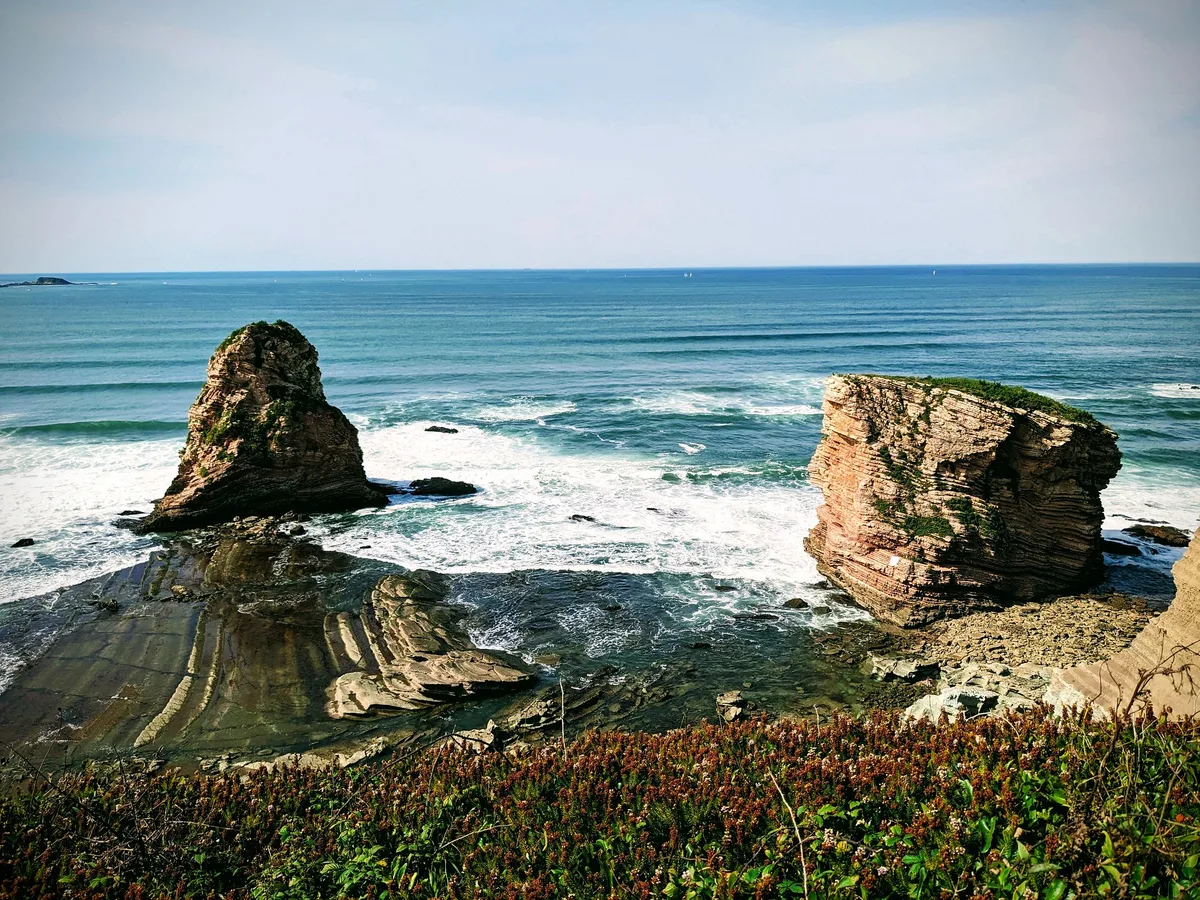
The flysch geological strata — ancient rock layers tilted at dramatic angles against the blue Atlantic — are the defining shot at Loya, best captured at low tide when the full rock platform is exposed.
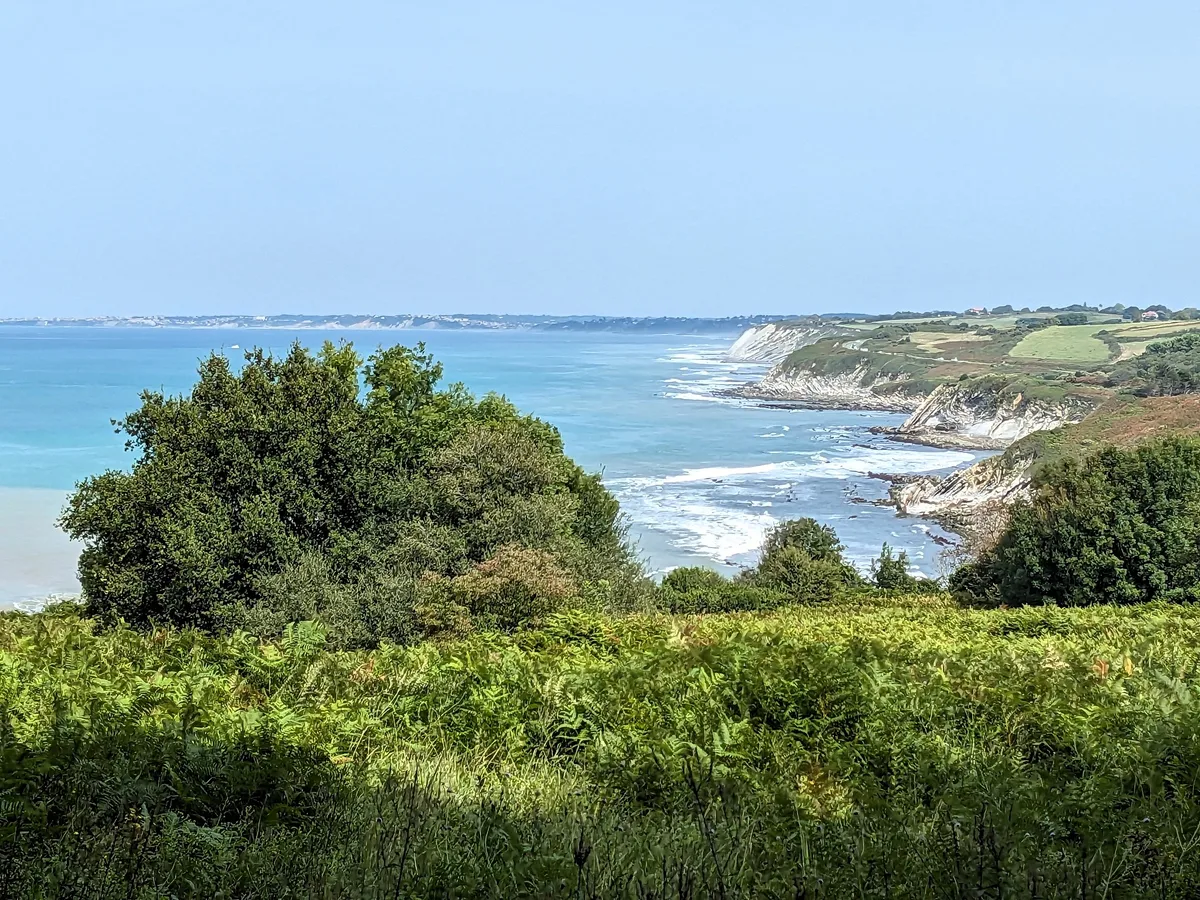
The Belvédère Pointe Sainte-Anne, just 0.4 km along the coastal path, gives an elevated wide-angle view of the entire wild coastline.
Where to eat
There's nothing to eat at the beach itself, so plan ahead. Aguerria is the closest option at 1.2 km, followed by Le Resto de l'Océan and La croisière chez Patxi, both offering regional Basque cooking within 2.5 km of the site. Côté Plage and Gogoko round out the nearby choices — all are in Hendaye, so a post-hike meal is easy to arrange.
Where to stay
Bellevue, at 2.6 km, is the closest place to rest your legs after the scramble. Orhoïtza and Hôtel Serge Blanco are both within 3.5 km and offer comfortable bases in Hendaye. If you need more space, Résidence Orfea Hendaye and San Nikolas hotela are a little further out but still well within reach of the coastal path.
Photography
The flysch strata — those striking diagonal rock layers meeting the blue Atlantic — photograph well when shadows deepen the geological lines. The Belvédère Pointe Sainte-Anne, just 0.4 km away, gives an elevated angle over the whole coastline and is a strong compositional vantage point.
Good to know
Check tide tables before every visit — access is only possible 2 hours either side of low tide, and being caught by a rising tide on the rock traverse is genuinely dangerous. Do not enter the water: swimming is dangerous here, there is no lifeguard, and the Atlantic conditions are unforgiving. Wear sturdy shoes with grip; the rocks are slippery even in dry weather. Avoid the months of November through February, when rough Atlantic conditions and slippery rocks make the coastal scramble hazardous.
GAMES
🕹️ Five minutes of sand?
Three daily games — including the UV simulator set to this beach.
Map
Nearby places
Aguerria
Le Resto de l'Océan
Côté Plage
Gogoko
La croisière chez Patxi
Bellevue
Orhoïtza
Hôtel Serge Blanco
Résidence Orfea Hendaye
San Nikolas hotela
Belvédère Pointe Sainte-Anne
Parc d'aventures et Paintball
Lertxuntxoaren begiratokia
Things to see around Hendaye
Château d'Abbadia
Flysch de Zumaia
World-famous flysch geological formations across the border in the Spanish Basque Country.
Baie de Txingudi
Transboundary estuary nature reserve shared by France and Spain, important for migratory birds.
GIFT
🎁 Gift this beach
Its exact coastline, your date, your words — on a print or a PDF you print yourself.
Loya Beach
THAT DAY
Loya Beach, Nouvelle-Aquitaine
© OpenStreetMap contributors
Clean & decorative, or “That day” with the real sky of your date.
Shipping included 3-6 business days
A question before you order? Contact us
Delivered within minutes on the confirmation page and by email: a ZIP with all 4 print sizes (30×40 cm, 12×16″, 50×70 cm, 18×24″), each as a high-resolution PDF and PNG (300 dpi), plus a screen version. Print at home or at any print shop.
Please complete the delivery address.
Please accept the Terms of Sale.
Almost there — the shop opens very soon.
Secure payment · Printed locally in 30+ countries · 7 languages
Frequently asked
The information on this page is provided for guidance only and may evolve. Access conditions, safety and infrastructure can change without notice. Always check official sources before traveling.
Nearest beaches
Other wild beaches in France
More beaches in Nouvelle-Aquitaine
Reviews of this beach
- No reviews yet, what a shame — leave yours and share your experience.