Marloes SandsUnited Kingdom Beach Guide
Wild Pembrokeshire geology, golden sands, walk-in only
About
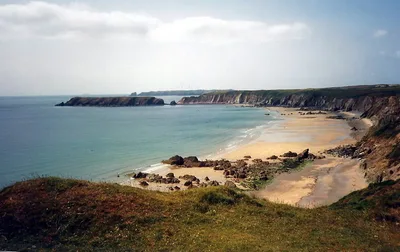
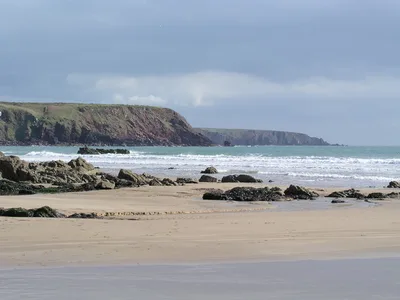
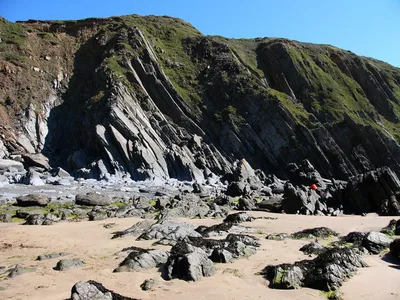
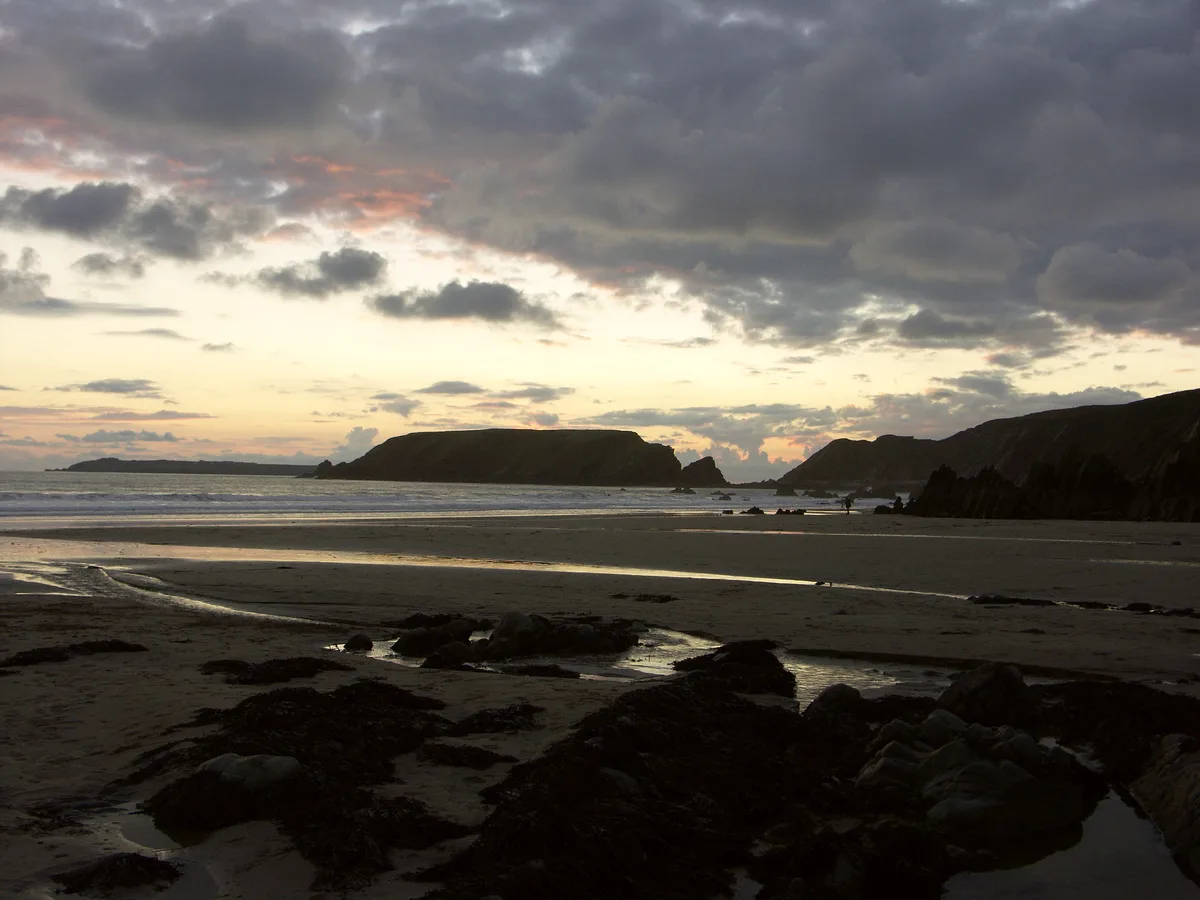
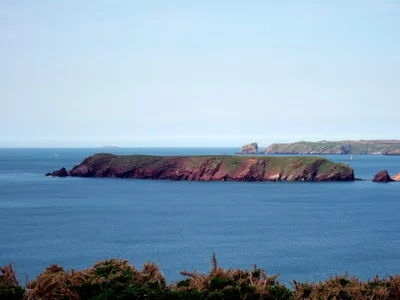
Marloes Sands stretches roughly 1,500 metres of golden sand along the Pembrokeshire Coast in Wales, backed by dramatic Silurian rock stacks that have been folding and tilting for hundreds of millions of years. The Three Chimneys — a row of near-vertical rock fins slicing up from the beach — are the headline geological feature, and they're as striking up close as they are from a distance. Blue water pushes in from the west, and on clear days the outline of Skomer Island sits on the horizon like a promise. This is National Trust land, walk-in only, and the absence of facilities keeps it genuinely quiet.
How to get there
From the National Trust car park at Marloes village, a 15-minute footpath walk brings you down to the beach — there is no vehicle access beyond the car park. Parking is paid: up to 2 hours costs £4, up to 4 hours £6, and a full day £8; National Trust members park free. Charges apply from 1 March to 31 October, 9am–7pm, managed by Pembrokeshire Coast National Park Authority. The footpath is rough and the sand is soft — not suitable for wheelchairs or pushchairs.
Who it's for
For couples
The walk-in only access and genuine quiet make Marloes Sands one of the more private beaches on the Pembrokeshire coast — you can spend hours among the rock stacks without another soul nearby.
For families
Children with an interest in geology will find the Silurian rock formations endlessly explorable, but parents must watch the tide carefully — the beach can be cut off by incoming water, and there is no lifeguard on duty at any time.
Our take
Marloes Sands asks something of you before it gives anything back — a 15-minute walk, no café at the end, no lifeguard, and a tide that will cut you off if you stop paying attention. Respect those terms and what you get is 1,500 metres of golden sand backed by some of the most visually arresting geology on the Welsh coast. The Three Chimneys alone justify the detour. Avoid November through February: this is an exposed, west-facing beach with no shelter, and winter storms make both the walk and the beach genuinely unpleasant. Come in June, July, or August, check the tide times the night before, and bring everything you need because nothing is sold down there.
What to do
The short crossing to Skomer Island, departing from Martin's Haven just 2.5km away, is one of the best wildlife experiences in Wales — the National Nature Reserve is famous for puffins, Manx shearwaters, and grey seals, and boat trips run from that small cove. Back on the mainland, the Dale Peninsula about 10km away is a sheltered sailing and watersports hub worth an afternoon. The beach itself rewards slow exploration: the Three Chimneys and the Silurian rock stacks are a geologist's playground, and the views across to Skomer from the sand are hard to beat.
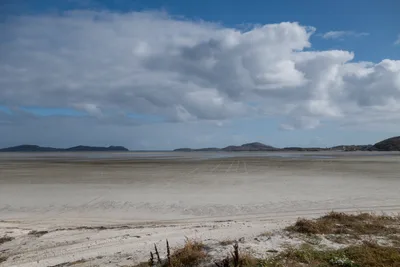
The Three Chimneys rock fins photographed at low tide with wet golden sand in the foreground are the defining shot at Marloes Sands — arrive early for soft light and no other visitors in frame.
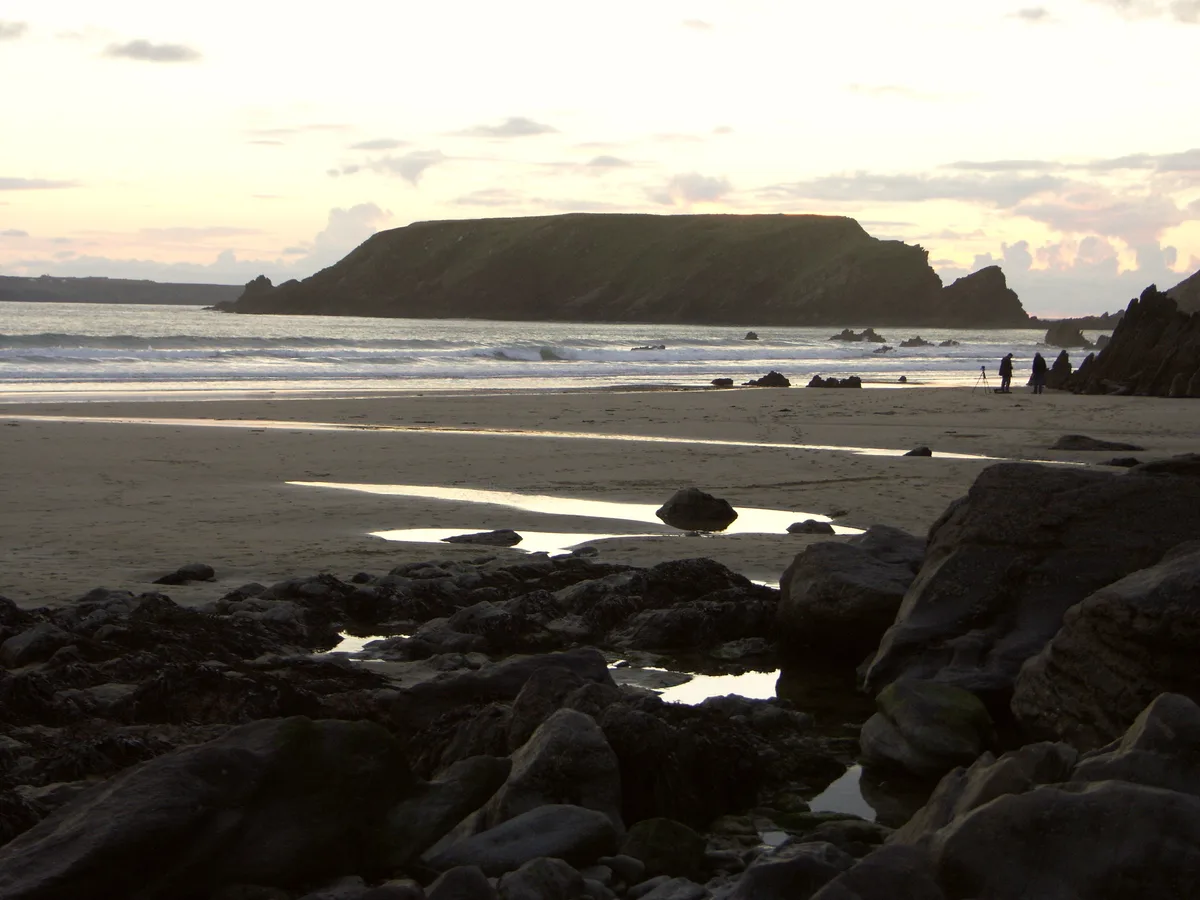
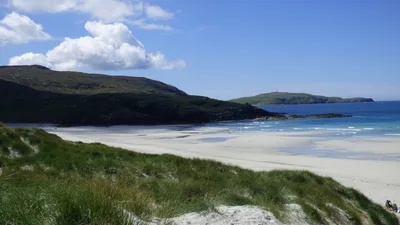
The western end of the beach looking out toward Skomer Island gives a wide, open composition of blue water and distant headlands that works particularly well in the hour before sunset.
Where to eat
The closest option is The Lobster Pot Inn in Marloes village, 1.4km from the beach — convenient for a post-walk meal. A short drive further, The Griffin at 3km has built a strong local reputation, and The Brook Inn at 4.8km is worth the extra distance. Bring your own food and water to the beach itself — there is nothing on site.
Where to stay
The Lobster Pot Inn doubles as a guesthouse right in Marloes village, 2km away, making it the most convenient base. Foxdale Guesthouse and Campsite at 1.5km and West Hook Farm Camping at 2.7km are good options if you want to wake up close to the coast. For something more distinctive, HPB St Brides Castle at 3.6km carries excellent reviews and puts you within easy reach of the beach.
Photography
Shoot the Three Chimneys at low tide in the early morning when the light rakes across the rock fins from the east and the golden sand is still wet and reflective. For Skomer Island views, position yourself at the western end of the beach in the late afternoon when the island sits in silhouette against the blue water.
Good to know
No fires are permitted anywhere on the beach or surrounding National Trust land, and no vehicles may be driven beyond the car park — leave no trace applies strictly here. There is no lifeguard service and no facilities on the beach, so bring everything you need including water, food, and a fully charged phone. The rock stacks are slippery at low tide — wear shoes with grip if you plan to explore them. Critically, the incoming tide can cut off sections of the beach: check tide times before you go and keep a close eye on the water while you're down there.
GAMES
🕹️ Five minutes of sand?
Three daily games — including the UV simulator set to this beach.
Map
Nearby places
The Lobster Pot Inn
The Griffin
The Brook Inn
St. Brides Inn
The Seaside Hatch
The Lobster Pot Inn
Foxdale Guesthouse and Campsite
West Hook Farm Camping
HPB St Brides Castle
Mill Haven Place
Things to see around Marloes
Skomer Island
National Nature Reserve famous for puffins, Manx shearwaters and grey seals; boat trips from Martin's Haven.
Martin's Haven
Small cove and embarkation point for Skomer and Skokholm island boat trips.
Dale Peninsula
Sheltered sailing and watersports hub at the mouth of Milford Haven.
GIFT
🎁 Gift this beach
Its exact coastline, your date, your words — on a print or a PDF you print yourself.
Marloes Sands
THAT DAY
Marloes Sands, Wales
© OpenStreetMap contributors
Clean & decorative, or “That day” with the real sky of your date.
Shipping included 3-6 business days
A question before you order? Contact us
Delivered within minutes on the confirmation page and by email: a ZIP with all 4 print sizes (30×40 cm, 12×16″, 50×70 cm, 18×24″), each as a high-resolution PDF and PNG (300 dpi), plus a screen version. Print at home or at any print shop.
Please complete the delivery address.
Please accept the Terms of Sale.
Almost there — the shop opens very soon.
Secure payment · Printed locally in 30+ countries · 7 languages
Frequently asked
The information on this page is provided for guidance only and may evolve. Access conditions, safety and infrastructure can change without notice. Always check official sources before traveling.
Nearest beaches
Other wild beaches in United Kingdom
Reviews of this beach
- No reviews yet, what a shame — leave yours and share your experience.
Photo credits
Sources and licenses for the photos shown above.
- Photo 1 — Alan Richards · source · CC BY-SA 2.0
- Photo 2 — Jeremy Owen · source · CC BY-SA 2.0
- Photo 3 — Chris Gunns · source · CC BY-SA 2.0
- Photo 4 — Pete Hurford · source · Public Domain
- Photo 5 — Pete Hurford · source · Public Domain
- Photo 6 — ceridwen · source · CC BY-SA 2.0