Porth Mawr BeachUnited Kingdom Beach Guide
Wild volcanic rock pools, coast path access, no sand
About
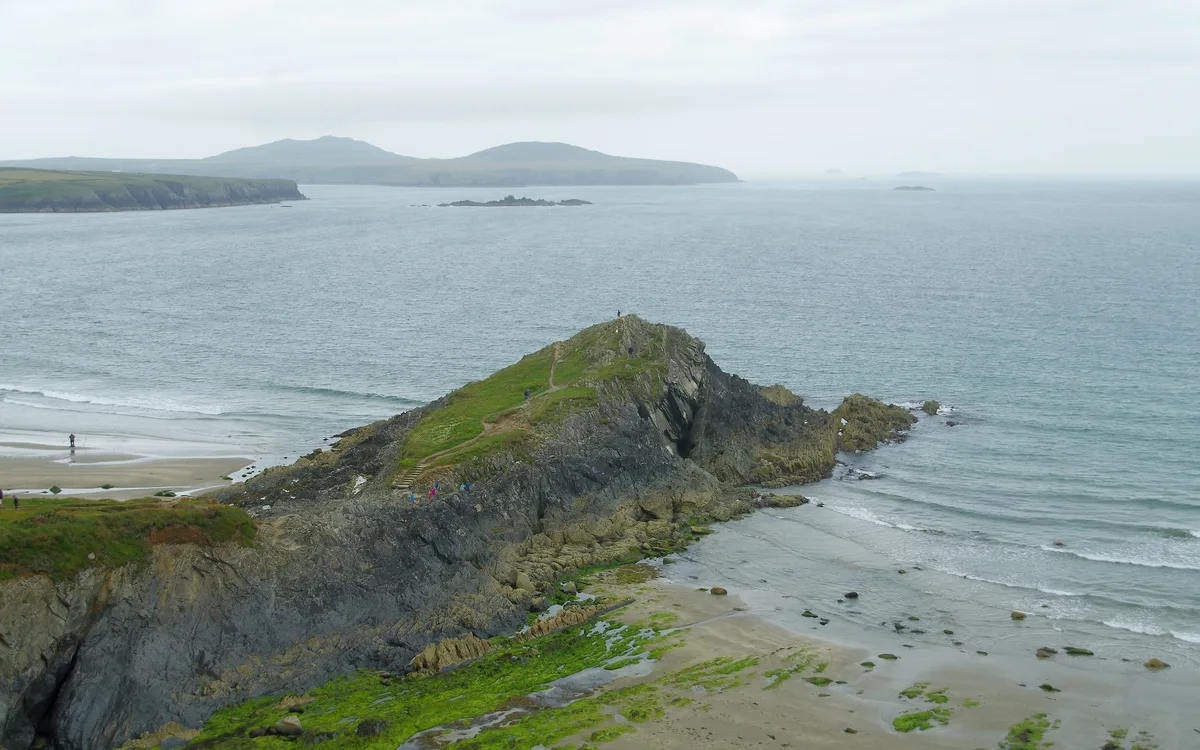
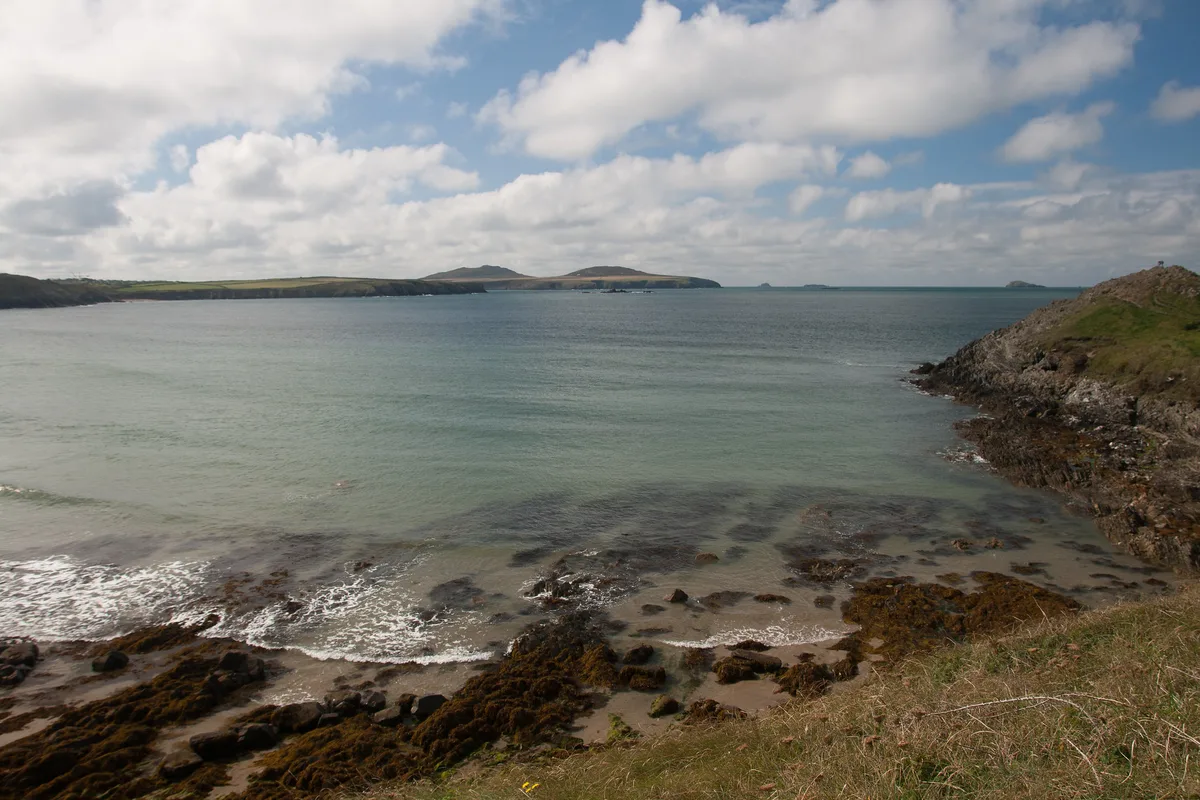
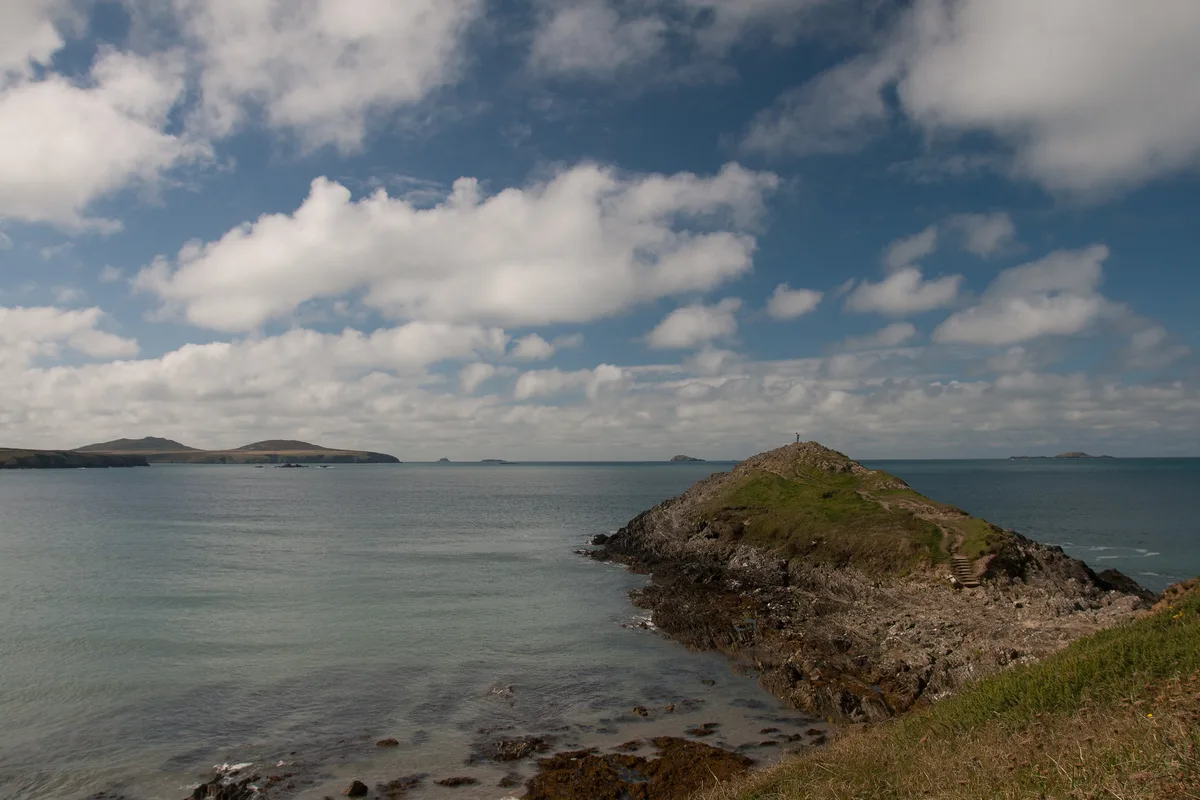
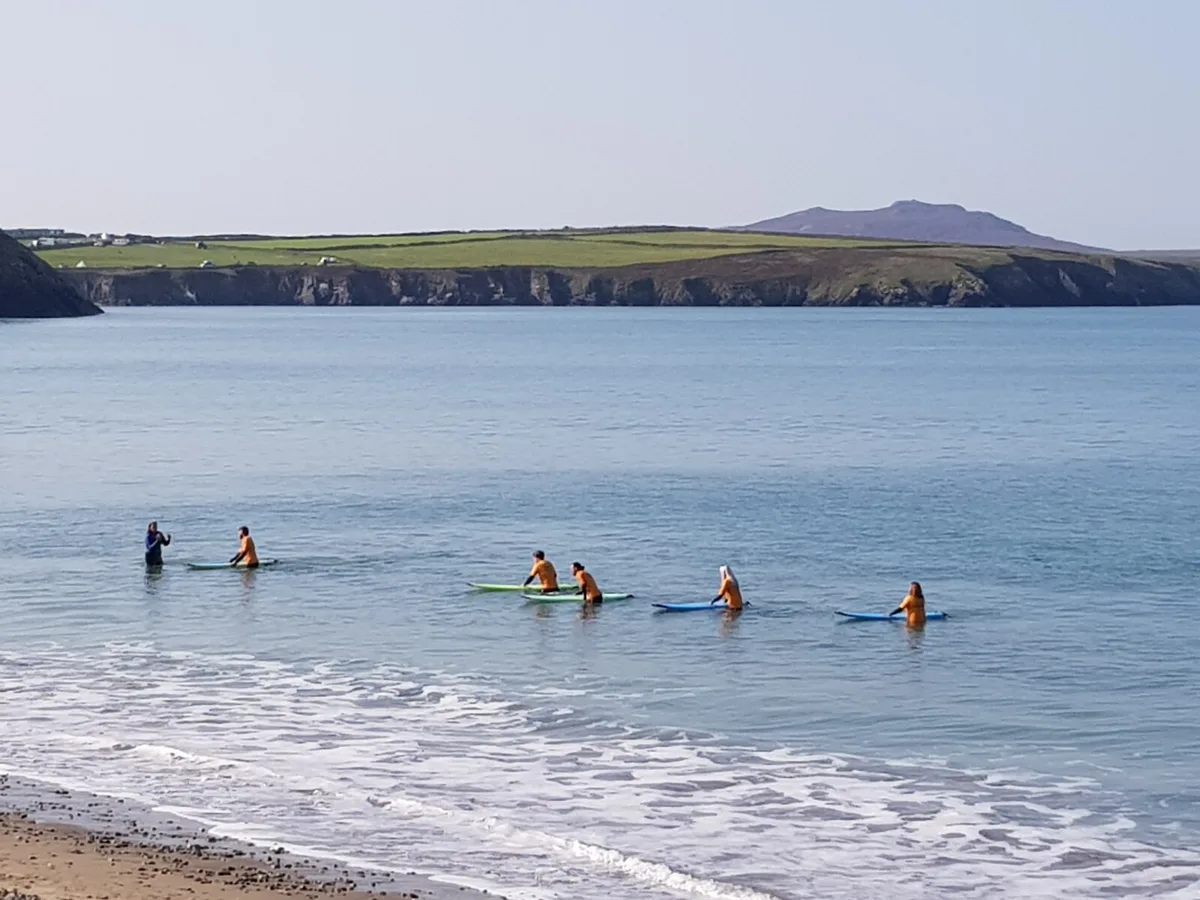
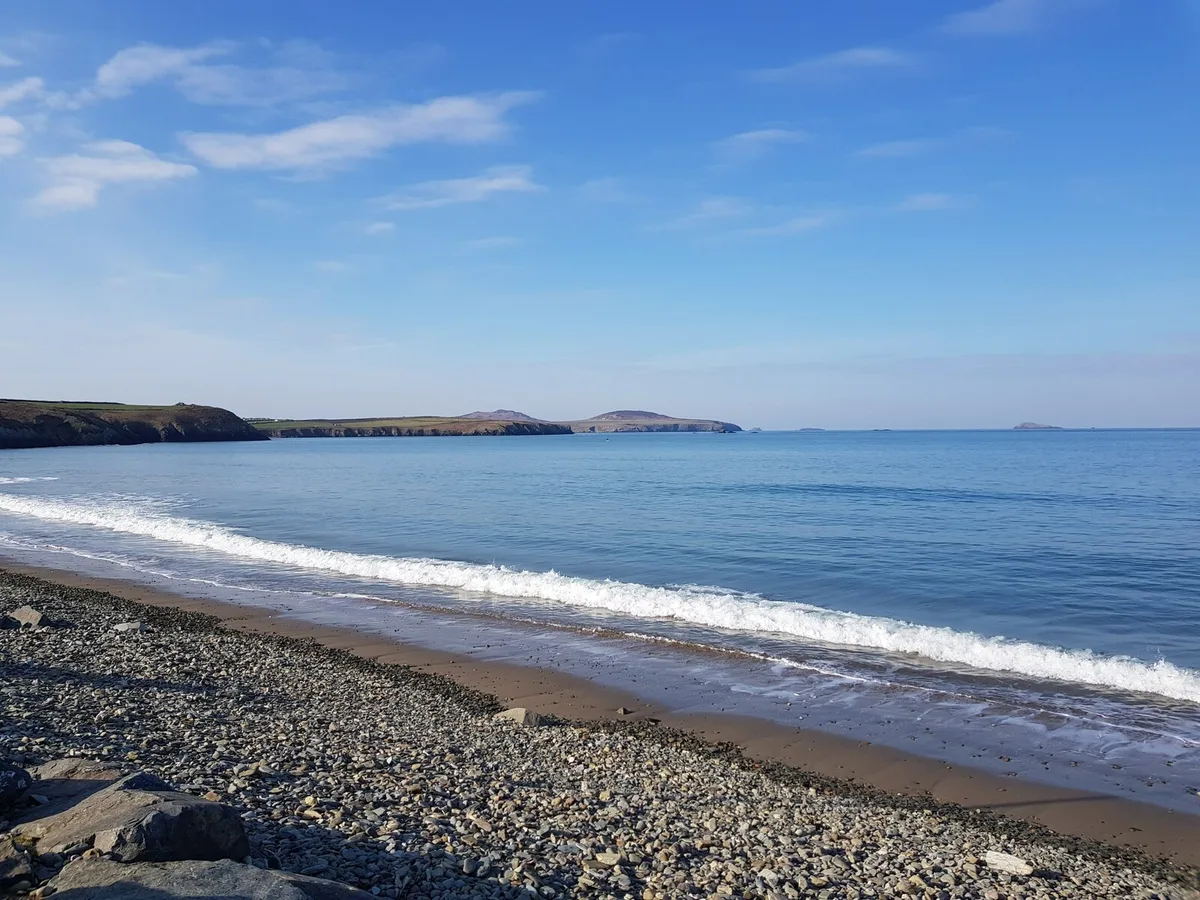
Traeth Porth Mawr sits on the Pembrokeshire coast near St Davids, tucked away on the island of Carreg yr Esgob and hidden from the main beach. It's a raw, elemental spot — no sand here, just ancient volcanic rock shelf platforms dropping into crystal-clear Atlantic water. Tidal pools scatter across the rock, alive with marine life, and the views out toward the open ocean are wide and uninterrupted. The coast path is the only way in, which keeps it genuinely quiet even in summer. This is Pembrokeshire at its most unpolished.
How to get there
Traeth Porth Mawr is reachable only on foot via the coast path — a roughly 10-minute hike from the Whitesands Bay National Trust car park. There's no road access to the beach itself, so lace up before you go. Parking at the shared Whitesands Bay NT car park is paid, costing approximately £5–7; National Trust members get in free.
Who it's for
For couples
The coast path approach and the quiet, wild atmosphere make this a genuinely private escape — you're unlikely to share the rock platforms with more than a handful of people, even in summer.
For families
Older children who are steady on their feet will love exploring the natural tidal pools, but parents should keep a close eye — the rock surfaces are slippery and there's no lifeguard. Not suitable for toddlers or pushchairs given the rough coast path and uneven rock platform.
Our take
Traeth Porth Mawr demands honesty upfront: the rock surfaces are genuinely hazardous when wet, there's no lifeguard, and Atlantic swell can make water entry dangerous — check conditions before you go anywhere near the water's edge. That said, if you visit on a calm summer day with the right footwear, this is one of the most rewarding spots on the Pembrokeshire coast. The 10-minute walk from Whitesands Bay filters out the casual visitor, and what you find at the end is a raw volcanic platform with crystal-clear water and tidal pools that feel entirely your own. It's not a beach for sunbathing or a swim on a whim — it's a place for people who want geology underfoot, snorkelling in clear water, and a view that hasn't been packaged for anyone. Come between June and September, avoid the winter months when the rock platforms become genuinely dangerous in swell and low light, and bring a packed lunch because there's nothing on-site. Worth every step of the path.
What to do
St Davids Head, just 1.5km away, is an Iron Age promontory fort with sweeping views toward Ramsey Island — well worth the short walk. St Davids Cathedral, around 3km from the beach, is a remarkable 12th-century building sitting at the heart of the UK's smallest city. For wildlife, Ramsey Island RSPB Reserve runs boat trips from St Justinian's, 2.1km away, where you can spot grey seals and puffins in season.
The natural tidal pools set into the volcanic rock shelf make a striking foreground shot, especially when filled with clear water reflecting the sky above.
Shoot from the coast path looking back toward the rock platforms with the Atlantic behind for a wide, dramatic frame. Early morning light before other walkers arrive gives you the cleanest, most uncluttered compositions.
Where to eat
Tŷ-Bach-Twt is the closest option at 2.6km — a handy stop before or after the coast path walk. For something more substantial, The Shed Bistro is about 9.8km away. Pack your own lunch if you want to eat at the beach; there's nothing on-site.
Where to stay
Whitesands Camping is just 0.2km from the car park and rated 4.7/5 across nearly 116 reviews — hard to beat for proximity. YHA St Davids at 0.9km is a solid budget option with a 4.7/5 rating. Further along, Lleithyr Farm Holiday Park (1.4km, 4.8/5) and Pencarnan Farm Camping & Caravan Park (1.4km, 4.7/5) both offer well-reviewed pitches within easy reach.
Photography
The volcanic rock shelf platforms photograph best in the golden hour before sunset, when low light catches the texture of the rock and the crystal-clear tidal pools reflect the sky. Shoot from the higher sections of the coast path looking down over the platforms for the most dramatic composition.
Good to know
No fires are permitted at any point on or around the beach — respect this absolutely. The rock surfaces are extremely slippery when wet, so take real care with every step, especially after rain or at the tide's edge. There is no lifeguard service here, and the beach is exposed to Atlantic swell — always check sea conditions before entering the water. Dogs are welcome year-round on the rock platform, which makes it a good off-season escape for dog owners.
GAMES
🕹️ Five minutes of sand?
Three daily games — including the UV simulator set to this beach.
Map
Nearby places
Tŷ-Bach-Twt
The Shed Bistro
Whitesands Camping
YHA St Davids
St David's Lleithyr Meadow Caravan and Motorhome Club Campsite
Pencarnan Farm Camping & Caravan Park
Lleithyr Farm Holiday Park
St Justinian's
St. Davids Cathedral
Llys yr Esgob, Tyddewi / St Davids Bishop's Palace
Things to see around St Davids
St Davids Head
Iron Age promontory fort on a dramatic headland with views to Ramsey Island.
St Davids Cathedral
12th-century cathedral in the UK's smallest city.
Ramsey Island RSPB Reserve
RSPB reserve with grey seals and puffins; boat trips from St Justinians.
GIFT
🎁 Gift this beach
Its exact coastline, your date, your words — on a print or a PDF you print yourself.
Porth Mawr Beach
THAT DAY
Porth Mawr Beach, Wales
© OpenStreetMap contributors
Clean & decorative, or “That day” with the real sky of your date.
Shipping included 3-6 business days
A question before you order? Contact us
Delivered within minutes on the confirmation page and by email: a ZIP with all 4 print sizes (30×40 cm, 12×16″, 50×70 cm, 18×24″), each as a high-resolution PDF and PNG (300 dpi), plus a screen version. Print at home or at any print shop.
Please complete the delivery address.
Please accept the Terms of Sale.
Almost there — the shop opens very soon.
Secure payment · Printed locally in 30+ countries · 7 languages
Frequently asked
The information on this page is provided for guidance only and may evolve. Access conditions, safety and infrastructure can change without notice. Always check official sources before traveling.
Nearest beaches
Other wild beaches in United Kingdom
Reviews of this beach
- No reviews yet, what a shame — leave yours and share your experience.
Photo credits
Sources and licenses for the photos shown above.
- Photo 1 — mattbuck4950 · source · CC BY-SA 2.0
- Photo 2 — Odd Wellies · source · Public Domain
- Photo 3 — Odd Wellies · source · Public Domain
- Photo 4 — Andy F · source · CC BY-SA 2.0
- Photo 5 — Jeff Gogarty · source · CC BY-SA 2.0
- Photo 6 — Jeff Gogarty · source · CC BY-SA 2.0