Kua BayUnited States Beach Guide
White sand meets raw lava — respect the shore break
About
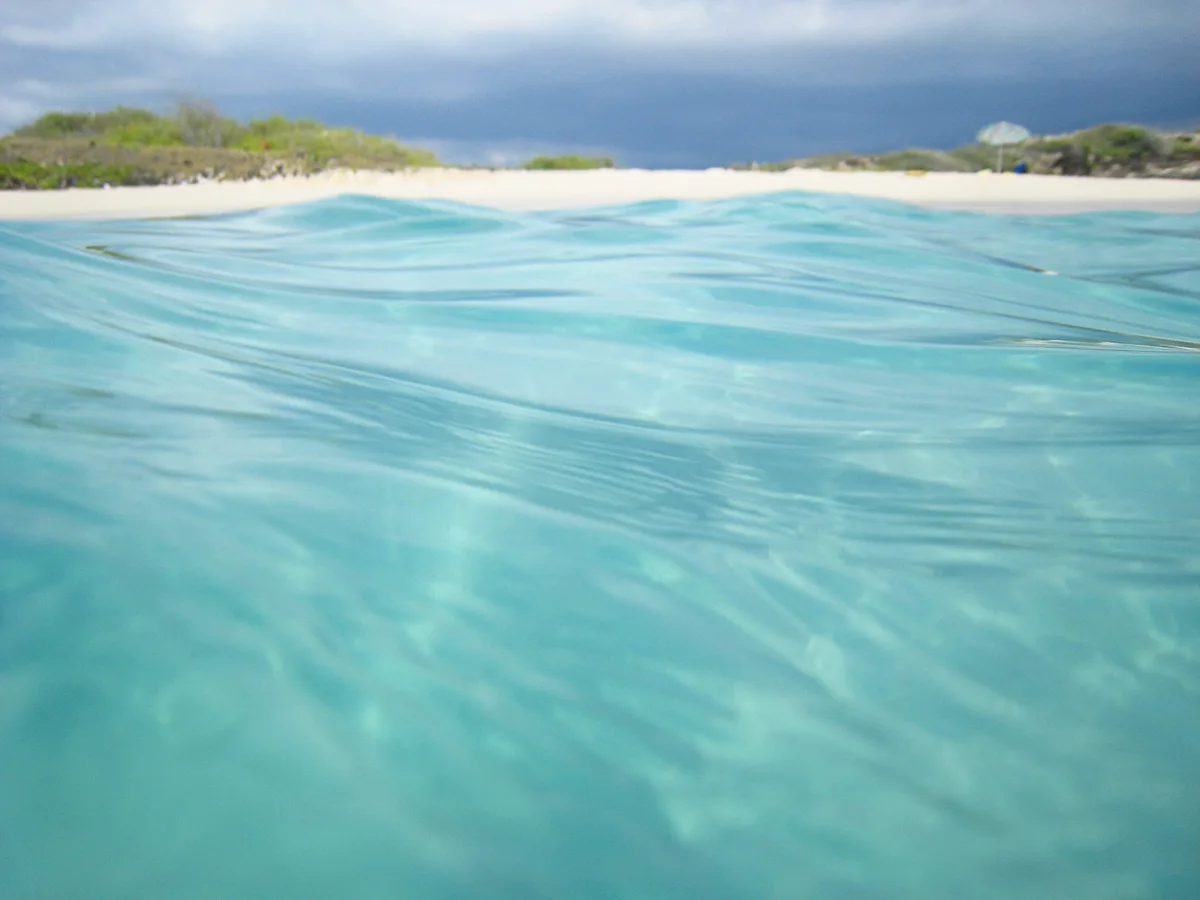
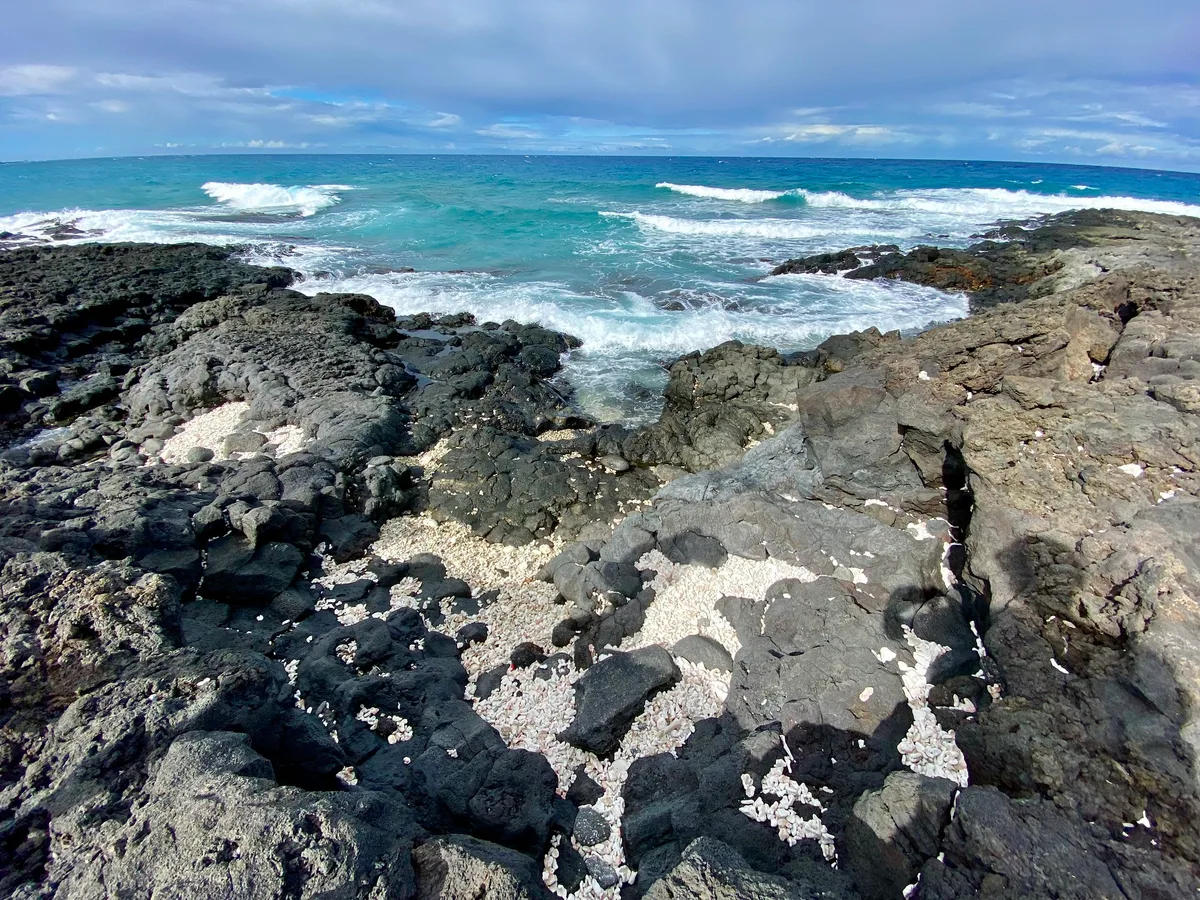
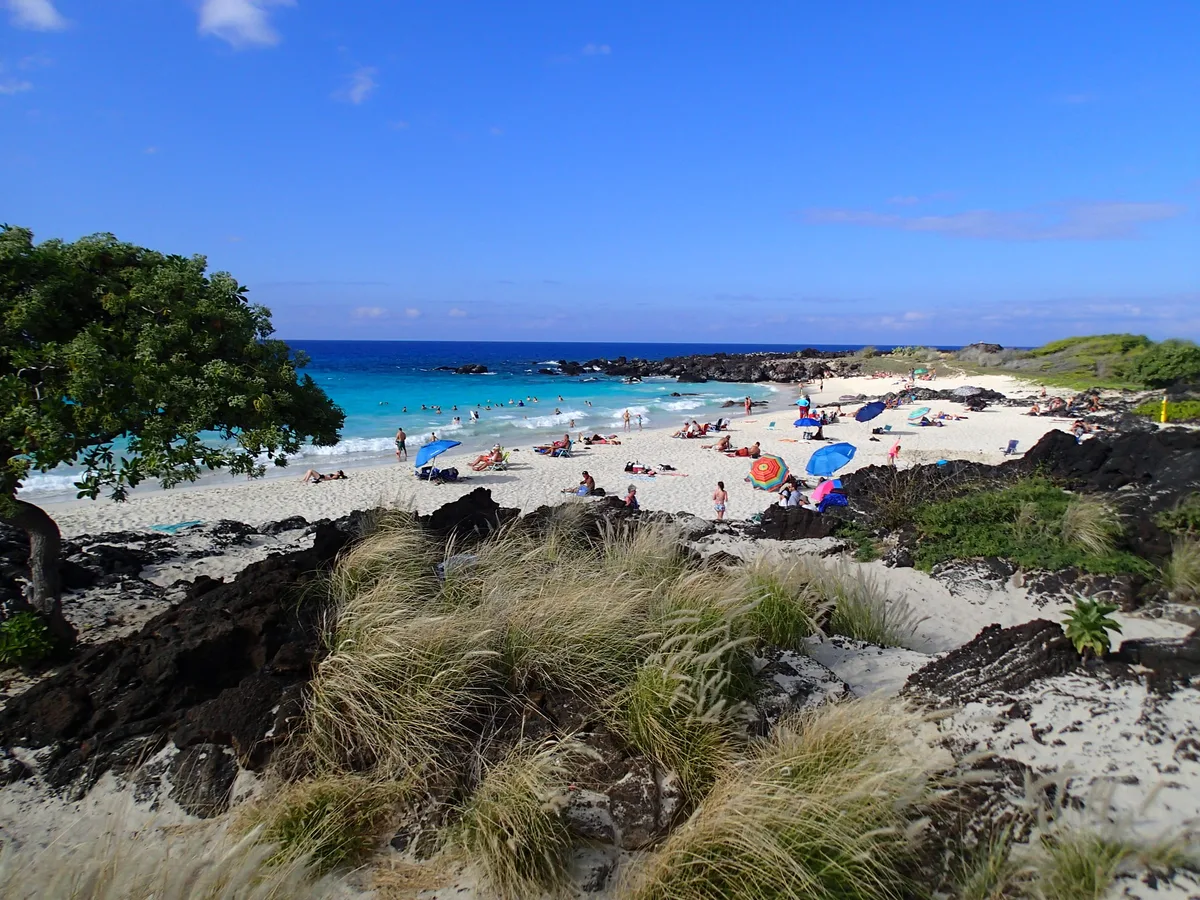
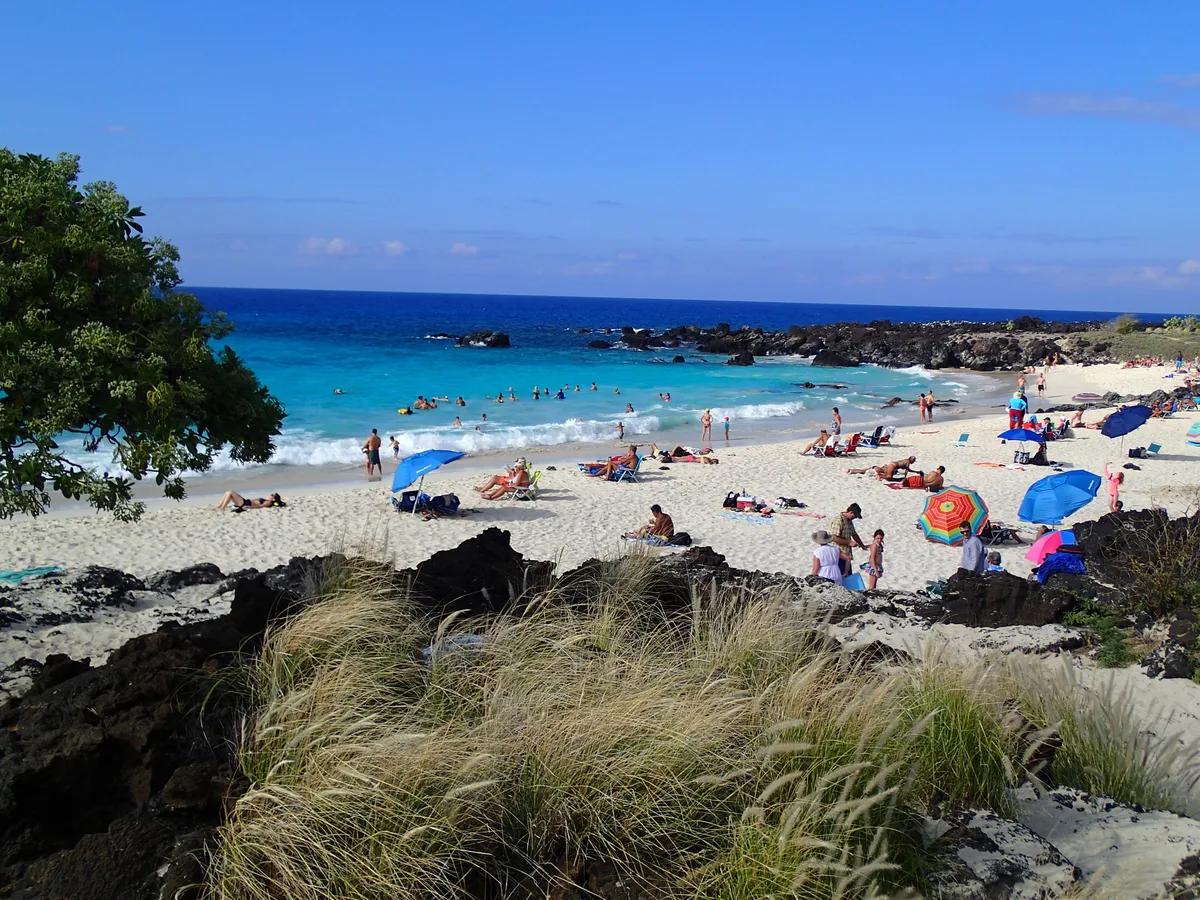
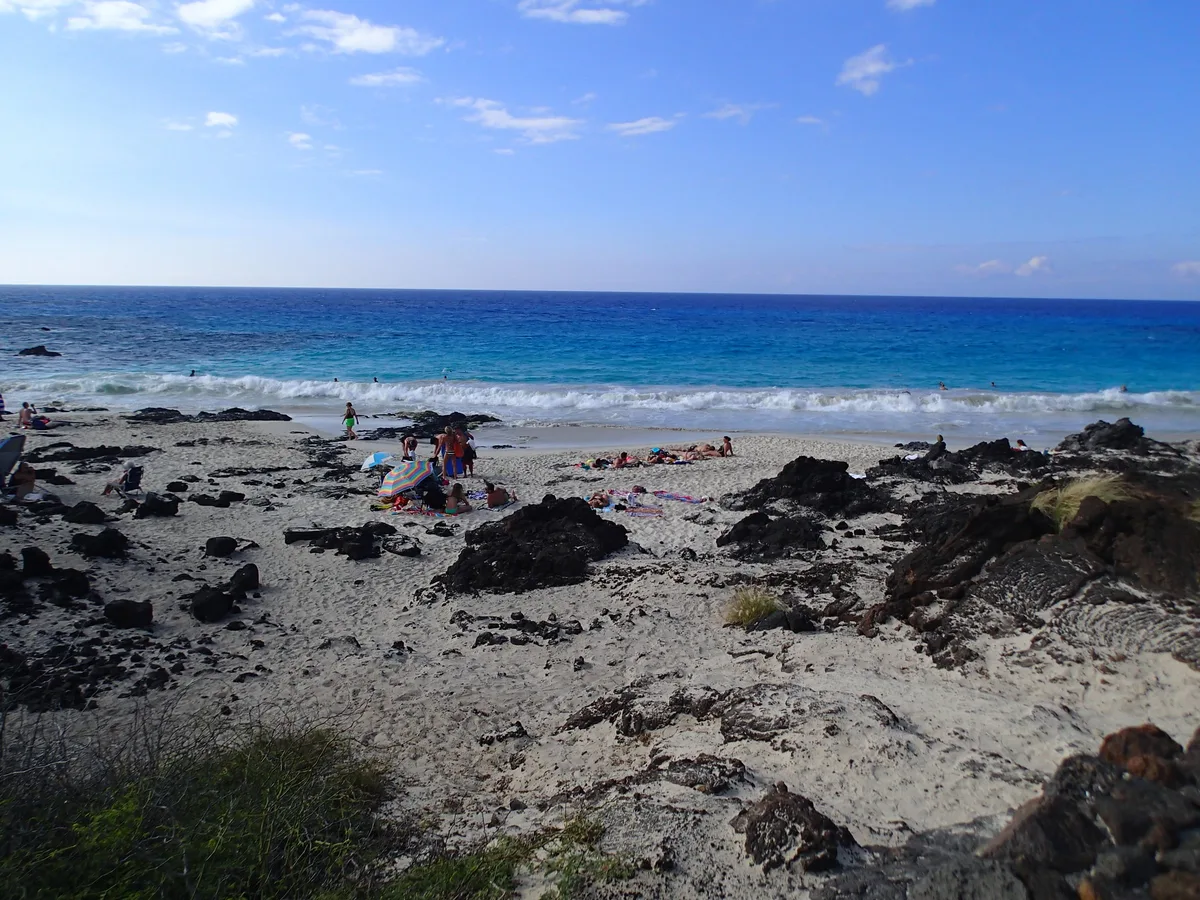
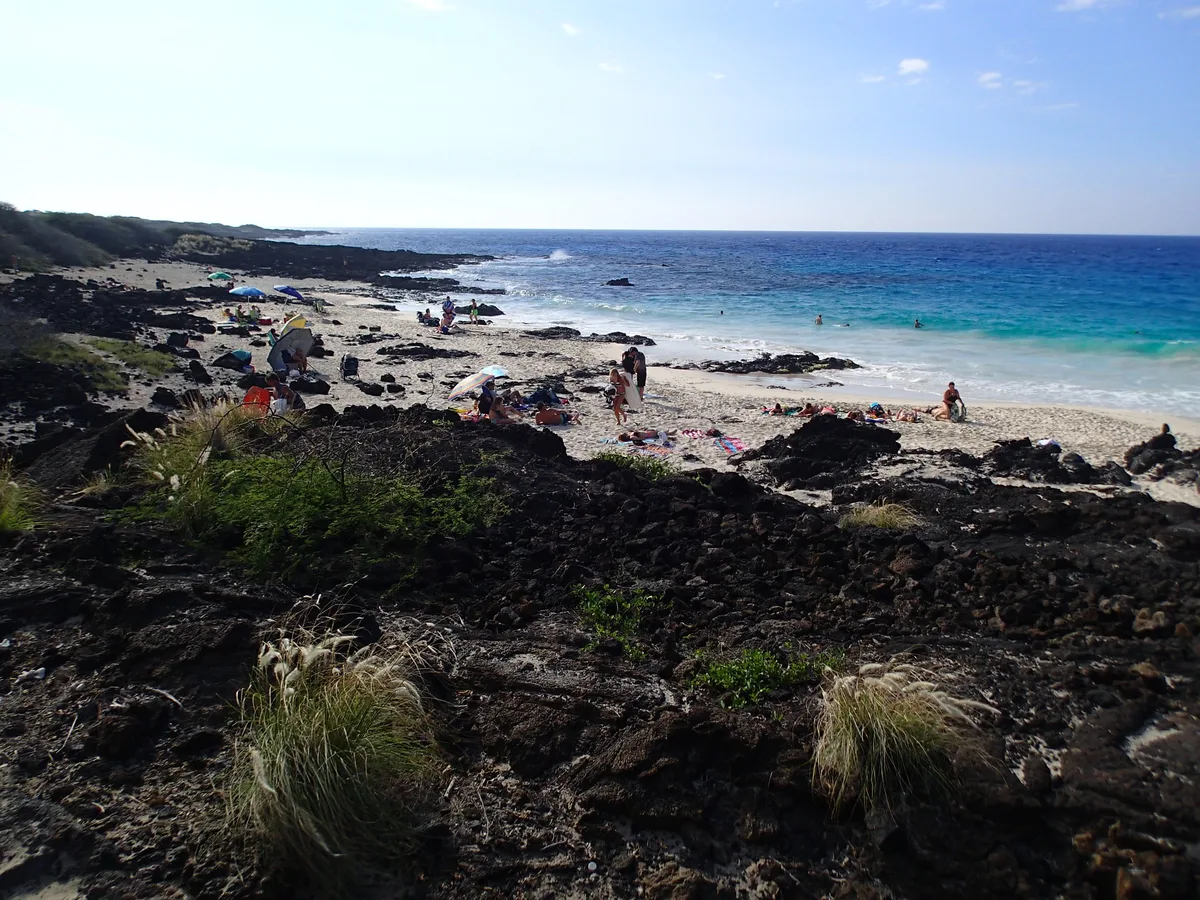
Kua Bay sits inside a state park on the Big Island's Kona coast, where a crescent of white sand meets black lava in a striking visual contrast. The water is crystal clear, but the steep shore break hits hard — this is a beach to watch as much as swim. No shade vegetation softens the scene, so the sun bears down on the sand and lava alike, making the light intense and the heat real. It's quiet on weekdays, wild in character, and the kind of place that earns its reputation through raw beauty rather than resort polish.
How to get there
Drive from Kailua-Kona — it's about 34 minutes by car. The beach sits within a state park with a small parking lot; parking costs $10 per vehicle and entry is $5 per person, both waived for Hawaii residents with a valid Hawaii state ID. The lot fills quickly on weekends, so arrive early. A paved path leads to the beach edge, though the sand and lava terrain beyond is not wheelchair accessible.
Who it's for
For couples
Kua Bay's quiet weekday atmosphere and striking white-sand-on-black-lava scenery make it a compelling stop for couples who want raw coastal beauty without the resort scene — just bring shade and manage expectations about swimming.
For families
Families with young children should approach with caution: there is no lifeguard, no shade, dangerous shore break, and rip currents are possible. Older children who understand water safety may enjoy watching the bodysurfers, but this is not a gentle paddling beach.
Our take
Do not enter the water without reading the conditions carefully — rip currents are real, the shore break is steep and powerful, and there is no lifeguard on duty. That warning stated plainly, Kua Bay delivers white sand against black lava, crystal-clear water, and a state park setting that keeps the numbers down. Skip June, July, and August — summer south swells make the shore break dangerous for most people. The dry season from November through April offers the most manageable conditions, though 'manageable' here never means 'tame'. Come for the landscape, the bodysurfing energy, and the wild Kona coast character — not for a lazy swim.
What to do
Bodysurfing is the signature activity here when conditions allow, though you must read the water carefully before entering. Just 1.5 km away, Maniniʻowali Beach offers calmer entry conditions and is worth combining into the same visit. Kikaua Point is another nearby stop at 1.5 km, and the Kaloko-Honokōhau National Historical Park — about 14.3 km away — preserves ancient Hawaiian fishponds, petroglyphs, and coastal trails that add real cultural depth to a Kona coast day.
The white sand framed against the black lava edge is the defining shot — position yourself at the lava boundary at the beach's flanks for maximum contrast.
The shore break itself, captured from a safe distance on dry sand, delivers raw power in a single frame that no filter needs to improve.
Where to eat
The closest dining options are a short drive from the park. The Hualālai Canoe Club, an American restaurant about 2.1 km away, is the nearest option, followed by Residents' Beach House at 2.6 km and the Hualalai Grille steakhouse at 2.8 km. Beach Tree, serving American and Italian food, is 2.9 km out — pack a cooler for the beach itself, as there is nothing on-site.
Where to stay
The Four Seasons Resort Hualalai is the closest hotel, sitting just 2.9 km from the beach and offering a polished base for exploring the Kona coast. Kona Village, A Rosewood Resort, is 3.7 km away and another strong option for those wanting to stay close to the state park.
Photography
Shoot in the early morning when the low angle catches the white sand against the black lava with minimal harsh shadows — the contrast is the shot. The shore break itself, photographed from the dry sand at a safe distance, makes for dramatic images that honestly capture the beach's wild character.
Good to know
No camping, no fires, and no dogs are permitted — these are state park rules, not suggestions. Most critically: no lifeguard is on duty, rip currents are possible, and the shore break is powerful, especially in winter months and during summer south swells. When red flags are posted, stay out of the water — no exceptions. Bring serious sun protection; there is zero shade on this beach.
GAMES
🕹️ Five minutes of sand?
Three daily games — including the UV simulator set to this beach.
Map
Nearby places
The Hualālai Canoe Club
Residents' Beach House
Hualalai Grille
Beach Tree
Ke'olu Clubhouse
Four Seasons Resort Hualalai
Kona Village, A Rosewood Resort
Manini'owali Beach (Kua Bay's neighbor)
Kaloko-Honokōhau National Historical Park
Pu'uhonua o Hōnaunau National Historical Park
Things to see around Hawaii County
Manini'owali Beach (Kua Bay's neighbor)
Larger white-sand beach in the same state park with calmer entry conditions.
Kaloko-Honokōhau National Historical Park
Ancient Hawaiian fishponds, petroglyphs, and coastal trails preserving pre-contact settlement.
Pu'uhonua o Hōnaunau National Historical Park
Sacred place of refuge with reconstructed heiau and royal grounds on the Kona coast.
GIFT
🎁 Gift this beach
Its exact coastline, your date, your words — on a print or a PDF you print yourself.
Kua Bay
THAT DAY
Kua Bay, Hawaii
© OpenStreetMap contributors
Clean & decorative, or “That day” with the real sky of your date.
Shipping included 3-6 business days
A question before you order? Contact us
Delivered within minutes on the confirmation page and by email: a ZIP with all 4 print sizes (30×40 cm, 12×16″, 50×70 cm, 18×24″), each as a high-resolution PDF and PNG (300 dpi), plus a screen version. Print at home or at any print shop.
Please complete the delivery address.
Please accept the Terms of Sale.
Almost there — the shop opens very soon.
Secure payment · Printed locally in 30+ countries · 7 languages
Frequently asked
The information on this page is provided for guidance only and may evolve. Access conditions, safety and infrastructure can change without notice. Always check official sources before traveling.
Nearest beaches
Other wild beaches in Hawaii
More beaches in Hawaii
Reviews of this beach
- No reviews yet, what a shame — leave yours and share your experience.
Photo credits
Sources and licenses for the photos shown above.
- Photo 1 — Hitchster · source · CC BY 2.0
- Photo 2 — thepnw4life · source · CC BY-ND 2.0
- Photo 3 — alebowler · source · CC BY-SA 2.0
- Photo 4 — alebowler · source · CC BY-SA 2.0
- Photo 5 — alebowler · source · CC BY-SA 2.0
- Photo 6 — alebowler · source · CC BY-SA 2.0