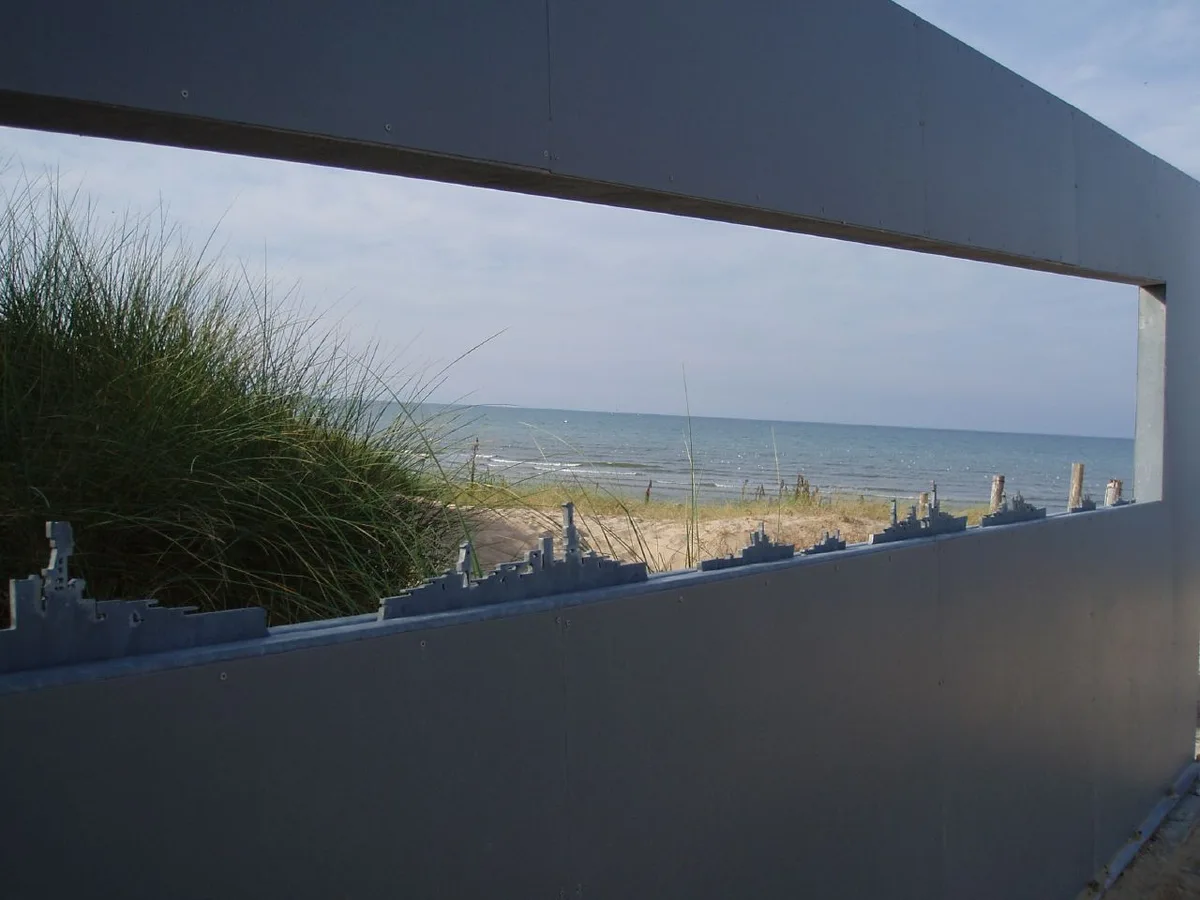
Juno BeachFrance Beach Guide
Golden sands, grey seas, and Canada's greatest sacrifice
About
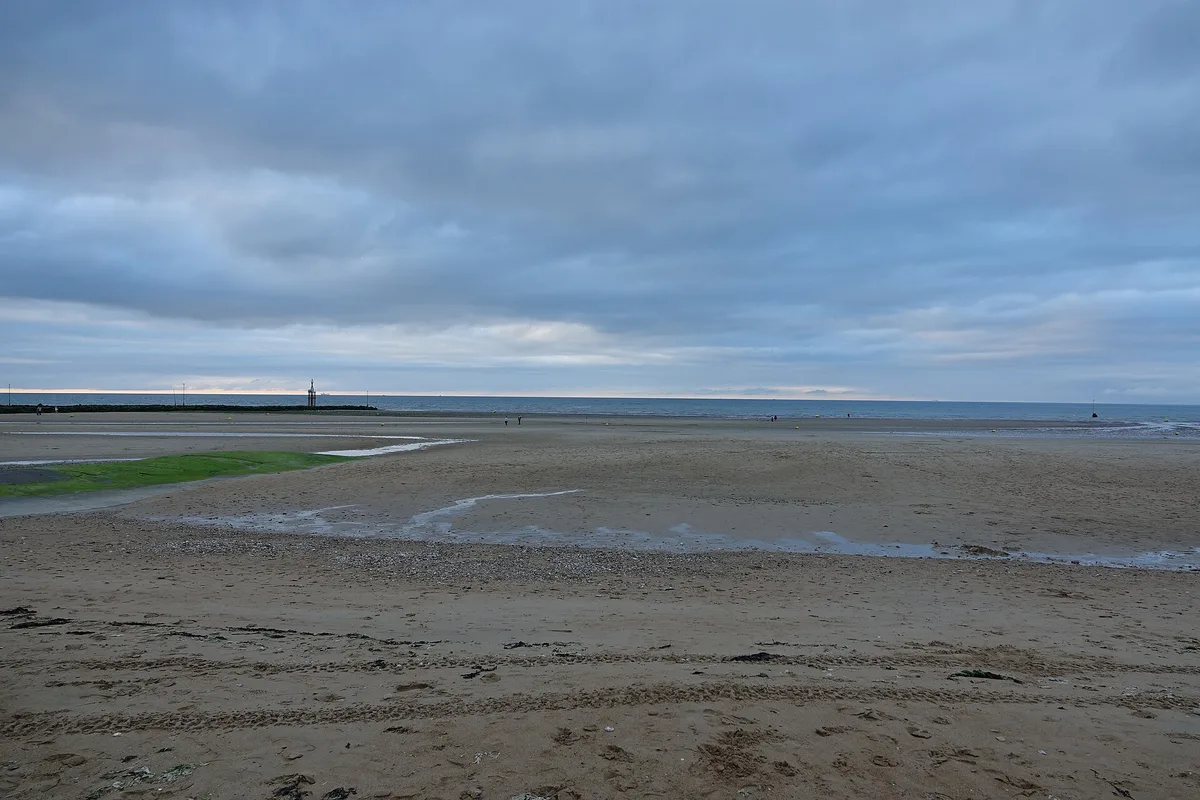
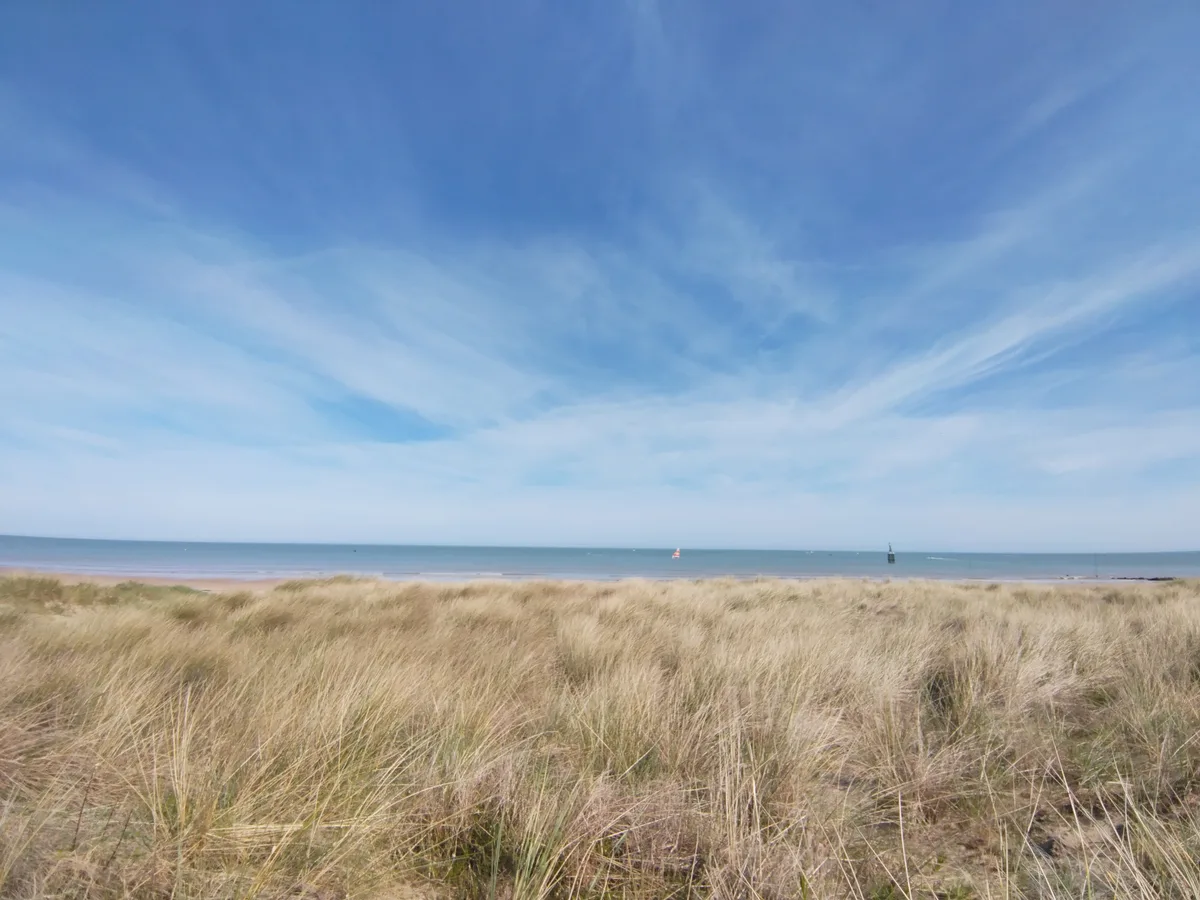
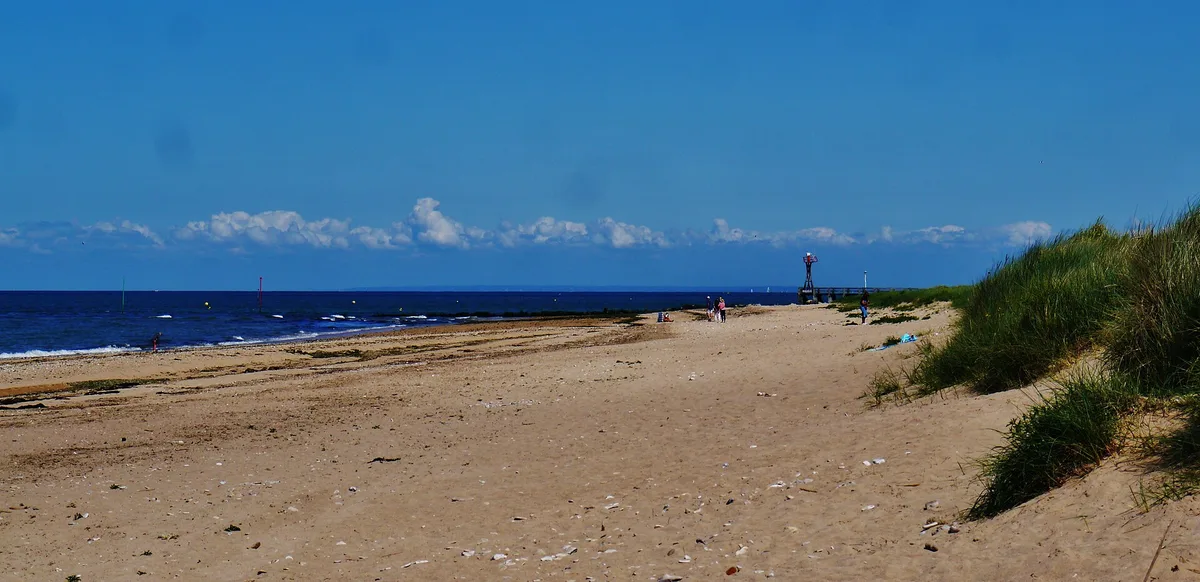
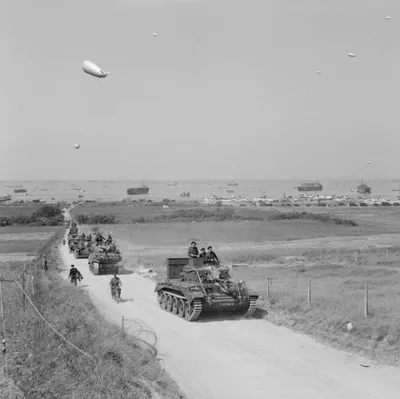
Juno Beach stretches roughly 1,200 metres of golden sand along the Côte Fleurie in Courseulles-sur-Mer, Normandy — one of five Allied landing beaches from 6 June 1944. The water runs a characteristic Channel grey, cold and restless even on calm summer days. German bunkers still stand at the waterline, their concrete weathered but unmistakable, framing a shoreline that carries more history per square metre than almost anywhere in Europe. In summer the beach draws a moderate flow of visitors — families, history pilgrims, and day-trippers from Caen — but the weight of the place never quite lifts, even when children are building sandcastles on the same golden sand where Canadian soldiers came ashore.
How to get there
From Caen, drive north — it's about 22 minutes by car, and free public parking is available near the Juno Beach Centre. If you're crossing from the UK, a daily ferry from Portsmouth takes roughly seven hours and lands you in Normandy ready to drive straight to the coast. There's no entry fee to the beach itself. The museum and beach access points are wheelchair-accessible, making this one of the more inclusive D-Day sites on the coast.
Who it's for
For couples
Couples who share an interest in history will find Juno Beach quietly moving — walk the golden sand at low tide, then spend an hour in the Juno Beach Centre before driving out to the Canadian War Cemetery at Bény-sur-Mer for a reflective close to the day.
For families
Families do well here: free parking, easy beach access, wheelchair-accessible facilities, and a world-class museum that pitches its storytelling at visitors of all ages. Keep younger children away from the water's edge — the tidal range and Channel currents demand adult supervision at all times.
Our take
Juno Beach is not a beach you visit for the swimming or the scenery — you visit because 14,000 Canadian soldiers landed on this golden sand on a single morning in 1944, and the place still holds that weight. The Juno Beach Centre is genuinely excellent, the bunkers are sobering, and the 6.3-kilometre drive to Bény-sur-Mer Canadian War Cemetery should be non-negotiable. The grey Channel water and the strong tidal currents mean this is not a place to be casual about entering the sea — respect the warnings and keep children supervised near the waterline. Come between June and September for the best conditions. The beach itself is accessible, free, and moderately busy in summer without ever feeling like a resort. This is one of the most historically significant stretches of coastline in the world, and it earns every kilometre of the drive from Caen.
What to do
The Juno Beach Centre is the anchor of any visit — Canada's dedicated WWII museum and cultural centre honouring the soldiers who landed here on D-Day, and it sits right at the beach. The preserved German bunkers and Atlantic Wall remains are free to explore, with guided tours available that put the defensive positions in sharp tactical context. A short drive of 7 kilometres brings you to the Bény-sur-Mer Canadian War Cemetery, a profoundly quiet place that completes the story the beach begins. If you have half a day more, the Radar Museum 1944 is 6.6 kilometres away and holds a strong 4.6-star rating.
The Atlantic Wall bunkers half-buried in golden sand are the defining image of Juno Beach — shoot them at low tide with the grey Channel behind for an unmanipulated, powerful frame.
The Juno Beach Centre memorial facade offers clean architectural lines and is best captured in the soft light of early morning before the day-trippers arrive. The beach's full length, seen from the western access point at low tide, gives you the scale of the landing zone in a single wide shot.
Where to eat
The nearest sit-down option with serious reviews is La Fabrique, about 10.7 kilometres from the beach. For something closer and quicker, a McDonald's sits just 1.6 kilometres away — not glamorous, but convenient if you're spending a full day at the memorials and need a fast refuel.
Where to stay
No accommodation is listed in the verified data for the immediate beach area. Courseulles-sur-Mer is the base commune, and Caen — 19 minutes by car — offers the widest range of options for overnight stays in the region.
Photography
The German bunkers at the waterline photograph best in the flat morning light, when the grey Channel water and golden sand create a stark, unadorned contrast that no filter can improve. For wider context shots, position yourself at the Juno Beach Centre end of the beach at low tide, when the full 1,200-metre sweep of sand opens up behind the memorial markers.
Good to know
Be serious about the tides: Juno Beach has a strong tidal range, and the Channel currents are real — swim only in designated areas and check local tide times before you wade in. Never underestimate the pull of the water here; the grey surface hides powerful currents that can catch even confident swimmers off guard. Avoid visiting between November and February — cold water and rough seas make the experience bleak and potentially unsafe. The beach is at its best June through September, when the weather is mild and the Juno Beach Centre is fully operational.
GAMES
🕹️ Five minutes of sand?
Three daily games — including the UV simulator set to this beach.
Map
Nearby places
La Fabrique
McDonald's
Radar Museum 1944
Juno Beach Centre
German Bunkers and Atlantic Wall Remains
Bény-sur-Mer Canadian War Cemetery
Things to see around Courseulles-sur-Mer
Juno Beach Centre
Canada's WWII museum and cultural centre honoring Canadian soldiers on D-Day.
German Bunkers and Atlantic Wall Remains
Preserved German bunkers and defensive positions from WWII; tours available.
Bény-sur-Mer Canadian War Cemetery
Resting place for Canadian soldiers who died in Battle of Normandy.
GIFT
🎁 Gift this beach
Its exact coastline, your date, your words — on a print or a PDF you print yourself.
Juno Beach
THAT DAY
Juno Beach, Normandy
© OpenStreetMap contributors
Clean & decorative, or “That day” with the real sky of your date.
Shipping included 3-6 business days
A question before you order? Contact us
Delivered within minutes on the confirmation page and by email: a ZIP with all 4 print sizes (30×40 cm, 12×16″, 50×70 cm, 18×24″), each as a high-resolution PDF and PNG (300 dpi), plus a screen version. Print at home or at any print shop.
Please complete the delivery address.
Please accept the Terms of Sale.
Almost there — the shop opens very soon.
Secure payment · Printed locally in 30+ countries · 7 languages
Frequently asked
The information on this page is provided for guidance only and may evolve. Access conditions, safety and infrastructure can change without notice. Always check official sources before traveling.
Nearest beaches
Other lively beaches in France
Reviews of this beach
- No reviews yet, what a shame — leave yours and share your experience.
Photo credits
Sources and licenses for the photos shown above.
- Photo 1 — Amanda Slater from Coventry, West Midlands, UK · source · CC BY-SA 2.0
- Photo 2 — Gzen92 · source · CC BY-SA 4.0
- Photo 3 — remiforall · source · CC BY 2.0
- Photo 4 — Zairon · source · CC BY-SA 4.0