Anse Marron BeachSeychelles Beach Guide
La Digue's wild southern secret — earned, not given
About
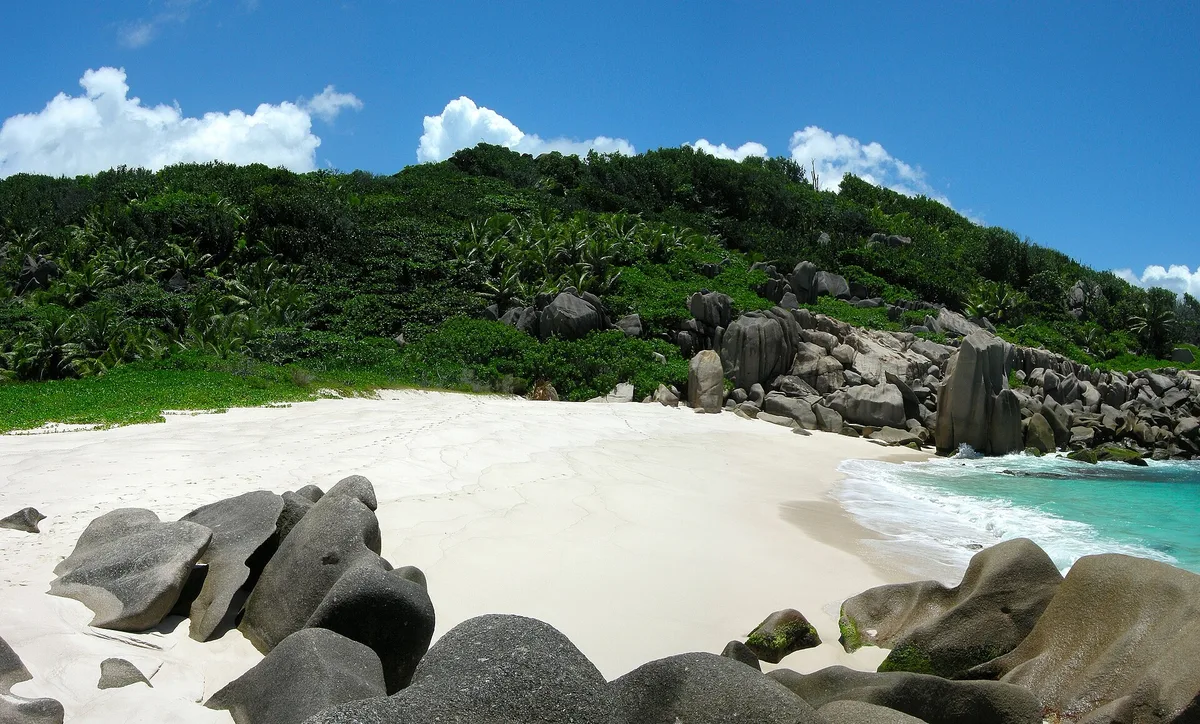
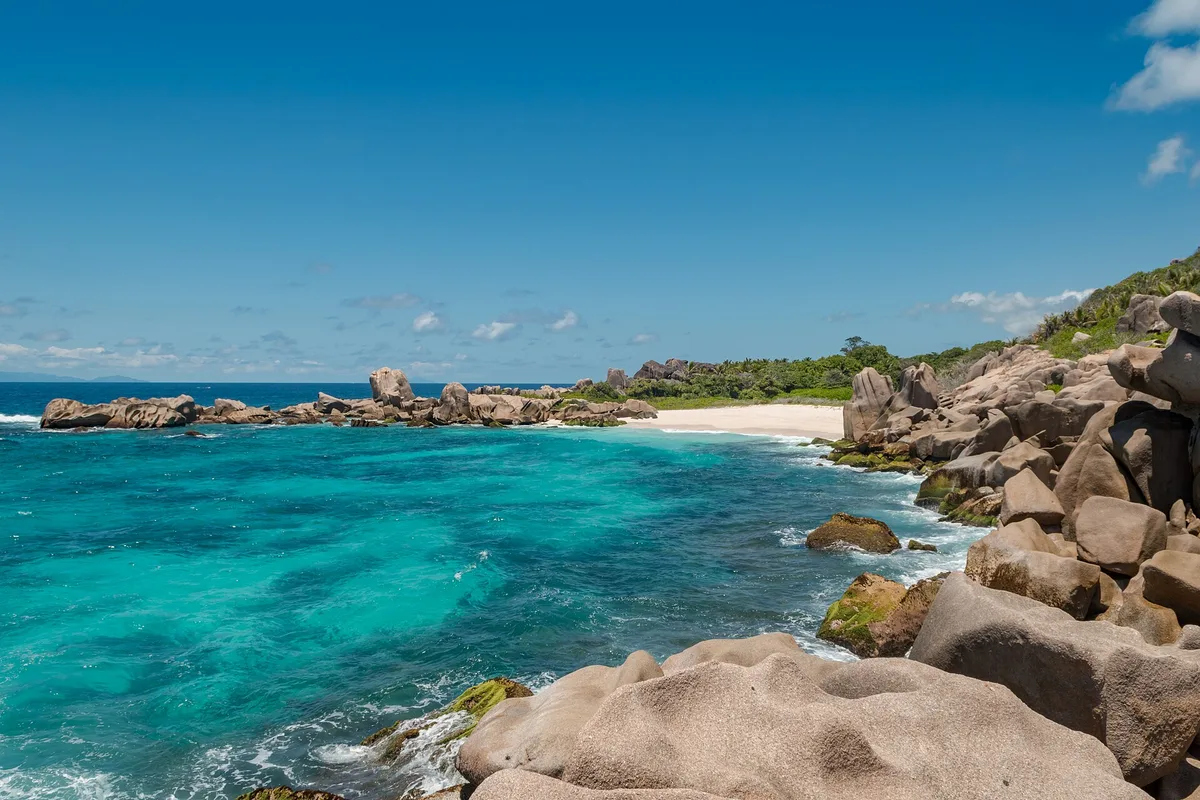
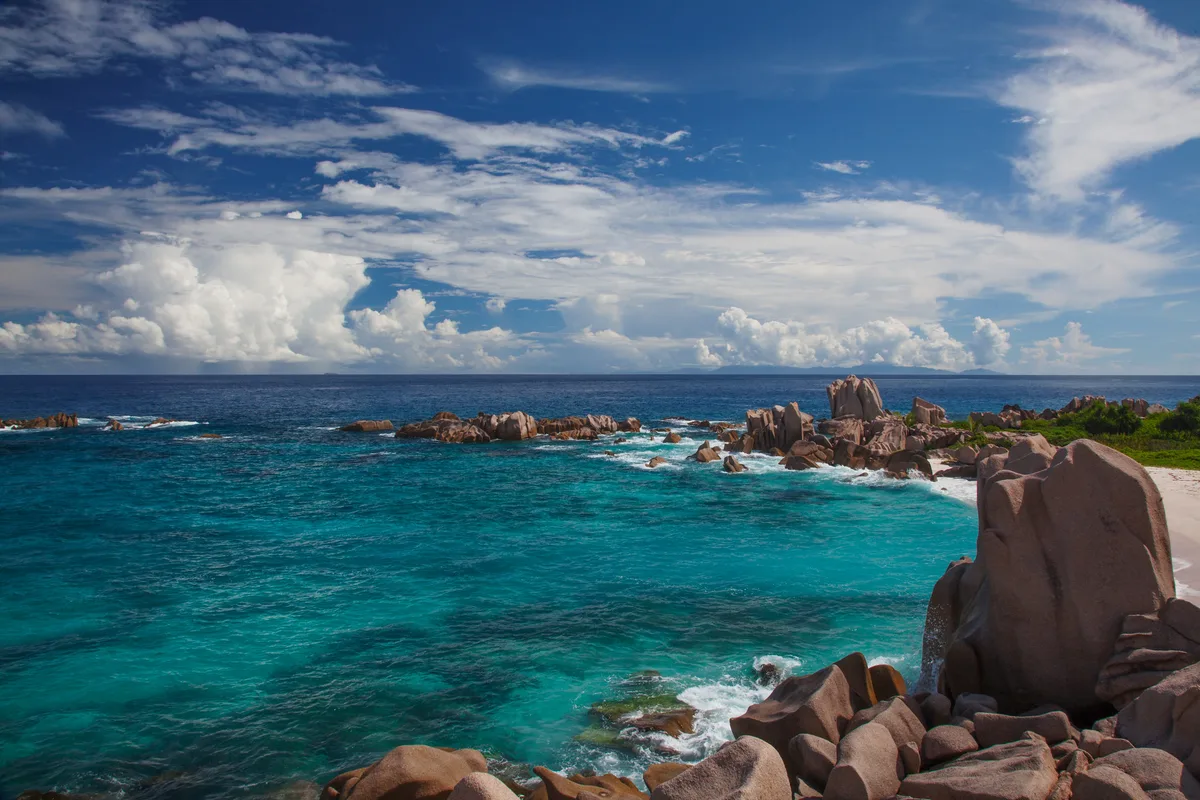
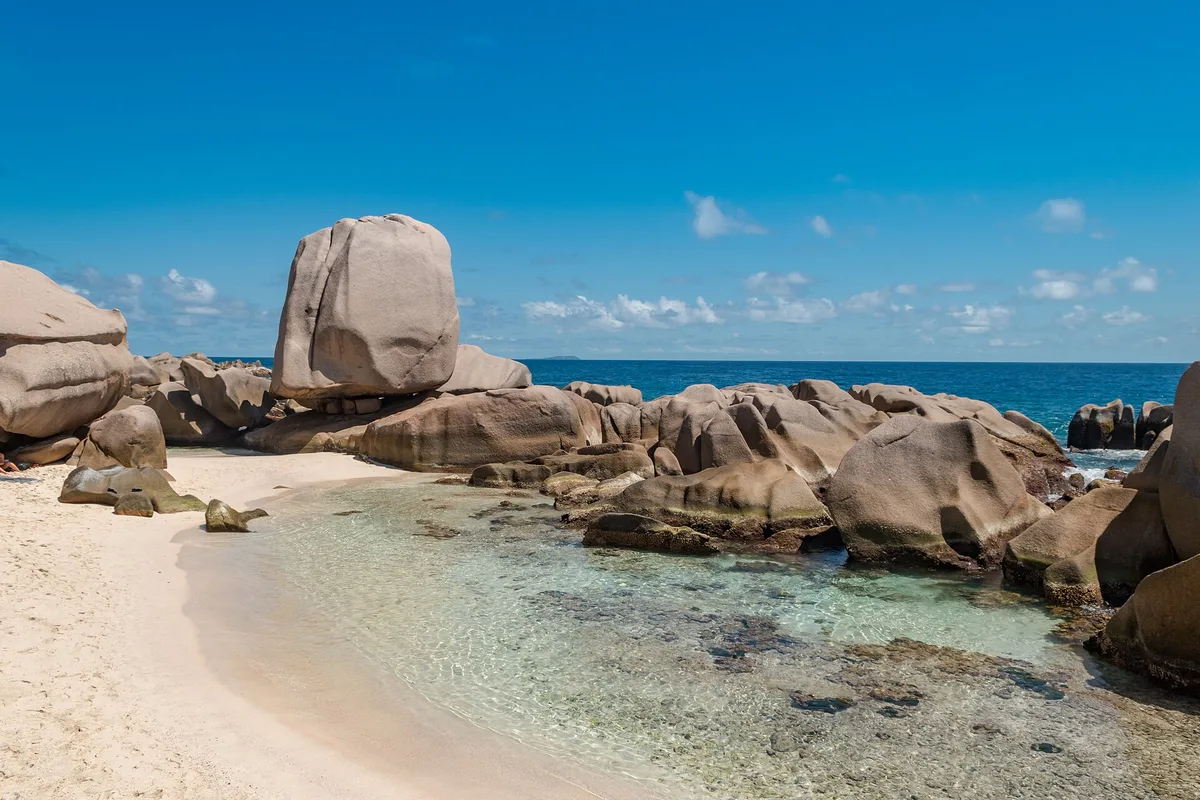
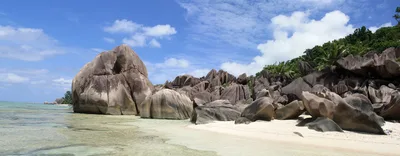
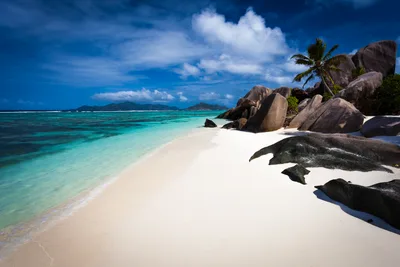
Anse Marron sits at the southernmost tip of La Digue, a pocket of white sand barely 50 metres wide, flanked by ancient granite boulders worn smooth by the Indian Ocean. The star of the show isn't the sand — it's the wave-carved cliff swimming hole and natural granite rock pool that make this one of Seychelles' most extraordinary coastal formations. Crystal-clear water fills the pool at low to mid-tide, turning it into a sheltered basin of startling clarity. Getting here demands a 90-minute boulder scramble from Grand Anse, and that effort is precisely what keeps it quiet. The wild vibe is real — this is not a beach you stumble upon.
How to get there
Anse Marron is reached on foot only — La Digue has no cars, so there is no parking of any kind. The route begins at Grand Anse and involves a technical 90-minute boulder scramble along the island's southern coastline, passable year-round in suitable conditions. A licensed guide is mandatory by local regulation, and a guide fee is required at the point of booking — do not attempt the route solo under any circumstances. The beach opens only when sea conditions are calm enough; your guide will confirm access on the day.
Who it's for
For couples
The 90-minute scramble to reach Anse Marron turns the journey itself into the experience — arriving together at a near-empty white sand cove with a private-feeling granite rock pool is a reward that feels genuinely earned. It's physical and remote, which makes it ideal for couples who want adventure over sunbeds.
For families
The technical boulder scramble and tide-dependent access make Anse Marron unsuitable for young children or anyone who isn't confident on uneven, sometimes wet rock. Families with older, sure-footed teenagers may manage it with a guide, but it is not a casual family beach outing.
Our take
Anse Marron is one of those places that earns its reputation through difficulty, not marketing. The mandatory guide requirement isn't bureaucratic box-ticking — the tidal trap risk on the scramble route is real, and the consequences of getting the timing wrong are serious. Go in the dry season between May and October, but not June through August when the swell closes access. The rock pool at low to mid-tide is genuinely unlike anything else in the Seychelles inner islands — crystal-clear water held in ancient granite, completely sheltered, completely quiet. The 90-minute scramble will sort out who really wants to be there, and that's the point. Book your guide, wear proper shoes, and go early.
What to do
Anse Cocos, just 1 km away, is the classic departure point for the guided scramble and is worth exploring in its own right — it has a remote freshwater pool and a long stretch of undeveloped shoreline. Grand Anse La Digue, 6 km out, is the island's longest undeveloped beach and an alternative starting point for the approach. Back towards the village, L'Union Estate is a working colonial plantation where giant tortoises roam freely around a historic copra house — a grounding cultural counterpoint to a day of wild coastline.
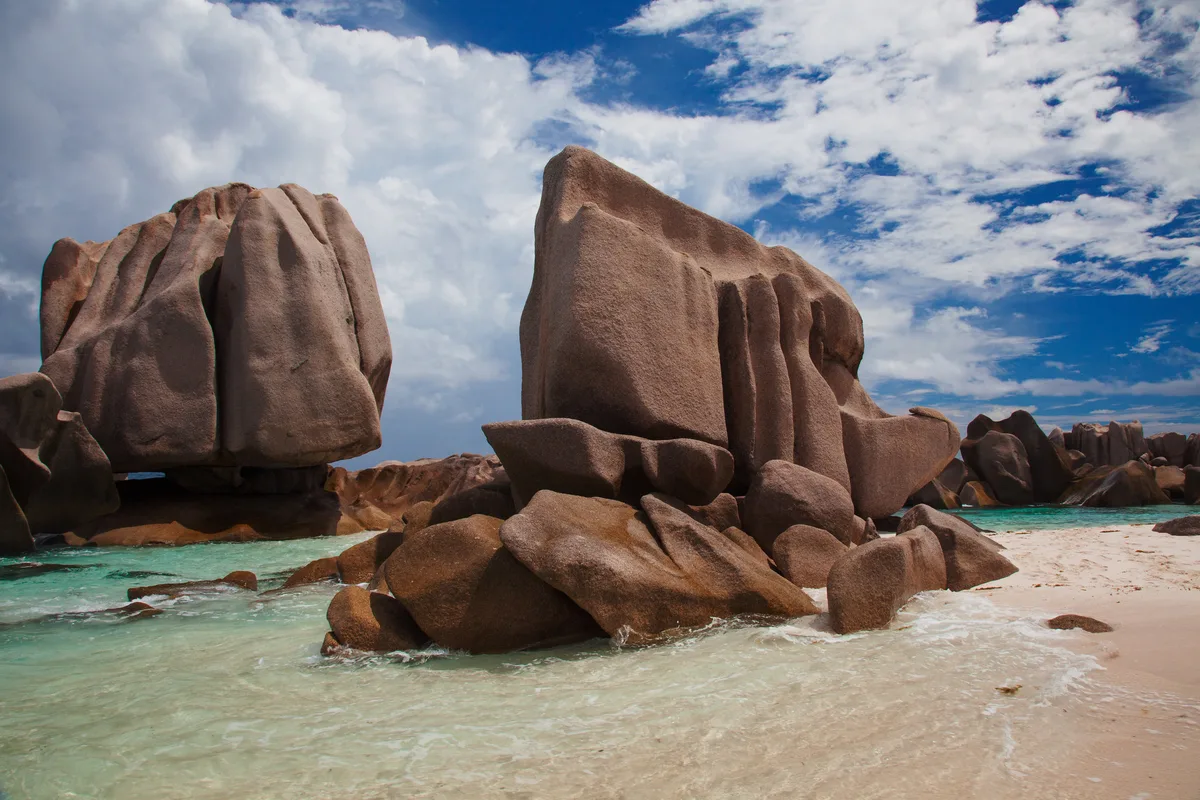
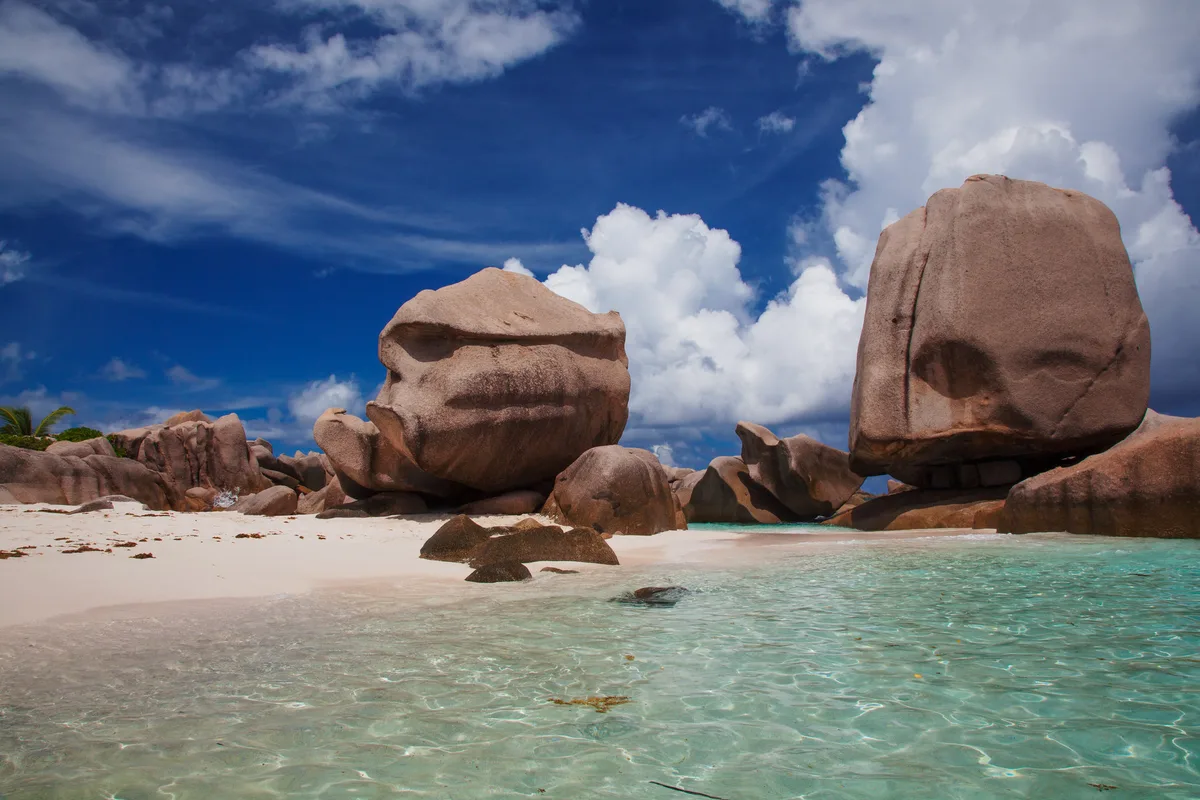
The natural granite rock pool filled with crystal-clear water, framed by the surrounding boulders, is the defining shot — get low and shoot across the water surface.
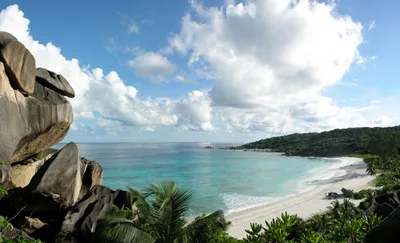
The wave-carved cliff swimming hole from an elevated boulder angle shows the raw scale of the granite formations against the open ocean. The scramble approach itself, with its layered granite slabs and coastal views, makes for compelling documentary-style frames on the way in.
Where to eat
Loutier Coco, 1.2 km from the beach, is the closest option for a post-scramble meal with a regional Seychellois menu. Zerof, at 3.2 km, serves Kreole cooking worth the short bicycle ride. Chez Jules rounds out the options at 3.5 km with creole and cajun dishes alongside fresh juices — exactly what you want after a morning on the rocks.
Where to stay
Chloe's Cottage and Pension Michel-Villa Roche Bois both sit around 2.5 km from the beach and offer a quiet, local-scale stay close to the southern end of the island. For more comfort, Chateau St. Cloud at 3.3 km and Ylang Ylang at 3.5 km provide well-regarded options without straying far from the trailhead.
Photography
The granite rock pool photographs best at low to mid-tide when the water is at its clearest and the surrounding boulders frame the shot — aim for morning light before any haze builds. The wave-carved cliff swimming hole, shot from the boulders above, gives a dramatic sense of scale that captures why this place is unlike anything else on La Digue.
Good to know
A licensed guide is not optional — local regulation prohibits solo access, and the route genuinely requires someone who knows the tidal windows. Wear closed-toe shoes with grip; sandals will let you down on the technical scramble sections. The incoming tide can submerge sections of the trail and trap visitors — your guide manages the timing, so follow their lead without question. Avoid June, July, and August: southeast trade winds generate swell that closes access to the rock pool entirely. No camping is permitted at the beach.
GAMES
🕹️ Five minutes of sand?
Three daily games — including the UV simulator set to this beach.
Map
Nearby places
Loutier Coco
Lanbousir
Belle Vue Café
Zerof
Chez Jules
Chloe's Cottage
Pension Michel-Villa Roche Bois
Diguoise Guesthouse
Chateau St. Cloud
Ylang Ylang
Things to see around La Digue
Anse Cocos
Remote beach with freshwater pool, departure point for Anse Marron guided scramble
Grand Anse La Digue
La Digue's longest undeveloped beach, alternative departure point for Anse Marron
L'Union Estate
Historic plantation with giant tortoises and colonial copra house
GIFT
🎁 Gift this beach
Its exact coastline, your date, your words — on a print or a PDF you print yourself.
Anse Marron Beach
THAT DAY
Anse Marron Beach, Seychelles Inner Islands
© OpenStreetMap contributors
Clean & decorative, or “That day” with the real sky of your date.
Shipping included 3-6 business days
A question before you order? Contact us
Delivered within minutes on the confirmation page and by email: a ZIP with all 4 print sizes (30×40 cm, 12×16″, 50×70 cm, 18×24″), each as a high-resolution PDF and PNG (300 dpi), plus a screen version. Print at home or at any print shop.
Please complete the delivery address.
Please accept the Terms of Sale.
Almost there — the shop opens very soon.
Secure payment · Printed locally in 30+ countries · 7 languages
Frequently asked
The information on this page is provided for guidance only and may evolve. Access conditions, safety and infrastructure can change without notice. Always check official sources before traveling.
Nearest beaches
Reviews of this beach
- No reviews yet, what a shame — leave yours and share your experience.