Anse aux Cèdres BeachSeychelles Beach Guide
La Digue's casuarina-shaded secret, known only to locals
About
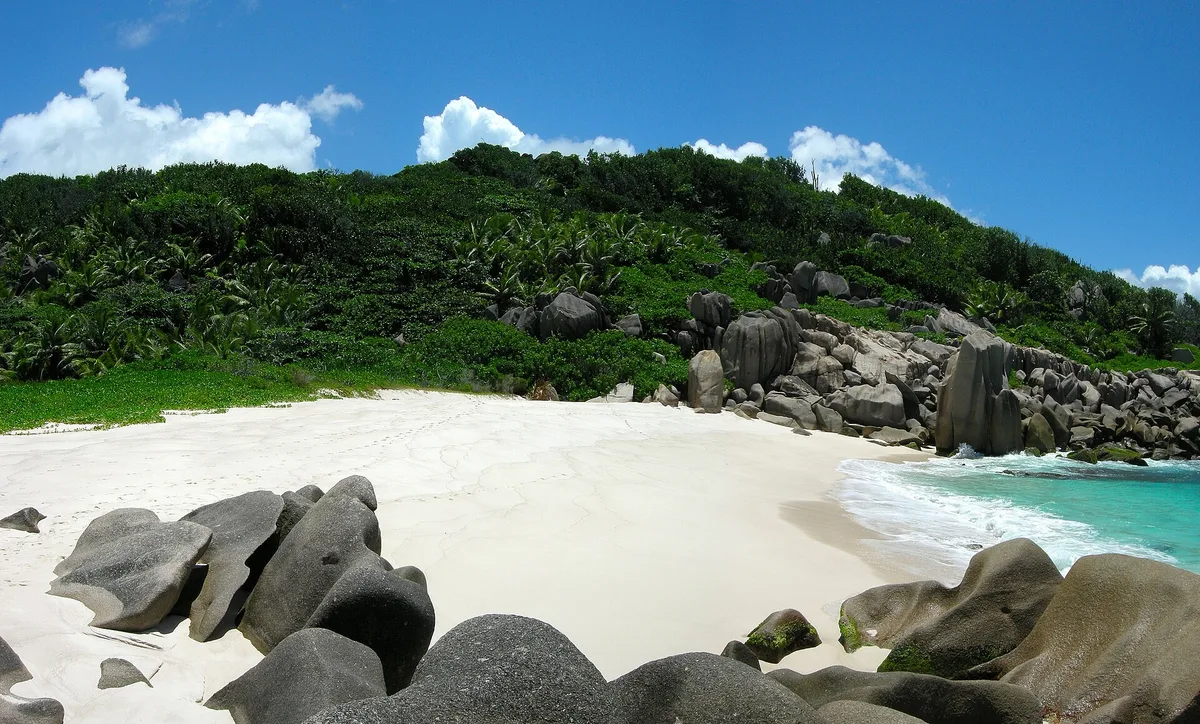
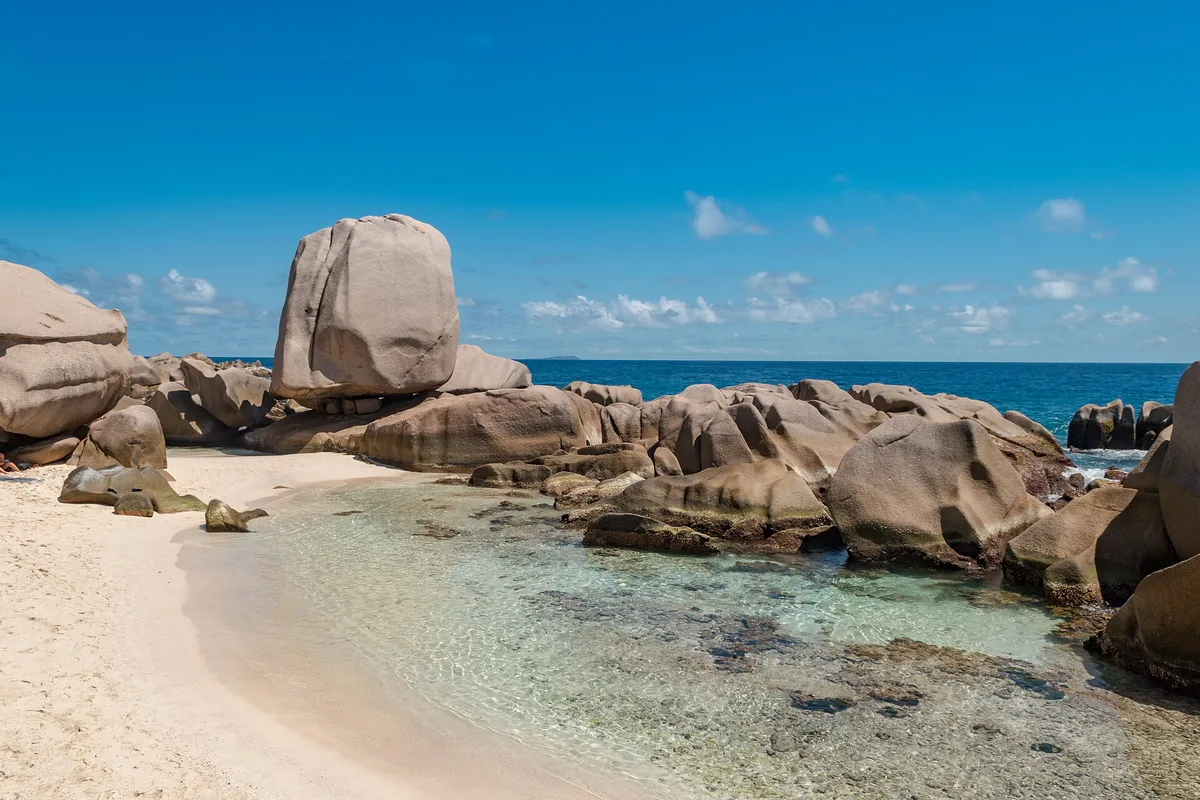
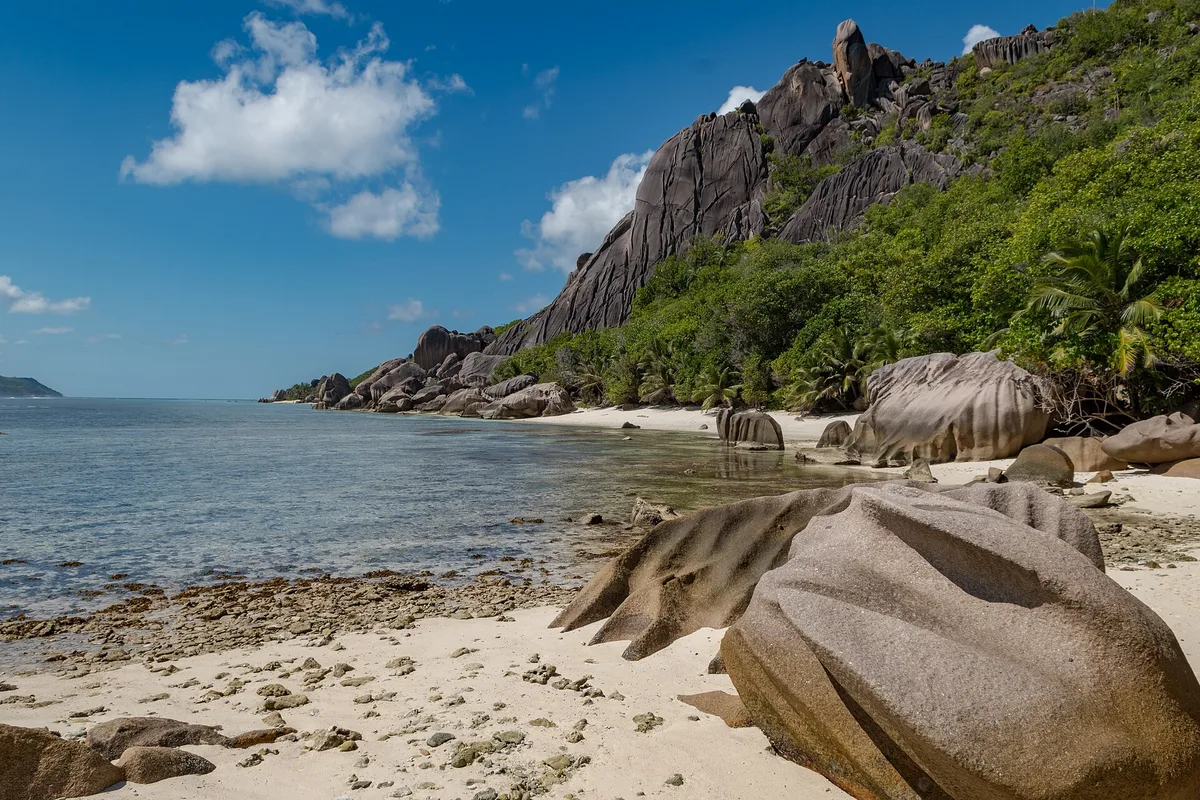
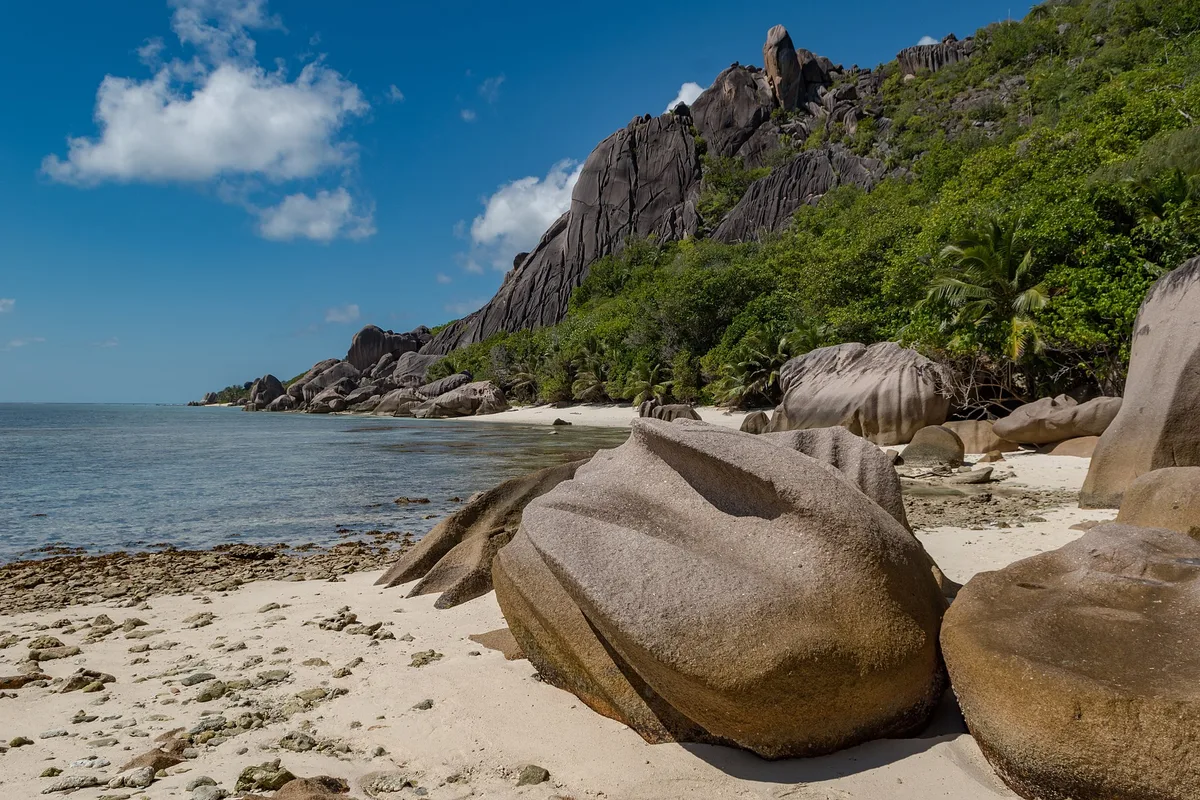
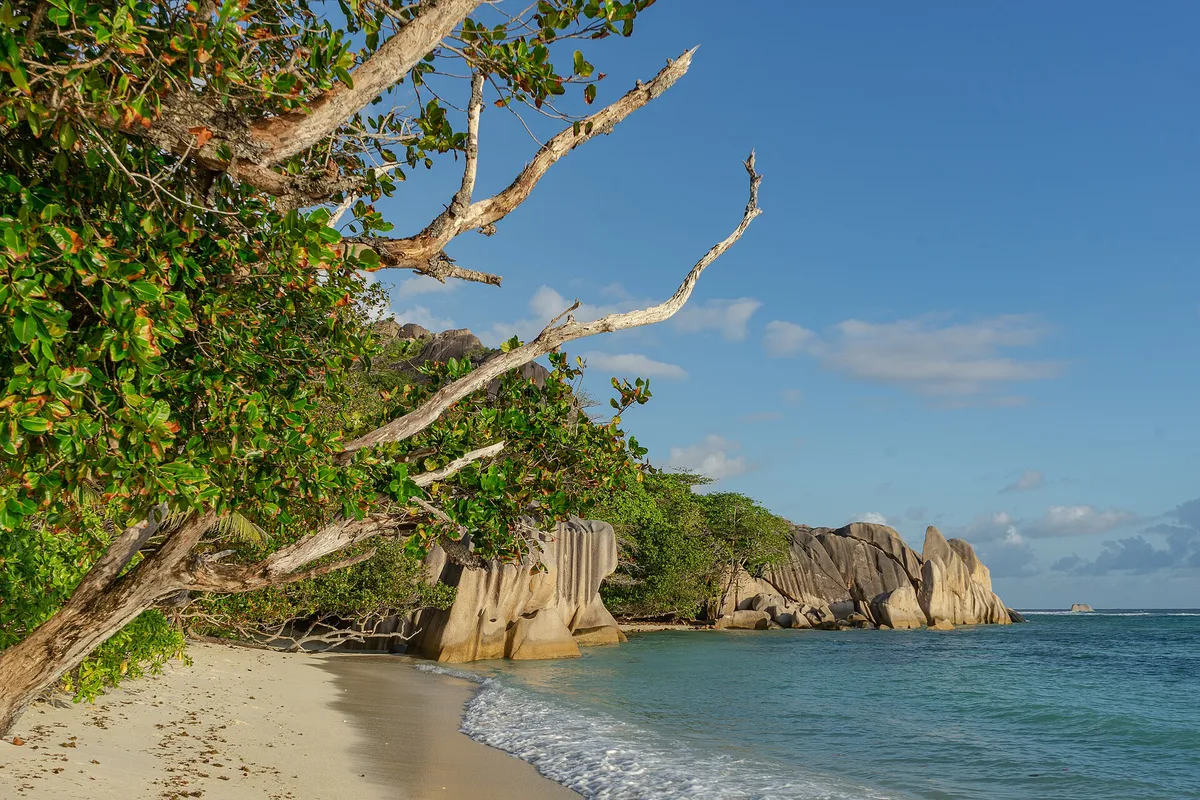
Anse aux Cèdres sits quietly on La Digue's northeast coast, a compact white-sand cove roughly 80 metres wide and almost entirely unknown to casual visitors. A full canopy of casuarina trees arches overhead, dropping a soft carpet of needles across the sand and blocking the midday sun in a way that most beaches on the island simply can't match. The crystal-clear water catches the light between the branches, and the only sounds are wind through the pines and the occasional rustle of a gecko. Access runs along a dirt track through private land, which keeps the numbers low — on most days you'll have the cove entirely to yourself. It's the kind of place expats quietly keep to themselves.
How to get there
La Digue has no cars, so you'll get here by bicycle from La Passe village, then on foot along a dirt track — allow around 35 minutes total. The track crosses private land, so ask locally before you set off; the landowner can close access at any time. There is no parking of any kind, no entry fee, and no facilities on site. Accessibility is limited — the dirt track is uneven and not suitable for wheelchairs or pushchairs.
Who it's for
For couples
The near-guaranteed solitude and the cathedral-like casuarina shade make this one of La Digue's most quietly romantic spots — bring a book, lay out on the needle carpet, and let the afternoon disappear.
For families
The lack of facilities, the private-land access track, and the need to check swell conditions make this a tricky choice for families with young children; better to save it for older kids who can handle the bicycle ride and the uncertainty of access.
Our take
Anse aux Cèdres earns its reputation as an expat-kept secret — not because it's the most dramatic beach on La Digue, but because it delivers something rarer: genuine solitude under a full casuarina canopy on an island that's increasingly well-visited. The white sand and crystal-clear water are the baseline; the needle carpet, the pine-filtered shade, and the near-total absence of other visitors are what make it worth the effort. That said, this is not a beach you can just show up to. Private land access means you need to ask locally first, and the track can be closed without warning. Northeast exposure brings real swell risk in the trade-wind months, so skip June through August if you're coming to swim. Get the conditions right, get permission, and you'll have one of the quietest corners of the Seychelles entirely to yourself. That's a rare thing.
What to do
The raw northeast coastline rewards exploration: Anse Fourmis, about 0.8km away, is a striking stretch of granite slabs and a rusted anchor that feels genuinely untouched. Anse Banane, 1.5km along the bicycle circuit, sits beside a remnant banana plantation and makes a natural second stop on a half-day ride. If you have time, the Veuve Nature Reserve, 3km from the cove, protects the habitat of the endemic Seychelles Paradise Flycatcher — one of the rarest birds on earth. There's also a snorkelling spot roughly 0.9km away worth investigating on calmer days.
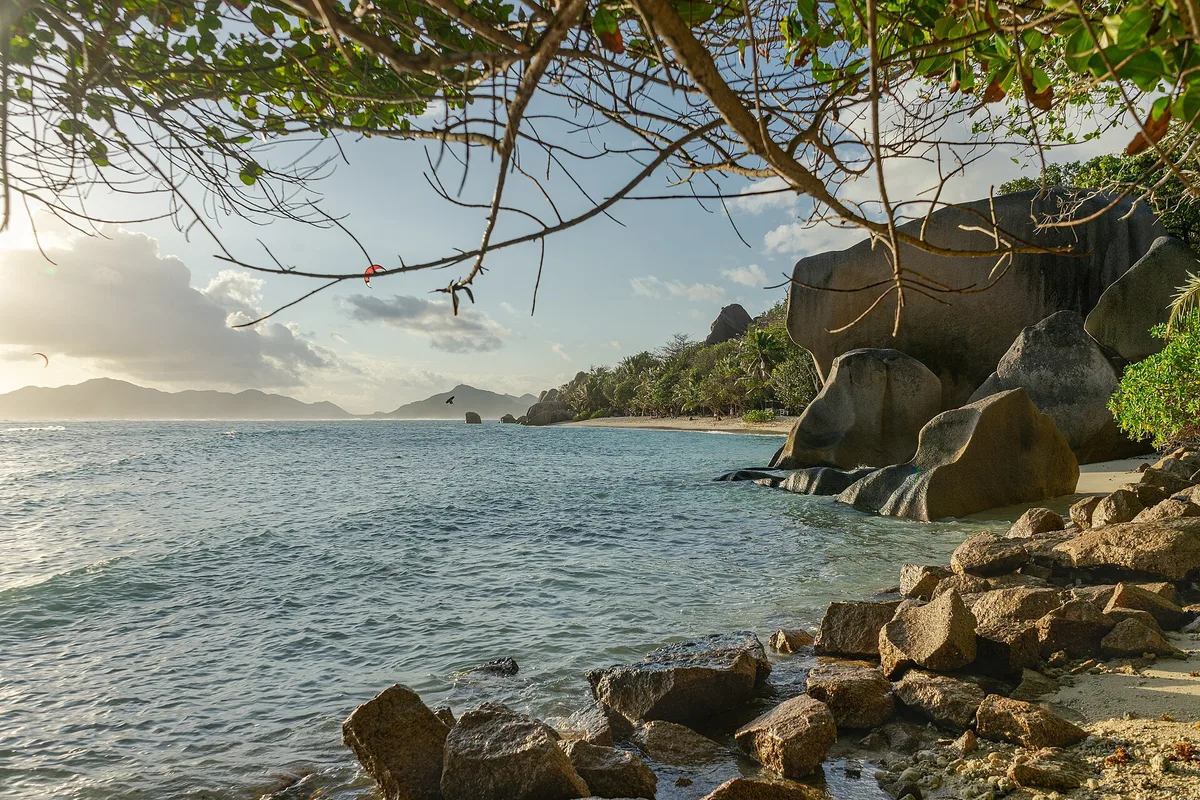
The casuarina canopy shot looking up through the pine branches toward the sky is unlike anything else on La Digue.
Frame the white sand needle carpet in the foreground with the crystal-clear water behind for a composition that reads as both wild and serene. The northeast cove angle at sunrise, with granite-edged shoreline and soft morning light, is the money shot.
Where to eat
Loutier Coco, a regional restaurant 1.3km from the cove, is the closest option and a practical lunch stop after your ride. Lanbousir is 1.8km away, and Zerof — serving Kreole cooking — is about 2.7km if you're heading back toward the main village. Pack your own water regardless; none of these are within walking distance of the beach itself.
Where to stay
Pension Michel-Villa Roche Bois, 1.9km away, and Chloe's Cottage at 2km are the closest bases and suit travellers who want a quiet, local-style stay. Chateau St. Cloud and La Digue Island Lodge are both within 3km if you prefer something with more facilities. Booking ahead is wise — La Digue is a small island and good rooms go fast in peak season.
Photography
Shoot in the early morning when low-angle light filters through the casuarina canopy and throws long shadows across the needle-carpeted white sand — the contrast is striking. The northeast orientation also means soft, directional light at sunrise, making the crystal-clear water glow without the harsh overhead glare of midday.
Good to know
Always ask locally before visiting — this is private land, and the access track may be blocked by the landowner without notice. Northeast-facing coves like this one can pick up swell, so check sea conditions before you swim; swimming is rated moderate and caution is warranted. Avoid June, July, and August if swimming is your priority, as southeast trades can push swell directly into this cove. Bring everything you need — water, snacks, sun protection — because there is nothing on site.
GAMES
🕹️ Five minutes of sand?
Three daily games — including the UV simulator set to this beach.
Map
Nearby places
Loutier Coco
Lanbousir
Belle Vue Café
Zerof
Ton Gregs Pizzeria
Pension Michel-Villa Roche Bois
Chloe's Cottage
Diguoise Guesthouse
Chateau St. Cloud
La Digue Island Lodge
Things to see around La Digue
Anse Fourmis
Raw northeast-coast beach with rusted anchor and granite slab field
Anse Banane
East-coast beach with banana plantation remnant on the bicycle circuit
Veuve Nature Reserve
Protected habitat of the endemic Seychelles Paradise Flycatcher
GIFT
🎁 Gift this beach
Its exact coastline, your date, your words — on a print or a PDF you print yourself.
Anse aux Cèdres Beach
THAT DAY
Anse aux Cèdres Beach, Seychelles Inner Islands
© OpenStreetMap contributors
Clean & decorative, or “That day” with the real sky of your date.
Shipping included 3-6 business days
A question before you order? Contact us
Delivered within minutes on the confirmation page and by email: a ZIP with all 4 print sizes (30×40 cm, 12×16″, 50×70 cm, 18×24″), each as a high-resolution PDF and PNG (300 dpi), plus a screen version. Print at home or at any print shop.
Please complete the delivery address.
Please accept the Terms of Sale.
Almost there — the shop opens very soon.
Secure payment · Printed locally in 30+ countries · 7 languages
Frequently asked
The information on this page is provided for guidance only and may evolve. Access conditions, safety and infrastructure can change without notice. Always check official sources before traveling.
Nearest beaches
Reviews of this beach
- No reviews yet, what a shame — leave yours and share your experience.
Photo credits
Sources and licenses for the photos shown above.