Abereiddy BayUnited Kingdom Beach Guide
Black slate sand, blue lagoon, wild Pembrokeshire coast
About
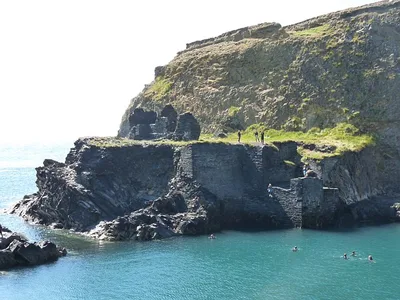
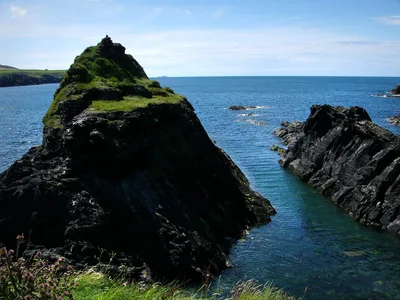
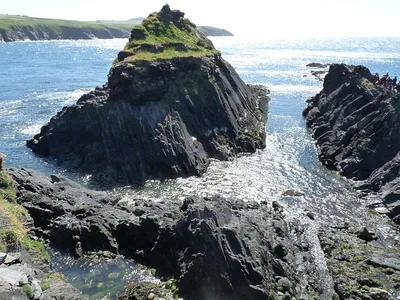
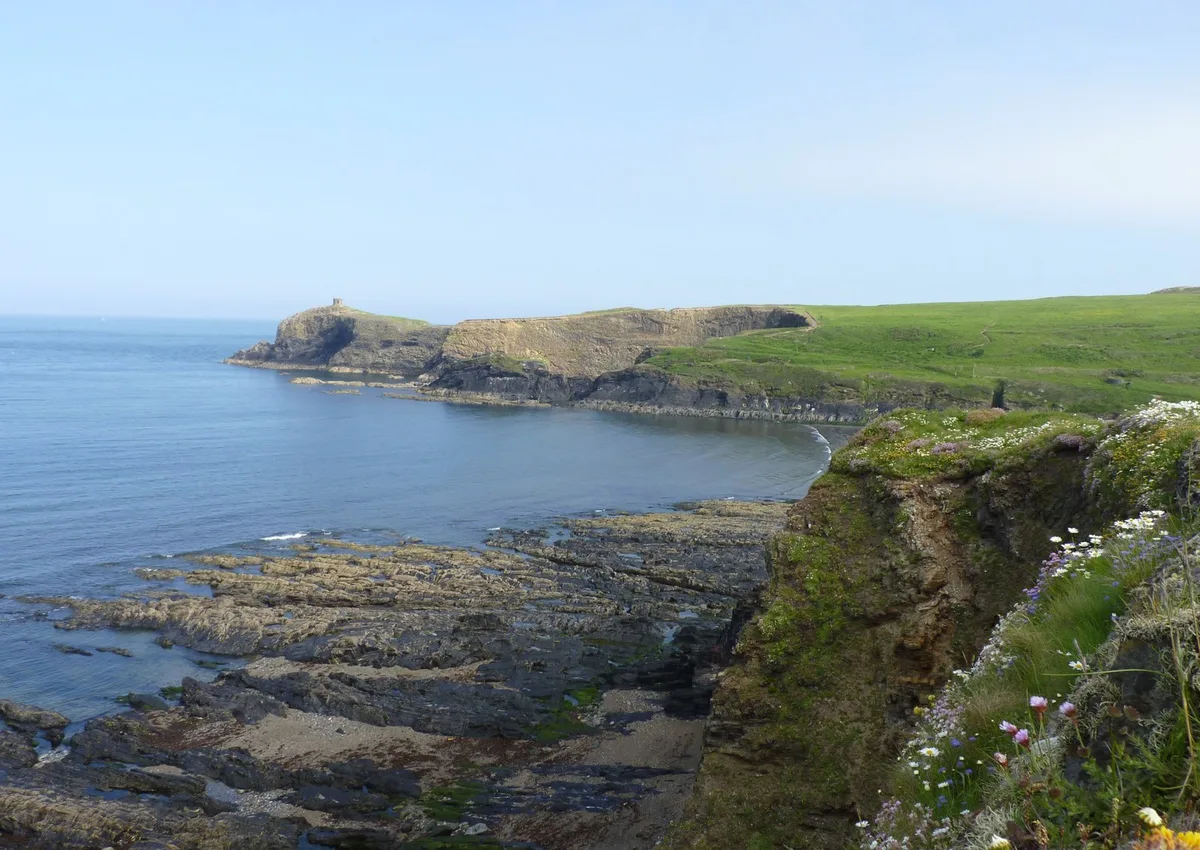
Abereiddy Bay sits on the Pembrokeshire coast in Wales, where centuries of quarrying have left behind something genuinely strange: a beach of dark, crushed slate that turns the shoreline an almost metallic black. The blue-green water contrasts sharply against that dark sand, and the ruins of old quarry workers' cottages crumble at the bay's edge. Just beyond the main beach, a flooded quarry known as the Blue Lagoon has become one of Wales's most photographed spots — and the venue for Red Bull Cliff Diving World Series events. The Pembrokeshire Coast Path runs directly through, making this a natural stop on one of Britain's finest long-distance walks.
How to get there
From St Davids, follow minor roads west for around 15 minutes by car. A small, rocky car park sits at the beach — it fills quickly in summer, and an overflow car park is also available nearby; parking is paid, cash only. By bus, the Strumble Shuttle 404 runs daily in summer from St Davids and Fishguard, with a limited Thursday and Saturday service between October and May. Note that the track down to the beach is rough and uneven — it is not suitable for wheelchairs.
Who it's for
For couples
The wild, post-industrial atmosphere and clifftop coast path make Abereiddy a compelling choice for couples who want scenery with some edge — walk the headland at dusk when the light catches the dark sand and the lagoon glows.
For families
Dogs are welcome year-round with no seasonal restrictions, which suits families with pets, but parents should be aware there is no lifeguard and currents on the main beach are strong — keep young children well clear of the water and the unguarded lagoon edge.
Our take
Abereiddy is not a beach you come to for a gentle swim and an ice cream. The safety picture here is serious: strong currents and undertows on the main beach, no lifeguard, and a Blue Lagoon that has sent people to hospital — read those warnings and take them at face value. What the bay does offer, in exchange for that honesty, is a genuinely rare landscape: black slate sand, flooded industrial quarry, crumbling ruins, and one of Wales's most dramatic stretches of coast path right on the doorstep. Come for the walking, the photography, and the raw industrial history. The Blue Lagoon is spectacular to look at from the cliff above. Whether you enter it is a decision that deserves serious thought, not a holiday impulse.
What to do
The Pembrokeshire Coast Path gives you immediate access to dramatic clifftop walking in both directions. A short walk along the coast brings you to Porthgain Harbour, a former industrial village where intact Victorian brick hoppers still stand alongside a pub and gallery — rated 4.6/5 and worth the 2.4km detour. Further afield, St Davids Cathedral, a 12th-century landmark in the UK's smallest city, is about 8km away, and the ancient Neolithic burial chamber at Carreg Samson is a rewarding 6km walk or drive.
The clifftop viewpoint directly above the Blue Lagoon is the signature shot — dark quarry walls, vivid blue-green water, and the scale of the old industrial workings in one frame.
The ruined quarry cottages on the beach edge, with black slate sand in the foreground and open sea behind, photograph well in overcast light when the tones are most dramatic.
Where to eat
The nearest dining option is The Shed Bistro, about 2.4km from the beach — a well-regarded spot that suits a post-walk meal. There is no food or drink on the beach itself, so bring supplies, especially if you're arriving on a busy summer day.
Where to stay
Celtic Camping & Bunkhouse Accommodation, rated 4.5/5 from over 523 reviews, is just 1.2km away and suits walkers and budget travellers well. For families or those wanting more comfort, Lleithyr Farm Holiday Park and Llanungar Caravan and Camping both score 4.8/5 and sit around 6km from the beach, while Premier Inn St Davids offers a reliable hotel option at a similar distance.
Photography
Shoot the Blue Lagoon from the clifftop path above it — the contrast between the turquoise-tinted water and the dark slate walls is most striking in morning light when shadows are long. For the main beach, a wide-angle shot looking south captures the black sand foreground against blue-green water and the ruined quarry cottages in a single frame.
Good to know
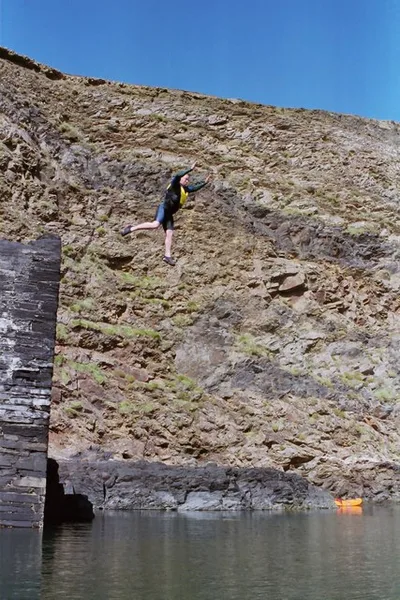
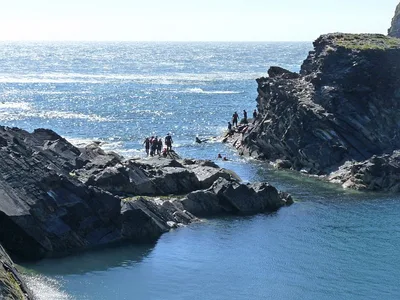
There is no lifeguard service on the main beach, and strong currents and undertows are present — do not swim unless you are confident in open-water conditions and have checked the tides, particularly near the lagoon entrance. The Blue Lagoon cliff jumping has caused serious injuries; there is no official supervision, and you should not jump without fully understanding the risks. On Red Bull competition days, observe any exclusion zones in force around the lagoon — access may be restricted. Arrive early in summer: the car park is small, fills fast, and cash is the only payment accepted.
GAMES
🕹️ Five minutes of sand?
Three daily games — including the UV simulator set to this beach.
Map
Nearby places
The Shed Bistro
Celtic Camping & Bunkhouse Accommodation
St Davids Camping and Caravanning Club Site
Lleithyr Farm Holiday Park
Llanungar Caravan and Camping
Premier Inn St David's
Things to see around Llanrhian
Porthgain Harbour
Former industrial harbour village with intact brick hoppers, now home to a pub and gallery.
Strumble Head Lighthouse
Active lighthouse on a dramatic headland, excellent for dolphin and porpoise watching.
St Davids Cathedral
12th-century cathedral in the UK's smallest city.
GIFT
🎁 Gift this beach
Its exact coastline, your date, your words — on a print or a PDF you print yourself.
Abereiddy Bay
THAT DAY
Abereiddy Bay, Wales
© OpenStreetMap contributors
Clean & decorative, or “That day” with the real sky of your date.
Shipping included 3-6 business days
A question before you order? Contact us
Delivered within minutes on the confirmation page and by email: a ZIP with all 4 print sizes (30×40 cm, 12×16″, 50×70 cm, 18×24″), each as a high-resolution PDF and PNG (300 dpi), plus a screen version. Print at home or at any print shop.
Please complete the delivery address.
Please accept the Terms of Sale.
Almost there — the shop opens very soon.
Secure payment · Printed locally in 30+ countries · 7 languages
Frequently asked
The information on this page is provided for guidance only and may evolve. Access conditions, safety and infrastructure can change without notice. Always check official sources before traveling.
Nearest beaches
Other wild beaches in United Kingdom
Reviews of this beach
- No reviews yet, what a shame — leave yours and share your experience.
Photo credits
Sources and licenses for the photos shown above.
- Photo 1 — Robin Drayton · source · CC BY-SA 2.0
- Photo 2 — Chris Gunns · source · CC BY-SA 2.0
- Photo 3 — Brendan Patchell · source · CC BY-SA 2.0
- Photo 4 — Robin Drayton · source · CC BY-SA 2.0
- Photo 5 — Robin Drayton · source · CC BY-SA 2.0
- Photo 6 — Jeff Gogarty · source · CC BY-SA 2.0