De Cocksdorp BeachNetherlands Beach Guide
Wild white sands at Texel's untamed northern tip
 🎁 Gift idea: the star map of your most beautiful night↓
About
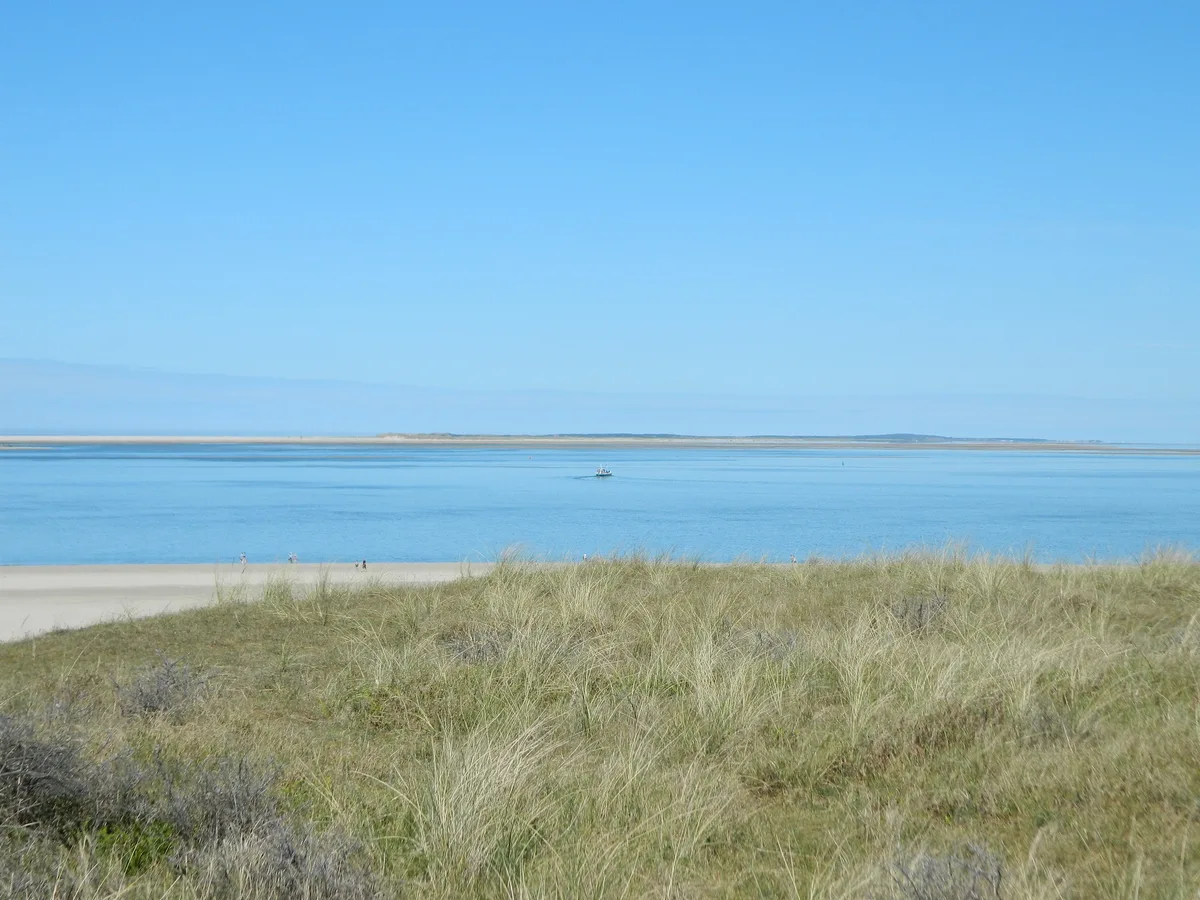
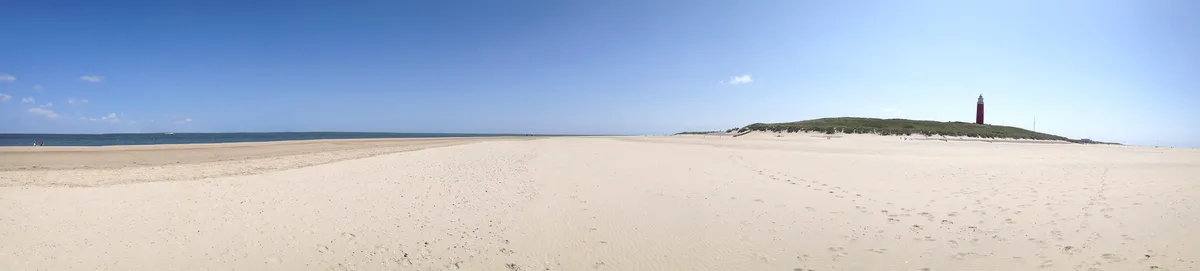
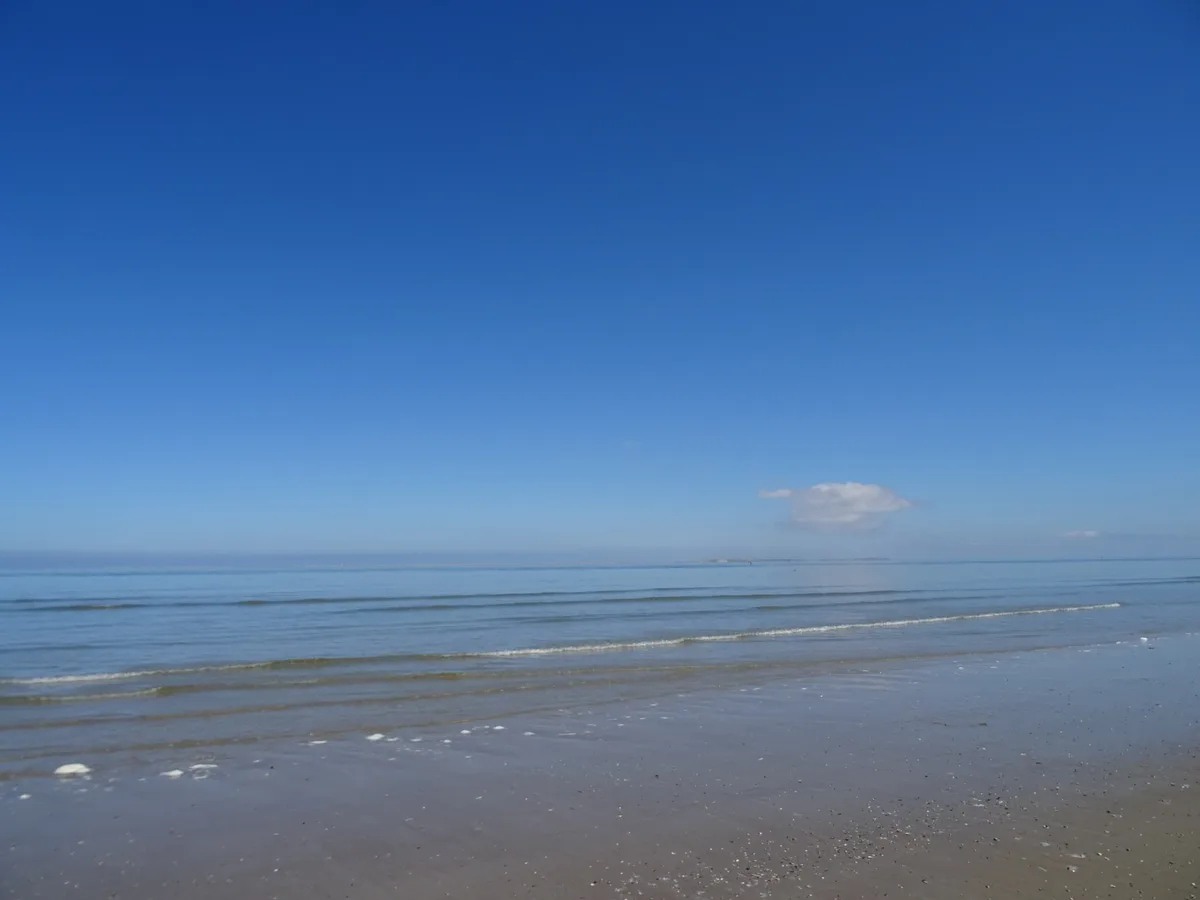
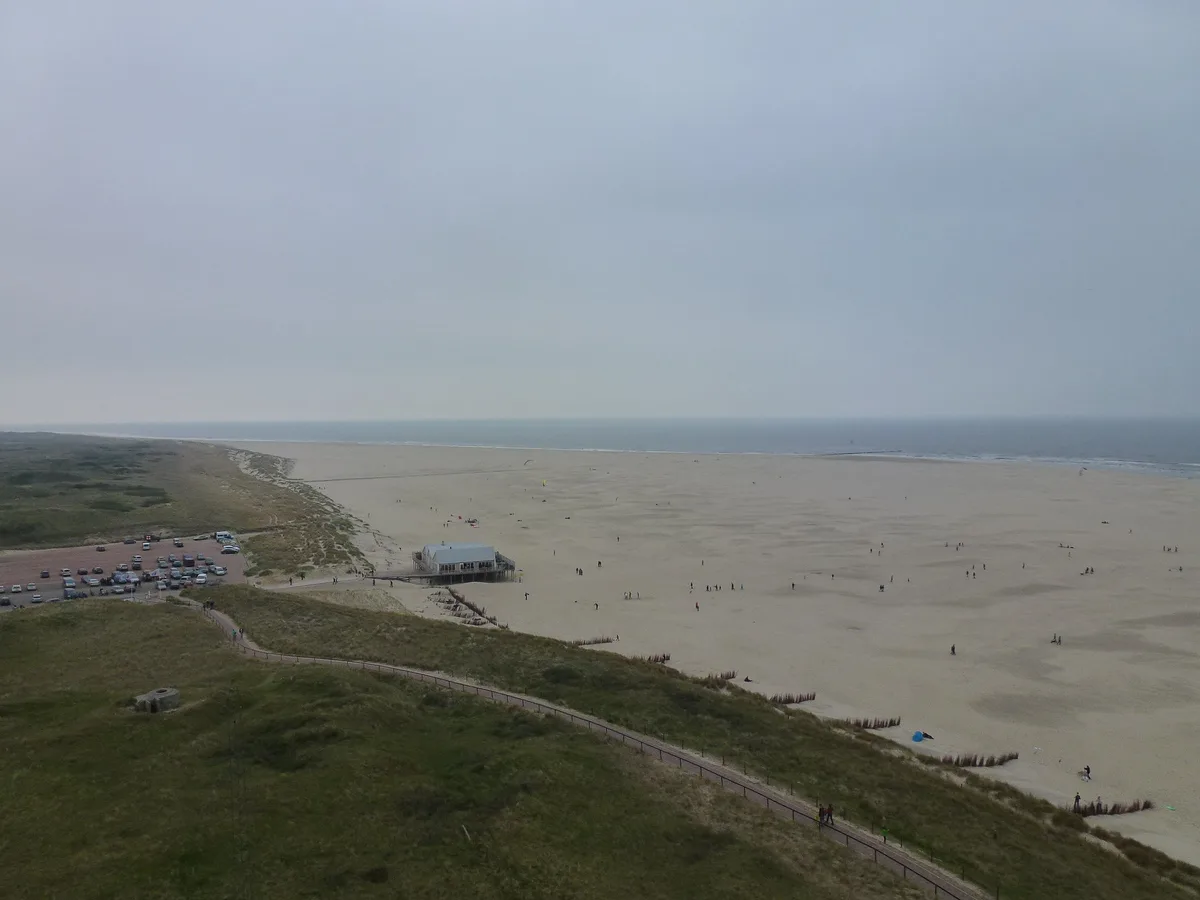
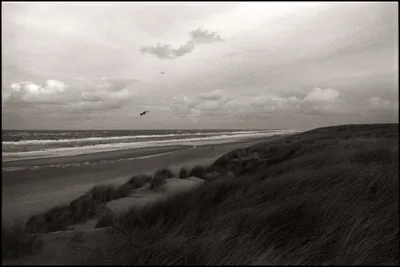
Strand De Cocksdorp stretches roughly 4 kilometres along the northernmost spit of Texel, where the island tapers to a raw, windswept terminus above the Eierlandse Gat tidal channel. The sand is white underfoot, but the North Sea here runs a deep, shifting grey — honest and unromantic, exactly as the latitude demands. Dune grasses hiss in the onshore wind, migratory birds wheel overhead in their thousands, and on clear days the low silhouette of Vlieland floats on the horizon. The red-brick Vuurtoren Eierland lighthouse anchors the scene, its 1864 tower rising above the flat coastal plain like a punctuation mark at the end of the Netherlands. This is a wild beach — quiet, exposed, and entirely serious about its remoteness.
How to get there
Take the daily ferry from Den Helder to Texel — the crossing takes around 20 minutes. From the village of De Cocksdorp, the beach is a 10-minute drive north along Vuurtorenweg. Paid parking is available near the lighthouse at Vuurtorenweg 193 and at other beach entrances; day rate is €10, a weekly pass is €20, and an island-wide e-vignette costs €30 per year. The access track is unpaved and involves a dune crossing, making it unsuitable for wheelchairs.
Who it's for
For couples
The sheer quiet of this northern tip — white sand, grey water, a lighthouse, and almost no one else — makes it a genuinely atmospheric place for a long walk without an agenda.
For families
Families with older children who enjoy birdwatching and lighthouse history will find plenty here, but note that the water is off-limits for swimming and the unpaved access track rules out pushchairs and prams.
Our take
Do not come to Strand De Cocksdorp expecting a beach holiday in any conventional sense — the water is off-limits, the wind is relentless, and the grey North Sea makes no promises. What you get instead is something rarer: 4 kilometres of white sand at the edge of the Netherlands, a 160-year-old lighthouse, a sky full of migrating birds, and the kind of silence that only genuinely remote places produce. The tidal currents in the Eierlandse Gat are not a footnote — they are a real hazard, and the prohibition on swimming must be taken seriously. Come between June and September, walk to the lighthouse, watch the birds from the Renvogelveld hides, and let the horizon do its work. Worth the ferry crossing.
What to do
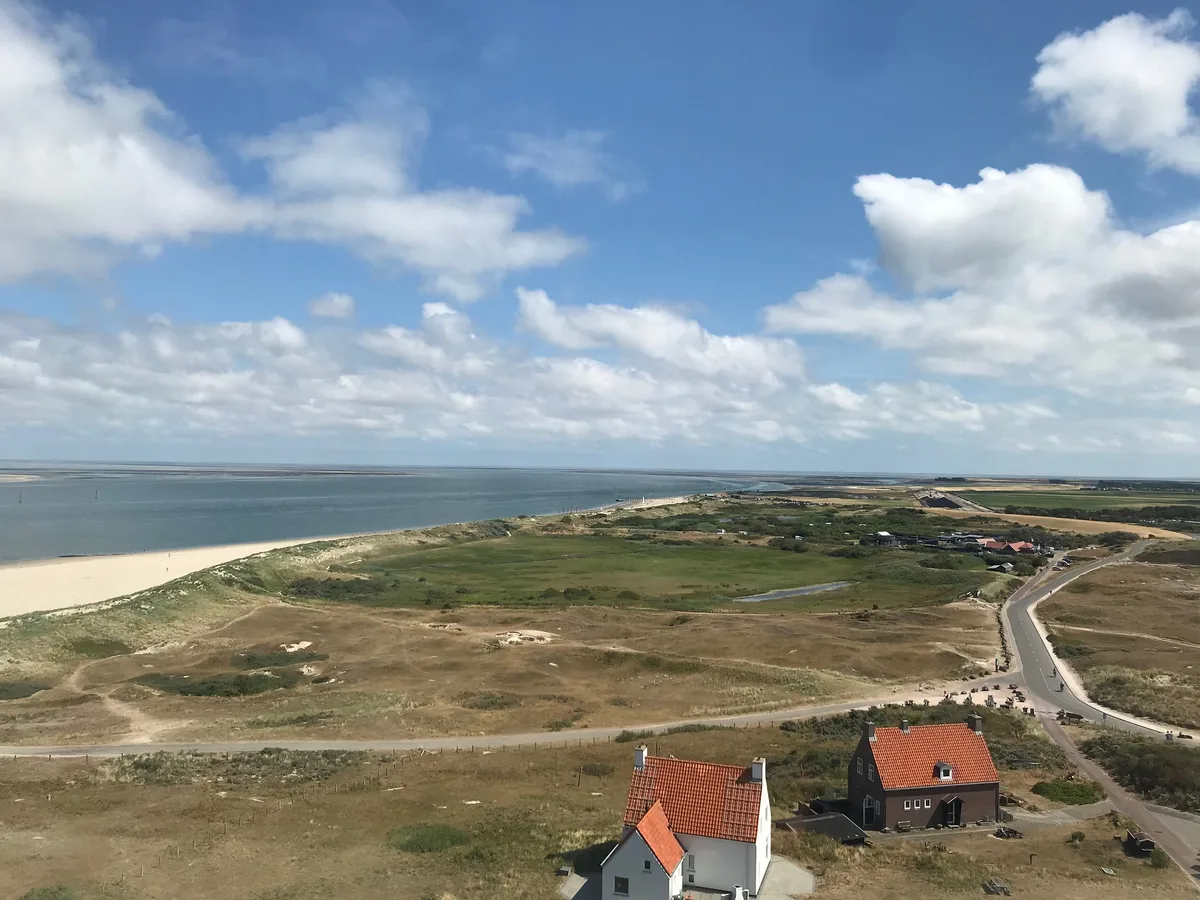
The Vuurtoren Eierland lighthouse, just 0.5 km from the beach, is the obvious first stop — a historic red-brick tower built in 1864 that rewards the short walk with sweeping views over the spit. Two dedicated birdwatching hides at Renvogelveld (0.3 km) make this one of the better-equipped spots on the island for watching the migratory corridor in action. A short walk further brings you to De Robbenjager (0.9 km), a vantage point for scanning the tidal flats, while the boundary of Nationaal Park Duinen van Texel begins almost at the beach entrance (0.1 km), opening up marked dune trails into protected habitat.
The red-brick Vuurtoren Eierland lighthouse framed against a wide, cloud-heavy sky with white sand in the foreground is the standout frame on this beach.
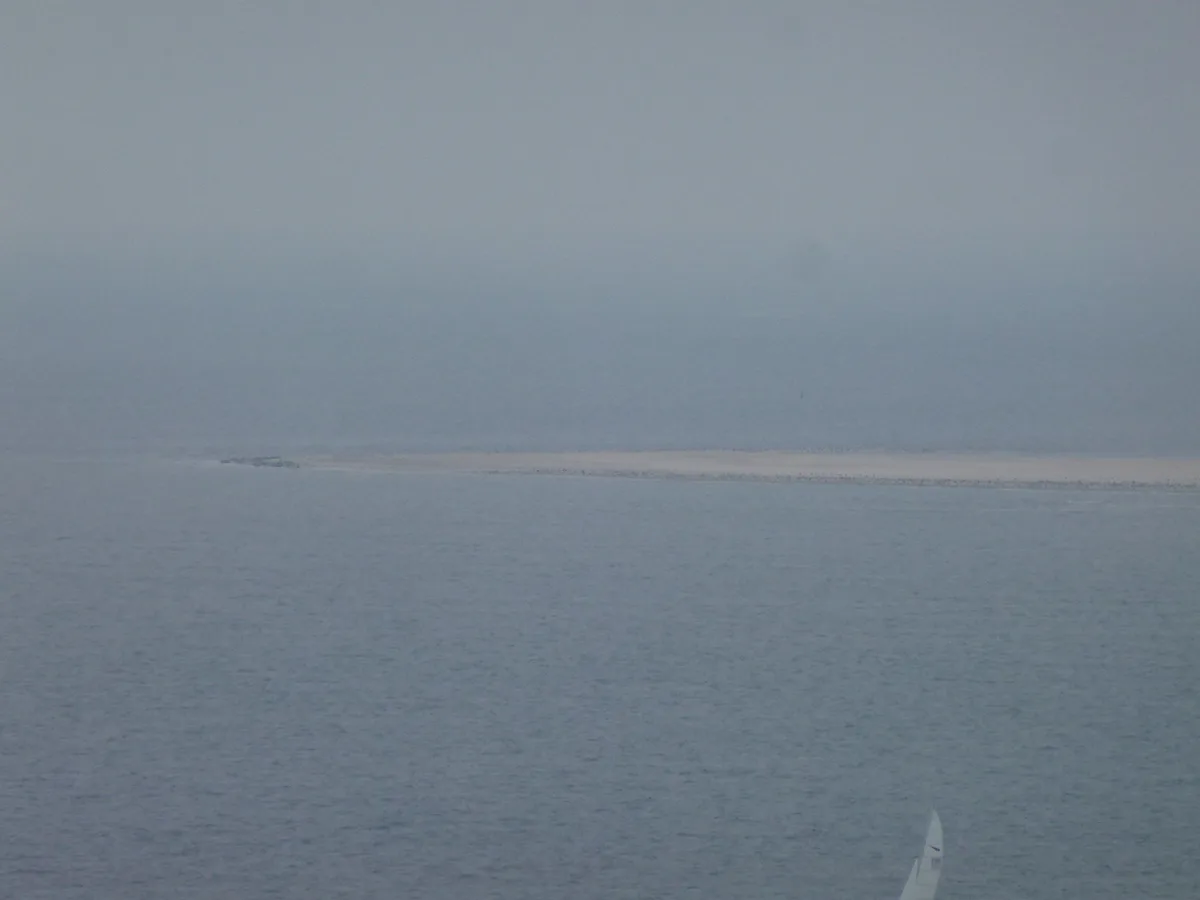
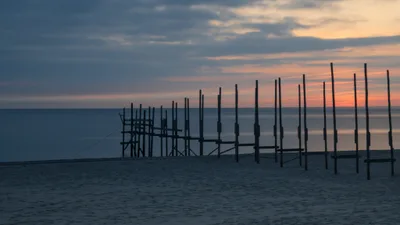
The spit terminus — where the narrow strip of land ends and the grey Eierlandse Gat channel opens up toward Vlieland — offers a dramatic, minimal composition that few visitors bother to walk to.
Where to eat
Torenrestaurant (0.2 km) and Faro Beach (0.3 km) are the closest options, both within easy walking distance of the lighthouse end of the beach. Paviljoen Kaap Noord, about 1.2 km away, serves regional dishes and suits a longer lunch stop after a dune walk. If you're heading back toward De Cocksdorp, Strandpaviljoen Paal 28 is 3.1 km south and rounds out the local options.
Where to stay
Herberg de Aanleg and Hotel het Anker van Texel are both 3.1 km from the beach and offer the most convenient base for an early-morning visit before day visitors arrive. Molenbos (3.5 km) and Boutique Hotel Texel (6.9 km) provide alternatives at slightly greater distance, while Duinhotel Texel (10.4 km) sits deeper into the island if you want a quieter retreat.
Photography
The Vuurtoren Eierland lighthouse against a wide grey sky is the defining shot — arrive at first light when the low northern sun rakes across the white sand and the tower casts a long shadow toward the sea. The island spit terminus, where land dissolves into the Eierlandse Gat channel with Vlieland visible beyond, rewards a late-afternoon visit when the tidal water catches the fading light.
Good to know
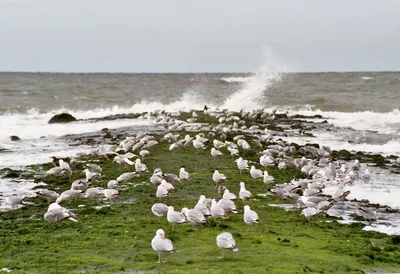
Do NOT enter the water — strong tidal currents in the Eierlandse Gat make swimming genuinely dangerous, and swimming is strictly prohibited here. Nesting birds colonise sections of the dune and beach seasonally, so respect all marked exclusion zones and stay on designated paths through the dunes. Dogs are generally welcome in this remote northern section, but check current seasonal nesting restrictions before you arrive. Avoid the beach entirely from October through March: the exposed position catches severe northerly gales that make conditions dangerous, not merely uncomfortable.
GAMES
🕹️ Five minutes of sand?
Three daily games — including the UV simulator set to this beach.
Map
Nearby places
Torenrestaurant
Faro Beach
Paviljoen Kaap Noord
Pizza Limone
Strandpaviljoen Paal 28
Herberg de Aanleg
Hotel het Anker van Texel
Molenbos
Boutique Hotel Texel
Duinhotel Texel
Vuurtoren Eierland
De Muy Nature Reserve
Nationaal Park Duinen van Texel
Things to see around Texel
Vuurtoren Eierland
Historic red-brick lighthouse at the northern tip of Texel, built 1864.
De Muy Nature Reserve
Wetland reserve in the northern dunes of Texel, important for spoonbills and other wading birds.
Nationaal Park Duinen van Texel
National park covering Texel's entire dune system.
GIFT IDEA · MARCEL ET LES BLONDES
🎁 Give a moment, not a thing

What’s the occasion?

 💑 Dating anniversaryTwo dates, two starry skies
 💍 Wedding anniversaryCotton, silver, golden…
 🎂 BirthdayTheir own newspaper front page
 👶 New babyThe stars on the day they were bornValentine’s DayOur two moons, as a print
Shipping €5, free from €49 · made to order, shipped within 48 hAlso: our engraved wooden bracelets, €23.90 →
Frequently asked
The information on this page is provided for guidance only and may evolve. Access conditions, safety and infrastructure can change without notice. Always check official sources before traveling.
Nearest beaches
Reviews of this beach
- No reviews yet, what a shame — leave yours and share your experience.
Photo credits
Sources and licenses for the photos shown above.