Pedra de Lume BeachCape Verde Beach Guide
Float in a volcanic crater's hypersaline pink lagoon
About
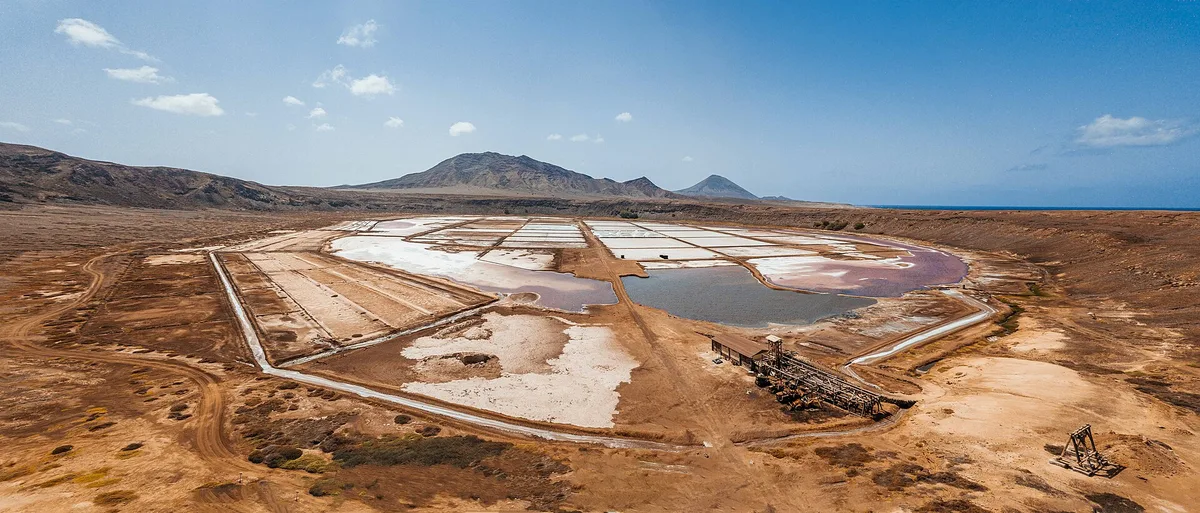
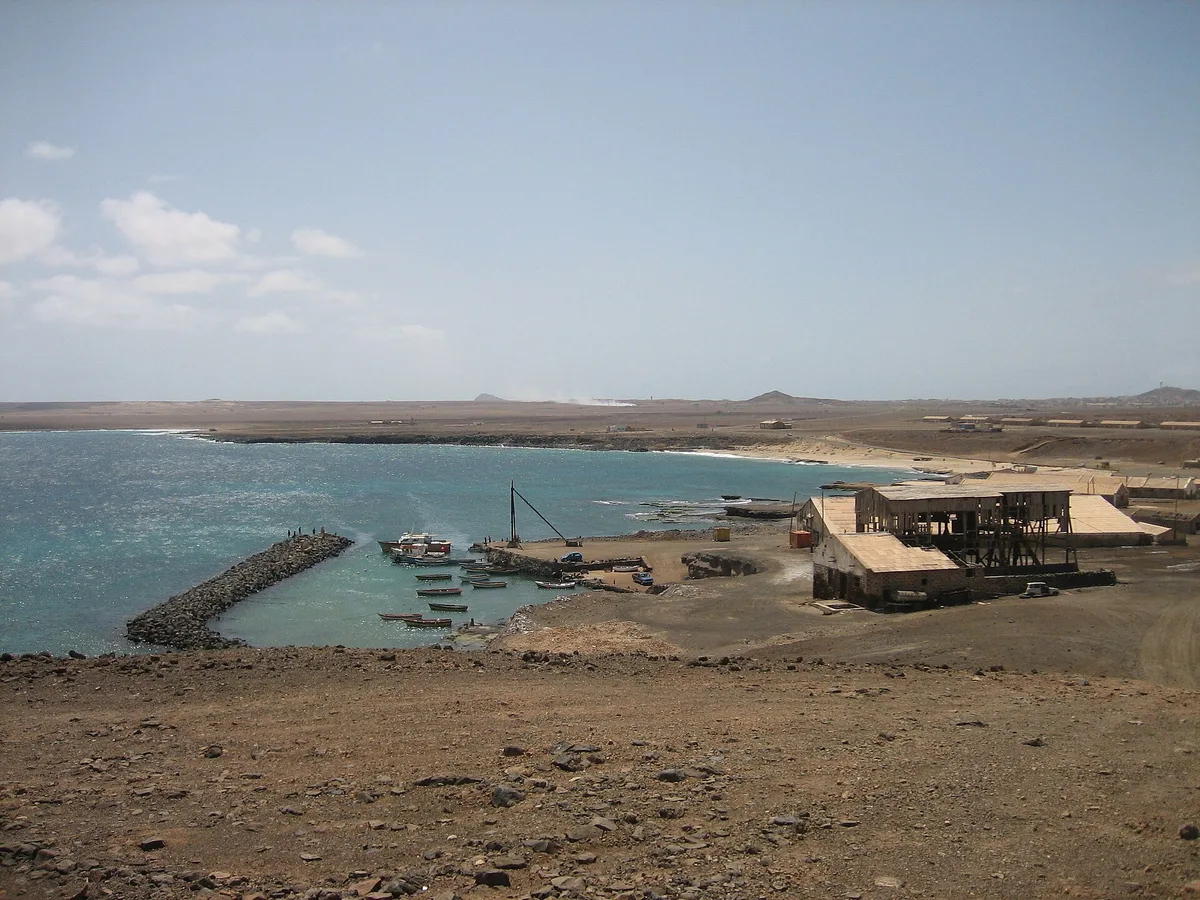
Praia de Pedra de Lume sits inside an ancient volcanic crater on Ilha do Sal, Cape Verde — one of the most geologically unusual beach settings in the Atlantic. The main draw isn't the ~150-metre strip of dark volcanic sand but the hypersaline pink lagoon at its heart, where the salt concentration is so high you float effortlessly, Dead Sea-style. Rusted ruins of old salt extraction infrastructure ring the crater walls, giving the place an eerie, industrial beauty that no postcard beach can match. The water in the lagoon runs a pale rose hue against the dark volcanic rock, while the surrounding crater offers zero shade and an almost lunar silence outside peak hours. It's compact, managed, and unlike anywhere else in Cape Verde.
How to get there
From Santa Maria it's roughly a 30-minute drive north; from Espargos, about 10 minutes. Free parking is available at the entrance. The site operates managed access with an entry fee (covering crater entry and use of the salt pans), so bring cash or card. A paved road leads to the entrance, though the path inside the crater is uneven in places — manageable for most visitors but worth knowing if mobility is a concern.
Who it's for
For couples
The surreal floating experience in the pink lagoon — effortless, wordless, unlike any beach afternoon — makes this a genuinely memorable shared moment. Arrive early, beat the day-tripper rush, and you'll have the crater almost to yourselves.
For families
Children old enough to follow clear safety rules — no splashing, no submerging heads, water shoes on — will find the floating lagoon genuinely exciting. Keep a close eye on younger kids given the eye-irritation risk from the hypersaline water, and pack serious sun protection since there is no shade anywhere inside the crater.
Our take
Pedra de Lume is not a beach you come to swim or surf — it's a geological spectacle you come to experience once and remember for years. The floating lagoon inside a volcanic crater, ringed by salt ruins and dark volcanic rock, is genuinely unlike anything else on Sal or in the wider Cape Verde archipelago. That said, go in with clear expectations: the dark sand beach strip is short, there is no shade whatsoever, and the hypersaline water demands real respect — eyes and cuts are at serious risk if you're careless. Time your visit for early morning, outside July and August, and the crater feels almost otherworldly before the day-trippers arrive. Worth the detour from Santa Maria without question — just treat it as the managed natural site it is, not a casual beach day.
What to do
The Salinas salt pans, just 0.4 km away, extend the geological story beyond the lagoon itself and are worth a slow walk. A short drive brings you to the Miradouro viewpoint at 1.3 km, offering elevated perspectives over the crater and coastline. Further afield, Buracona Blue Eye — about 25 km away — is a basalt rock platform with a striking underwater cave light phenomenon, while Shark Bay (18 km) offers shallow-water snorkelling with resident lemon sharks.
The pink lagoon shot from the crater rim path is the signature frame — shoot wide to capture the volcanic rock walls framing the pale rose water below.
The crumbling salt extraction ruins along the crater edge offer a compelling industrial-decay foreground, especially in the warm directional light before 10:00. For a human-scale shot, photograph a person floating motionless in the lagoon from directly above — the buoyancy is so extreme the pose looks almost impossible.
Where to eat
Bar Salinas, just 0.2 km from the beach, is the obvious stop for a post-float drink or a bite of regional food. Area Docas is about 0.8 km away if you want a slightly longer sit-down option. For something further out, Restaurante Mexico En Cabo Verde is around 3.9 km away.
Where to stay
La Vela is the nearest listed hotel, sitting about 8.9 km from the crater — a reasonable base for day visits. The area is primarily a day-trip destination, so most visitors stay in Santa Maria and drive up.
Photography
Arrive before 09:30 for the best light on the pink lagoon with no day-trippers in frame — the contrast between the pale rose water and dark volcanic rock is at its most vivid in low morning sun. The old salt extraction ruins along the crater rim make a compelling foreground element for wide-angle shots; position yourself on the crater path looking down into the lagoon for the most dramatic angle.
Good to know
An entry fee is required to access the salt lagoon area — budget accordingly and check current rates on arrival. Shower before and after entering the lagoon, and under no circumstances let the hypersaline water touch your eyes or any open cuts; it causes serious irritation. Do not submerge your head in the lagoon. Wear water shoes — salt crystals on the crater floor are sharp. The crater walls provide absolutely no shade, so bring strong sun protection, a hat, and your own drinking water. Avoid visiting between 10:00 and 14:00 when day-trippers from Santa Maria arrive in volume, and skip July and August entirely: extreme heat inside the crater with no shade makes those months genuinely unpleasant.
GAMES
🕹️ Five minutes of sand?
Three daily games — including the UV simulator set to this beach.
Map
Nearby places
Bar Salinas
Area Docas
Area Docas
Guesthouse kleine Schweiz
Restaurante Mexico En Cabo Verde
La Vela
Things to see around Sal
Espargos Town
Main administrative town with local restaurants and market
Buracona Blue Eye
Basalt rock platform with underwater cave light phenomenon
Shark Bay
Shallow bay with resident nurse sharks for snorkelling
GIFT
🎁 Gift this beach
Its exact coastline, your date, your words — on a print or a PDF you print yourself.
Pedra de Lume Beach
THAT DAY
Pedra de Lume Beach, Cape Verde
© OpenStreetMap contributors
Clean & decorative, or “That day” with the real sky of your date.
Shipping included 3-6 business days
A question before you order? Contact us
Delivered within minutes on the confirmation page and by email: a ZIP with all 4 print sizes (30×40 cm, 12×16″, 50×70 cm, 18×24″), each as a high-resolution PDF and PNG (300 dpi), plus a screen version. Print at home or at any print shop.
Please complete the delivery address.
Please accept the Terms of Sale.
Almost there — the shop opens very soon.
Secure payment · Printed locally in 30+ countries · 7 languages
Frequently asked
The information on this page is provided for guidance only and may evolve. Access conditions, safety and infrastructure can change without notice. Always check official sources before traveling.
Nearest beaches
Reviews of this beach
- No reviews yet, what a shame — leave yours and share your experience.
Photo credits
Sources and licenses for the photos shown above.
- Photo 1 — Dandell7 · source · CC BY-SA 4.0
- Photo 2 — Catiaritaferreira · source · CC BY-SA 4.0
- Photo 3 — JeLuF · source · CC0
- Photo 4 — JeLuF · source · CC0
- Photo 5 — JeLuF · source · CC0
- Photo 6 — Ingo Wölbern · source · Public Domain