
Flamenco BeachPuerto Rico Beach Guide
Ferry-only horseshoe bay with tanks, turtles, and turquoise water
 🎁 Gift idea: the star map of your most beautiful night↓
About
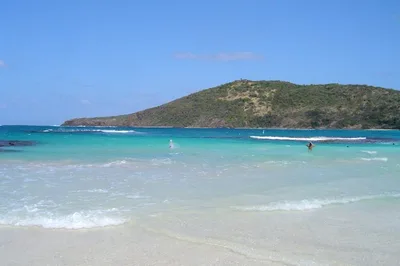
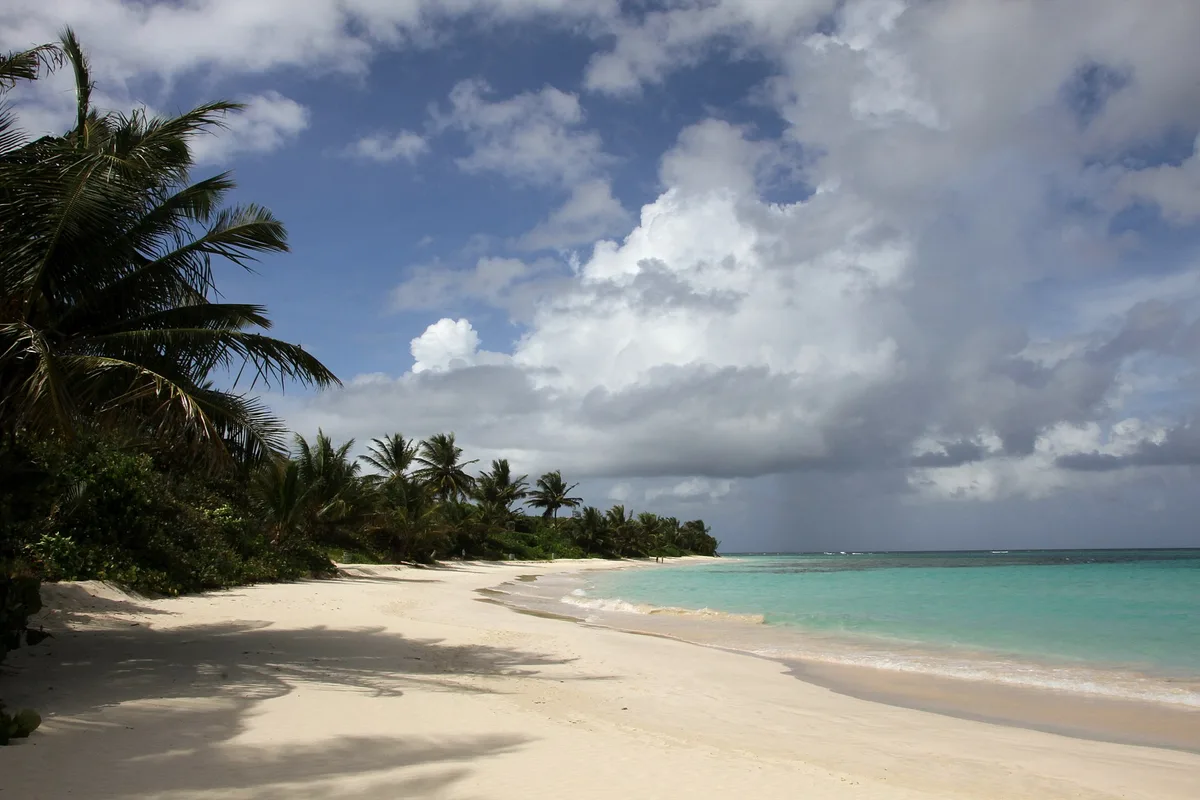
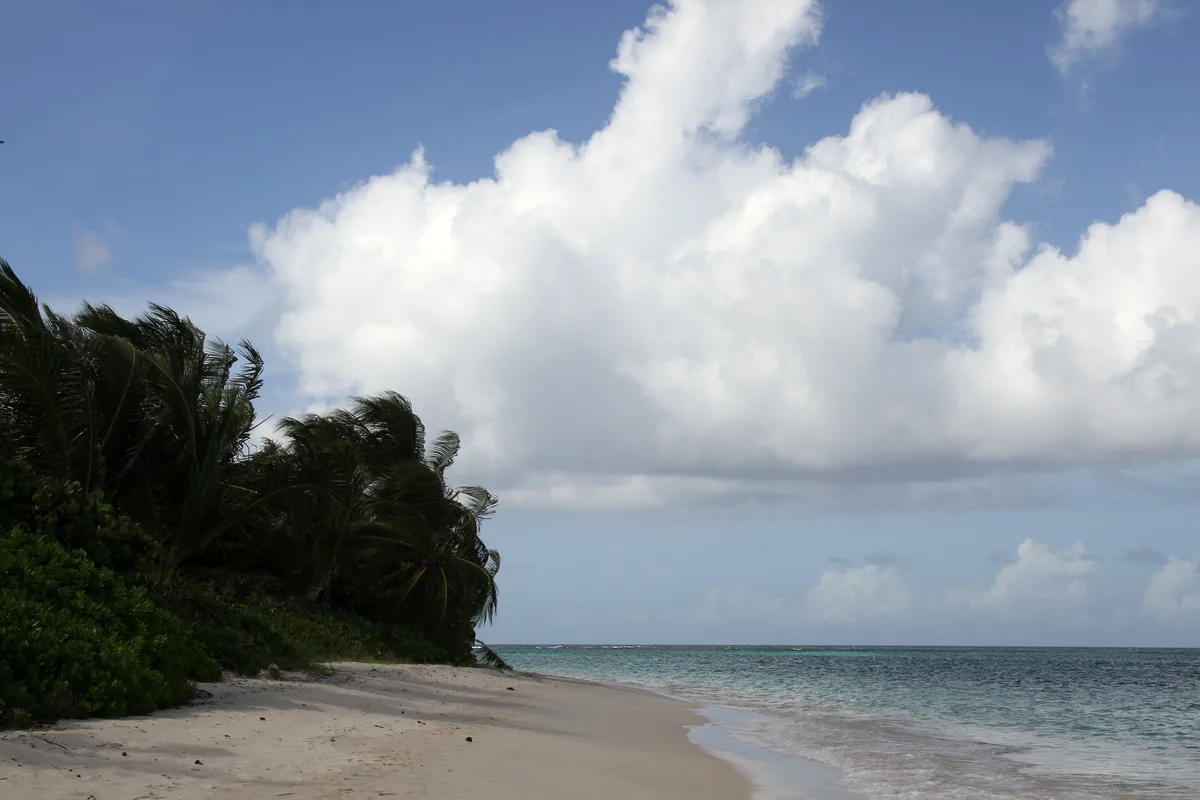
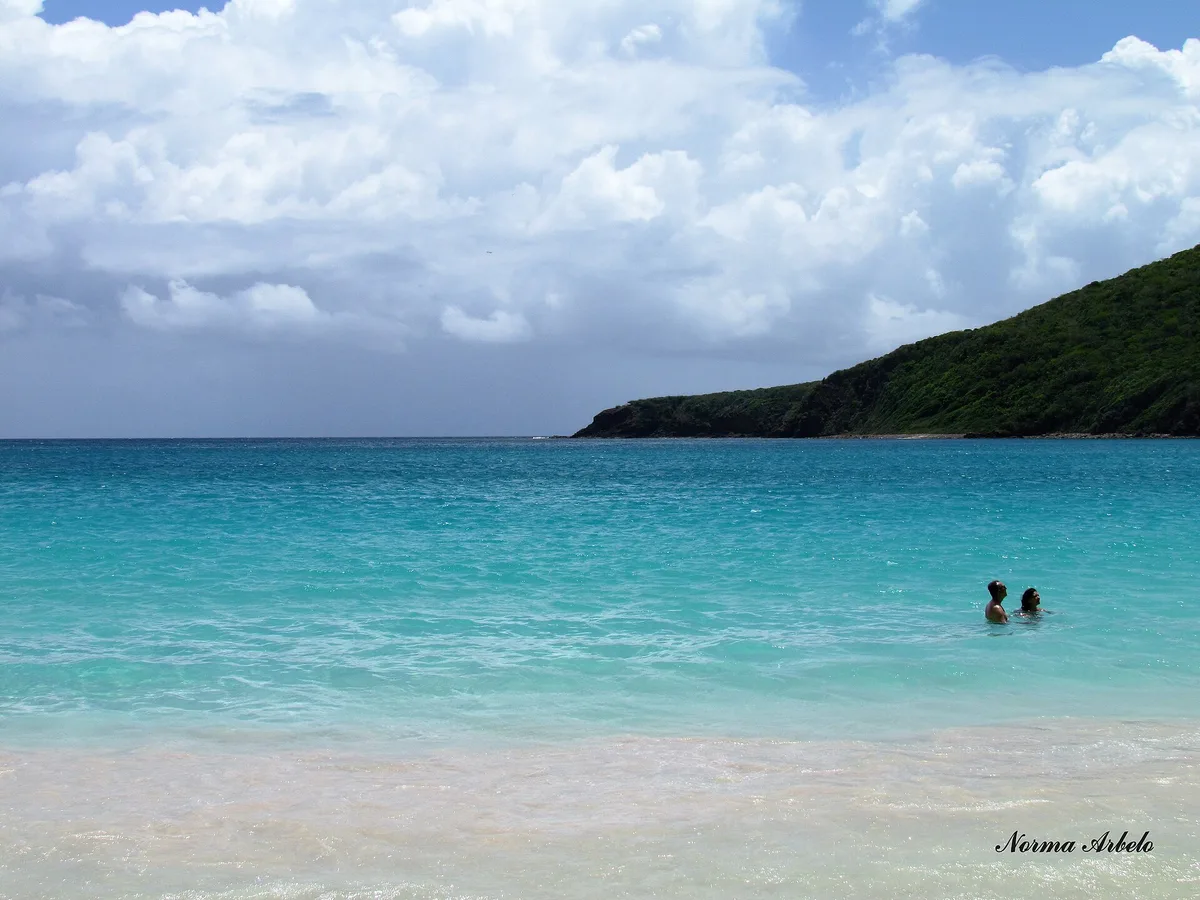
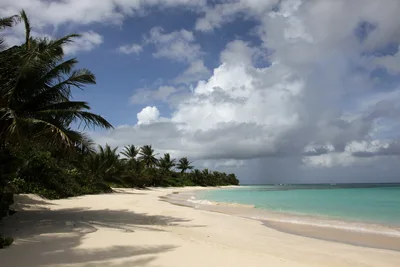
Playa Flamenco curves into a near-perfect horseshoe on the island of Culebra, off Puerto Rico's eastern coast. The powdery white sand stretches roughly a kilometre, cradling water so turquoise it looks artificially lit. What sets it apart from every other Caribbean postcard is the pair of graffiti-covered military tanks left behind from the U.S. Navy era — rusting, painted, and utterly surreal against the soft shoreline. The bay's sheltered geometry keeps the inner water calm and clear, making it one of Puerto Rico's premier snorkelling spots. It's busy, it's beautiful, and it earns every superlative — but you have to earn it too, because there's no road in.
How to get there
Playa Flamenco is boat- and ferry-only — no road reaches the beach. Catch the daily public ferry from Ceiba; the crossing takes roughly 60 minutes and drops you in Dewey (Pueblo de Culebra), about 4 km from the beach, where water taxis and local transport connect you to the shore. A $2 USD entry fee is collected at the beach. The beach is open daily during daylight hours, with the camping area remaining open overnight.
Who it's for
For couples
The relaxed pace, the surreal tank art, and the ferry journey itself make Playa Flamenco a genuinely memorable escape for two — camp overnight and you'll have the horseshoe bay almost entirely to yourselves at dawn.
For families
The sheltered inner bay offers safe, calm swimming for children, and the graffiti tanks are endlessly fascinating for kids — just keep little ones away from the outer ends of the beach where rip currents can occur.
Our take
Playa Flamenco is one of Puerto Rico's most celebrated beaches, and the reputation is justified — but go in clear-eyed. Rip currents are real at the outer ends of the bay and at the bay entrance; swim in the sheltered centre and pay attention to conditions. The ferry-only access is a feature, not a flaw: it keeps the beach from being overrun the way a road would, and the 90-minute crossing from Ceiba is part of the experience. December through February brings peak ferry congestion — if you visit then, camp overnight or take the earliest possible boat. The military tanks covered in decades of graffiti are genuinely one of the strangest and most compelling sights in the Caribbean. Come for the snorkelling, stay for the sunset, and leave no trace near the turtle nesting zones.
What to do
Snorkelling the reef just offshore is the main event — the turquoise water is clear enough to make it worthwhile even for beginners. The graffiti-covered military tanks at the edge of the beach are a genuine curiosity worth exploring on foot; they're a living canvas of Caribbean street art layered over Cold War hardware. A water taxi from Dewey can take you the 5 miles out to Culebrita Island, an uninhabited cay with tidal pools, a historic lighthouse, and more excellent snorkelling. The Luis Peña Channel Natural Reserve, just 3 km away, protects some of the richest coral reef and sea turtle habitat in the region.
The graffiti military tanks are unlike anything else on a Caribbean beach — shoot them at golden hour when the painted surfaces glow against the white sand.
From the higher ground at either tip of the horseshoe, you can frame the full mile of turquoise water in a single wide shot that needs no filter.
Where to eat
There are no restaurants directly on the beach, so bring provisions for the day. La Pista, about 2.1 km away, is the closest option once you head back toward Dewey. Coconuts Pizza Bar & Grill (2.5 km) and Salsa y Sazon (2.7 km) round out the nearest choices if you're making a full day of it on the island.
Where to stay
There is no on-beach accommodation listed for Playa Flamenco. Camping directly on the beach is permitted with a valid DRNA permit, making it the most immersive — and practical — overnight option for those who want to wake up before the day visitors arrive.
Photography
The military tanks at the beach's edge are the most distinctive shot on Culebra — arrive at first light for soft shadows and zero foot traffic. For the classic horseshoe panorama, find higher ground at either end of the bay where the full arc of white sand and turquoise water comes into frame.
Good to know
No alcohol is permitted on the beach — pack accordingly and respect the rule. If you plan to camp overnight (the best way to beat the day-tripper rush), you must obtain a permit in advance from the DRNA (Puerto Rico's Department of Natural Resources). Between April and July, sea turtle nesting zones are marked on the sand — stay out of them, no exceptions. Rip currents can develop at the outer ends of the bay and strong currents are possible at the bay entrance; swim in the sheltered centre and never ignore posted warnings. True digital-detox spot — bring offline books, the cell signal fades and there's nowhere to plug in a laptop.
GAMES
🕹️ Five minutes of sand?
Three daily games — including the UV simulator set to this beach.
Map
Nearby places
Culebrita Island
Luis Peña Channel Natural Reserve
Dewey (Pueblo de Culebra)
Things to see around Culebra
Culebrita Island
Uninhabited cay with tidal pools, a historic lighthouse, and excellent snorkeling reachable by water taxi.
Luis Peña Channel Natural Reserve
Marine reserve surrounding Culebra with protected coral reefs and sea turtle habitat.
Dewey (Pueblo de Culebra)
The only town on Culebra, with restaurants, dive shops, and the ferry terminal.
GIFT IDEA · MARCEL ET LES BLONDES
🎁 Give a moment, not a thing


What’s the occasion?

 💑 Dating anniversaryTwo dates, two starry skies
 💍 Wedding anniversaryCotton, silver, golden…
 🎂 BirthdayTheir own newspaper front page
 👶 New babyThe stars on the day they were bornValentine’s DayOur two moons, as a print
Shipping €5, free from €49 · made to order, shipped within 48 hAlso: our engraved wooden bracelets, €23.90 →
Frequently asked
The information on this page is provided for guidance only and may evolve. Access conditions, safety and infrastructure can change without notice. Always check official sources before traveling.
Nearest beaches

More beaches in Greater Antilles
Reviews of this beach
- No reviews yet, what a shame — leave yours and share your experience.
Photo credits
Sources and licenses for the photos shown above.
- Photo 1 — owen galen jones · source · CC BY-SA 2.0
- Photo 2 — License pending verification
- Photo 3 — Marco Zanferrari from Doha, Qatar · source · CC BY-SA 2.0
- Photo 4 — Marco Zanferrari · source · CC BY-SA 2.0
- Photo 5 — Norma Arbelo Irizarr… · source · CC BY-SA 3.0