Ouakam BeachSenegal Beach Guide
Wild cliff beach under Africa's tallest statue

About
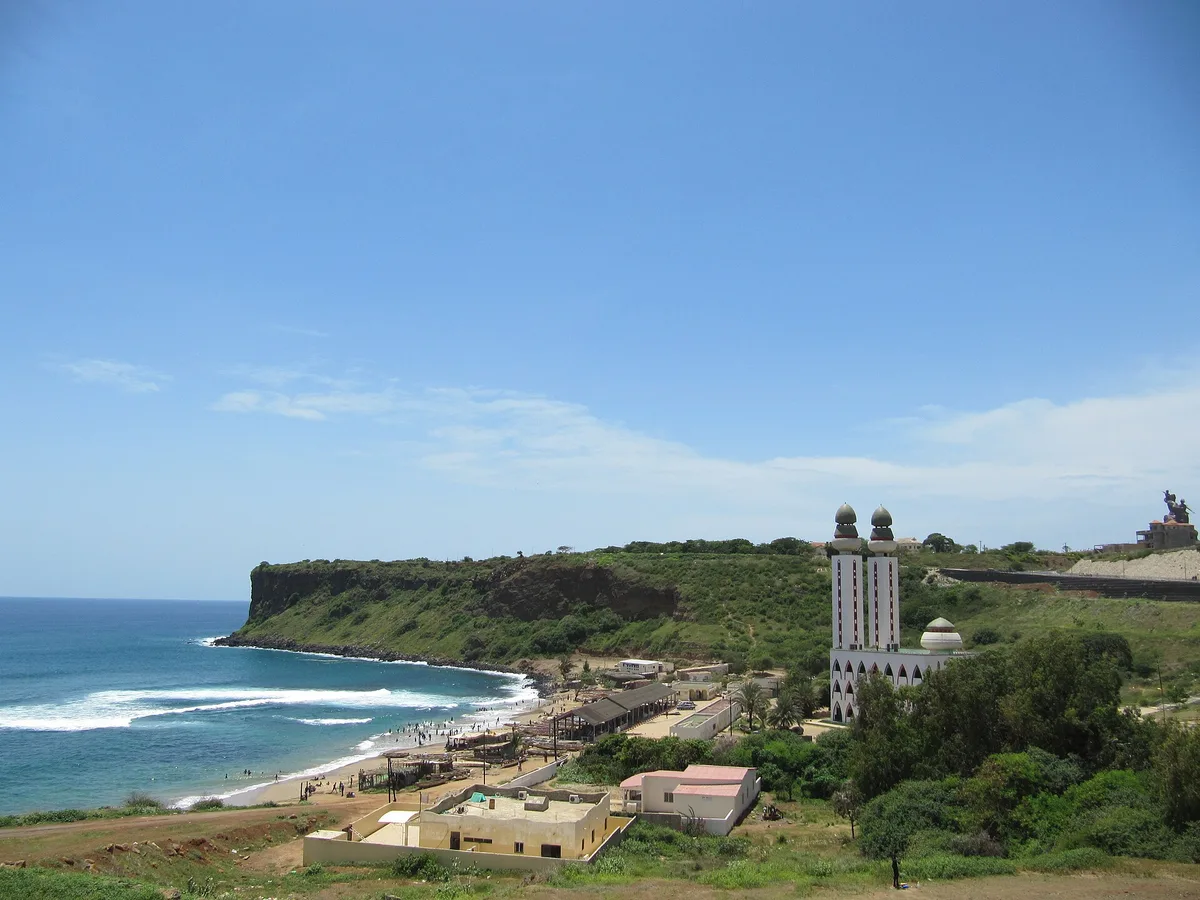
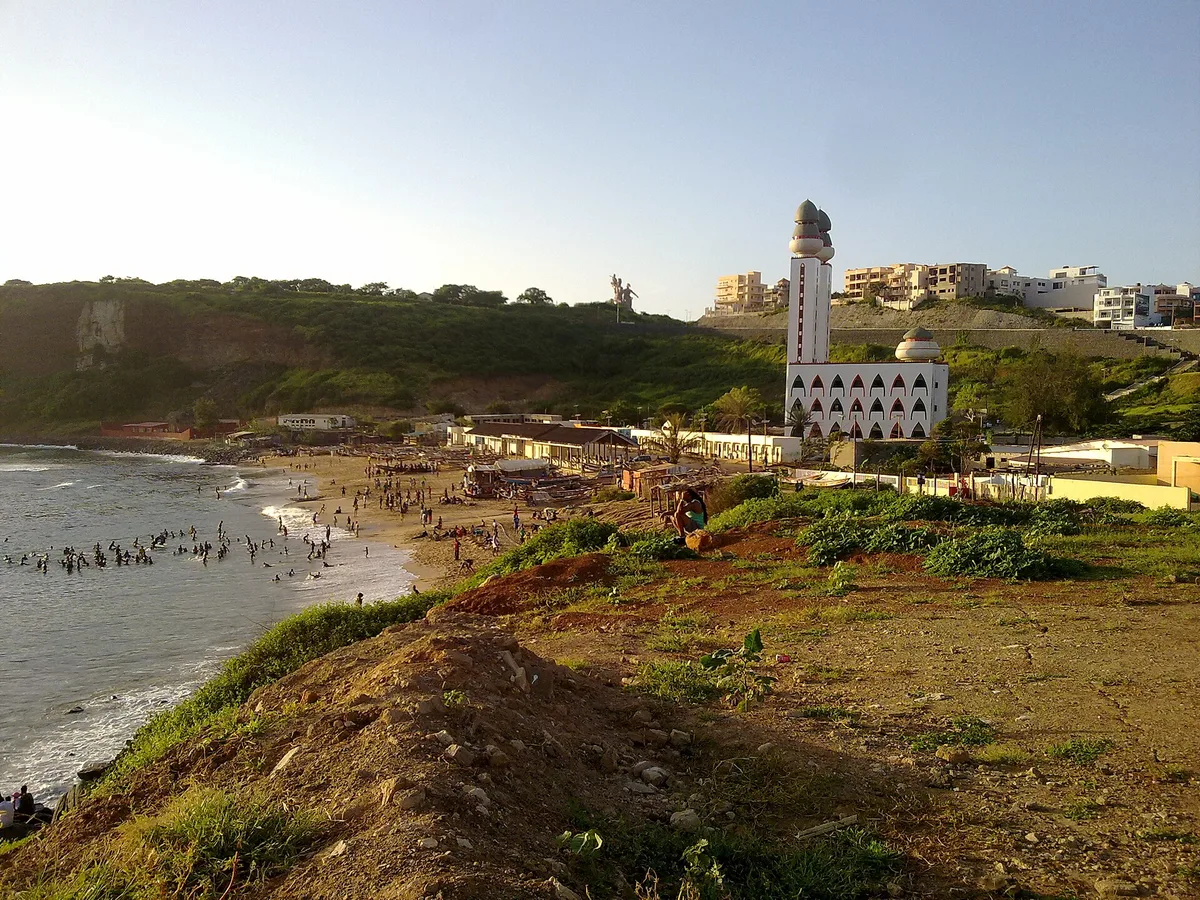
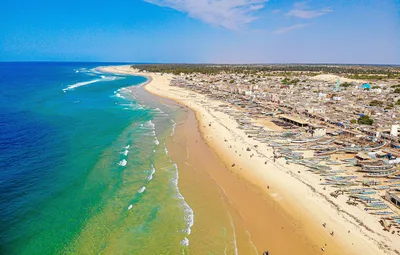
Plage de Ouakam sits at the foot of basalt cliffs on Dakar's Cap-Vert Peninsula, a compact stretch of golden sand where the blue Atlantic meets a rocky foreshore. Above it all, the 52-metre Monument de la Renaissance Africaine watches over the scene from the Ouakam ridge — a backdrop unlike any other beach in West Africa. Local fishermen work the shoreline, pirogues dotting the water, giving the place an unhurried, working-beach energy. It's wild and urban at once: city noise above, raw ocean below. Quiet by Dakar standards, but the sea here is unforgiving.
How to get there
From Dakar city centre, the beach is roughly 20 minutes by car — a straightforward daily connection. Paid parking is available at the entrance, though spaces are limited; free street parking can be found nearby if you arrive early. Getting down to the sand requires navigating a steep cliff path, so wear sturdy footwear and take your time. There is no entry fee to the beach itself.
Who it's for
For couples
The cliff setting and monument backdrop make for a genuinely striking walk — dramatic scenery, a quiet atmosphere, and a short stroll to one of Africa's most iconic landmarks. Come at dusk when the light hits the basalt cliffs and the monument glows above.
For families
The steep cliff path and dangerous currents make this a poor choice for young children. Older kids interested in the Monument de la Renaissance Africaine nearby may enjoy the cultural stop, but the beach itself offers no safe swimming and limited flat access.
Our take
Let's be direct: you do not come to Plage de Ouakam to swim. The currents are lethal, the prohibition is real, and no photograph is worth ignoring it. What you do come for is one of the most dramatically framed urban beaches in West Africa — golden sand backed by basalt cliffs, blue Atlantic stretching to the horizon, and a 50-metre bronze colossus watching from the ridge above. The fishing activity keeps it grounded and local; this is not a resort beach, and it doesn't pretend to be. Pair it with a visit to the Monument de la Renaissance Africaine and you have a half-day that's genuinely unlike anything else in Dakar. Skip the rainy season months of July through September. Come in the dry season, stay on the sand, and look up.
What to do
The Monument de la Renaissance Africaine is just 0.3 km away — one of the tallest statues in Africa, with panoramic views over Dakar and the Atlantic, and worth the short climb. The Phare des Mamelles lighthouse sits 1.5 km away and pairs well with a visit to the monument. If you want a beach where you can actually swim, Plage de N'Gor is 3 km north — a wide crescent with a pirogue crossing to N'Gor island — and Plage des Almadies, at Africa's westernmost point, is 4 km further.
The cliff-top vantage point with the Monument de la Renaissance Africaine rising above the golden sand and blue water is the defining shot — arrive early before the haze builds.
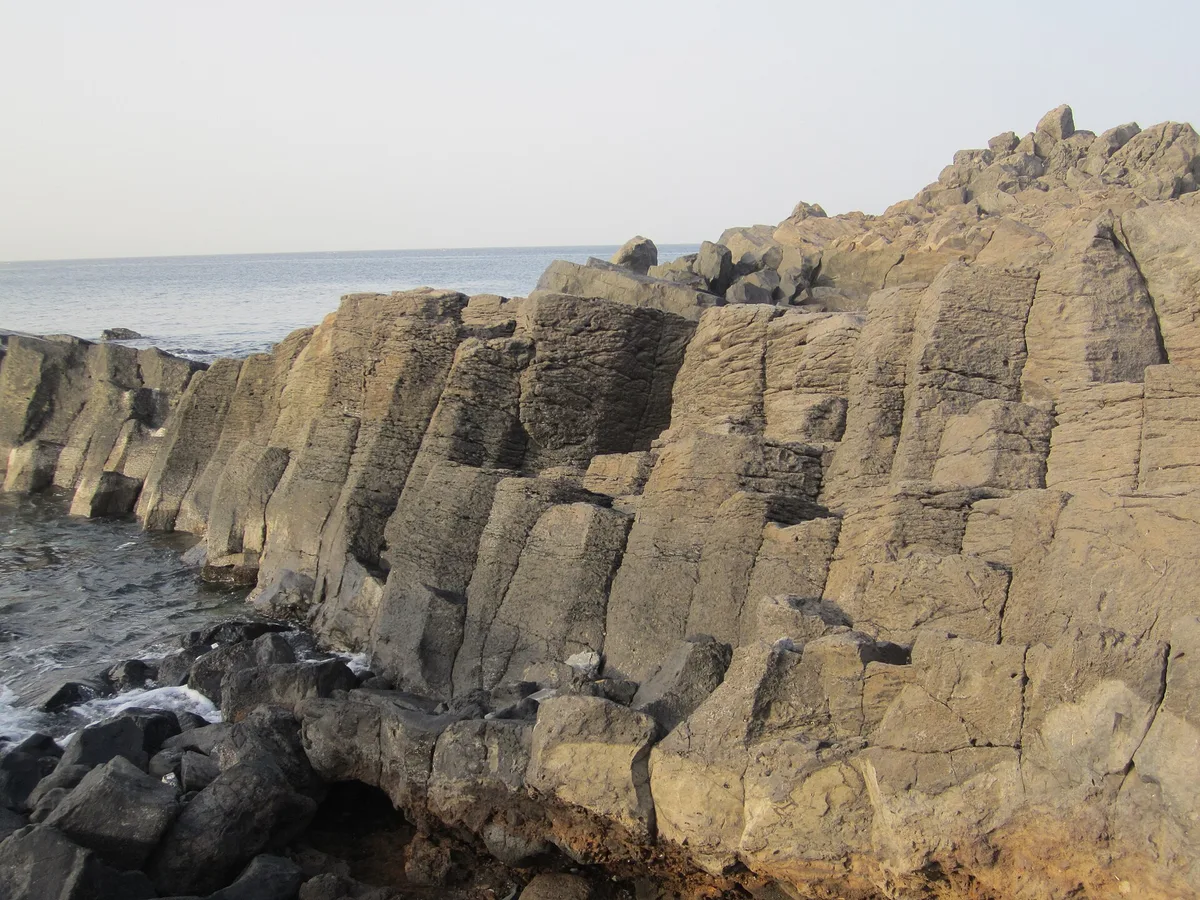
The rocky foreshore pockets at beach level offer textured close-ups with fishing pirogues and basalt formations as natural framing. At dusk, the monument catches warm light directly above the shoreline for a strong silhouette composition.
Where to eat
Phare des Mamelles, 1.4 km away, is the closest dining option and sits near the lighthouse. La Brioche Dorée Ouakam is 1.5 km out for a quick bite, while Boulangerie Jaune — a bakery, pâtisserie, and restaurant combo — is 2.7 km away and a solid stop for provisions. For a proper sit-down meal, Restaurant le Bazoff at 3.5 km carries strong reviews across over 2,300 ratings.
Where to stay
Hôtel Residence La Corniche is the closest option at just 0.5 km — a practical base if you want to be steps from the cliff. Hôtel du Phare sits 2 km away near the lighthouse area, and Le Shéhérazade is another 200 metres beyond that. All three put you within easy reach of both the beach and Dakar's wider attractions.
Photography
Shoot from the cliff top at golden hour for the full drama: the Monument de la Renaissance Africaine framed above golden sand and blue Atlantic water, with fishing pirogues in the foreground. Early morning gives the cleanest light and the fewest people on the rocky foreshore below.
Good to know
Do NOT enter the water — swimming is strictly prohibited here. Strong currents have caused multiple drownings, and the danger is real year-round. Avoid July, August, and September entirely: the rainy season intensifies currents and makes the cliff path treacherous. Respect local fishing operations — give fishermen and their equipment a wide berth, and never obstruct their access to the shore.
Map
Nearby places
La Brioche Dorée Ouakam
KFC Mermoz
Boulangerie Jaune (Boulangerie,Pâtisserie,Restauration)
Restaurant le Bazoff
Hôtel Residence La Corniche
Hôtel du Phare
Le Shéhérazade
Appartement
Hotel VDN
Monument de la Renaissance Africaine
Plage de N'Gor
Plage des Almadies
Things to see around Ouakam
Monument de la Renaissance Africaine
49-metre bronze statue on the Ouakam ridge, one of the tallest statues in Africa, with panoramic views
Plage de N'Gor
Wide crescent beach with pirogue crossing to N'Gor island
Plage des Almadies
Exposed surf beach at Africa's westernmost point
GIFT
🎁 Gift this beach
Its exact coastline, your date, your words — on a print, a mug, or a PDF you print yourself.
Ouakam Beach
THAT DAY
Ouakam Beach, Cap-Vert Peninsula
© OpenStreetMap contributors
Clean & decorative, or “That day” with the real sky of your date.
Shipping included 3-6 business days
A question before you order? Contact us
Delivered within minutes on the confirmation page and by email: a ZIP with all 4 print sizes (30×40 cm, 12×16″, 50×70 cm, 18×24″), each as a high-resolution PDF and PNG (300 dpi), plus a screen version. Print at home or at any print shop.
Please complete the delivery address.
Please accept the Terms of Sale.
Almost there — the shop opens very soon.
Secure payment · Printed locally in 30+ countries · 7 languages
Frequently asked
The information on this page is provided for guidance only and may evolve. Access conditions, safety and infrastructure can change without notice. Always check official sources before traveling.
Nearest beaches
Reviews of this beach
- No reviews yet, what a shame — leave yours and share your experience.
Photo credits
Sources and licenses for the photos shown above.
- Photo 1 — Popo le Chien · source · Public Domain
- Photo 2 — Panorama47 · source · CC BY 4.0
- Photo 3 — bhane https://www.geodiversite.net/auteur314 · source · CC BY-SA 3.0
- Photo 4 — Bigfall91 · source · CC BY-SA 4.0