Amed BeachIndonesia Beach Guide
Black volcanic sand, blue water, Bali's quieter east coast

About
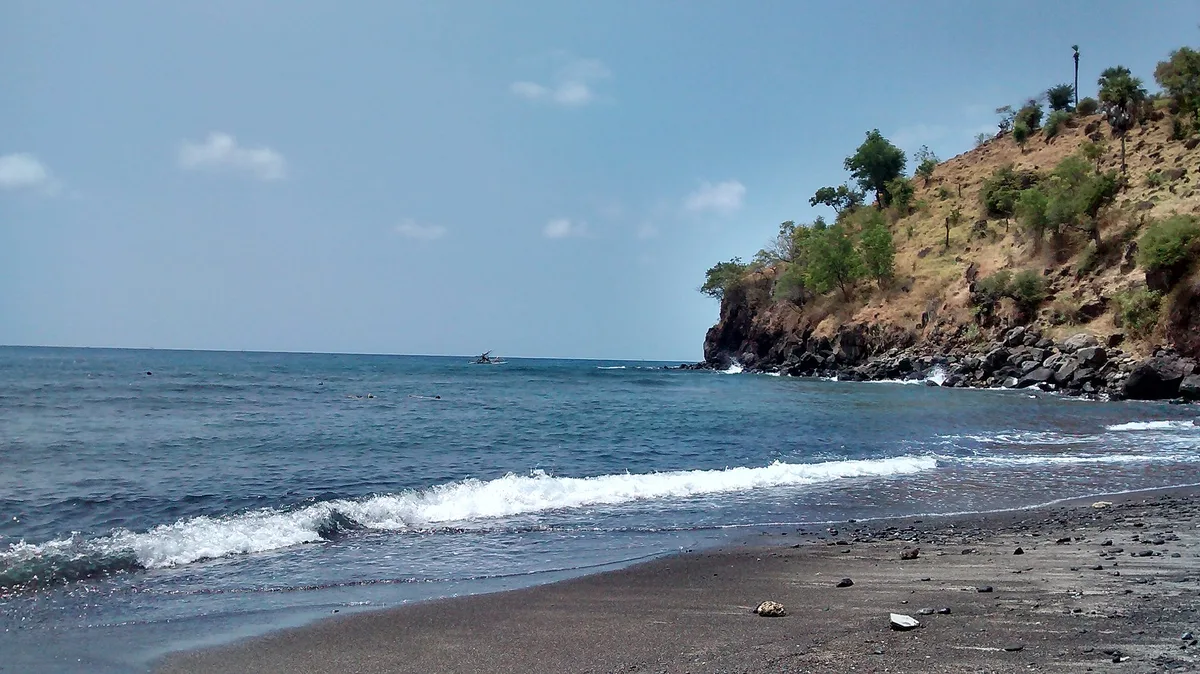
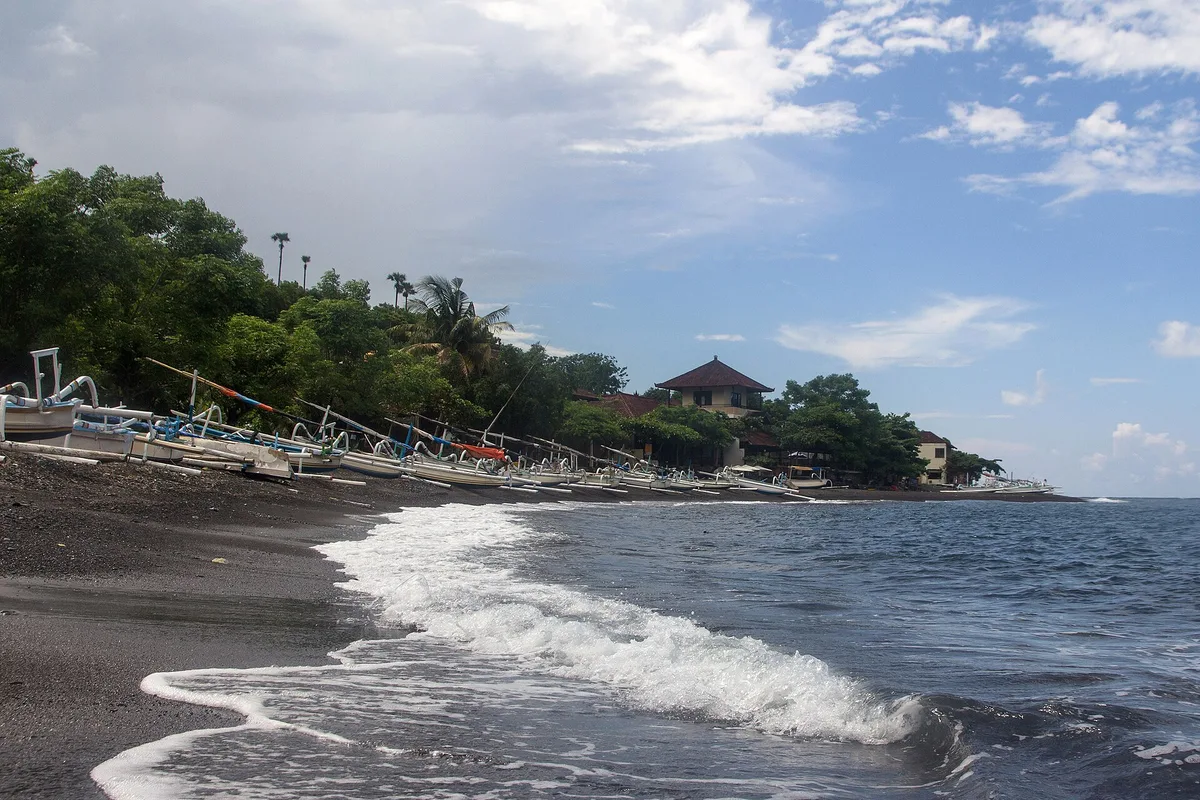
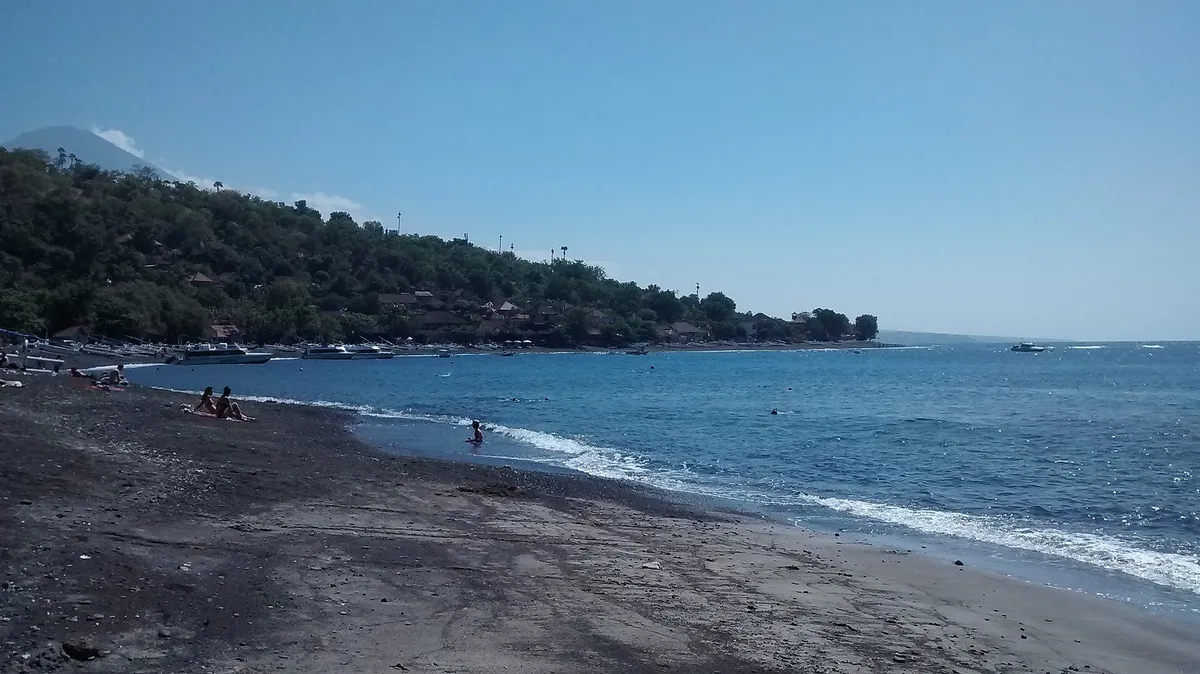
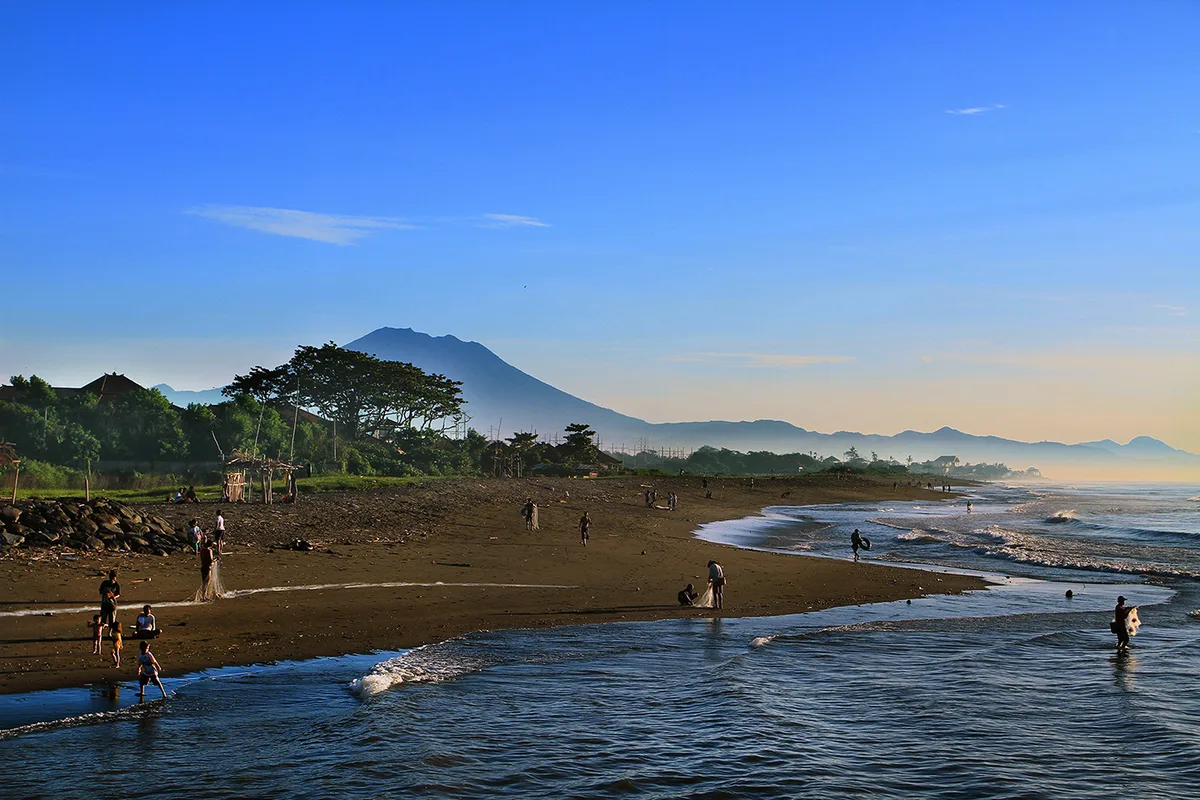
Pantai Amed stretches roughly 14 kilometres along Bali's east coast, a series of black volcanic sand coves backed by fishing boats and framed by the brooding silhouette of Gunung Agung. The water is a deep, open blue — calm enough for shore-entry snorkeling and diving straight off the beach. Traditional salt-making platforms still operate here, a craft that has defined this coastline for generations. On a clear morning, Gunung Agung's reflection shimmers across the surface before the day's heat builds. It's quiet, unhurried, and genuinely off the tourist trail.
How to get there
From Denpasar, allow around 150 minutes by car via winding mountain roads — the drive is scenic but demands full attention, especially after dark. From Candidasa it's a much shorter 28-minute run. Parking is free and informal: roadside spots at each cove along the strip. There is no entry fee.
Who it's for
For couples
The quiet pace and dramatic scenery — black sand, blue water, volcano backdrop — make Amed a genuinely romantic base for couples who'd rather dive together or watch a sunrise than fight for a sun lounger.
For families
Families with older children who dive or snorkel will find plenty here, but the black sand and uneven terrain make it impractical for pushchairs or young toddlers, and jellyfish blooms from November to February add a seasonal caution worth factoring into planning.
Our take
Amed is one of the few places on Bali where the beach still belongs to the people who work it. Fishing boats share the black volcanic sand with divers gearing up, and salt farmers go about their day largely unbothered by tourism. Swimming is safe in calm conditions, but take the jellyfish warning seriously — November through February is a real no-go for anyone in the water. The winding road in deserves respect too, especially at night. Come in the dry season, check the Gunung Agung advisories, bring your dive card, and you'll find one of east Bali's most rewarding stretches of coastline.
What to do
The shore-entry snorkeling and diving here is the main draw — the Amed Wall, just 500 metres away, is a recognised dive site worth exploring. A short 400-metre swim or dive brings you to an Underwater Shrine, one of the more unusual sights in Balinese waters. For a day trip, the USAT Liberty Shipwreck at Tulamben — 20 kilometres away — is one of Asia's most accessible wreck dives, a sunken WWII US cargo ship resting in shallow water. Gunung Agung's trekking routes and the ornamental pools of Tirta Gangga Water Palace are both within 20 kilometres if you want to venture inland.
The Sunrise Point at 100 metres delivers the signature shot: Gunung Agung reflected in blue water across black volcanic sand at first light.
The traditional salt-making platforms along the shore offer a rare, documentary-style frame that stands apart from standard Bali beach content. The Underwater Shrine at 400 metres is a striking subject for underwater photographers with a dive or snorkel setup.
Where to eat
Suda Café sits right at the beach, and Warung Celagi — serving Balinese food — is just 100 metres away. Warung Pantai and Amed Seaview Warung are both within 200 metres for a casual meal with a sea view. Sunrise Cafe and Restaurant, also 200 metres out, is a solid option for an early breakfast before a morning dive.
Where to stay
Ganesha Amed is the closest option at just 100 metres from the beach. Kembali Beach Bungalows at 300 metres and Valomia Beach Front at 600 metres both offer proximity to the water. Mango 5 Hotel and Mejore are slightly further out at 600 and 700 metres respectively, still well within walking distance of the coves.
Photography
The best shot on Amed is Gunung Agung's reflection on the still blue water at sunrise — head to the Sunrise Point, 100 metres from the beach, before 6 a.m. The black volcanic sand contrasting with colourful traditional fishing boats and the deep blue sea makes for strong foreground-to-horizon compositions throughout the morning golden hour.
Good to know
Dive operators require you to present your certification card — no card, no dive, no exceptions. Respect the active fishing operations on the beach; boats launch and land throughout the day, so stay clear of the working shoreline. Nudity is not permitted anywhere along the beach. Between November and February, jellyfish blooms are reported in the water, which also reduces visibility for diving and snorkeling — those months are best avoided entirely. The mountain road is winding and poorly lit; do not drive it at night unless you know it well. Before any visit, check current advisories for Gunung Agung volcanic activity.
GAMES
🕹️ Five minutes of sand?
Three daily games — including the UV simulator set to this beach.
Map
Nearby places
Suda Café
Warung Celagi
Warung Pantai
Amed Seaview Warung
Sunrise Cafe and Restaurant
Ganesha Amed
Kembali Beach Bungalows
Valomia Beach Front
Mango 5 Hotel
Mejore
USAT Liberty Shipwreck, Tulamben
Gunung Agung
Tirta Gangga Water Palace
Things to see around Abang
USAT Liberty Shipwreck, Tulamben
WWII US cargo ship sunk in 1963 by Gunung Agung eruption, now one of Asia's most accessible wreck dives.
Gunung Agung
Bali's highest and most sacred volcano, with trekking routes to the 3031 m summit.
Tirta Gangga Water Palace
Former royal water palace with ornamental pools, fountains and traditional Balinese gardens.
GIFT
🎁 Gift this beach
Its exact coastline, your date, your words — on a print or a PDF you print yourself.
Amed Beach
THAT DAY
Amed Beach, Lesser Sunda Islands
© OpenStreetMap contributors
Clean & decorative, or “That day” with the real sky of your date.
Shipping included 3-6 business days
A question before you order? Contact us
Delivered within minutes on the confirmation page and by email: a ZIP with all 4 print sizes (30×40 cm, 12×16″, 50×70 cm, 18×24″), each as a high-resolution PDF and PNG (300 dpi), plus a screen version. Print at home or at any print shop.
Please complete the delivery address.
Please accept the Terms of Sale.
Almost there — the shop opens very soon.
Secure payment · Printed locally in 30+ countries · 7 languages
Frequently asked
The information on this page is provided for guidance only and may evolve. Access conditions, safety and infrastructure can change without notice. Always check official sources before traveling.
Nearest beaches
Other relaxed beaches in Indonesia
More beaches in Lesser Sunda Islands
Reviews of this beach
- No reviews yet, what a shame — leave yours and share your experience.
Photo credits
Sources and licenses for the photos shown above.
- Photo 1 — F-GSPY · source · CC BY 3.0
- Photo 2 — Alexey Komarov · source · CC BY 3.0
- Photo 3 — F-GSPY · source · CC BY 3.0
- Photo 4 — musnahterinjak · source · CC BY-SA 3.0
- Photo 5 — Rrinaldy · source · CC BY-SA 4.0