Kastro BeachGreece Beach Guide
Medieval walls, grey pebbles, blue water, pure Sifnos
 🎁 Gift idea: the star map of your most beautiful night↓
About
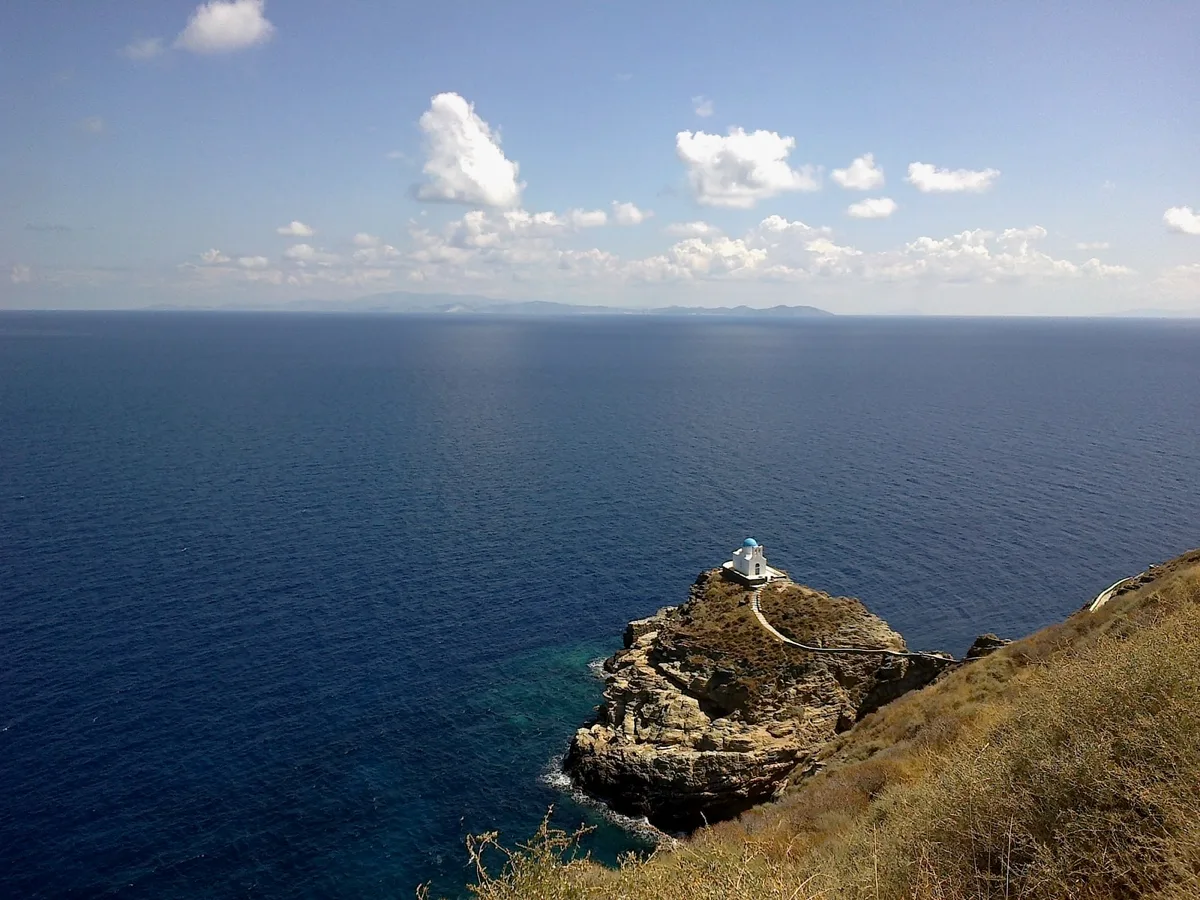
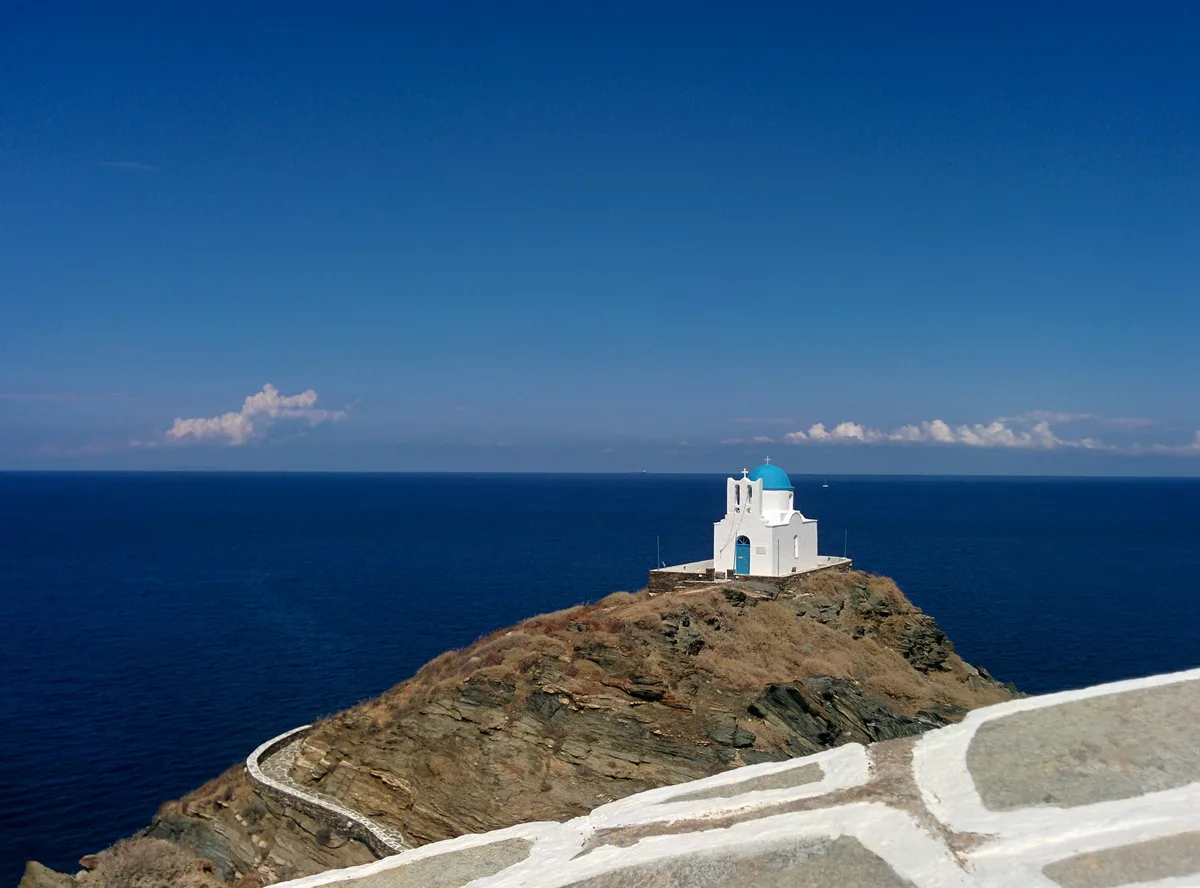
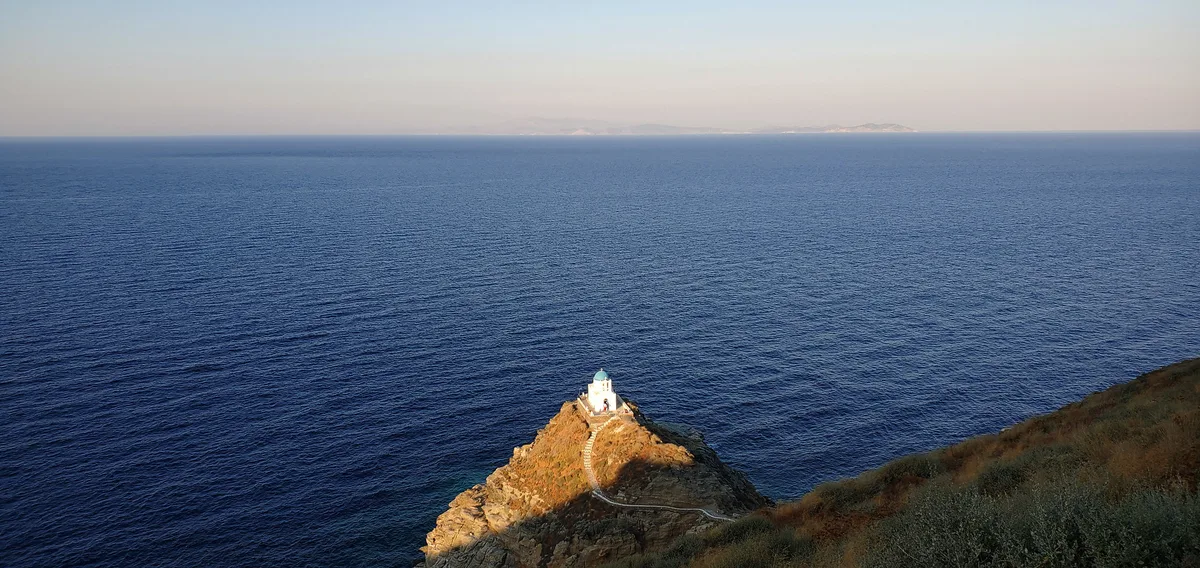
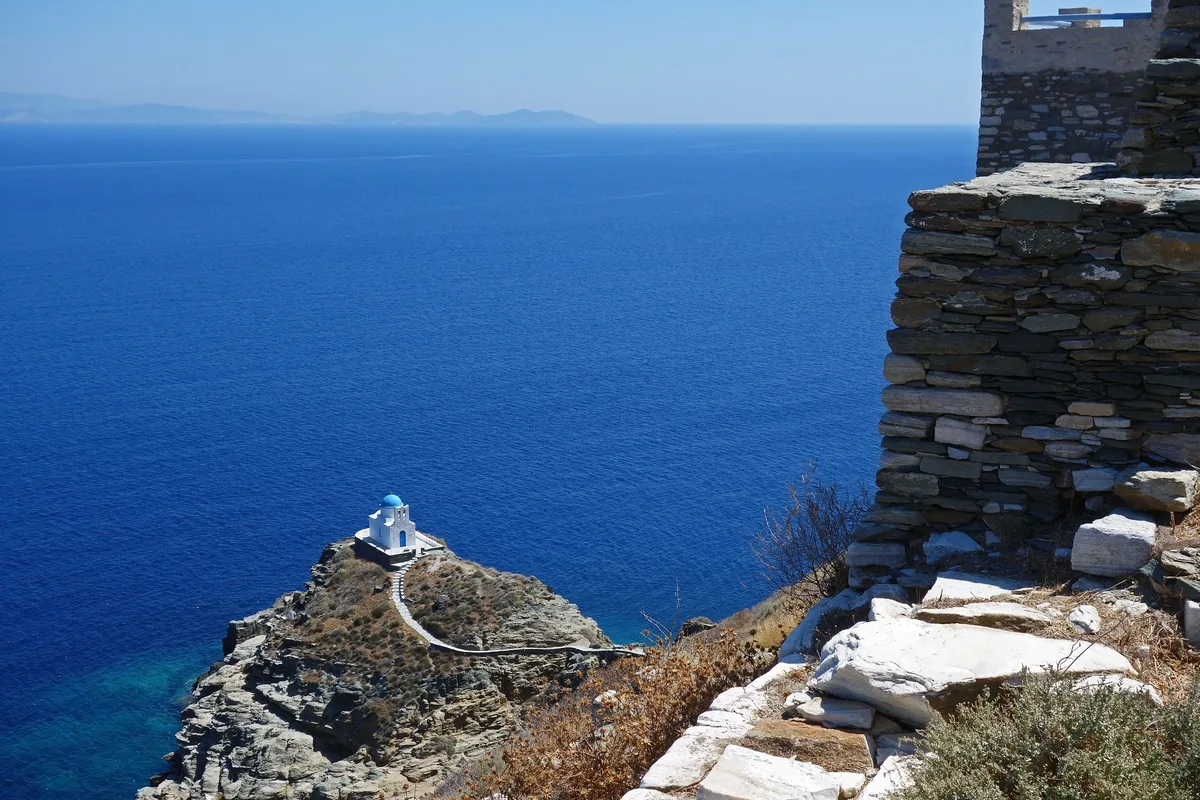
Kastro beach sits at the foot of Sifnos's most dramatic landmark — a Venetian fortified hilltop village whose medieval walls rise directly above the narrow pebble shore. The grey pebbles give way to blue water that catches the east-coast morning light in a way that makes the whole scene feel composed rather than accidental. Access is via a stone stairway descent from the village above, so the beach stays quiet even in high summer. It's a romantic, historically charged spot where architecture and coastline share equal billing.
How to get there
From Apollonia, drive toward Kastro village — the journey takes around 10 minutes by car. Park at the Kastro village entrance; there is no road down to beach level and no parking at the shore. From the village, a stone stairway leads down to the beach — a 10-minute walk on foot. Note that the stairway descent makes this beach inaccessible for those with limited mobility.
Who it's for
For couples
The combination of a quiet pebble shore, blue water, and Venetian walls overhead makes Kastro beach one of the most romantic settings on Sifnos — it's the kind of place where the scenery does all the work. Come in the morning, when the east-coast light is soft and you're likely to have the narrow shore almost to yourselves.
For families
The stone stairway access and slippery wet pebbles make this beach a challenge with very young children or pushchairs, so it suits families with older, sure-footed kids best. The upside is that the Kastro Medieval Village and its small Archaeological Museum are right there — 0.1 km and 0.2 km respectively — turning the outing into a proper half-day of history and swimming.
Our take
Kastro beach earns its place on any Sifnos itinerary not because of the swimming alone, but because of what looms above it. Swimming is safe, the water is blue, and the shore is quiet — but the real reason to make the stone stairway descent is that view: Venetian walls and a medieval village stacked directly overhead, reflected in the calm of an east-coast morning. The grey pebbles are narrow and can be slippery when wet, so water shoes are a practical call, not an optional extra. It's not a beach for a full lazy day — there's no road access to the shore, and the stairway return will remind you of its existence. Come for two or three hours, combine it with the Kastro Medieval Village and the Archaeological Museum just steps away, and you'll leave with a complete picture of what makes Sifnos different from the rest of the Cyclades. Worth the detour.
What to do
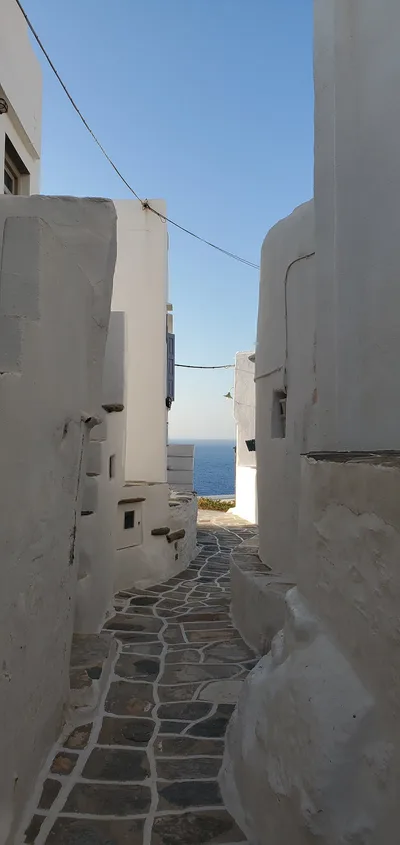
The Kastro Medieval Village, just 0.1 km away, is the main draw — a Venetian-era fortified hilltop settlement with intact medieval architecture, churches, and lanes that reward slow exploration. The Archaeological Museum of Sifnos inside Kastro, only 0.2 km from the beach, displays finds from the island's ancient sites and is well worth a visit before or after your swim. A short trip of 2.5 km brings you to Faros, a working fishing village with authentic tavernas and a very different, quieter pace.
The classic frame is from the water's edge looking up at the Venetian fortified walls and medieval village rising above the grey pebbles — shoot it in morning light for warm stone tones against blue sky.
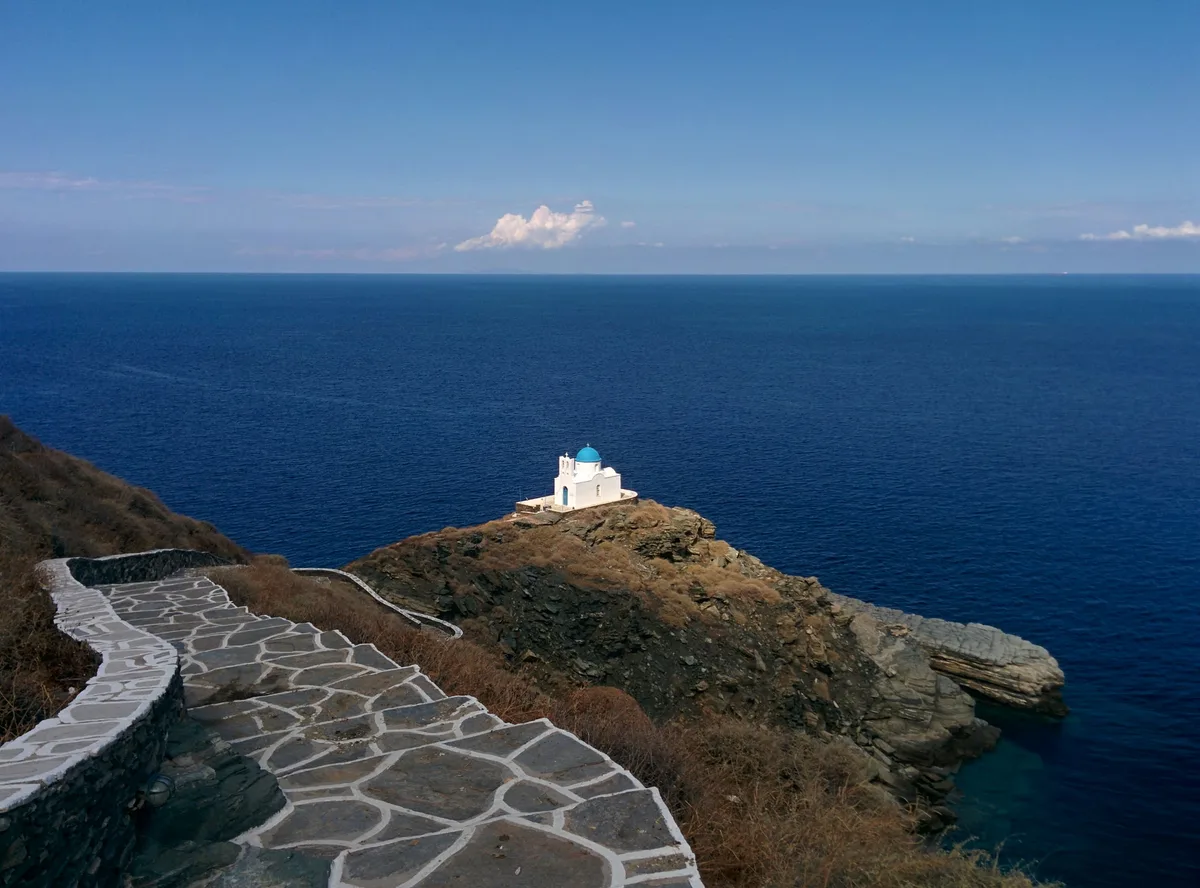
The stone stairway itself makes a strong architectural shot, with the narrow pebble shore and blue water visible below through the descent.
Where to eat
Right at the village level, Stiadi and Dolce are both within 0.1 km — Dolce covers everything from breakfast crepes and coffee to savory pancakes and pasta, making it a practical stop before the stairway descent. For a longer meal, Lembessis is 1.7 km away, while Margarita and Mama Mia — the latter known for pizza — are both around 1.9 km from the beach.
Where to stay
The closest options cluster around 1.9–2 km from the beach: Petali Village, Hotel Sofia, Sofia, and Andromeda Rooms all sit within that range and put you close enough to walk to Kastro village with ease. If you prefer something further afield, Aerina is about 4.9 km away and offers a different part of the island as your base.
Photography
The best shot on Sifnos is from the beach looking up at the Venetian fortified walls with the medieval village stacked above — shoot this in the morning when east-coast light hits the stonework directly. For a second angle, position yourself on the stone stairway descent to frame the narrow grey-pebble shore against the blue water below.
Good to know
You are inside a historic monument zone — treat the surroundings with respect and avoid touching or disturbing the Venetian walls and structures above. The pebble shore can be slippery when wet, so wear water shoes and take care on the stone stairway both going down and coming back up. Dogs are welcome here, as there are no formal restrictions on this unorganised beach. Arrive early to catch the east-coast morning light at its best and to enjoy the quiet before day visitors make the descent.
GAMES
🕹️ Five minutes of sand?
Three daily games — including the UV simulator set to this beach.
Map
Nearby places
Petali Village
Hotel Sofia
Sofia
Andromeda Rooms
Aerina
Villa Sviggos
Kastro Medieval Village
Archaeological Museum of Sifnos (Kastro)
Faros Village
Things to see around Apollonia
Kastro Medieval Village
Venetian-era fortified hilltop village with intact medieval architecture, churches, and a small archaeological museum.
Archaeological Museum of Sifnos (Kastro)
Small museum inside Kastro displaying finds from the island's ancient sites.
Faros Village
Working fishing village with authentic tavernas.
GIFT IDEA · MARCEL ET LES BLONDES
🎁 Give a moment, not a thing


What’s the occasion?

 💑 Dating anniversaryTwo dates, two starry skies
 💍 Wedding anniversaryCotton, silver, golden…
 🎂 BirthdayTheir own newspaper front page
 👶 New babyThe stars on the day they were bornValentine’s DayOur two moons, as a print
Shipping €5, free from €49 · made to order, shipped within 48 hAlso: our engraved wooden bracelets, €23.90 →
Frequently asked
The information on this page is provided for guidance only and may evolve. Access conditions, safety and infrastructure can change without notice. Always check official sources before traveling.
Nearest beaches

Other romantic beaches in Greece
More beaches in Cyclades
Reviews of this beach
- No reviews yet, what a shame — leave yours and share your experience.
Photo credits
Sources and licenses for the photos shown above.
- Photo 1 — rene boulay · source · CC BY-SA 3.0
- Photo 2 — nymphnode · source · CC BY-ND 2.0
- Photo 3 — Luigi Rosa · source · CC BY-SA 2.0
- Photo 4 — albategnius · source · CC BY-SA 2.0
- Photo 5 — nymphnode · source · CC BY-ND 2.0
- Photo 6 — Luigi Rosa · source · CC BY-SA 2.0