Johnny Cay BeachColombia Beach Guide
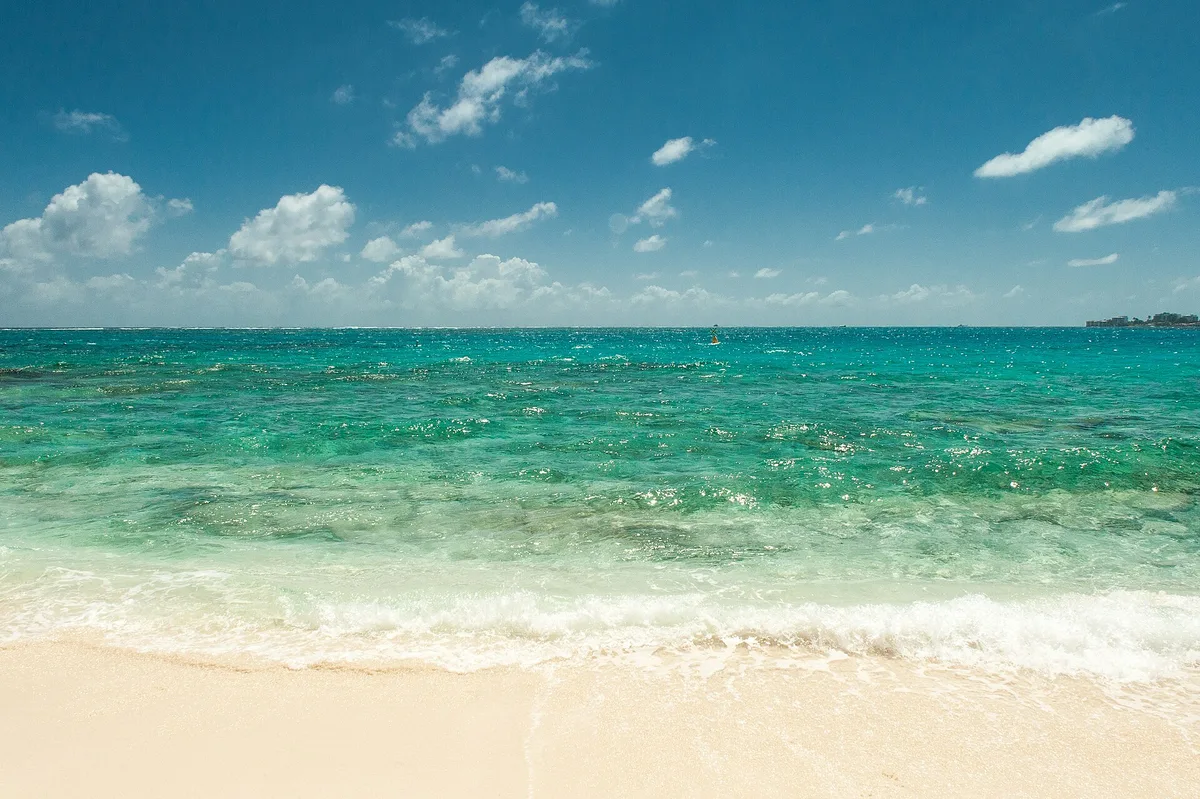
A protected coral cay ringed by turquoise water off San Andrés
About
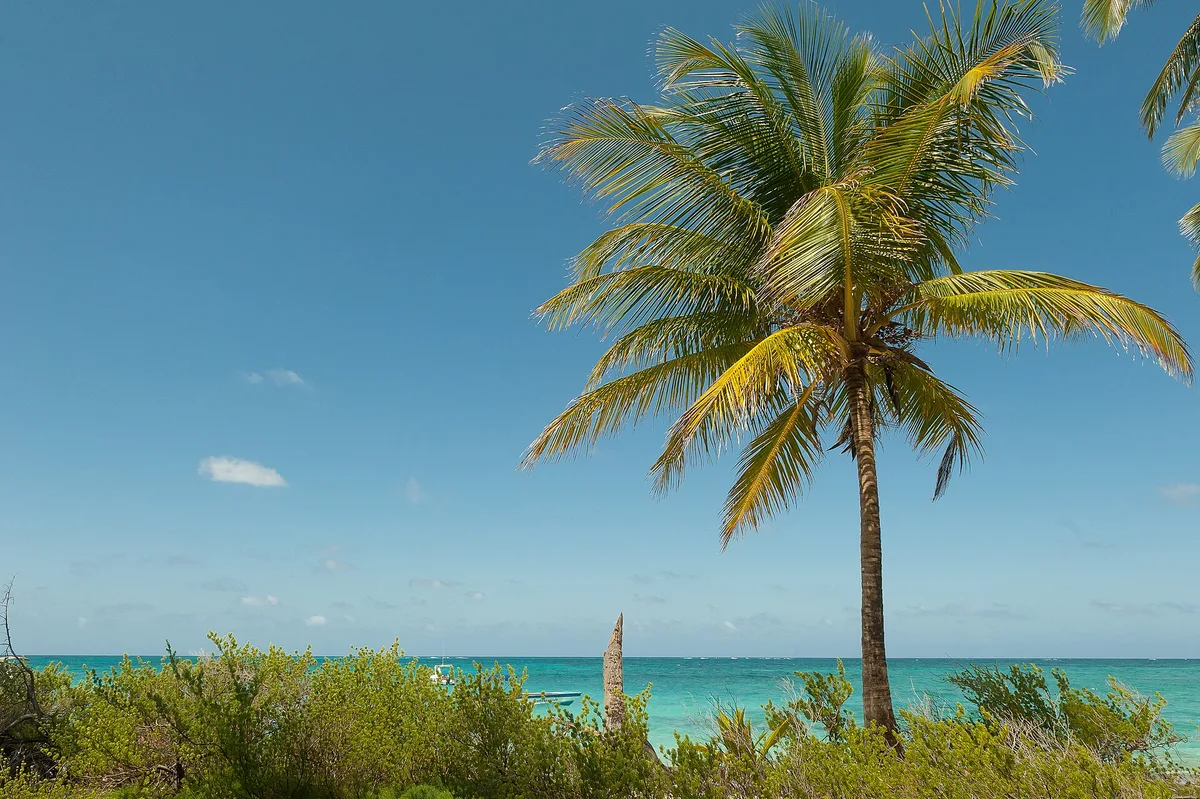
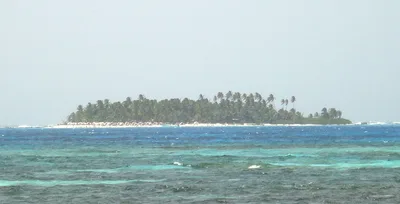
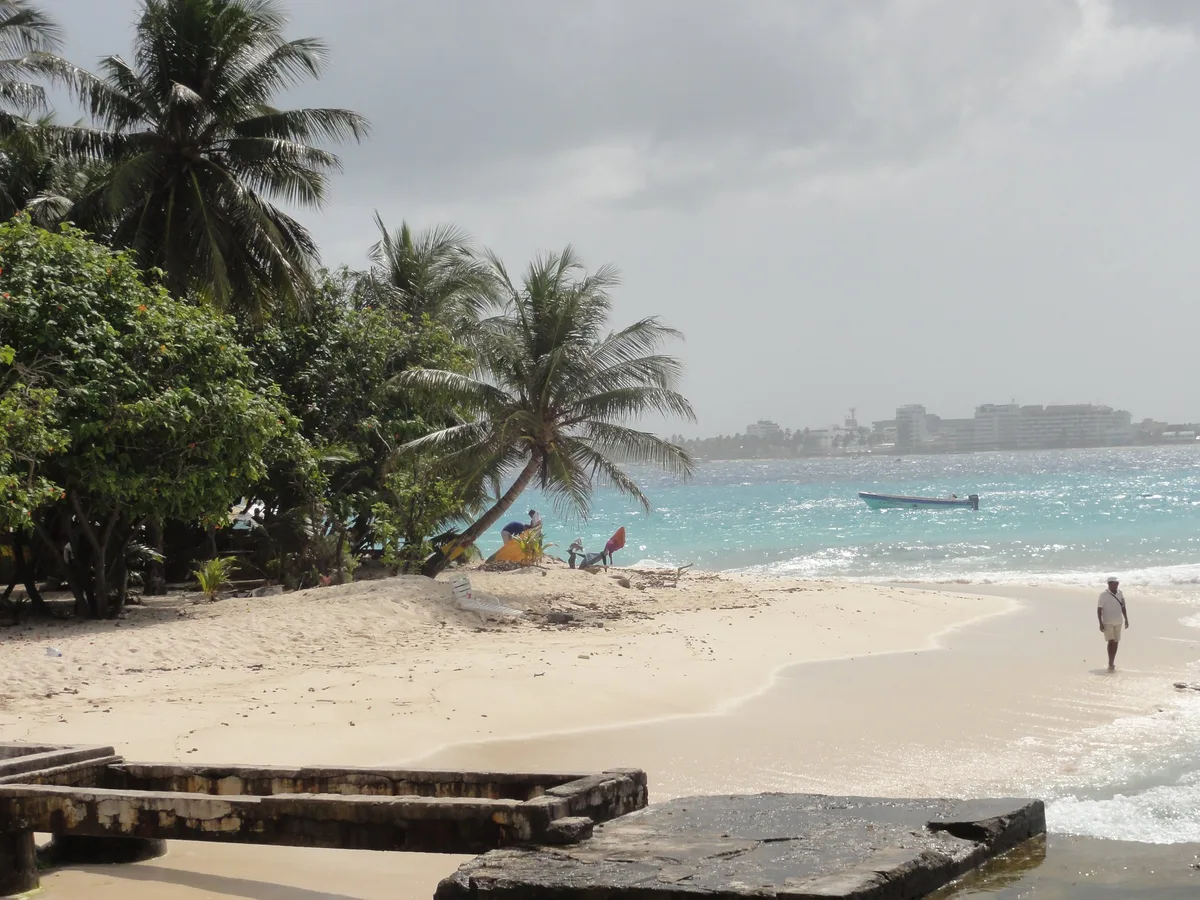
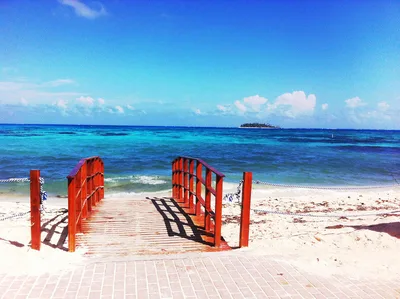
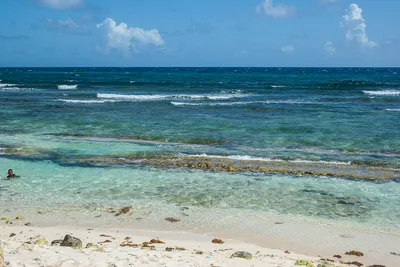
Johnny Cay is a small, circular coral cay sitting just off the coast of Isla de San Andrés in the Colombian Caribbean. Its white sand shore curves around the entire islet, and the surrounding water runs a clear turquoise that makes the reef below easy to spot from the surface. Protected as a natural park, the cay has no permanent development — no hotels, no restaurants, no roads — just palms, sand, and open sky. The view back toward the San Andrés skyline across the channel is one of the most distinctive sights in the archipelago. The vibe is unhurried, and the scale is intimate enough that you feel the whole place rather than just a strip of it.
How to get there
Johnny Cay is boat-access only — there is no road and no way to drive here. Lanchas (small motorboats) depart daily from the San Andrés town pier and reach the cay in roughly 7 minutes; boats run Tuesday through Sunday during daylight hours and do not operate on Mondays. A park entry and docking fee applies on arrival. Note that there is no landing dock on the cay: passengers wade or step ashore onto soft sand, which creates real difficulty for elderly visitors (over 65), pregnant women, people with disabilities, and children under 5.
Who it's for
For couples
The lack of any permanent development makes Johnny Cay genuinely quiet — a short boat ride delivers you to white sand and turquoise water with no vendors, no noise, and a skyline view that frames the horizon beautifully at golden hour.
For families
Families with older children who can wade ashore and swim confidently will enjoy the snorkelling and the compact scale of the cay. However, the boat boarding and shoreline entry are not suitable for children under 5, and there is no lifeguard — plan accordingly and stick to the calmer leeward side.
Our take
Johnny Cay earns its reputation not through spectacle but through restraint — no development, no permanent vendors, no road, just a circular sliver of white sand and turquoise water that the Colombian government has chosen to protect rather than exploit. The snorkelling around the perimeter is genuinely good, and the view back to San Andrés across the channel is unlike anything you get from the island itself. That said, go in with clear eyes: there is no lifeguard, strong currents run on the windward side, and the channel crossing can be rough between November and January — this is not a place to be casual about water safety. The Monday closure catches visitors off guard more than almost anything else, so check the day before you plan to go. Come Tuesday through Sunday between February and October, pack your own food and water, leave the coral exactly where you find it, and you will have one of the cleanest, most honest beach days the Colombian Caribbean offers.
What to do
Snorkelling around the cay's perimeter is the main draw, with the coral reef visible just below the turquoise surface. A short boat ride away, El Acuario is a shallow sandbar where nurse sharks and stingrays are visible from the surface — many boat operators combine both stops on a single day trip. Back on San Andrés, Spratt Bight Beach and its boardwalk offer a complete contrast: the main town beach with all the amenities the cay deliberately lacks.
The classic frame is standing on the white sand at the cay's edge with the turquoise water in the foreground and the San Andrés skyline sharp on the horizon behind — shoot it in the morning before the light goes flat.
The leeward reef just below the surface also photographs well from above with a waterproof camera or drone, where the coral patterns and turquoise gradients are at their most defined.
Where to eat
There are no food vendors or restaurants on Johnny Cay itself — pack everything you need before you board the boat. Back in San Andrés, Fishermen's Place (1.6 km from the pier) is the closest option after you return, and Mahi Mahi (1.8 km) is a solid choice if you want to stay near the waterfront.
Where to stay
Most visitors stay on San Andrés and day-trip to the cay. Bahia Sardina, Tiuna, and Calypso are all within 1.7 km of the town pier and make for a convenient base. Casa Blanca and Noblehouse are slightly further at 1.8 km but still an easy walk to the embarkation point.
Photography
The best shot on the cay is from the shoreline looking back toward the San Andrés skyline — morning light keeps the sun behind you and the turquoise water in front. For reef detail, get in the water with a waterproof camera along the leeward perimeter where the coral is shallowest and the light penetrates cleanly before midday.
Good to know
No camping is permitted on the cay, and removing coral or sand — even a small fragment — is prohibited under natural park regulations; rangers do enforce this. There is no lifeguard on the cay, and strong currents run along the windward side, so stay on the sheltered leeward shore if you are not a confident swimmer. Watch for large rocks in the water before wading in. If you are visiting between November and January, be aware that the trade-wind season can make the channel crossing rough — conditions are at their most reliable from February through April.
GAMES
🕹️ Five minutes of sand?
Three daily games — including the UV simulator set to this beach.
Map
Nearby places
Fishermen's Place
Sandwich Qbano
El Peruano
Restaurante Casa Blanca
Mahi Mahi
Bahia Sardina
Tiuna
Calypso
Casa Blanca
Noblehouse
Things to see around San Andrés
El Acuario
Shallow sandbar with nurse sharks and stingrays visible from surface
Spratt Bight Beach
Main town beach and boardwalk of San Andrés
La Loma Baptist Church
Historic 1847 Baptist church at the island's hilltop centre
GIFT
🎁 Gift this beach
Its exact coastline, your date, your words — on a print or a PDF you print yourself.
Johnny Cay Beach
THAT DAY
Johnny Cay Beach, Colombian Caribbean
© OpenStreetMap contributors
Clean & decorative, or “That day” with the real sky of your date.
Shipping included 3-6 business days
A question before you order? Contact us
Delivered within minutes on the confirmation page and by email: a ZIP with all 4 print sizes (30×40 cm, 12×16″, 50×70 cm, 18×24″), each as a high-resolution PDF and PNG (300 dpi), plus a screen version. Print at home or at any print shop.
Please complete the delivery address.
Please accept the Terms of Sale.
Almost there — the shop opens very soon.
Secure payment · Printed locally in 30+ countries · 7 languages
Frequently asked
The information on this page is provided for guidance only and may evolve. Access conditions, safety and infrastructure can change without notice. Always check official sources before traveling.
Other beaches in the region
Reviews of this beach
- No reviews yet, what a shame — leave yours and share your experience.
Photo credits
Sources and licenses for the photos shown above.
- Photo 1 — Mario Carvajal · source · CC BY 3.0
- Photo 2 — Mario Carvajal · source · CC BY 3.0
- Photo 3 — Milenioscuro · source · CC BY-SA 3.0
- Photo 4 — NickDun · source · CC BY-SA 2.0