Half Moon Bay BeachAntigua and Barbuda Beach Guide
Wild Atlantic crescent with pink-tinged sand and zero crowds
 🎁 Gift idea: the star map of your most beautiful night↓
About
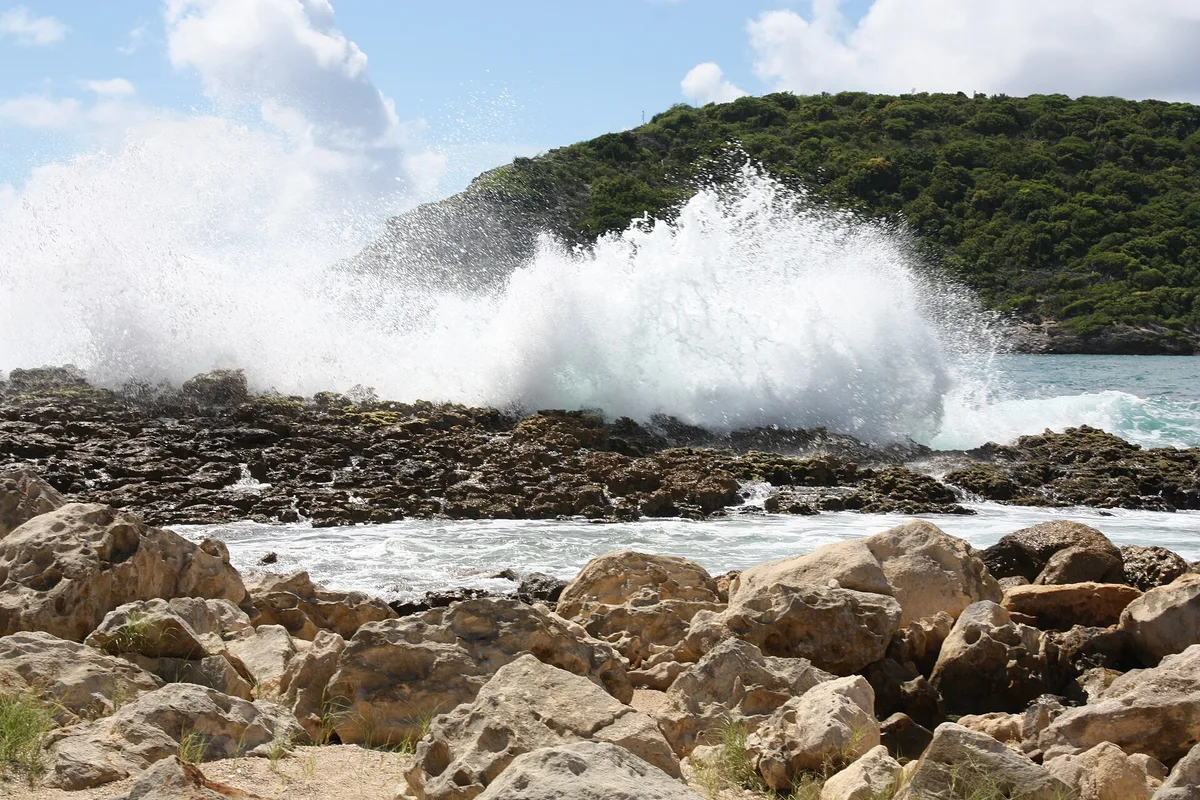
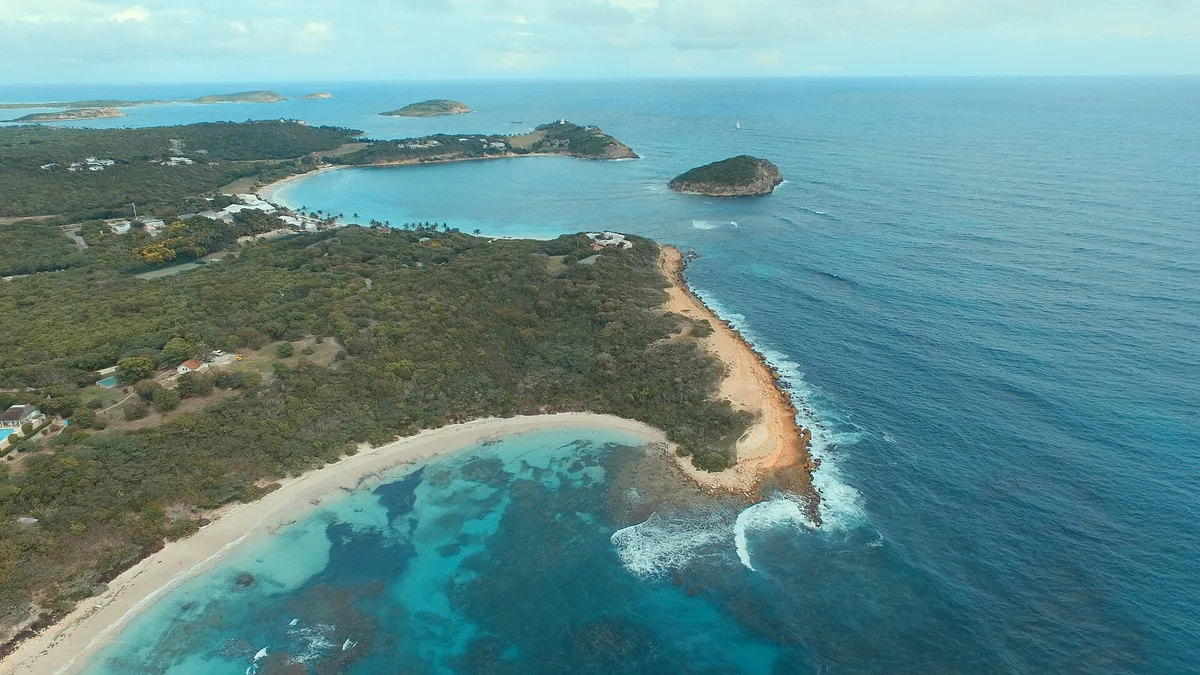
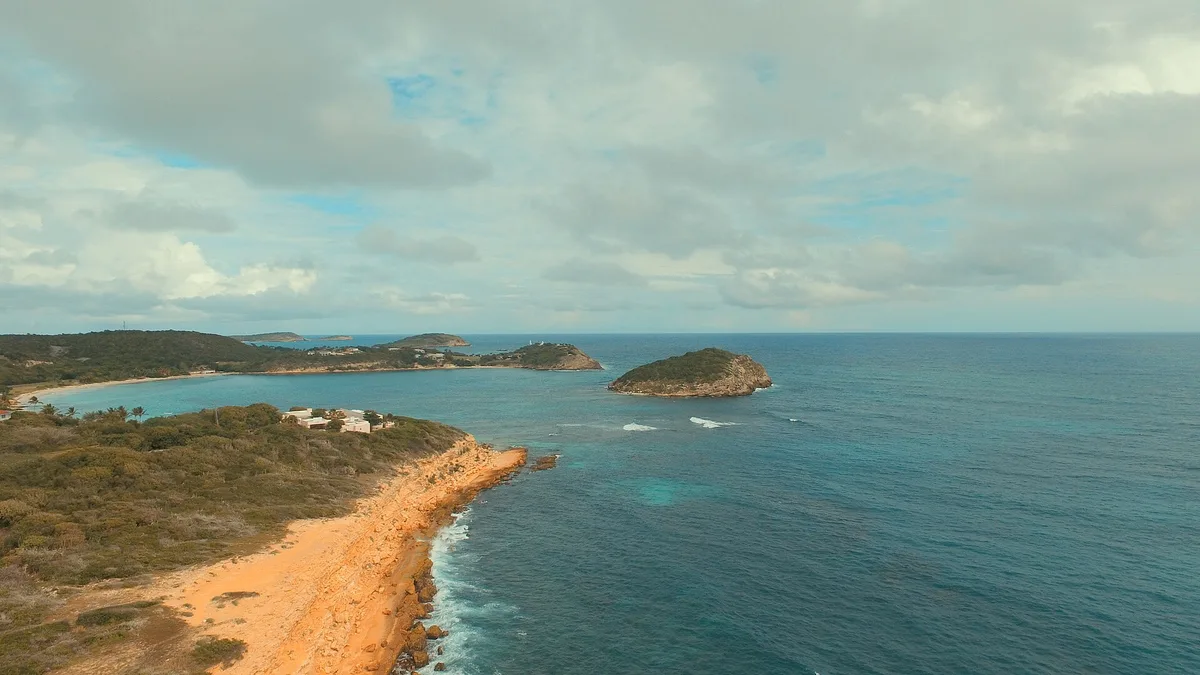
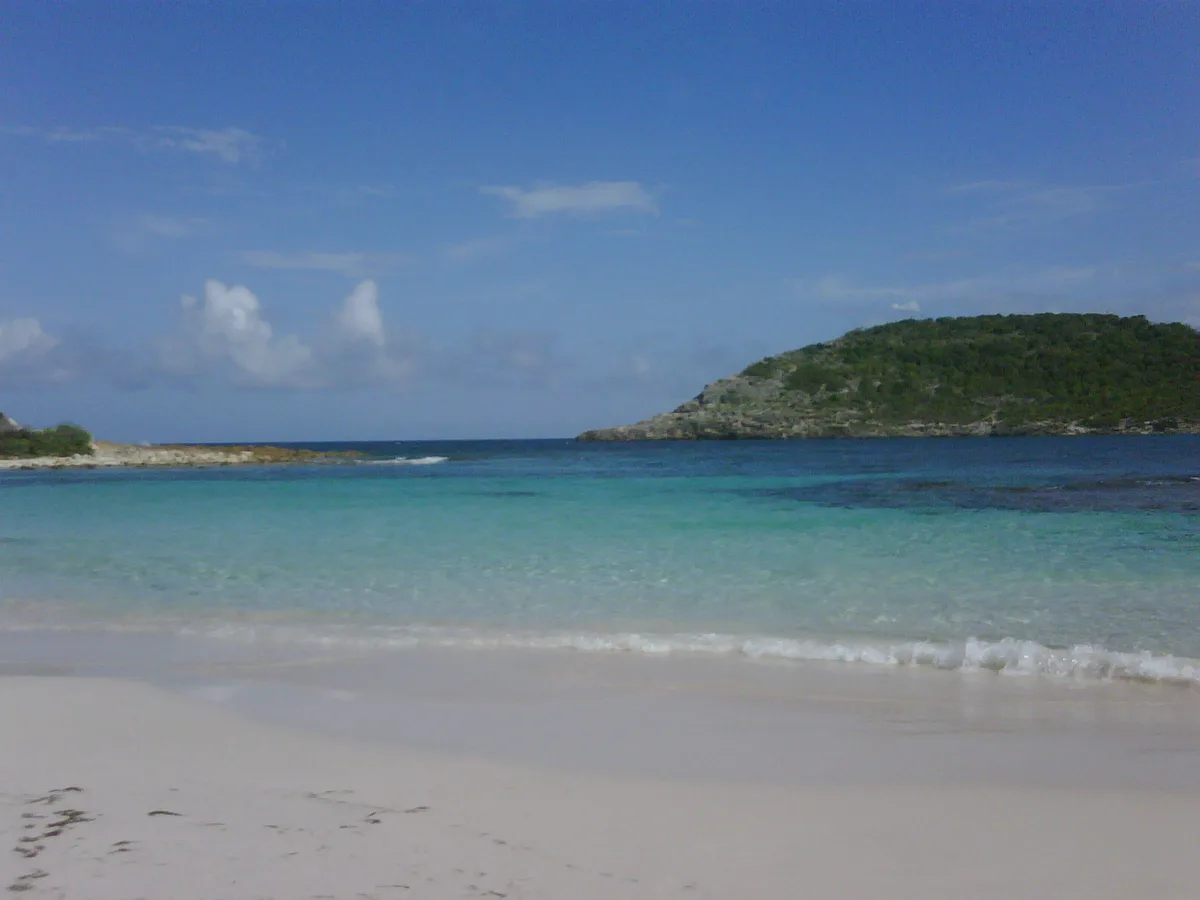
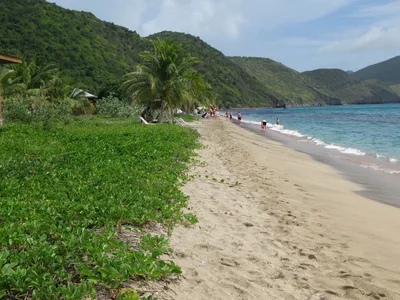
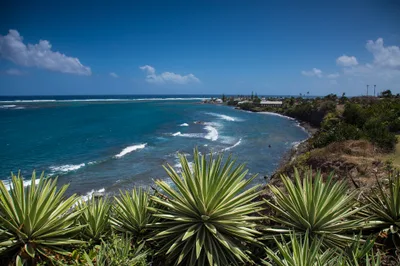
Half Moon Bay on Antigua's east coast is a near-perfect crescent of white sand with a subtle pink tinge, curving for roughly 1.5 kilometres along the Atlantic-facing shore of York Island near Freetown. The water at the sheltered centre glows turquoise, calm enough to wade in, while the eastern horn takes the full force of the open Atlantic — a dramatic contrast you can see and hear from the moment you arrive. There's no commercial development here: no beach bars, no sun-lounger rentals, no vendors. The ruins of an abandoned hotel stand quietly at the treeline, lending the place an eerie, time-capsule atmosphere that most of Antigua's more polished beaches simply can't offer. It's raw, scenic, and genuinely quiet.
How to get there
From Saint John's, drive east — the journey takes around 25 minutes on daily-accessible roads. A small informal car park sits at the top of the access path and is free to use. From there, an unpaved path with steps leads down to the beach; note that this route is not wheelchair accessible. Ferry access is also possible, making it reachable from the water as well.
Who it's for
For couples
Half Moon Bay's wild, uncommercialized atmosphere makes it one of Antigua's most genuinely romantic spots — long stretches of pink-tinged white sand with almost no other visitors, and a dramatic ruined hotel backdrop that feels like a private discovery rather than a postcard.
For families
The sheltered centre of the bay offers moderate, calm-enough swimming for older children and confident adults, but the lack of any facilities, the unpaved stepped access path, and the absence of a lifeguard mean it's better suited to self-sufficient families with older kids than those with toddlers or anyone requiring accessible infrastructure.
Our take
Half Moon Bay is not a beach you visit for convenience — you visit it because you want the real, unvarnished Atlantic coast of Antigua, not the resort-polished version. Rip currents near the horns are a genuine hazard; read that warning seriously, stay in the sheltered centre, and never assume the calm appearance of the water means the currents aren't there. That said, the sheltered centre is genuinely beautiful: turquoise water, a subtle pink blush in the white sand, and a crescent shape that photographers will find hard to leave. The abandoned hotel ruins add an atmosphere no amount of beach-bar development could manufacture. Come in the dry season — November through April — pack everything you need, and plan to stay most of the day. Worth the detour, but only if you respect the conditions.
What to do
Devil's Bridge, about 6 kilometres away in Indian Town National Park, is the east coast's most striking natural landmark — a limestone arch carved by Atlantic wave action, complete with blowholes. The park itself protects a stretch of dramatic northeastern coastline worth exploring on the same day trip. Further afield, Betty's Hope Sugar Plantation, roughly 15 kilometres away, offers a sobering look at Antigua's colonial history through restored 17th-century windmill towers. Stingray City, around 7 kilometres away, is an option if you want structured marine interaction after a morning at the bay.
The full crescent is best captured from the top of the access path before you descend — you get the entire arc of pink-tinged white sand and turquoise water in one frame.
The abandoned hotel ruins at the treeline offer a striking contrast to the natural beauty around them, particularly in the warm, raking light of late afternoon.
Where to eat
The closest option is Beach Bum Bar & Cafe, about 1.1 kilometres from the beach — the only realistic stop for a meal or drink without a longer drive. For more variety, Macumba Cafe and Mama Pasta are both within 6 kilometres, and Coco's and The Docksider are just slightly further at around 6.4 and 6.6 kilometres respectively. Pack your own lunch if you want to spend the whole day at the beach itself — there is nothing on-site.
Where to stay
Nonsuch Bay Resort, 3.5 kilometres away, is the closest base and suits those who want easy access to the east coast's wilder shores. The Verandah Resort and Estates and Grand Pineapple Beach Club are both under 6 kilometres away and offer more resort-style comfort. For something more private, Villa H and Cliffside Villa Antigua are both around 6 kilometres out.
Photography
Shoot from the western end of the crescent in the early morning, when the low sun catches the pink tinge in the sand and the turquoise water is at its calmest and most reflective. The abandoned hotel ruins framed against the treeline make for a compelling, unusual composition — late afternoon light adds texture and shadow to the crumbling walls.
Good to know
There are no facilities whatsoever on this beach — carry everything in and take every scrap of rubbish out with you. Rip currents are possible near both horns of the crescent, and the Atlantic swell makes swimming rough and unpredictable on the eastern horn specifically; stick strictly to the sheltered centre of the bay. There is no lifeguard on duty at any time, so swim conservatively and never alone. Avoid visiting in September and October, when hurricane season pushes Atlantic swell to its most dangerous levels.
GAMES
🕹️ Five minutes of sand?
Three daily games — including the UV simulator set to this beach.
Map
Nearby places
Beach Bum Bar & Cafe
Macumba Cafe
Mama Pasta
Coco's
The Docksider
Nonsuch Bay Resort
The Verandah Resort and Estates
Grand Pineapple Beach Club
Villa H
Cliffside Villa Antigua
Devil's Bridge
Betty's Hope Sugar Plantation
Indian Town National Park
Things to see around Saint Philip
Devil's Bridge
Natural limestone arch on the Atlantic coast carved by wave action, with blowholes
Betty's Hope Sugar Plantation
17th-century sugar estate with restored windmill towers, Antigua's most significant colonial ruin
Indian Town National Park
Protected area on the northeast coast encompassing Devil's Bridge and Atlantic coastal formations
GIFT IDEA · MARCEL ET LES BLONDES
🎁 Give a moment, not a thing


What’s the occasion?

 💑 Dating anniversaryTwo dates, two starry skies
 💍 Wedding anniversaryCotton, silver, golden…
 🎂 BirthdayTheir own newspaper front page
 👶 New babyThe stars on the day they were bornValentine’s DayOur two moons, as a print
Shipping €5, free from €49 · made to order, shipped within 48 hAlso: our engraved wooden bracelets, €23.90 →
Frequently asked
The information on this page is provided for guidance only and may evolve. Access conditions, safety and infrastructure can change without notice. Always check official sources before traveling.
Nearest beaches
More beaches in Lesser Antilles
Reviews of this beach
- No reviews yet, what a shame — leave yours and share your experience.