Grotta della Poesia BeachItaly Beach Guide
Bronze Age cave art meets crystal-clear Adriatic waters
 🎁 Gift idea: the star map of your most beautiful night↓
About
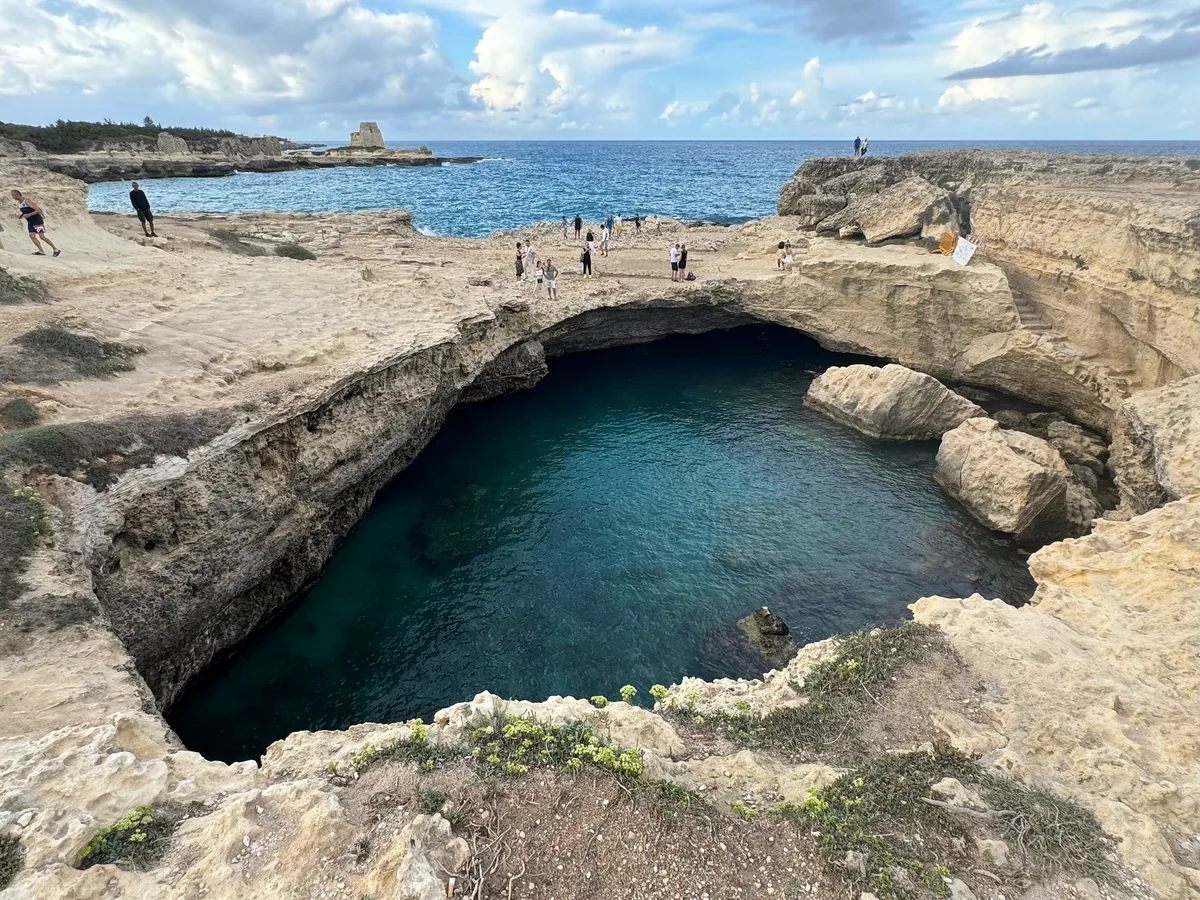
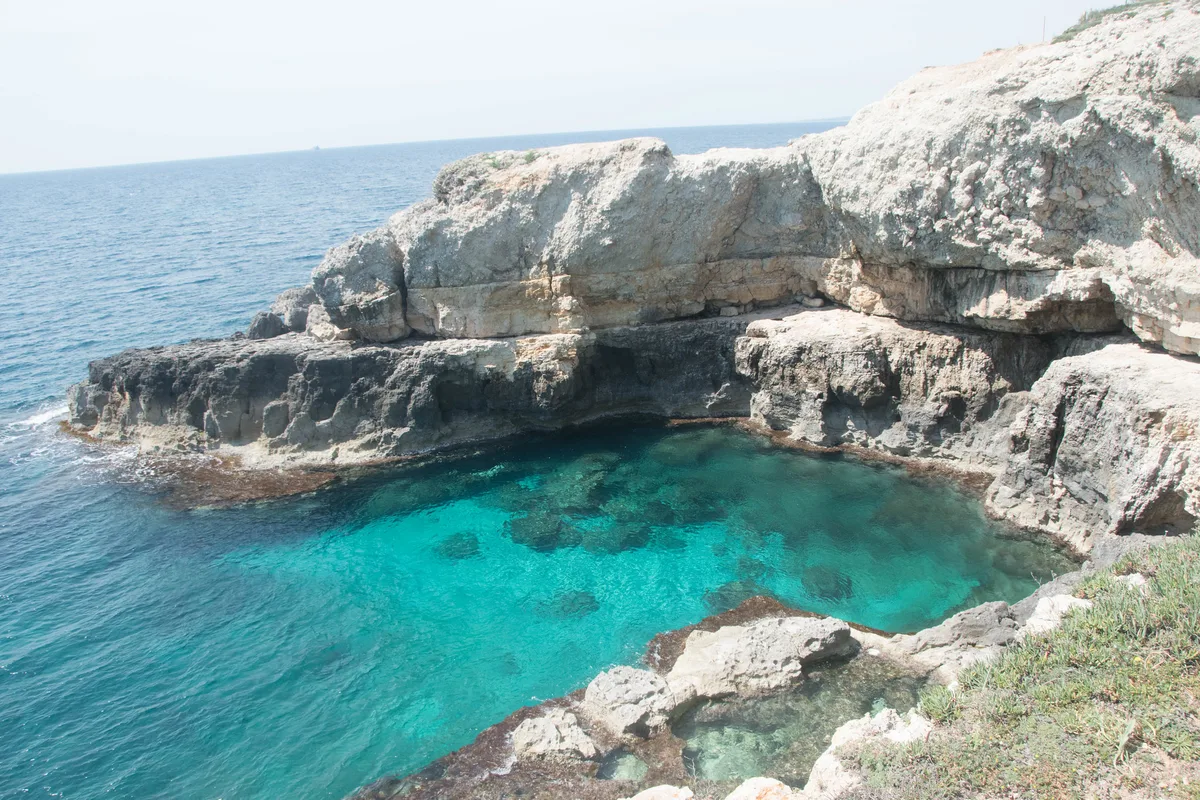
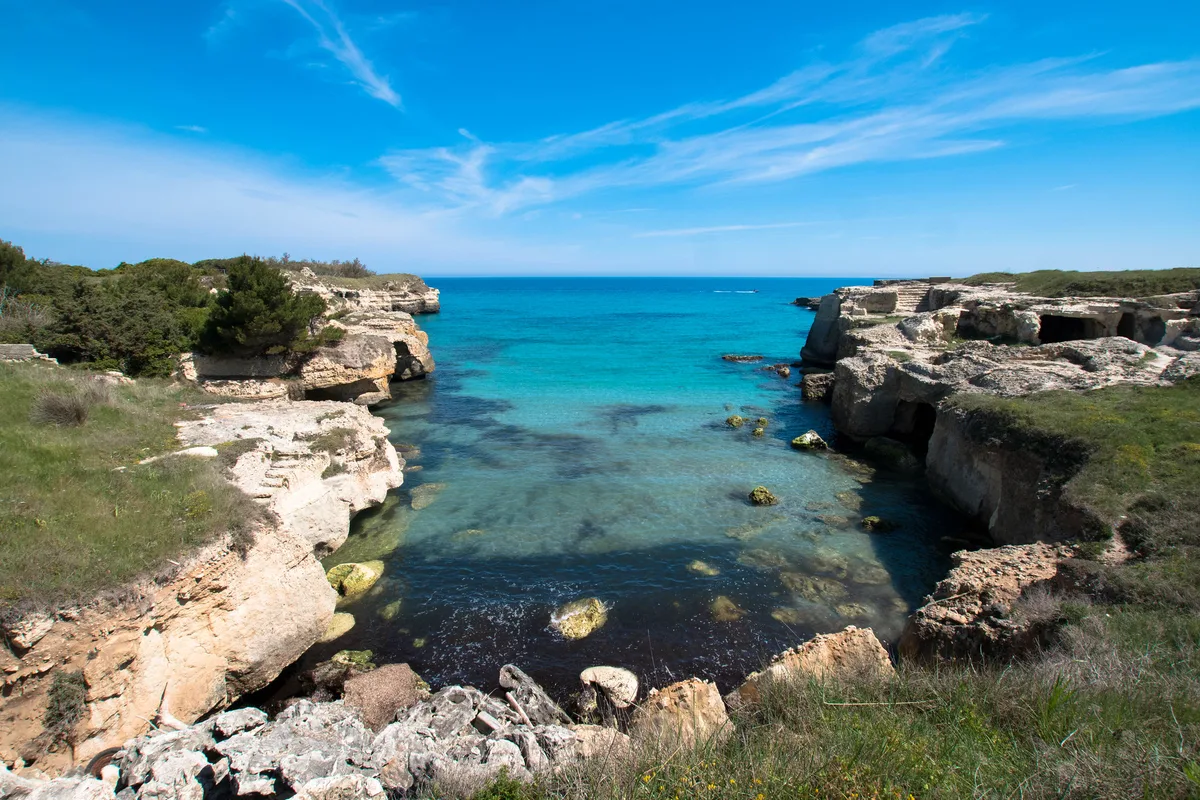
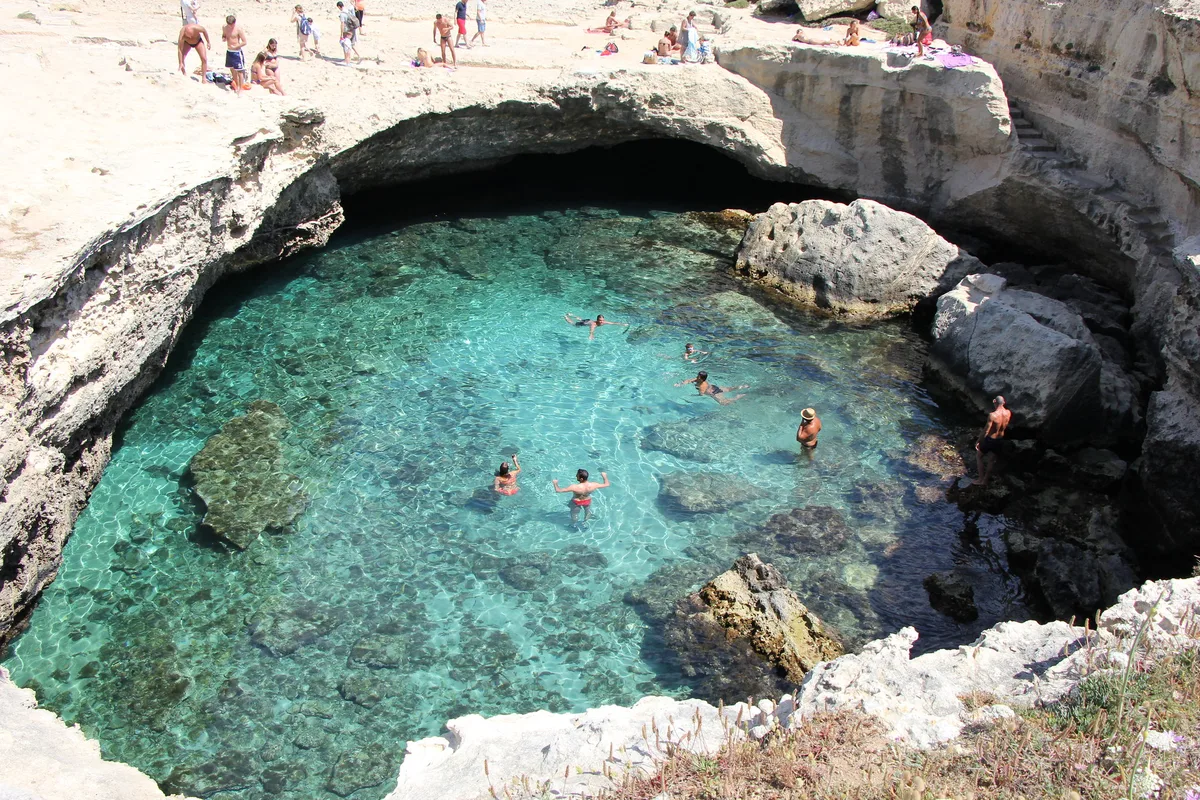
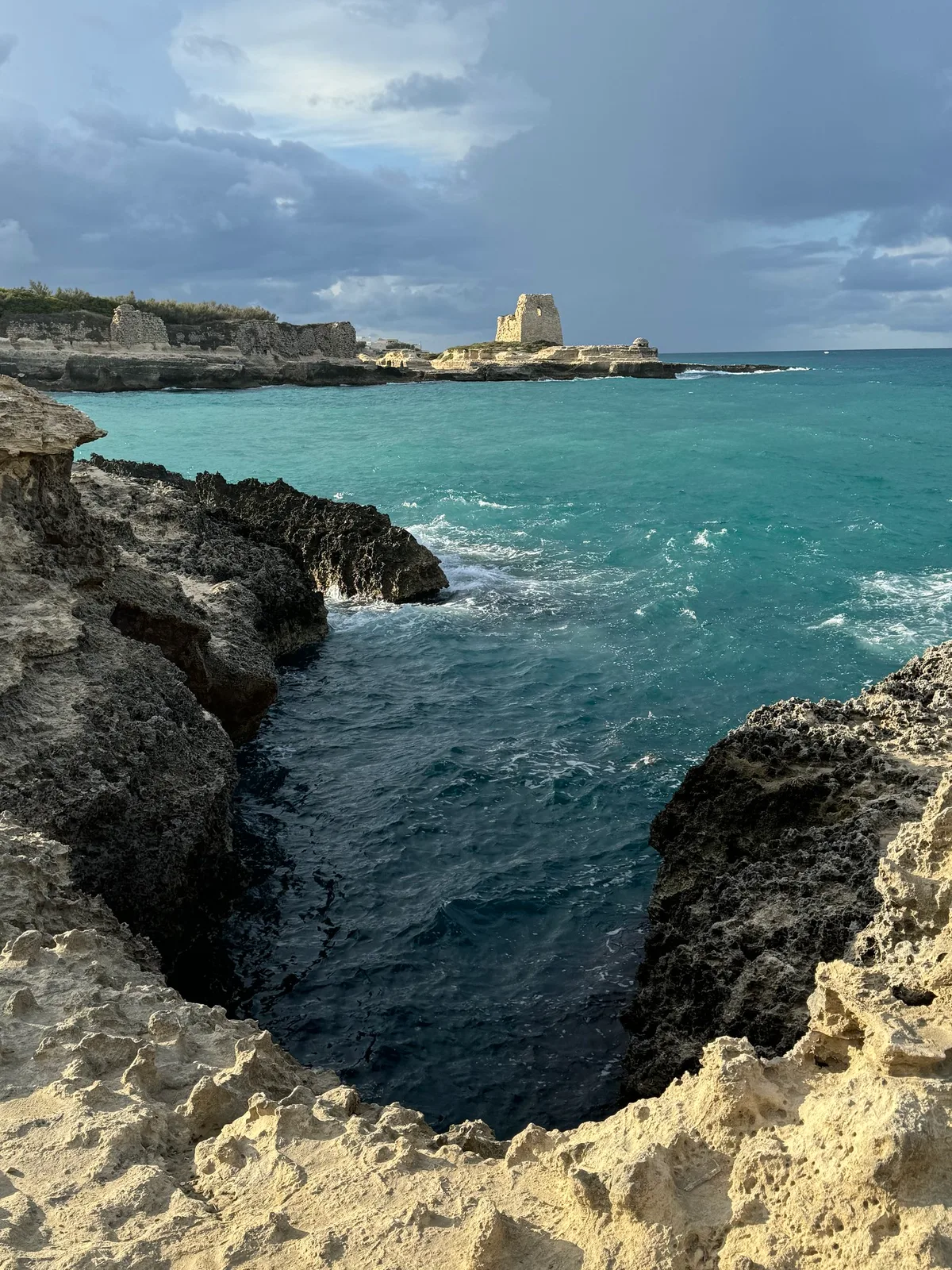
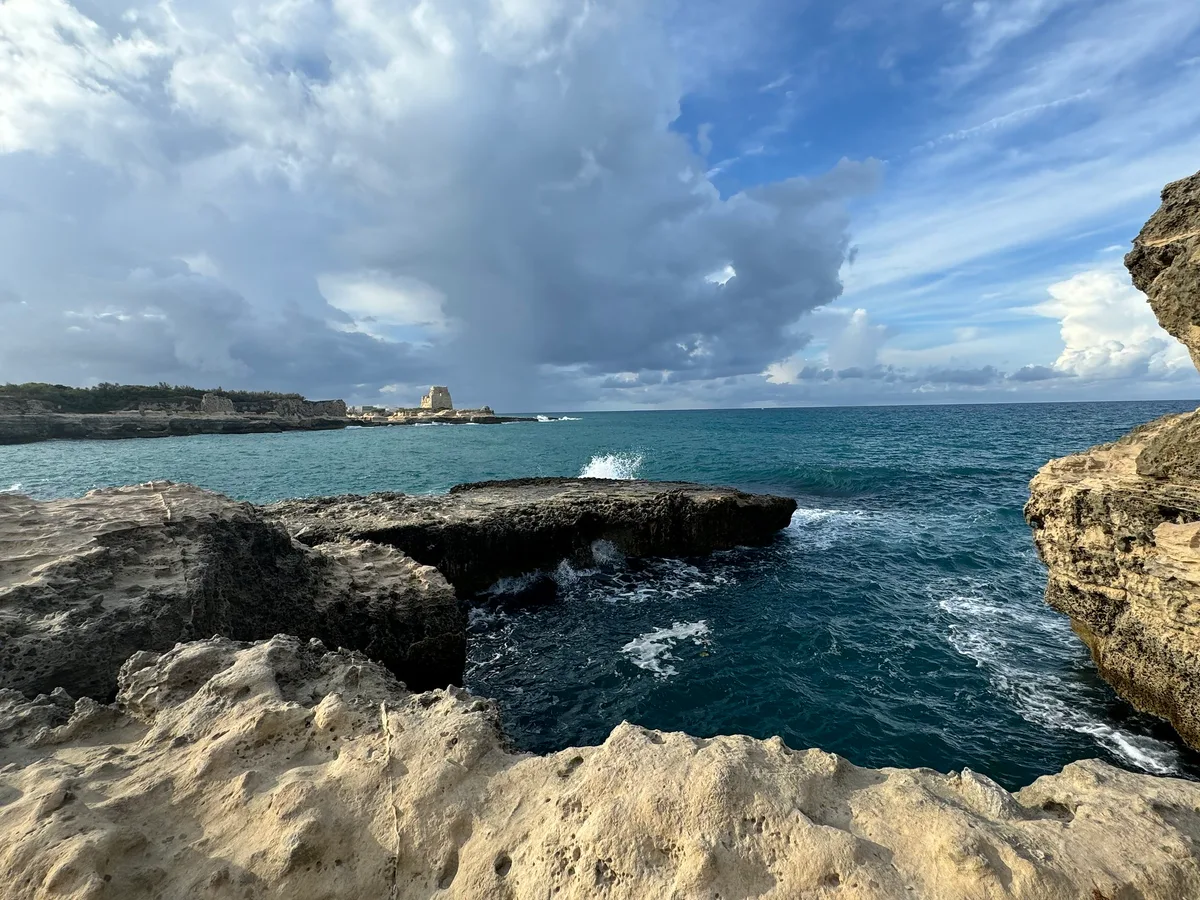
Grotta della Poesia is a managed archaeological site on the rocky Salento coastline near Roca, where a sea cave opens directly onto the Adriatic. Inside, Bronze Age rock engravings cover the cave walls. There is no sand here: the shore is all raw limestone, with crystal-clear water lapping against uneven rock platforms. Above the cave, ruins of a Bronze Age settlement crown the clifftop, giving the whole site a layered, ancient atmosphere. The vibe is wild and scholarly at once — this is a place you visit to understand, not just to sunbathe.
How to get there
By car from Melendugno or Lecce the drive takes around 30 minutes; large paid parking areas are available near the archaeological site, charged at €1.80 per hour. By bus from Lecce the journey is roughly 45 minutes, though service is limited — around four departures a day in summer — so check timetables before you go. If you're already staying in the Roca Vecchia area, a bicycle gets you there in about 5 minutes. Entry to the site includes a short guided tour; children under 16, visitors over 75, groups of more than 10, people with disabilities, and Lecce residents enter free.
Who it's for
For couples
The combination of prehistoric cave art, wild rocky coastline, and crystal-clear water makes this a genuinely unusual date — less beach-blanket, more shared discovery. Arrive early to have the cave and clifftop ruins largely to yourselves before the day's visitors arrive.
For families
Older children with an interest in history will find the Bronze Age engravings and settlement ruins genuinely engaging, and the guided visit format keeps the experience structured. Note that the rocky terrain, uneven platforms, and prohibition on swimming mean this is better suited to curious, sure-footed kids than very young children or toddlers.
Our take
Do not come to Grotta della Poesia expecting a beach day — swimming and diving are strictly prohibited, there is no sand, and the rocky platforms demand careful footing. What you get instead is something far rarer: direct, unmediated contact with Bronze Age rock art inside a sea cave that still opens onto living water. The managed site format, with its guided visit and entry fee, is not a bureaucratic inconvenience — it's what keeps the engravings intact for the next visitor. Come in June through September for open hours and good light. Skip the winter months unless you've confirmed the site is operating. This is one of Salento's most distinctive stops, and it earns that status through substance, not scenery.
What to do
Start with the cave itself and the Bronze Age engravings, then walk the clifftop to the Roca Vecchia Bronze Age Settlement ruins just 100 metres away — the combination of cave and settlement tells a remarkably complete prehistoric story. Snorkeling in the crystal-clear Adriatic water just outside the cave is one of the site's highlights, with rocky underwater terrain worth exploring. A short distance away, the natural pool at Piscina naturale di Roca Vecchia offers calmer conditions, and the panoramic viewpoint at Panorama sulla Due Sorelle is worth the 2 km trip for the coastal views.
The sea cave opening onto the Adriatic is the signature frame — shoot from the rock platform at the cave mouth with the water in the foreground and the engraved walls visible in the background.
The clifftop Bronze Age settlement ruins at Roca Vecchia, just 100 metres from the cave, offer dramatic elevated compositions with the coastline stretching behind. For detail shots, the texture of the ancient rock engravings rewards a close lens.
Where to eat
For pizza after your visit, L'antica fontana is about 1 km away, while Sud Pizza is a further option at 2.5 km. Sfizi di Mare and the terrace setting of Terrazza Matteotti are both within 2.6 km of the site.
Where to stay
The closest option is Oasis Park, just 300 metres from the site — hard to beat for convenience. Hotel Mare Blu is 800 metres away, while Albergo Morini and Romano are both under 3 km if you prefer to be closer to local amenities.
Photography
The cave mouth framed against the Adriatic is the defining shot — clear light gives the best colour and sharpest shadows on the engravings inside. For a wider composition, the clifftop ruins of the Bronze Age settlement offer elevated views along the coastline.
Good to know
Cave access is only permitted during open hours or with a guided visit — do not attempt to enter independently. Never touch the engravings; archaeological site rules apply throughout, and rangers enforce them. Swimming and diving are strictly prohibited here: the risk of cliff collapse is real, there is no lifeguard on site, and the water entry is rocky — wear water shoes and watch your footing on uneven rock platforms. The site may close or operate reduced hours outside the summer season, so avoid planning a visit in November through February without confirming hours in advance.
GAMES
🕹️ Five minutes of sand?
Three daily games — including the UV simulator set to this beach.
Map
Nearby places
L'antica fontana
Dietro L'Angolo
Sfizi di Mare
Sud Pizza
Terrazza Matteotti
Oasis Park
Hotel Mare Blu
Albergo Morini
Romano
Azienda Agricola Scalilla
Spiaggia Di Punta Sapone
Piscina naturale di Roca Vecchia
Panorama sulla Due Sorelle
Things to see around Melendugno
Roca Vecchia Bronze Age Settlement
Remains of a significant Bronze Age and Messapian settlement on the clifftop above the cave.
Torre dell'Orso
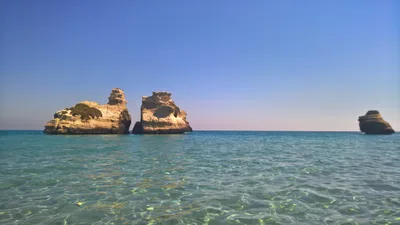
Popular sandy beach with two sea stacks known as the 'Two Sisters' rising from the water.
Otranto Cathedral
GIFT IDEA · MARCEL ET LES BLONDES
🎁 Give a moment, not a thing

What’s the occasion?
 💑 Dating anniversaryTwo dates, two starry skies
 💍 Wedding anniversaryCotton, silver, golden…
 🎂 BirthdayTheir own newspaper front page
 👶 New babyThe stars on the day they were bornValentine’s DayOur two moons, as a print
Shipping €5, free from €49 · made to order, shipped within 48 hAlso: our engraved wooden bracelets, €23.90 →
Frequently asked
The information on this page is provided for guidance only and may evolve. Access conditions, safety and infrastructure can change without notice. Always check official sources before traveling.
Nearest beaches
Other wild beaches in Italy
Reviews of this beach
- No reviews yet, what a shame — leave yours and share your experience.
Photo credits
Sources and licenses for the photos shown above.