Torre dell'Orso BeachItaly Beach Guide
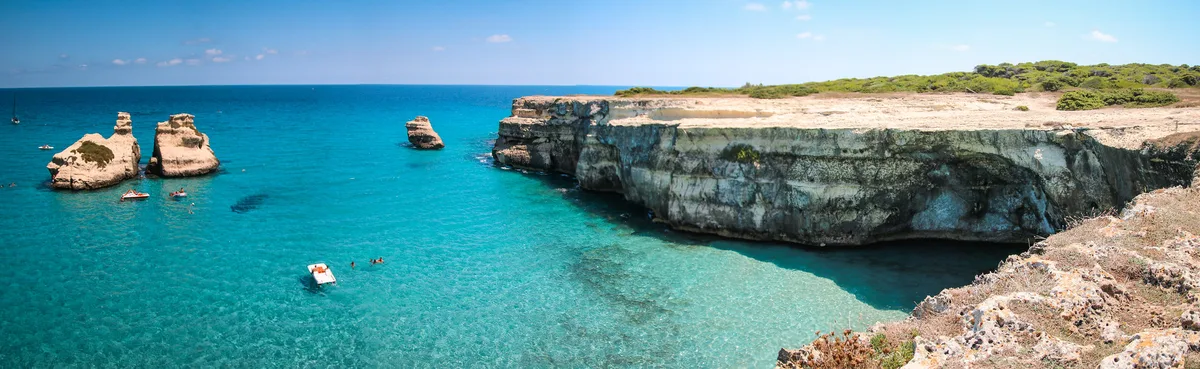
White sand, turquoise water, and two iconic sea stacks
About
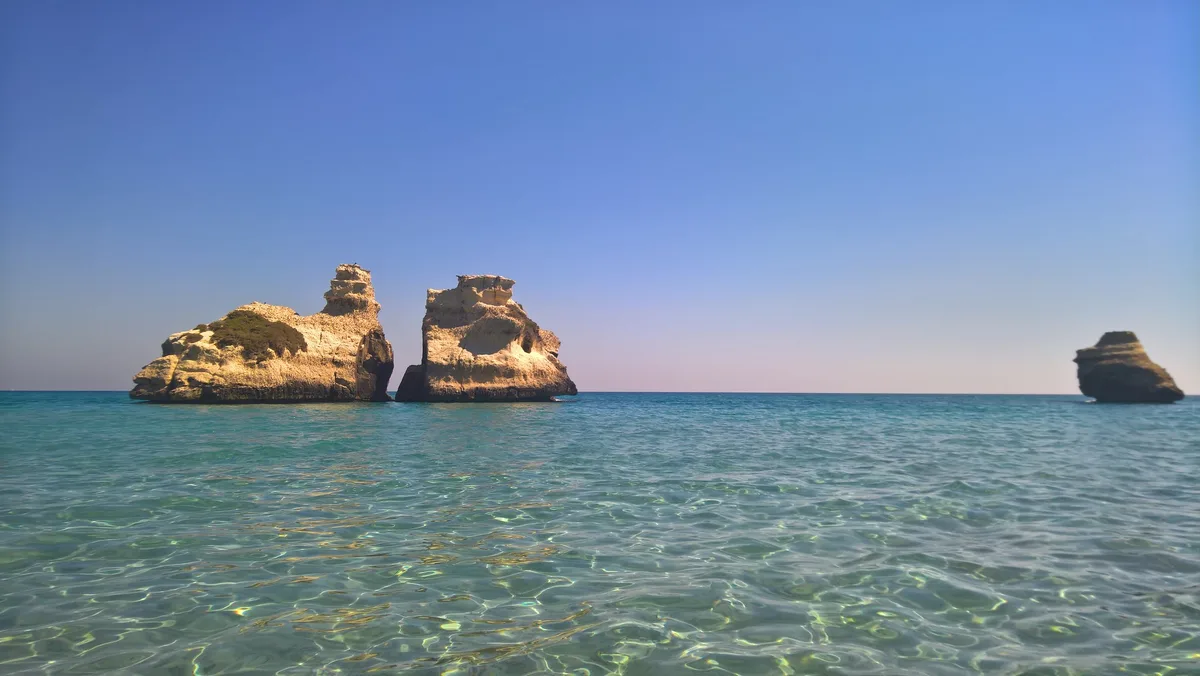
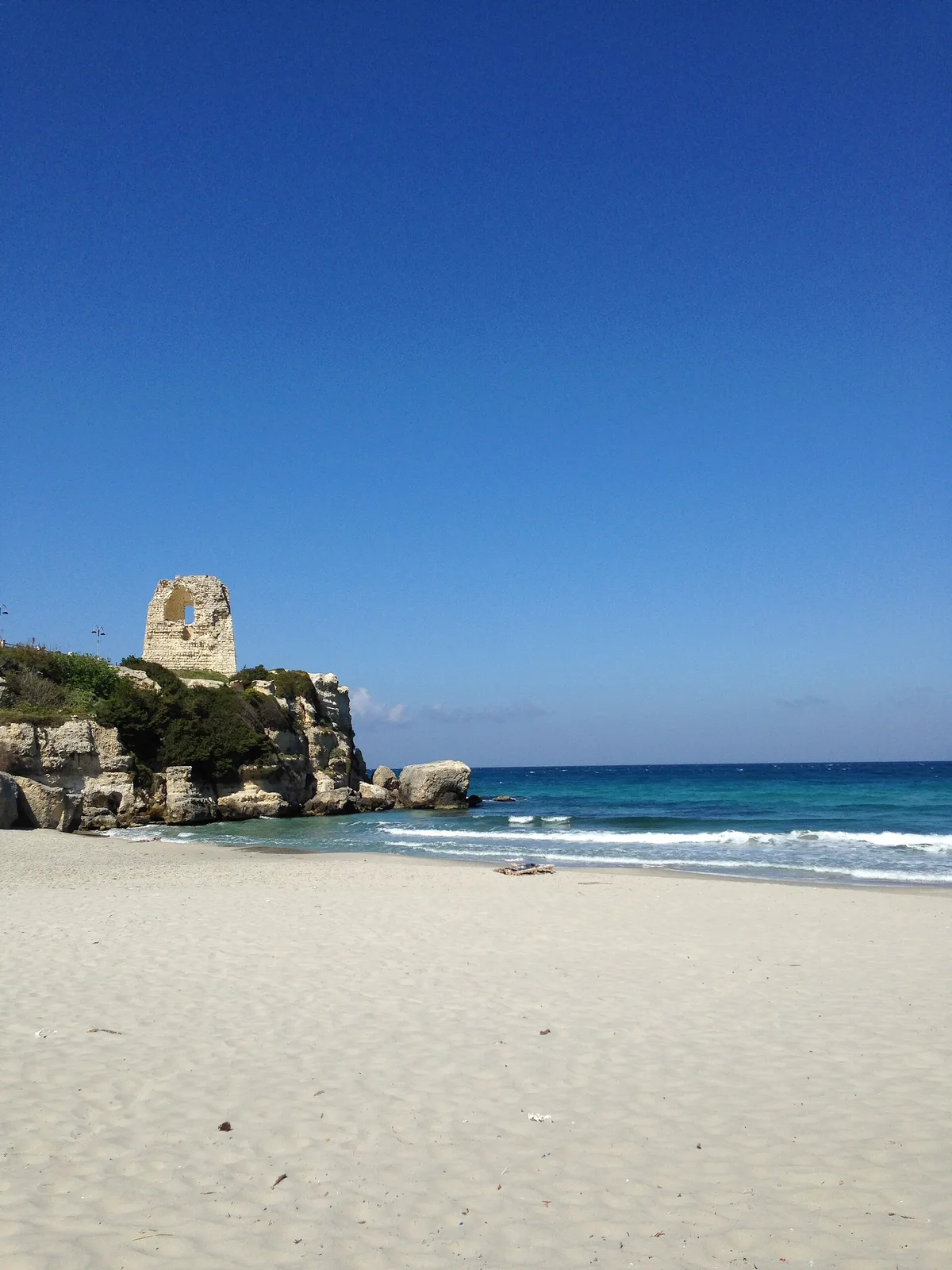
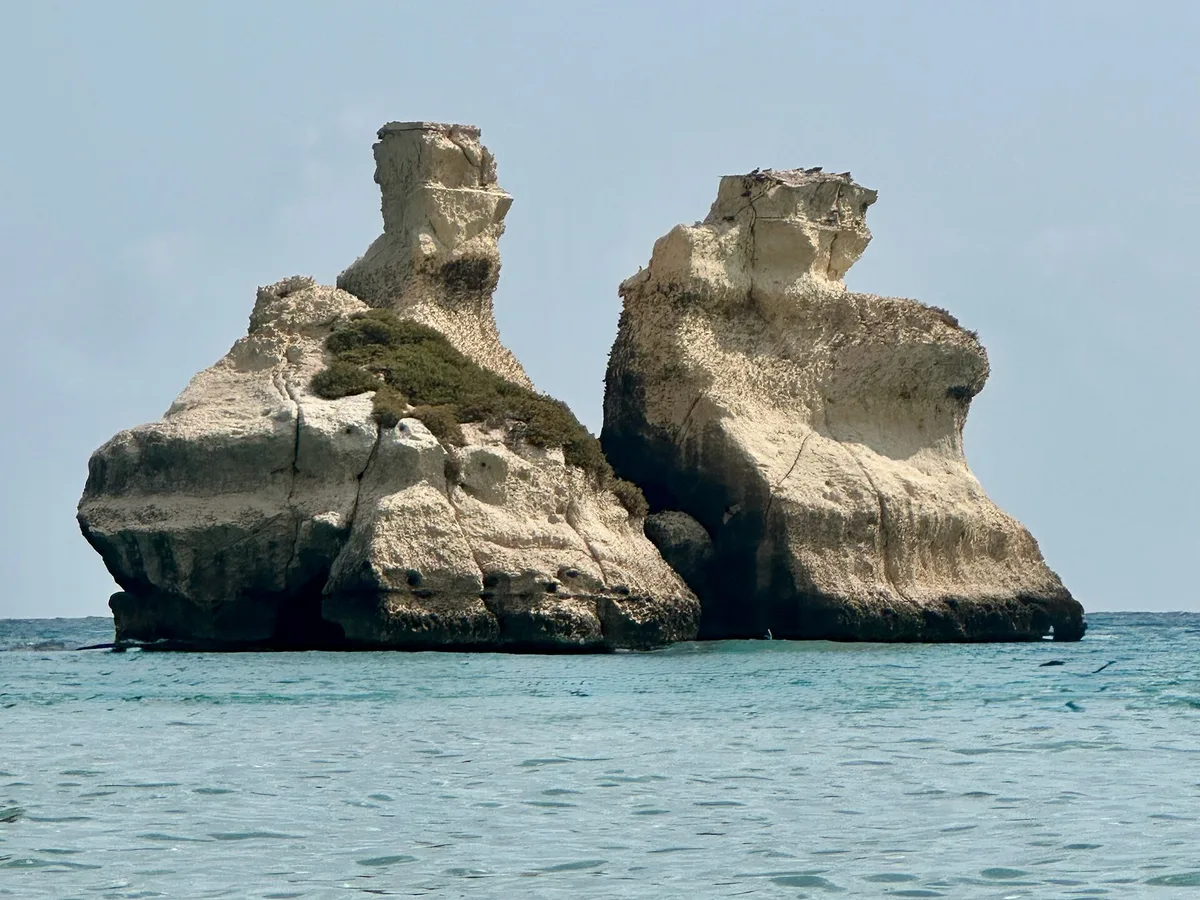
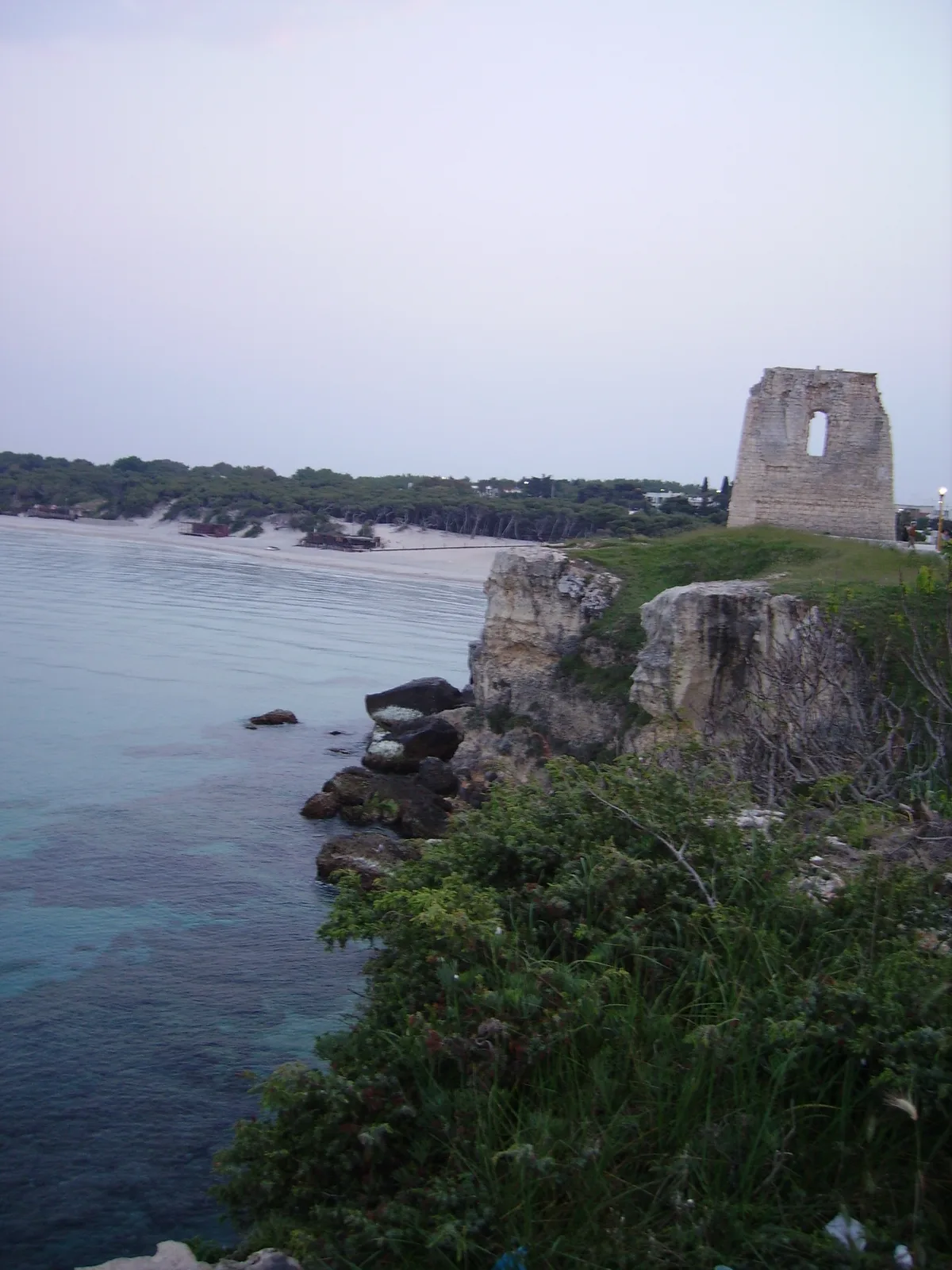
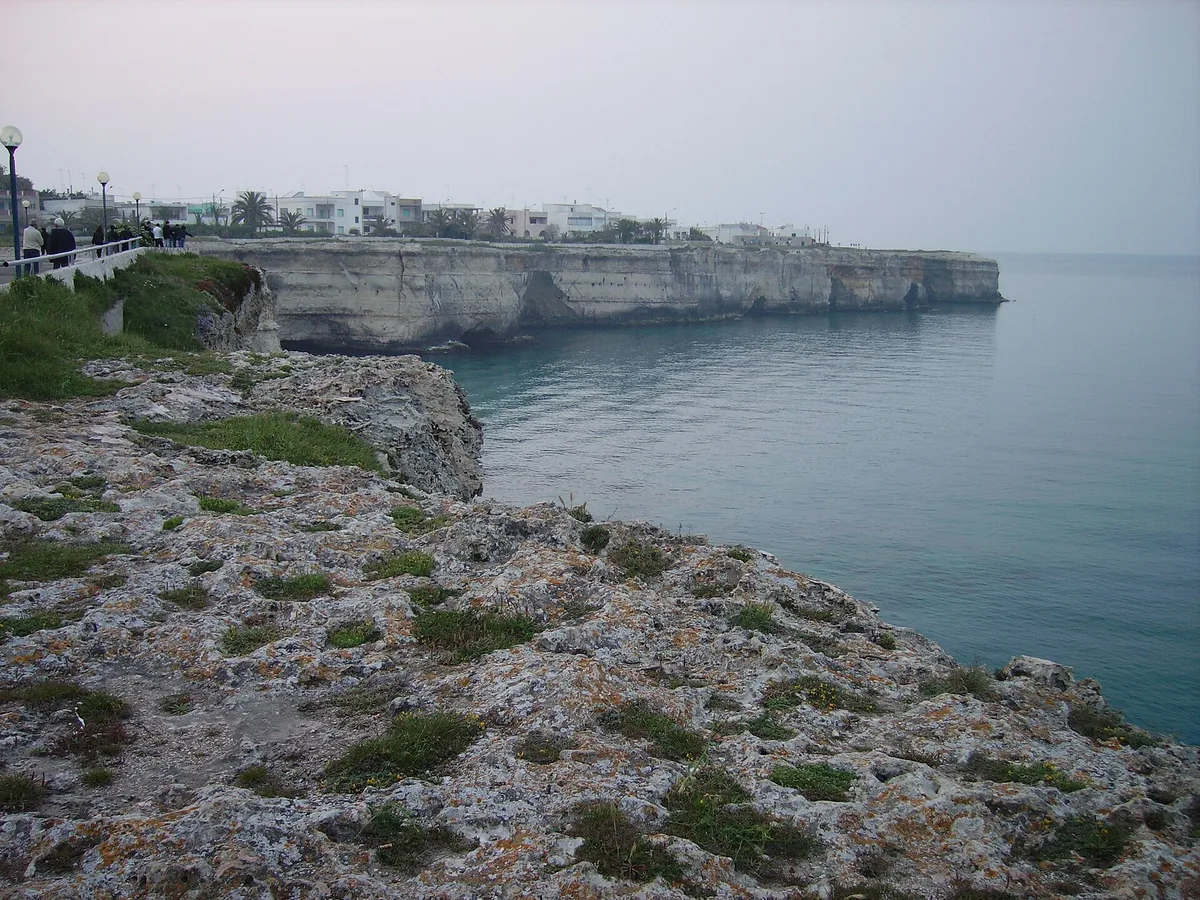
Torre dell'Orso Beach stretches roughly 800 metres along the Salento coastline in Puglia, where white sand meets water so turquoise it looks painted. The beach takes its name from a 16th-century watchtower that still stands sentinel above the shore, scanning the same Adriatic horizon it has watched for centuries. Two limestone sea stacks — the Due Sorelle, or 'Two Sisters' — rise dramatically from the turquoise shallows just offshore, giving the beach one of the most recognisable silhouettes in southern Italy. A pine forest backs the beach, offering shade when the sun is at its most unforgiving. It's a family favourite, consistently earning Blue Flag status for water quality and safe swimming conditions.
How to get there
From Lecce, you can reach Torre dell'Orso by car in about 30 minutes or by bus in roughly 45 minutes — both run daily. Paid and free public parking is available near the beach, with paid spots running around €3 per day; during peak season the lots fill fast, so arriving early is strongly advised. Note that access to the beach itself requires navigating steps or a staircase, which may be a consideration for visitors with mobility limitations.
Who it's for
For couples
The watchtower headland at dusk, with the Due Sorelle silhouetted against the turquoise Adriatic, is as romantic as Salento gets — come in June or early September for the scenery without the summer crush.
For families
Safe swimming, white sand, and easy beach access make this a reliable family choice, and the Blue Flag rating gives parents extra peace of mind about water quality. The pine forest at the back of the beach provides natural shade for little ones who need a break from the sun.
Our take
Torre dell'Orso earns its reputation honestly. The white sand is genuinely white, the water is genuinely turquoise, and the Due Sorelle sea stacks are the kind of landmark that makes you stop mid-stride. It's a busy beach — no point pretending otherwise — but the Blue Flag status and safe swimming conditions mean the popularity is deserved. Come in June or early September and you'll get the full Salento experience without the August chaos. The nearby Grotta della Poesia and Sant'Andrea stacks mean you won't run out of reasons to linger for a few days. Skip in August unless you genuinely love a packed beach.
What to do
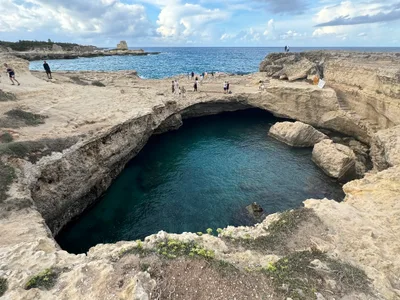
The Due Sorelle sea stacks are the headline act — swim out to them or hire a boat for a closer look at these iconic limestone formations. Just 1.9 kilometres away, the Sant'Andrea Sea Stacks are well worth the short trip and rated an impressive 4.8 out of 5 by visitors. About 3 kilometres up the coast, Grotta della Poesia near Roca Vecchia offers a spectacular natural rock pool for swimming and cliff diving. The 16th-century Torre dell'Orso watchtower sits right on the headland and rewards the short climb with panoramic coastal views.
Frame the Due Sorelle sea stacks from the shoreline with the turquoise water in the foreground — this is the shot that defines Torre dell'Orso.
The 16th-century watchtower on the headland makes a striking vertical subject, especially against a clear blue sky in the early morning. The pine forest edge where the trees meet the white sand offers a quieter, more textured composition away from the main beach action.
Where to eat
Several lidos and bars line the beach access road within easy walking distance. Lido Baia d'Oriente and La Cueva are both just 0.1 kilometres away, while I Caraibi del Salento, Lido La Sorgente, and El Chiringuito Lounge Bar are all within 0.2 kilometres. For a proper lido lunch with a sun-lounger setup, Lido L'Orsetta and Lido La Pineta Beach are both around 0.3 kilometres from the sand.
Where to stay
The beach sits within the commune of Melendugno, the nearest village, which offers the closest base for an overnight stay. The surrounding area has options to suit different budgets, but booking well ahead is essential if you're visiting between June and September.
Photography
Shoot the Due Sorelle sea stacks at golden hour from the waterline — the turquoise water picks up warm light beautifully and the stacks cast long shadows across the white sand. For a wider perspective, the 16th-century watchtower on the headland gives an elevated vantage point over the full arc of the bay, best captured in the soft light of early morning before the beach fills.
Good to know
June and early September are the sweet spots — the water is warm, the sand is accessible, and you won't be fighting for space. Avoid July and August if you can: this beach gets seriously packed and parking becomes a real ordeal. The Due Sorelle stacks are reachable by swimming or boat, but always assess sea conditions before heading out. True digital-detox spot — bring offline books, the cell signal fades and there's nowhere to plug in a laptop.
GAMES
🕹️ Five minutes of sand?
Three daily games — including the UV simulator set to this beach.
Map
Nearby places
Lido L'Orsetta
Lido La Pineta Beach
Lido Baia d' Oriente
La Cueva
Lido La Sorgente
I Caraibi del Salento
El Chiringuito Lounge Bar
Due Sorelle sea stacks
Grotta della Poesia
Torre dell'Orso watchtower
Things to see around Melendugno
Due Sorelle sea stacks
Iconic limestone formations reachable by swimming or boat.
Grotta della Poesia
Spectacular natural rock pool for swimming and cliff diving near Roca Vecchia.
Torre dell'Orso watchtower
16th-century coastal watchtower with panoramic views.
GIFT
🎁 Gift this beach
Its exact coastline, your date, your words — on a print or a PDF you print yourself.
Torre dell'Orso Beach
THAT DAY
Torre dell'Orso Beach, Puglia
© OpenStreetMap contributors
Clean & decorative, or “That day” with the real sky of your date.
Shipping included 3-6 business days
A question before you order? Contact us
Delivered within minutes on the confirmation page and by email: a ZIP with all 4 print sizes (30×40 cm, 12×16″, 50×70 cm, 18×24″), each as a high-resolution PDF and PNG (300 dpi), plus a screen version. Print at home or at any print shop.
Please complete the delivery address.
Please accept the Terms of Sale.
Almost there — the shop opens very soon.
Secure payment · Printed locally in 30+ countries · 7 languages
Frequently asked
The information on this page is provided for guidance only and may evolve. Access conditions, safety and infrastructure can change without notice. Always check official sources before traveling.
Nearest beaches
Other family beaches in Italy
Reviews of this beach
- No reviews yet, what a shame — leave yours and share your experience.
Photo credits
Sources and licenses for the photos shown above.
- Photo 1 — lscarso · source · CC BY 2.0
- Photo 2 — paolo dagani · source · CC BY 3.0
- Photo 3 — Lohen11 · source · CC BY 4.0
- Photo 4 — Luca Margheriti · source · CC BY-SA 3.0
- Photo 5 — Luca Margheriti · source · CC BY-SA 3.0
- Photo 6 — Giacomo Carena · source · CC BY-SA 2.0