Eagle BeachAruba Beach Guide
Wide white sand, sea turtles, and trade-wind calm
About
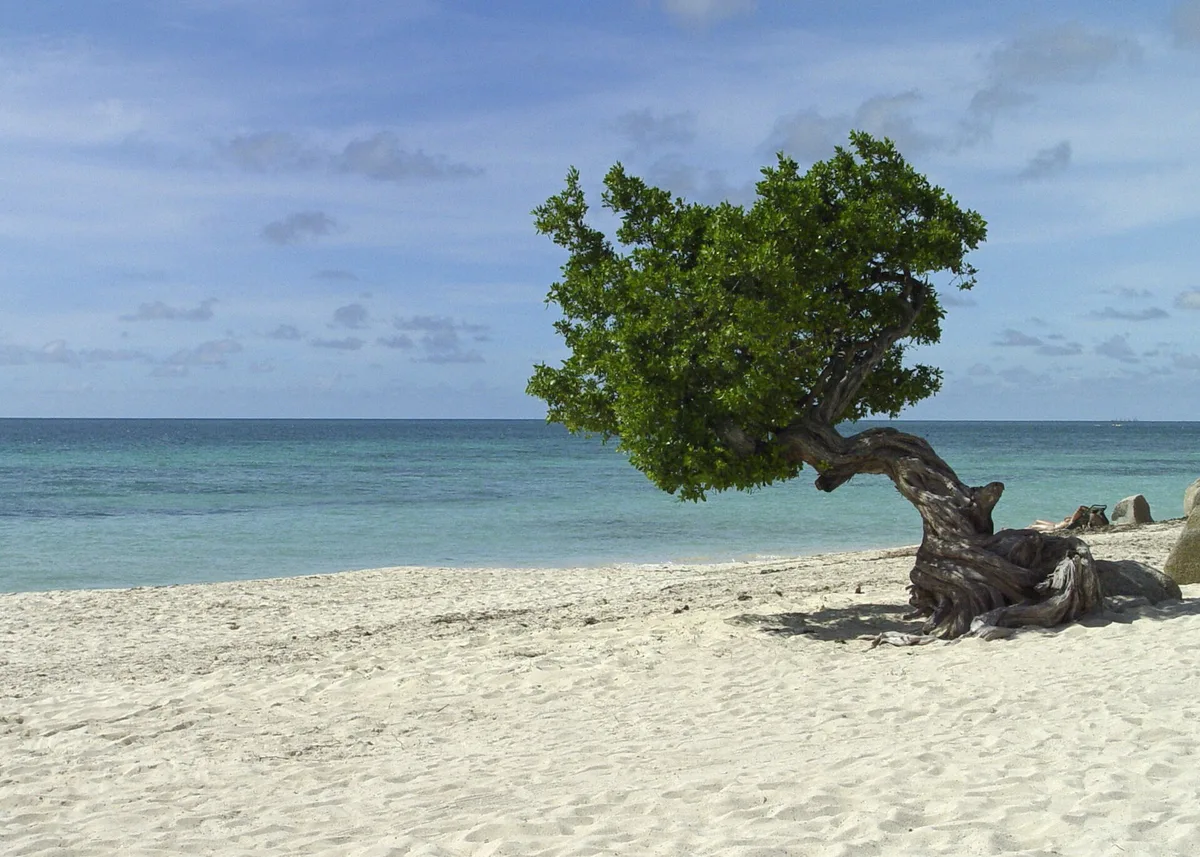
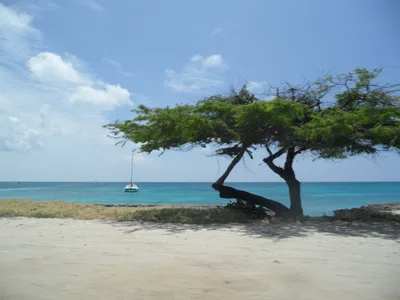
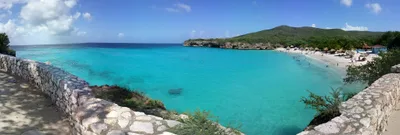
Eagle Beach stretches roughly 1,800 metres of broad, white sand along Aruba's leeward coast, backed by low-rise hotels that never block the sky. The water runs a clear turquoise — calm enough most of the year thanks to the island's sheltered western shore. Two iconic fofoti trees lean dramatically toward the sea, their silhouettes as recognisable as the beach itself. Sea turtles nest here seasonally, making it one of the few beaches in the Caribbean where you might share the sand with protected wildlife. The vibe is unhurried: no jet-ski noise in the swim zone, no high-rise shadows, just open sand and steady trade-wind breeze.
How to get there
From Oranjestad it's a 10-minute drive or a 9-minute bus ride — buses run every five minutes, making this one of the easiest public beaches to reach on the island. From Queen Beatrix International Airport (AUA, 7.2 km away) the drive is also around 10 minutes. Free public parking is available in lots along J.E. Irausquin Blvd; arrive early in peak season because spaces fill fast. There is no entry fee.
Who it's for
For couples
The wide, uncrowded sand and calm turquoise water make Eagle Beach an easy choice for a slow morning together — stake out a spot near the fofoti trees at sunrise before the day-trippers show up.
For families
The calm leeward water and easy bus access from Oranjestad make logistics simple, and the flat hard-packed sand near the waterline is manageable for pushchairs and young children — just remember there are no lifeguards, so keep a close eye on little swimmers.
Our take
No lifeguards, rip currents during strong wind periods, and choppy surf from December through March — those are the facts you need before you go, and they matter. Outside that window, Eagle Beach earns its reputation: 1,800 metres of white sand, turquoise water that stays genuinely calm, and a low-rise backdrop that keeps the horizon open. The fofoti trees are not a gimmick — they're the real landmark of Aruba's leeward coast. Sea turtle nesting adds a layer of ecological significance you won't find on most Caribbean resort beaches. Bus access every fifteen minutes from Oranjestad means you don't need a car. Come between May and November for the calmest conditions, get here early for parking and a good spot, and leave the jet skis to another beach — they're not welcome in the swim zone anyway.
What to do
The famous Divi Divi trees are just 0.4 km away and worth a short walk for context on Aruba's wind-sculpted landscape. If you want to get on the water, Jolly Pirate's operates about 3.2 km up the coast. For a half-day excursion, the California Lighthouse — a historic 1916 structure at the island's northwestern tip — sits 9.5 km away and rewards you with panoramic views. Arikok National Park, 20 km east, covers roughly 20 percent of Aruba and offers caves, desert trails, and windward beaches for a full-day adventure.
The twin leaning fofoti trees against the turquoise water are the signature shot — frame them at sunrise for warm light and empty sand.
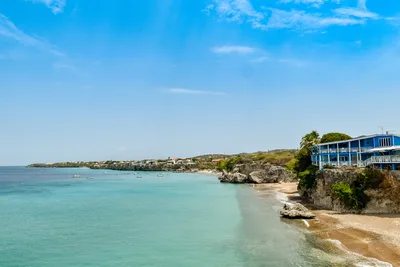
The wide unobstructed beach looking south toward the low-rise hotel backdrop works beautifully for panoramic golden-hour frames.
Where to eat
Calabria Trattoria is the closest option at 0.7 km, followed by P.F. Chang's (0.8 km) for Asian fare and Olive Garden (0.9 km) for Italian. The Kitchen Table by White and Grand Fish — a seafood spot — are both about 1 km from the beach and worth the short drive if you want something more local in feel.
Where to stay
Embassy Suites is the nearest hotel at 1 km, with Quality Apartments a little further at 1.4 km for a self-catering option. Divi Phoenix (1.5 km), Tamarijn Divi Aruba (1.8 km), and Tamarijn (1.9 km) keep you within easy walking or cycling distance of the sand.
Photography
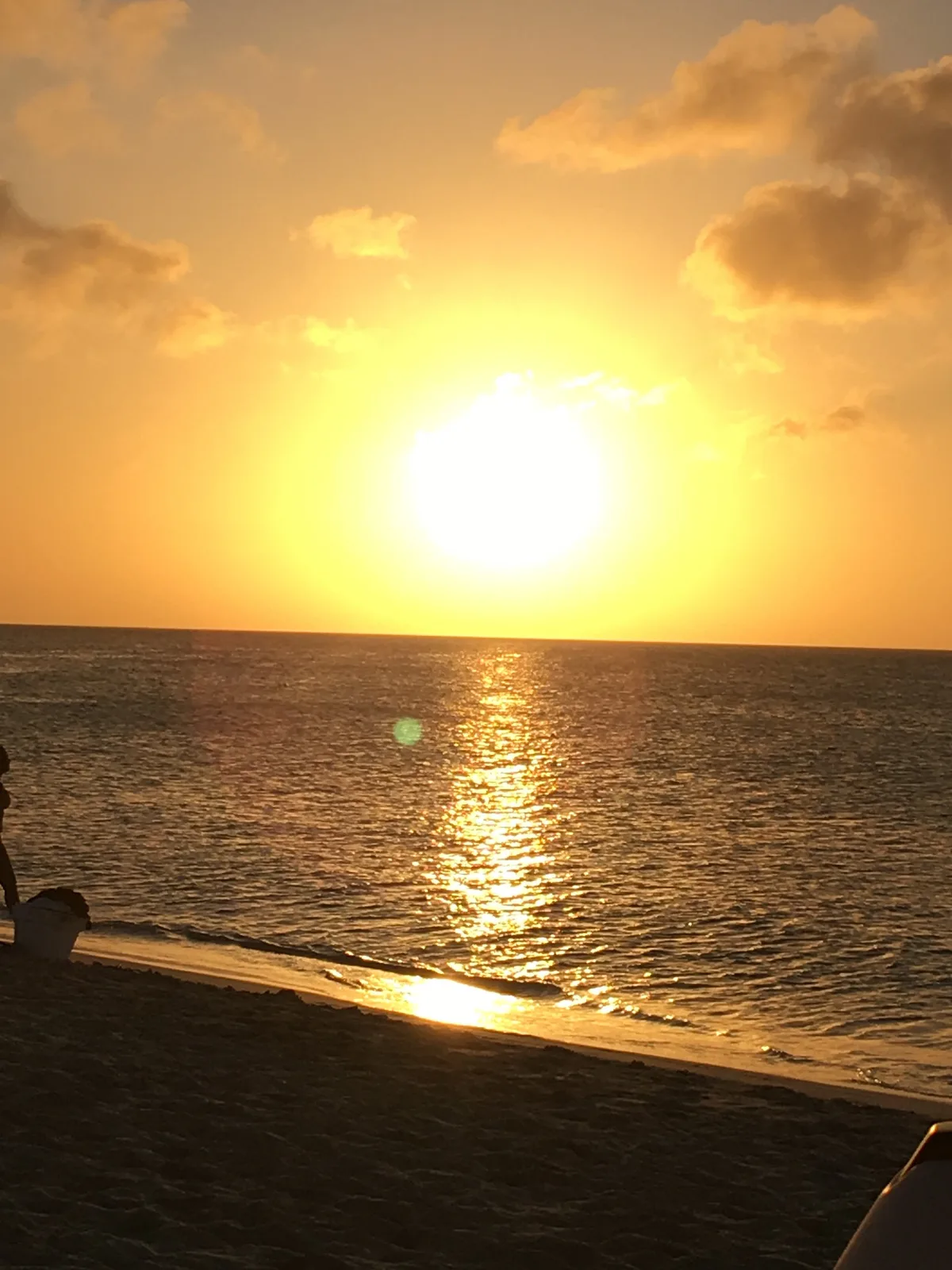
Shoot the twin fofoti trees at golden hour — the low western sun lights up the white sand and turquoise water behind them perfectly. Early morning is best for wide-angle shots of the full beach before visitors arrive and the light stays soft.
Good to know
No motorized water sports are permitted within the swim zone, so the water stays peaceful — respect the markers. During sea turtle nesting season, marked protected areas appear on the beach; stay out of them and never disturb nests or hatchlings. Trade winds peak December through March, producing choppy surf and rip currents — if you're not a strong swimmer, stay out of the water during those months. There are no lifeguards on Eagle Beach at any time of year, so swim with caution regardless of season.
GAMES
🕹️ Five minutes of sand?
Three daily games — including the UV simulator set to this beach.
Map
Nearby places
Calabria Trattoria
P.F Chang's
Olive Garden
The Kitchen Table by White
Grand Fish
Embassy Suites
Quality Apartments
Divi Phoenix
Tamarijn Divi Aruba
Tamarijn
Things to see around Noord
California Lighthouse
Historic 1916 lighthouse at the island's northwestern tip with panoramic views.
Arikok National Park
Protected park covering 20% of Aruba with desert landscape, caves, and windward beaches.
Oranjestad
Aruba's colorful Dutch colonial capital with shopping, dining, and Fort Zoutman.
GIFT
🎁 Gift this beach
Its exact coastline, your date, your words — on a print or a PDF you print yourself.
Eagle Beach
THAT DAY
Eagle Beach, Lesser Antilles
© OpenStreetMap contributors
Clean & decorative, or “That day” with the real sky of your date.
Shipping included 3-6 business days
A question before you order? Contact us
Delivered within minutes on the confirmation page and by email: a ZIP with all 4 print sizes (30×40 cm, 12×16″, 50×70 cm, 18×24″), each as a high-resolution PDF and PNG (300 dpi), plus a screen version. Print at home or at any print shop.
Please complete the delivery address.
Please accept the Terms of Sale.
Almost there — the shop opens very soon.
Secure payment · Printed locally in 30+ countries · 7 languages
Frequently asked
The information on this page is provided for guidance only and may evolve. Access conditions, safety and infrastructure can change without notice. Always check official sources before traveling.
Nearest beaches

More beaches in Lesser Antilles
Reviews of this beach
- No reviews yet, what a shame — leave yours and share your experience.