Kleftiko Beach
Sea arches, emerald caves, and zero road access
About
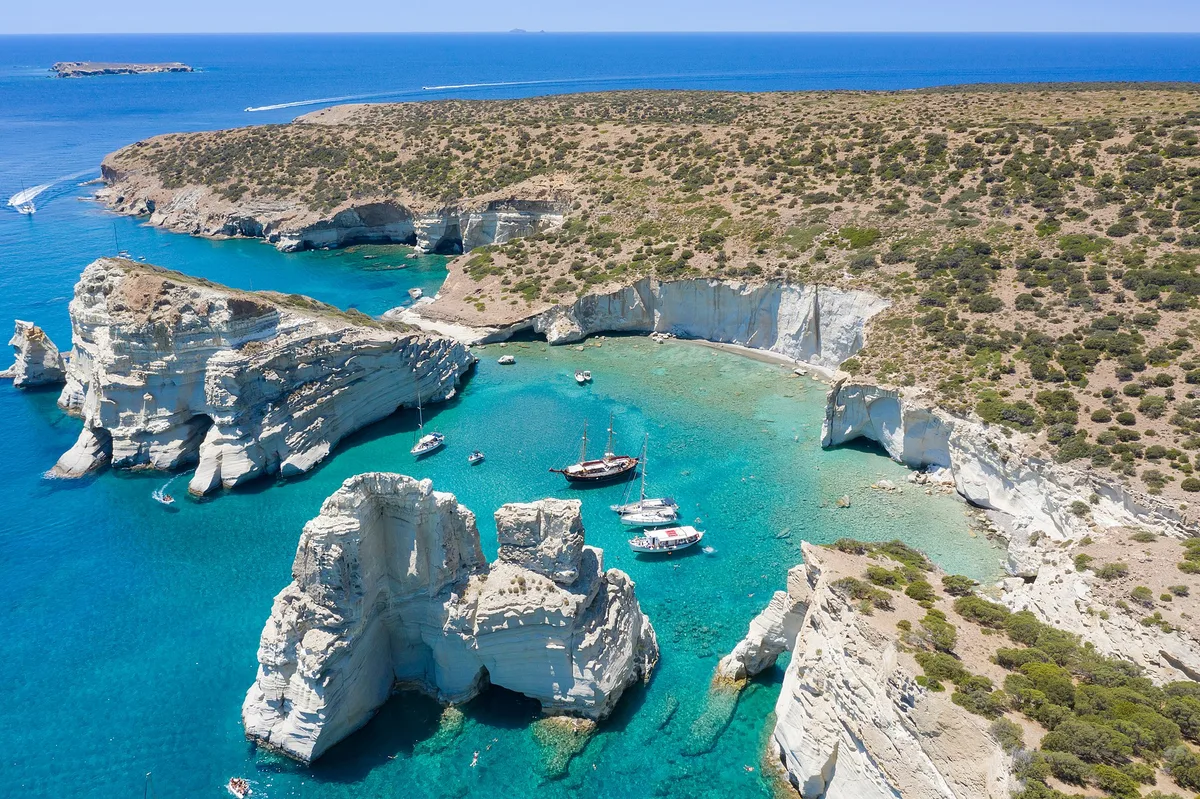
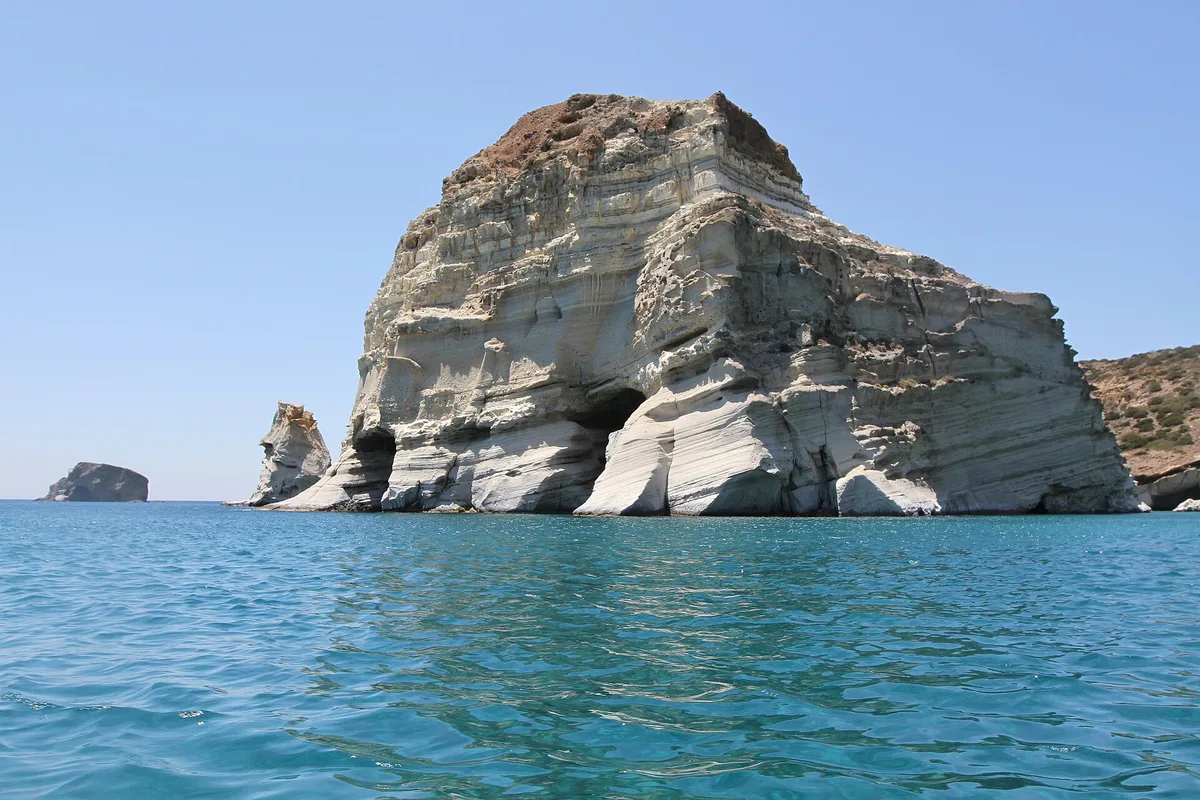
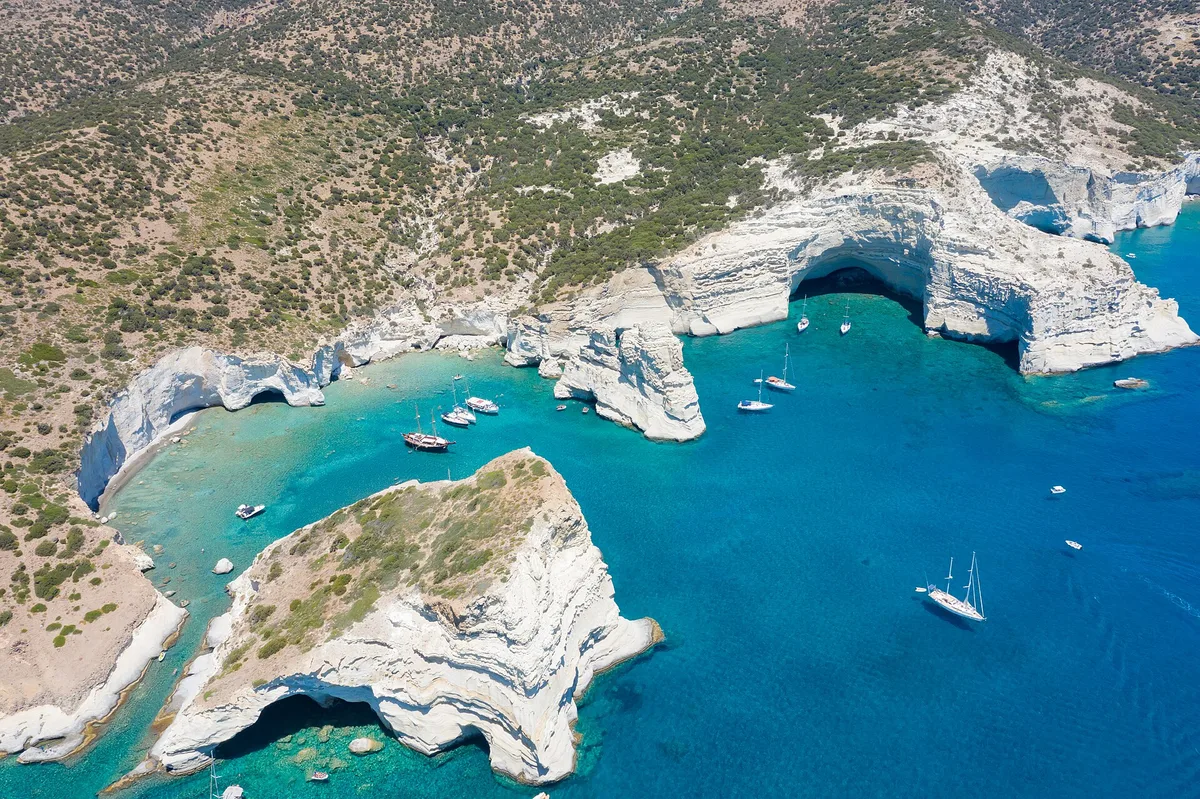
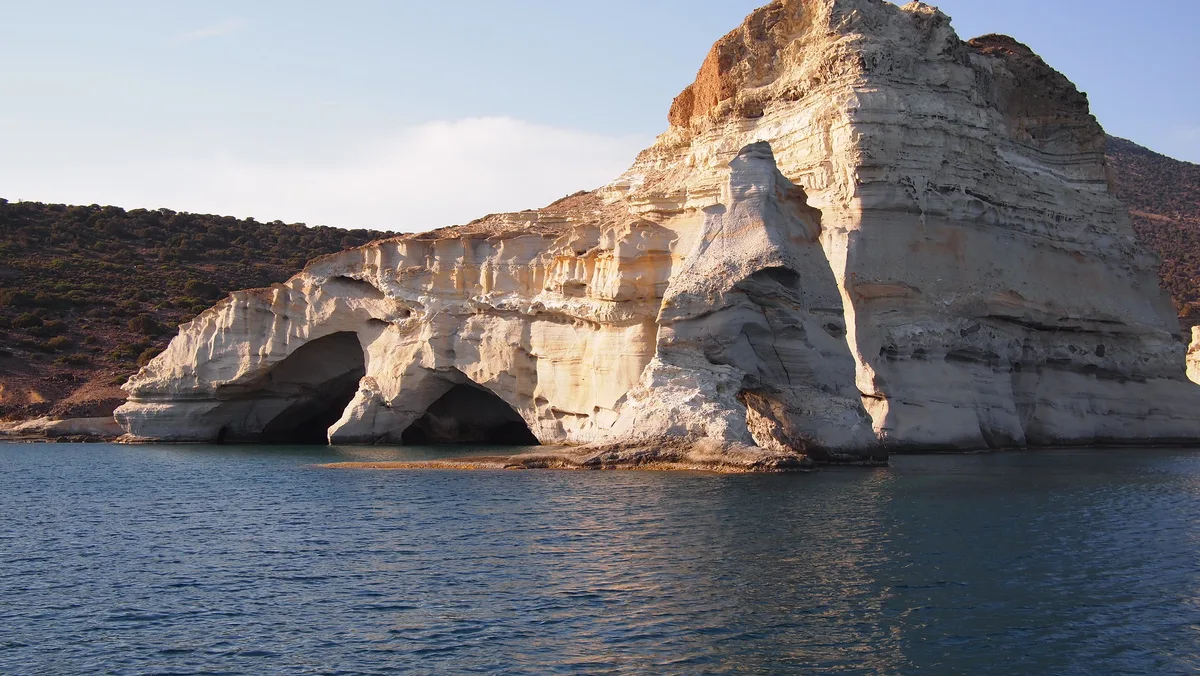
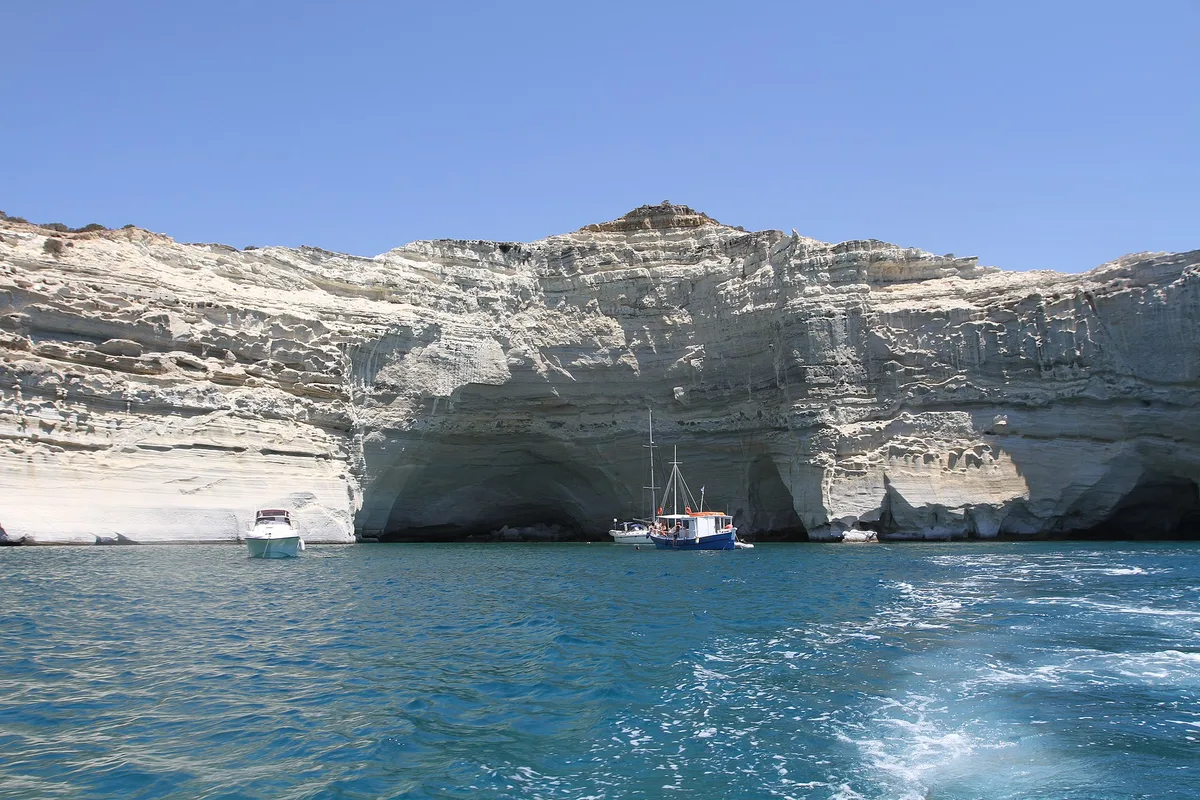
Kleftiko is a raw volcanic seascape on the southwestern tip of Milos — a labyrinth of white volcanic sea stacks, sea arch passages, and emerald cave lagoons carved by millennia of wave action. The water runs turquoise inside the coves, shifting to deeper hues where the arches open to the Aegean. There's no sand here, just sculpted rock and the sound of water echoing through cave chambers. It's boat-only, which keeps the experience wilder than most Cycladic beaches. The vibe is elemental: ancient geology, clear water, and the occasional splash of a snorkeler disappearing into a cave.
How to get there
Kleftiko is reachable only by boat — there is no road, no path, and no shore approach. Boats depart seasonally from Adamas, with the journey taking around 300 minutes round-trip depending on the operator and route. Boats anchor in the cove and passengers swim or wade to the rock formations. There is no parking of any kind — the concept simply doesn't apply here.
Who it's for
For couples
Kleftiko's boat-only isolation and cave lagoons make it one of the more genuinely remote experiences in the Cyclades — arriving by sea with no other infrastructure around strips the day back to something simple and memorable.
For families
Families with older children who are confident swimmers and can follow safety instructions — particularly ducking at low arch entrances and staying clear of cave walls — will find the snorkeling and geology endlessly engaging. It's not suitable for very young children or non-swimmers given the rocky surfaces and no lifeguard presence.
Our take
Feet in the sand, eyes on the screen
Kleftiko earns its reputation not through comfort but through sheer geological drama — white volcanic sea stacks, cave arches, and turquoise water that you can only reach by sea. The boat-only access is a genuine filter: it keeps the experience wilder, but it also means weather runs the show. Meltemi winds cancel trips without warning, July and August are the worst months for this, so June or September give you better odds. There's no lifeguard, the arch entrances are low enough to injure the inattentive, and the cave walls are off-limits to touch — read the rules before you duck inside. For snorkelers and anyone drawn to volcanic coastlines, this is one of the Aegean's most distinctive day trips. Go with realistic expectations: rocky, remote, rule-bound, and worth every minute of the 300-minute boat journey.
What to do
Snorkeling through the cave system is the main event — the turquoise water inside the arches is clear enough to see the volcanic rock walls below the surface. About 3km away, Sykia Cave offers a collapsed sea cave with a natural skylight, accessible by kayak or swim if your boat operator includes it. Further afield on Milos, the Catacombs of Milos near Tripiti (18km) are among the most significant early Christian catacombs in Greece, and the Ancient Theatre of Milos nearby shares the same excursion route with views over the bay.
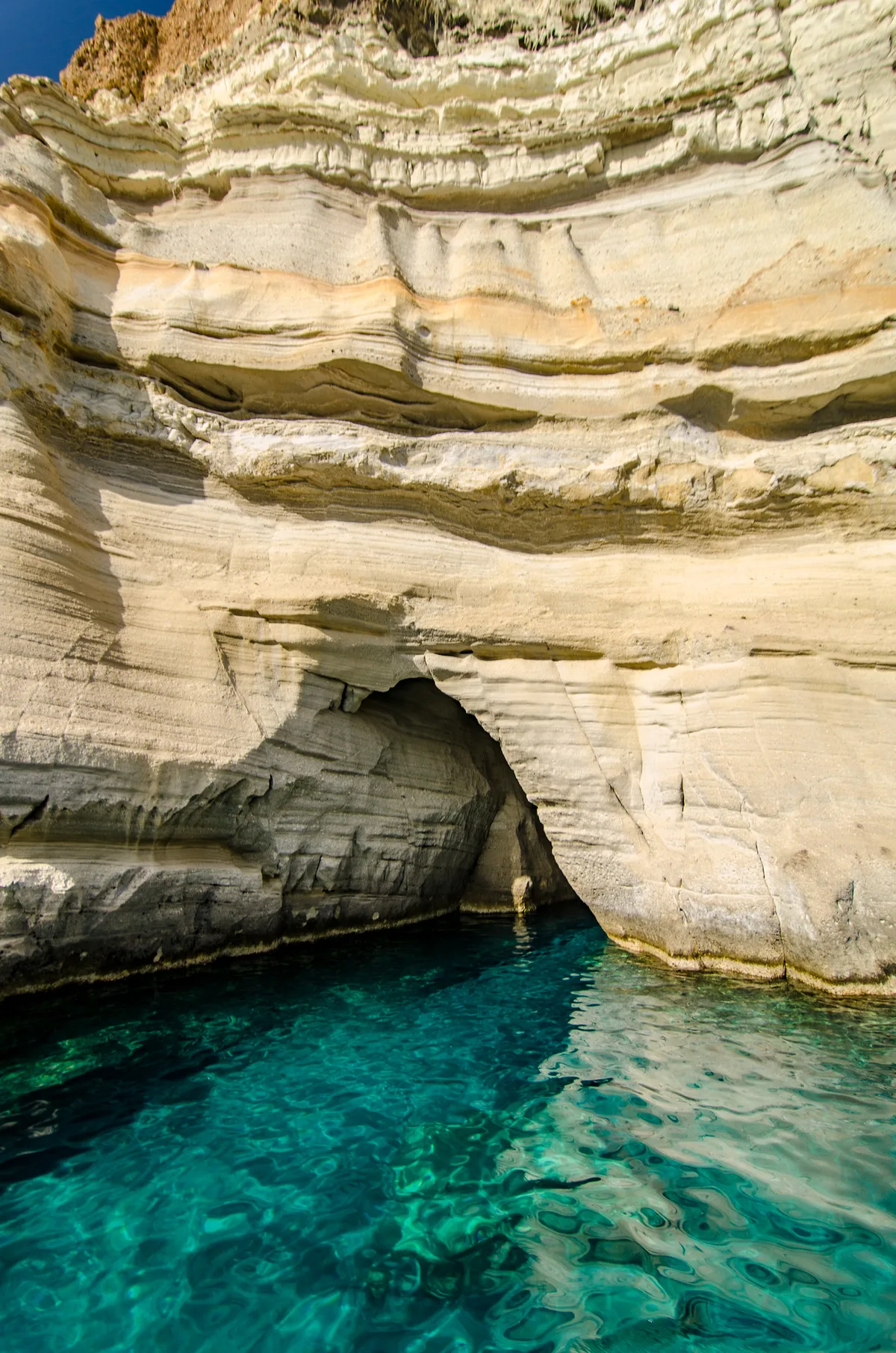
The sea arch passages shot from water level — framing turquoise water and white volcanic stacks through the arch opening — are the signature image of Kleftiko.
The emerald cave lagoon interior, lit by natural light filtering through the arch entrances, rewards photographers who time their visit to midday. White volcanic sea stacks rising from the water photographed from a boat on approach give the wide establishing shot that no cave interior can replicate.
Where to eat
There are no restaurants, cafés, or food vendors at Kleftiko — it's an uninhabited rock formation accessible only by boat. Pack your own food and water before departure from Adamas; most boat operators expect you to be self-sufficient for the duration of the trip.
Where to stay
There is no accommodation at or near Kleftiko itself. Base yourself in or around Adamas, the main port of Milos, where boat trips to Kleftiko depart seasonally.
Photography
The most striking shots come from inside the cave arches looking outward — the frame of white volcanic rock against turquoise water is the defining image of Kleftiko. Midday light floods the cave interiors best, while early morning departures from Adamas mean you'll arrive before boat traffic builds.
Good to know
No motorised boats are permitted inside the cave arches — this is a strict local rule, so expect your captain to cut the engine before entering. Do not touch the cave walls; the volcanic rock is fragile and the rule exists to protect the formations. The low arch entrances require ducking — move carefully to avoid a head injury. There is no lifeguard on site, and boat trips are frequently cancelled when meltemi winds pick up, especially in July and August — build flexibility into your itinerary. True digital-detox territory: bring offline books, signal fades out here and there's nowhere to plug in a laptop.
Map
Nearby places
Things to see around Milos
Sykia Cave
Collapsed sea cave with natural skylight, accessible by kayak or swim.
Catacombs of Milos
Early Christian catacombs near Tripiti, among the most important in Greece.
Ancient Theatre of Milos
Hellenistic theatre near Klima with views over the bay.
Frequently asked
The information on this page is provided for guidance only and may evolve. Access conditions, safety and infrastructure can change without notice. Always check official sources before traveling.
Nearest beaches
Other wild beaches in Greece
More beaches in Cyclades

Reviews of this beach
- No reviews yet, what a shame — leave yours and share your experience.
Photo credits
Sources and licenses for the photos shown above.