Cabo Ledo BeachAngola Beach Guide
Wild Atlantic point break on Angola's undeveloped coast
About
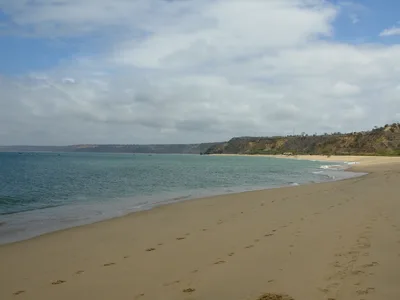
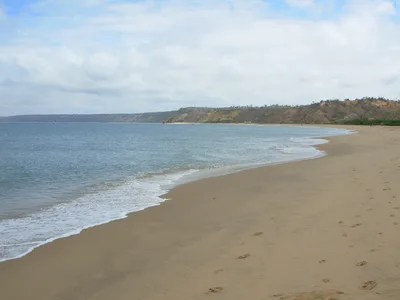
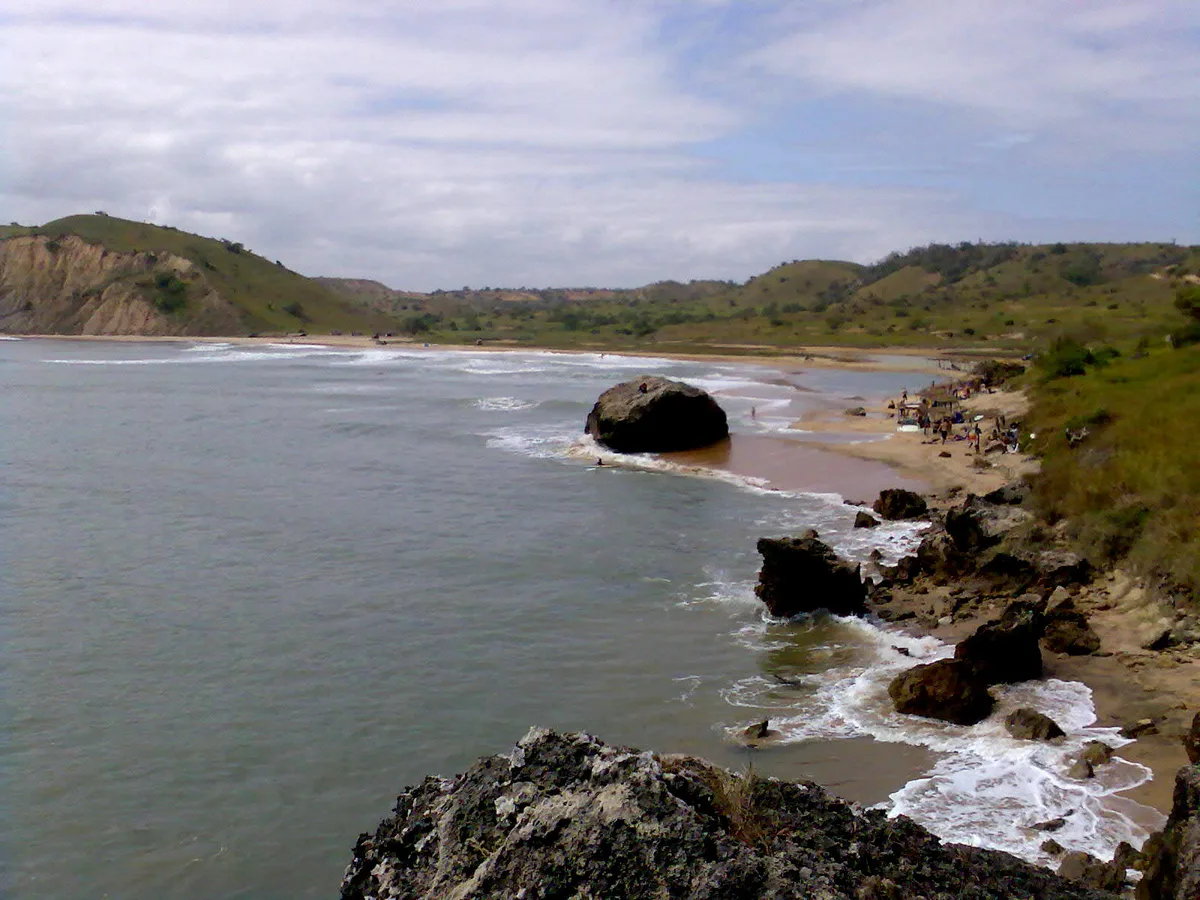
Praia do Cabo Ledo stretches roughly 854 metres of golden sand along Angola's Luanda coast, backed by dramatic ochre sandstone cliffs that glow warm in the afternoon light. The Atlantic rolls in blue and unfiltered here — no beach bars, no sunbed rows, just an undeveloped coastline that feels genuinely remote. A left-hand point break peels along the headland, drawing surfers who are willing to earn the experience. The vibe is wild and unhurried, and the quiet is the kind you have to travel two hours from Luanda to find.
How to get there
Drive south from Luanda — the journey takes around 120 minutes by car on a daily-accessible route. The final approach is an unpaved track, and after heavy rains the access road can become impassable, so check conditions before you leave. Parking is free and informal on the beach approach track; there are no formal facilities. The unpaved road and soft sand make wheelchair access impractical.
Who it's for
For couples
The remote Atlantic setting and near-empty golden sand make Cabo Ledo a rare place to disconnect together — no vendors, no noise, just cliffs, ocean and a shared sense of being somewhere genuinely off the map.
For families
The undeveloped nature of Cabo Ledo means there are no facilities, no lifeguards, and rip currents are possible outside the point break zone — families with young children should plan carefully, supervise water access closely, and come fully self-sufficient with food and water.
Our take
Rip currents are possible outside the point break zone — that is the first thing to know before you wade in. With that said, Cabo Ledo is one of the most compelling raw surf destinations on Angola's coast: ochre cliffs, golden sand, blue Atlantic, and almost no one else around. The 120-minute drive from Luanda is the price of admission, and the unpaved final track means this place self-selects for people who actually want to be here. Avoid November through February — the rainy season makes the access road genuinely difficult and the surf less consistent. Come between May and October, camp light, leave no trace, and you'll have a stretch of undeveloped Atlantic coastline that most travellers will never see.
What to do
The Miradouro Eco Carpe Diem viewpoint sits just 0.4 km away and rewards the short walk with views of the cliffs and ocean. Praia Morena, about 4.9 km along the coast, offers another stretch of Atlantic shoreline worth exploring. For a bigger excursion, Kissama National Park lies roughly 30 km away — Angola's most accessible national park, with elephants and coastal wildlife — while the Kwanza River mouth at Barra do Kwanza, around 40 km distant, brings mangroves and fishing villages into the picture.
The ochre sandstone cliffs viewed from the water's edge at low sun angle are the standout shot — warm rock against deep blue Atlantic.
The point break headland looking south along the golden sand gives a wide, undeveloped coastal frame that is rare on this stretch of Africa's Atlantic coast.
Where to eat
Doce Mar, about 1.5 km from the beach, is the closest dining option in the area. Carpe Diem sits a little further at 2.3 km, and 120 Na Braza is roughly 4.9 km away. Outside of these spots, the beach itself has no food vendors — bring supplies if you're planning a full day or camping overnight.
Where to stay
Complexo Turistico Golfinho, around 13.9 km from the beach, is the nearest documented accommodation option in the area. Beyond that, surf camping directly on the undeveloped coastline is part of the Cabo Ledo experience for those who come prepared.
Photography
The ochre sandstone cliffs photograph best in low-angle light, when the warm tones contrast sharply against the blue Atlantic. Shoot from the point break headland looking back along the 854-metre sweep of golden sand for the most dramatic coastal composition.
Good to know
Rip currents are possible outside the point break zone — stay aware of water movement and do not swim beyond the sheltered break. The access road can be impassable after heavy rains, so avoid planning a trip during the rainy season months of November through February. No formal rules apply, but leave-no-trace camping etiquette is expected — pack out everything you bring in. This is a true digital-detox destination: bring offline entertainment, because cell signal fades and there is nowhere to plug in a laptop.
Map
Nearby places
Complexo Turistico Golfinho
Things to see around Cabo Ledo
Kissama National Park
Angola's most accessible national park with elephants and coastal wildlife.
Barra do Kwanza
Kwanza River mouth beach with mangroves and fishing villages.
Luanda
Angola's capital city with colonial architecture, museums and the Marginal waterfront.
Frequently asked
The information on this page is provided for guidance only and may evolve. Access conditions, safety and infrastructure can change without notice. Always check official sources before traveling.
Reviews of this beach
- No reviews yet, what a shame — leave yours and share your experience.
Photo credits
Sources and licenses for the photos shown above.
- Photo 1 — Felipe Miguel from Curitiba, Brazil · source · CC BY-SA 2.0
- Photo 2 — Felipe Miguel from Curitiba, Brazil · source · CC BY-SA 2.0
- Photo 3 — Paulo César Santos · source · CC0