Tipaza BeachAlgeria Beach Guide
Golden sand, Roman ruins, and turquoise Mediterranean water
About
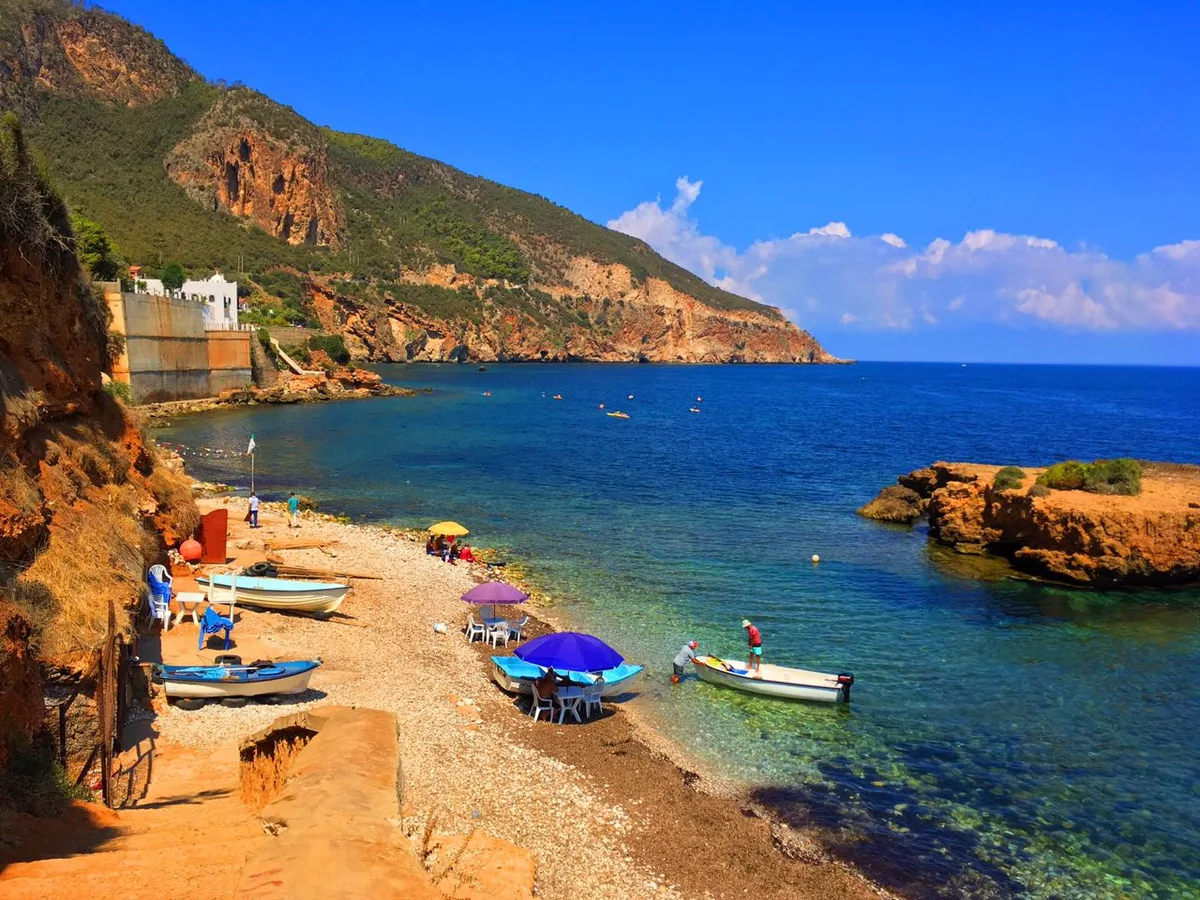
Tipaza stretches roughly 960 metres along Algeria's Mediterranean coast, backed by the dramatic silhouette of the Chenoua massif and flanked by some of the most remarkable ancient stonework you'll find anywhere on a shoreline. Golden sand meets turquoise water, and the transition between the two is interrupted — in the best possible way — by Phoenician stonework and Roman ruins that spill right down to the waterline. The beach sits adjacent to the UNESCO World Heritage Tipaza Archaeological Site, so history isn't a backdrop here; it's literally underfoot. Ile de Zaryana punctuates the seascape offshore, giving the view an extra layer of drama. It's a mixed sand-and-rock beach, relaxed in vibe, and genuinely unlike anywhere else on the Algerian coast.
How to get there
From Algiers city centre, the drive takes around 70 minutes daily — straightforward on the coastal road toward Cherchell in the Shenoua commune. Free parking is available near the ruins entrance, but fair warning: July and August turn the access roads and parking area into near-chaos, so arrive before 9am if you're visiting in peak summer. The beach itself is easy to reach on foot once you've parked. No entry fee details are confirmed, so budget conservatively and carry cash.
Who it's for
For couples
The combination of turquoise water, golden sand, and ancient Phoenician stonework at the shoreline gives couples a genuinely atmospheric setting — walk the ruins at dawn before the beach gets busy and you'll have it largely to yourselves.
For families
The easy access and free parking make logistics manageable, but bring water shoes for the kids — rocky sections are mixed throughout the sand, and the archaeological site boundaries need to be explained to younger visitors before you arrive.
Our take
Tipaza Beach is one of the few places on earth where you can swim in turquoise water and then step directly onto a UNESCO World Heritage archaeological site — that combination is rare and it's real. Swimming is rated moderate, the water is clear, and the golden sand is genuinely attractive, but the rocky sections throughout mean water shoes are non-negotiable. June and September are the months to aim for. July and August bring serious access problems — chaotic parking, packed access roads, and a beach that loses its charm under the weight of peak-season visitors. The local rules here are not suggestions: no archaeological fragments leave the site, no alcohol on the beach, and the site boundaries are there for a reason. Come for the history as much as the swim, and you'll leave with something more interesting than a tan.
What to do
The Tipasa Archaeological Site is just 0.1 km from the waterline — Phoenician and Roman ruins run directly adjacent to the beach, making a slow walk along the shore feel like an open-air museum visit. Three kilometres away, Chenoua Beach offers a dramatic sandy bay at the base of the Chenoua massif if you want to explore further along the coast. For a deeper dive into the region's Roman heritage, the Cherchell Museum is 35 km away and houses Roman-era sculptures and mosaics from ancient Caesarea. The View of Roman Aqueduct is reachable at 12.1 km — a worthwhile detour for anyone serious about the archaeological context of this coastline.
The Roman ruins tumbling toward the turquoise waterline — shoot wide with the Chenoua massif in the background for a frame that earns its likes.
Ancient stonework at the water's edge, with golden sand in the foreground, gives you a detail shot with a depth of historical character that is hard to find elsewhere on the Mediterranean.
Where to eat
Le Romana, about 1.7 km from the beach, is the closest dining option worth noting. Poisson Tipaza and Restaurant Le Dauphin are both around 2 km away and round out the immediate choices for a post-swim meal. There are also a couple of regional options a little further out at roughly 4 to 4.5 km — bring snacks for the beach itself, as on-site food is not confirmed.
Where to stay
Complexe le Grand Bleu at 1.2 km is the closest base, followed by Complexe El Manar at 1.5 km — both put you within easy reach of the ruins and the shore. Hôtel Munatec at 1.8 km is another solid option if the complexes are full, particularly useful for early arrivals trying to beat the summer parking situation.
Photography
Shoot the Roman ruins against the turquoise water with the Chenoua massif rising behind, before the beach fills up. Arriving early gives you the best light and the quietest conditions along the shoreline.
Good to know
Rocky sections are mixed throughout the golden sand — pack water shoes to protect your feet and move comfortably between zones. Do not remove any archaeological fragments from the beach or site area; this is a firm local rule and a legal obligation in a UNESCO-protected zone. Alcohol is not permitted on the public beach, and you must respect the marked boundaries of the archaeological site at all times. If you're visiting in July or August, the parking situation and access roads become genuinely chaotic — arriving before 9am is not just a suggestion, it's the difference between a good day and a frustrating one. Skip those two months entirely if you can.
Map
Nearby places
Le Romana
Poisson Tipaza
Restaurant Le Dauphin
Resto
Resto
View of Roman Aquaduct
Things to see around Tipaza
Tipasa Archaeological Site
UNESCO World Heritage Phoenician and Roman ruins directly adjacent to the beach.
Chenoua Beach
Dramatic sandy bay at the base of the Chenoua massif.
Cherchell Museum
Museum housing Roman-era sculptures and mosaics from ancient Caesarea.
GIFT
🎁 Gift this beach
Its exact coastline, your date, your words — on a print, a mug, or a PDF you print yourself.
Tipaza Beach
THAT DAY
Tipaza Beach, Algerian Mediterranean
© OpenStreetMap contributors
Clean & decorative, or “That day” with the real sky of your date.
Shipping included 3-6 business days
A question before you order? Contact us
Delivered within minutes on the confirmation page and by email: a ZIP with all 4 print sizes (30×40 cm, 12×16″, 50×70 cm, 18×24″), each as a high-resolution PDF and PNG (300 dpi), plus a screen version. Print at home or at any print shop.
Please complete the delivery address.
Please accept the Terms of Sale.
Almost there — the shop opens very soon.
Secure payment · Printed locally in 30+ countries · 7 languages
Frequently asked
The information on this page is provided for guidance only and may evolve. Access conditions, safety and infrastructure can change without notice. Always check official sources before traveling.
Reviews of this beach
- No reviews yet, what a shame — leave yours and share your experience.
Photo credits
Sources and licenses for the photos shown above.
- Photo 1 — Mimo alili · source · CC BY-SA 4.0
- Photo 2 — Sidahmed sentemi · source · CC BY-SA 4.0
- Photo 3 — AdamGala9 · source · CC BY-SA 4.0
- Photo 4 — Chaafik · source · CC BY-SA 4.0