Timur Gili Meno BeachIndonesia Beach Guide
White sand, turquoise water, zero footprints — just turtles
About
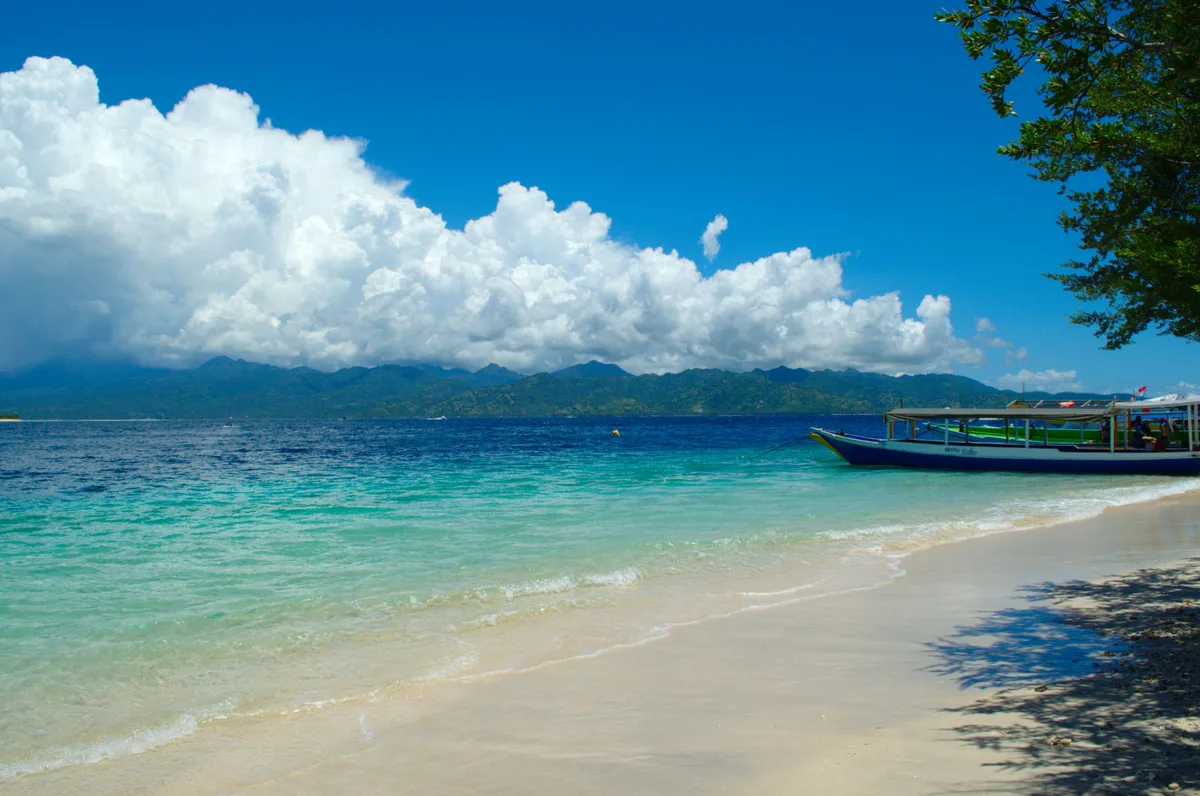
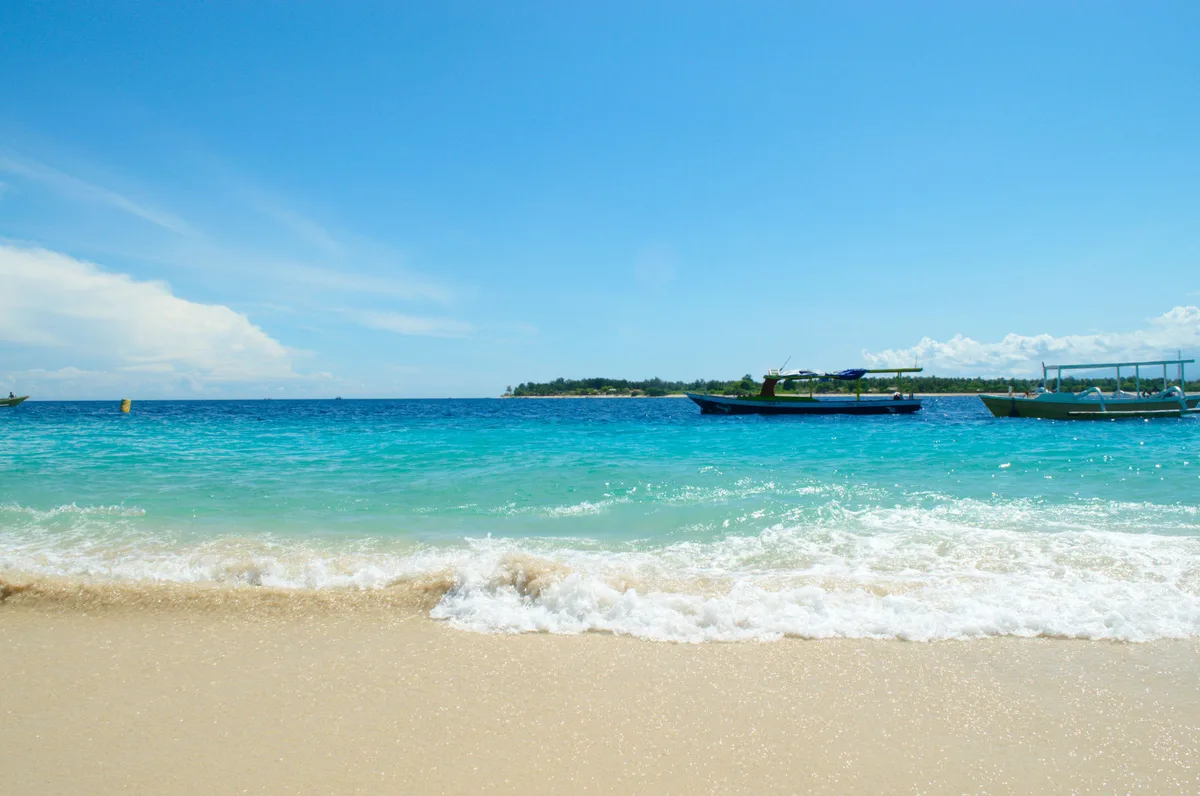
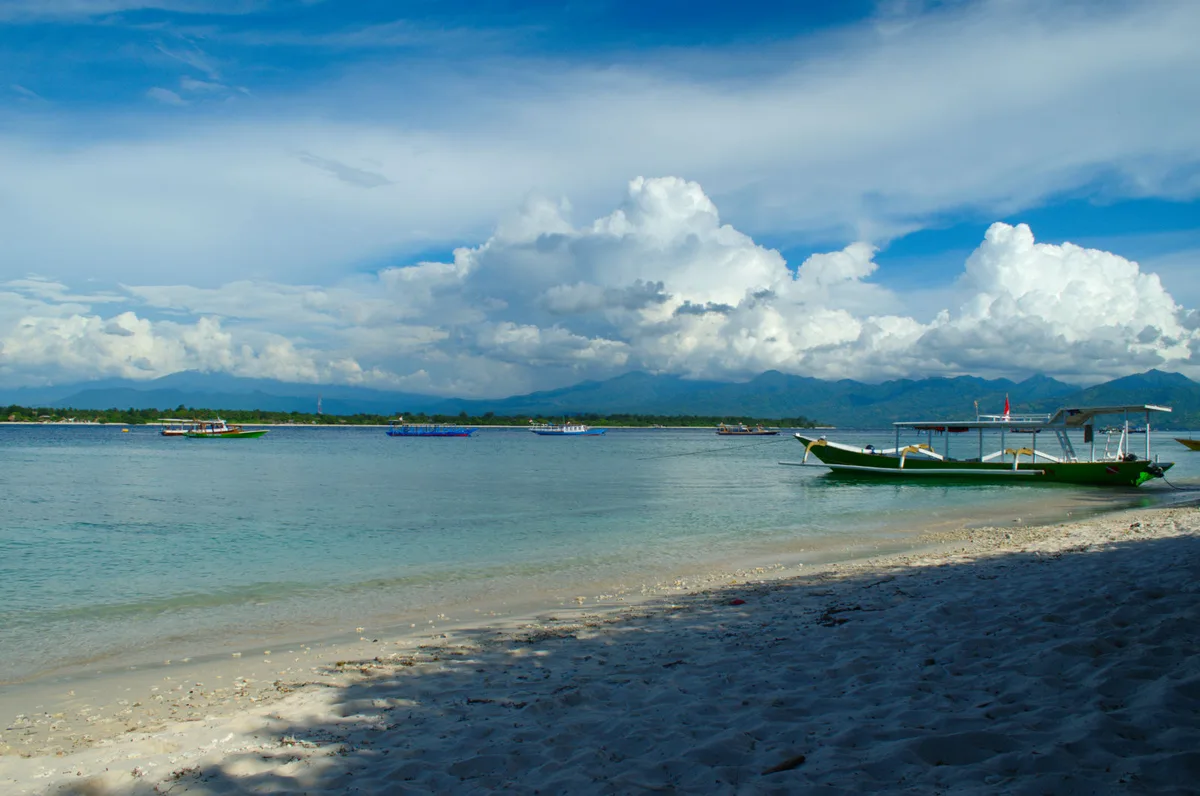
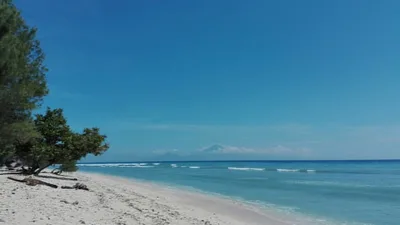
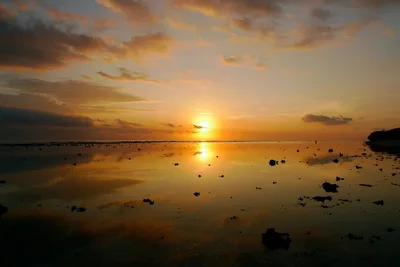
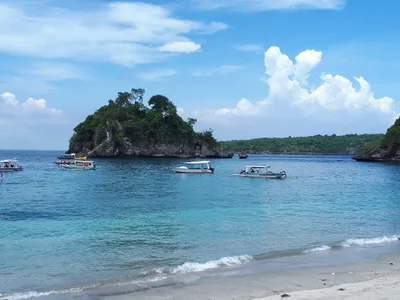
Pantai Timur Gili Meno is Gili Meno's wild eastern shore — roughly 400 metres of white sand facing open water the colour of shallow turquoise glass. No sunbeds, no vendors, no noise. The seagrass meadows just offshore are an active turtle feeding ground, so sightings here are genuinely common rather than lucky. A hard coral slope begins within 50 metres of the waterline, and the Lombok mainland sits on the horizon like a painted backdrop. This is what the Gili Islands looked like before anyone built a bar.
How to get there
Pantai Timur Gili Meno is boat-access only — there are no roads and no vehicles of any kind on Gili Meno. Take the daily public ferry from Bangsal, Lombok (roughly 20 minutes), then walk east along the island's perimeter path from Gili Meno jetty — the beach is about 10 minutes on foot. There is no entry fee, no parking of any kind, and no facilities whatsoever once you arrive.
Who it's for
For couples
The extreme solitude and the reliable turtle sightings make this a genuinely rare find for couples who want a wild, uncommercialized stretch of white sand with something alive in the water — no performance required, just show up early.
For families
Families with older, confident children who can snorkel will find the turtle feeding ground memorable, but the zero-facility setup — no shade, no fresh water, no lifeguard — means young children and toddlers are better served at Gili Meno's west beach, 1.2 km away.
Our take
No facilities, no lifeguard, no shade, and no road to drive away on — Pantai Timur Gili Meno is not a beach that forgives poor preparation. Come ready: water, reef shoes, sun protection, and a ferry schedule you've actually checked. Do all that, and what you get in return is a 400-metre stretch of white sand and turquoise water where turtles feed in the seagrass and the Lombok mainland sits on the horizon in silence. The coral slope within 50 metres rewards snorkellers immediately. Skip December through February without a second thought — monsoon debris and exposure make it a different, worse place. The rest of the dry season, particularly May through October, this is as close to an empty, functioning reef beach as the Gili Islands offer.
What to do
The coral slope within 50 metres of shore makes snorkelling the obvious first move — visibility is good and the turtle encounters are real. Three Biorock artificial reef projects operate nearby: Gili Divers Biorock (0.1 km), Trawangan Dive Biorock (0.2 km), and Bale Sampan Biorock (0.3 km), all worth exploring with a dive operator. A short walk inland brings you to Gili Meno Salt Lake, a brackish interior lake that attracts wading birds. Further along the island, the Nest Underwater Sculpture Park — Jason deCaires Taylor's circular cage of human figures in 4 metres of water off the west coast — is one of the most distinctive dive and snorkel sites in the archipelago.
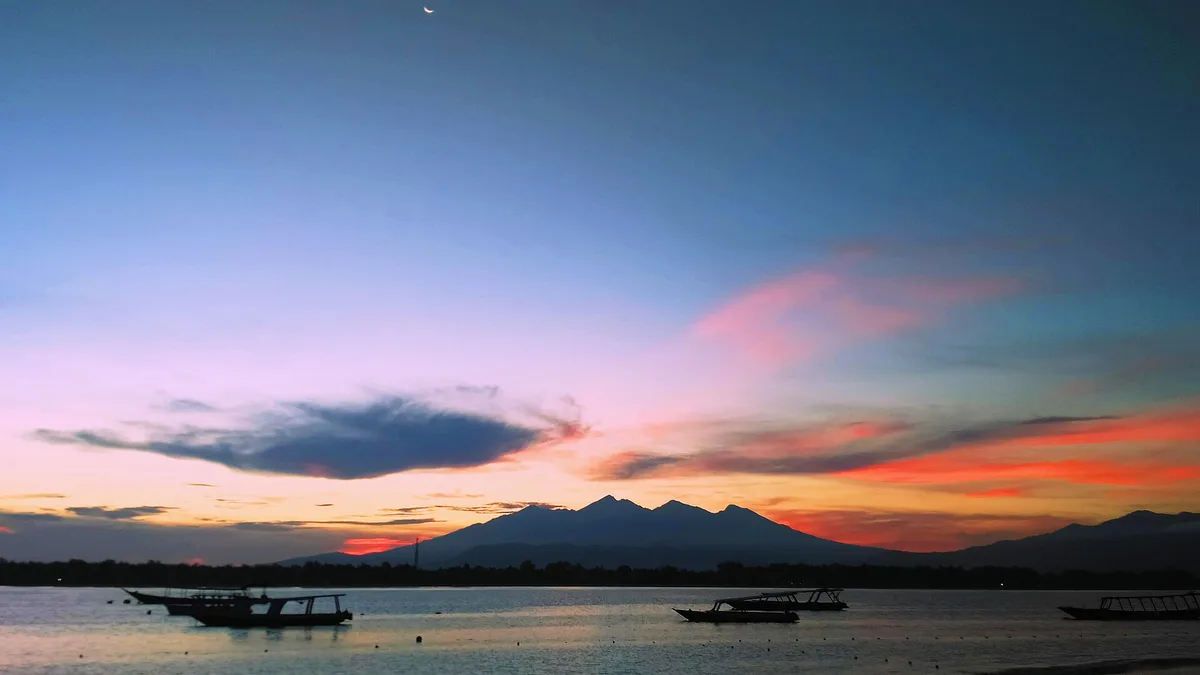
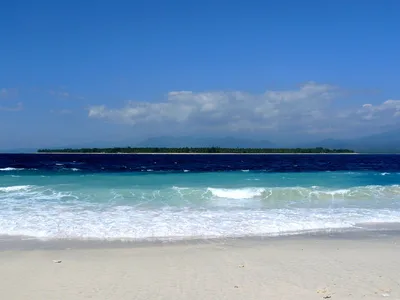
The Lombok mainland sightline from the waterline — white sand in the foreground, turquoise water mid-frame, volcanic peaks behind — is the defining composition on this beach.
If turtles are feeding in the shallows, a wide-angle shot from knee-depth captures them in their natural context without the need to approach. The total absence of infrastructure means every frame looks unedited.
Where to eat
Blue Beach Restaurant, Warna Restaurant, and Meeting Point (Indonesian) are all within the immediate area near the beach perimeter. EGO is a short 0.1 km away. Pack your own water and snacks for the beach itself — there is nothing on-site.
Where to stay
Egoïste Bungalow, Gili Divers Hotel, Horizontal Hotel, and Sunrise are all within 0.1 km of the beach, making them the most practical bases for an early-morning visit before other visitors arrive. DeJaVu Turtle Beach is 0.2 km away and, given the name, seems to know its audience.
Photography
Shoot in the early morning when the turquoise water is glassy and the Lombok mainland sightline is sharpest against the light — the combination of white sand foreground and volcanic peaks behind is the money shot. If turtles surface in the seagrass shallows, shoot from the waterline without approaching them; the natural behaviour is far more compelling than a posed encounter.
Good to know
Bring everything you need before you leave the jetty: water, sun protection, and reef shoes — the seagrass entry makes barefoot wading uncomfortable, and there is no lifeguard and no shade structure on this beach. Do not touch or chase turtles; it is prohibited and disrupts their feeding behaviour. Avoid December, January, and February — monsoon conditions and seagrass debris make this exposed shore genuinely unpleasant during those months. No motorised vehicles are permitted anywhere on Gili Meno, so plan your timing around ferry schedules.
GAMES
🕹️ Five minutes of sand?
Three daily games — including the UV simulator set to this beach.
Map
Nearby places
Blue Beach Restaurant
Warna Restaurant
Meeting Point
Blue Beach Restaurant
EGO
Egoïste Bungalow
Gili Divers Hotel
Horizontal hotel
Sunrise
DeJaVu Turtle Beach
Gili Meno Salt Lake
Nest Underwater Sculpture Park
Gili Meno West Beach
Things to see around Gili Indah
Gili Meno Salt Lake
Brackish lake in the island interior, habitat for wading birds.
Nest Underwater Sculpture Park
Circular cage of human figures by Jason deCaires Taylor in 5 m of water off the west coast.
Gili Meno West Beach
Pristine powder-white west-facing beach, the island's centrepiece.
GIFT
🎁 Gift this beach
Its exact coastline, your date, your words — on a print or a PDF you print yourself.
Timur Gili Meno Beach
THAT DAY
Timur Gili Meno Beach, Lesser Sunda Islands
© OpenStreetMap contributors
Clean & decorative, or “That day” with the real sky of your date.
Shipping included 3-6 business days
A question before you order? Contact us
Delivered within minutes on the confirmation page and by email: a ZIP with all 4 print sizes (30×40 cm, 12×16″, 50×70 cm, 18×24″), each as a high-resolution PDF and PNG (300 dpi), plus a screen version. Print at home or at any print shop.
Please complete the delivery address.
Please accept the Terms of Sale.
Almost there — the shop opens very soon.
Secure payment · Printed locally in 30+ countries · 7 languages
Frequently asked
The information on this page is provided for guidance only and may evolve. Access conditions, safety and infrastructure can change without notice. Always check official sources before traveling.
Nearest beaches
Other wild beaches in Indonesia
More beaches in Lesser Sunda Islands
Reviews of this beach
- No reviews yet, what a shame — leave yours and share your experience.
Photo credits
Sources and licenses for the photos shown above.
- Photo 1 — Luis Medina · source · CC BY-SA 3.0
- Photo 2 — Dhika Ayu Agustin Cahyani · source · CC BY-SA 4.0
- Photo 3 — Luis Medina · source · CC BY-SA 3.0
- Photo 4 — Luis Medina · source · CC BY-SA 3.0
- Photo 5 — Marc Bernat Madrid · source · CC BY-ND 2.0
- Photo 6 — cnener · source · CC BY-ND 2.0