Myrtos BeachGreece Beach Guide
White cliffs, wild water, no shade — come prepared
 🎁 Gift idea: the star map of your most beautiful night↓
About
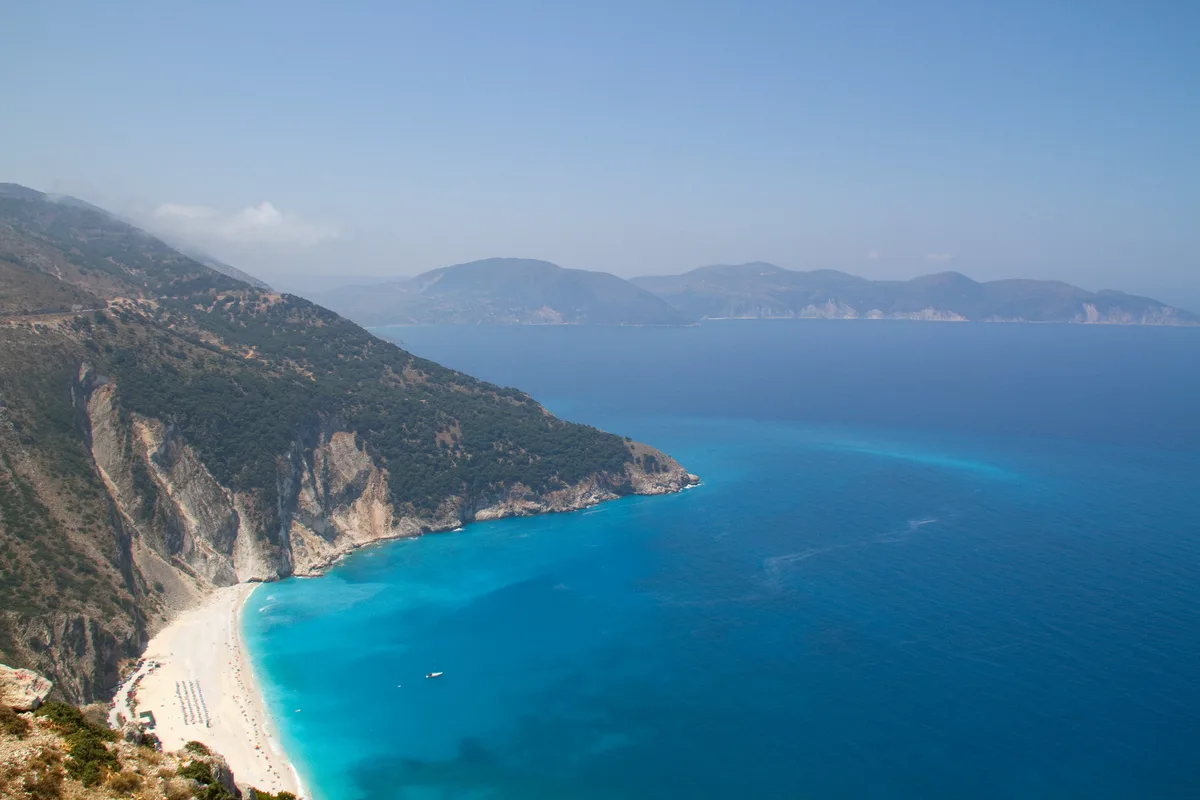
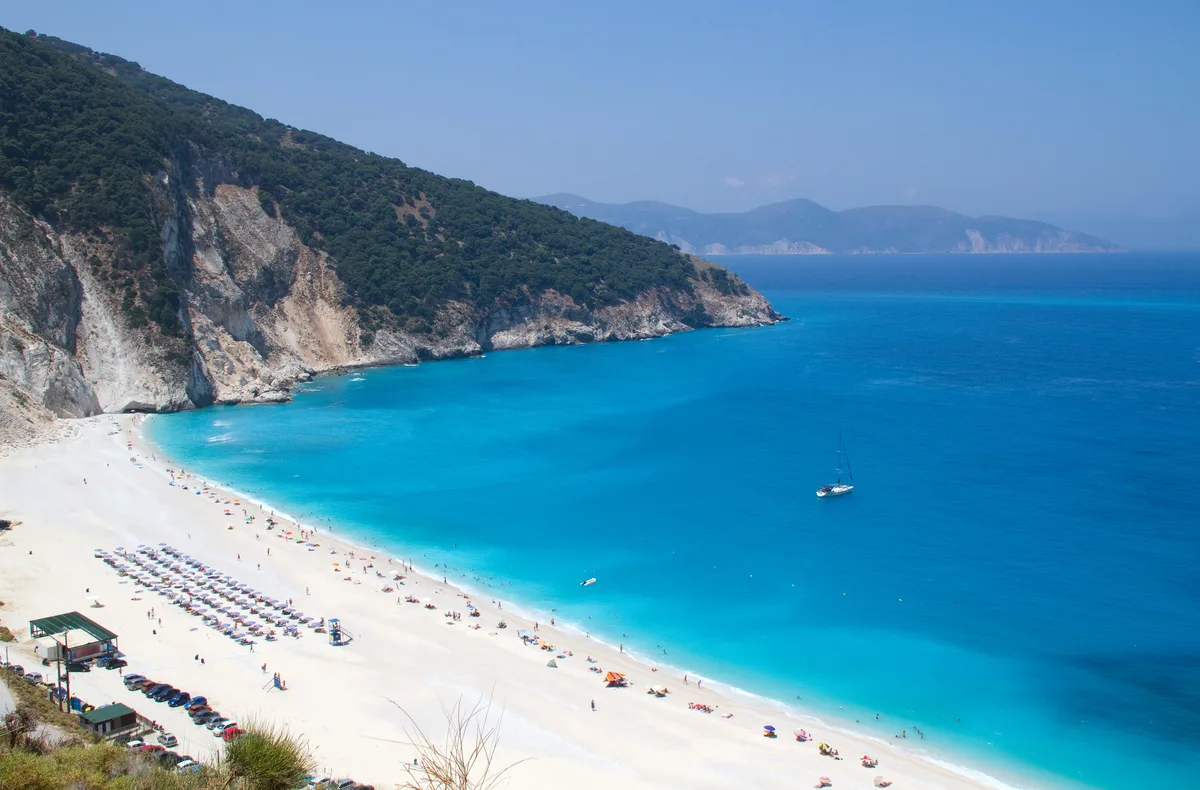
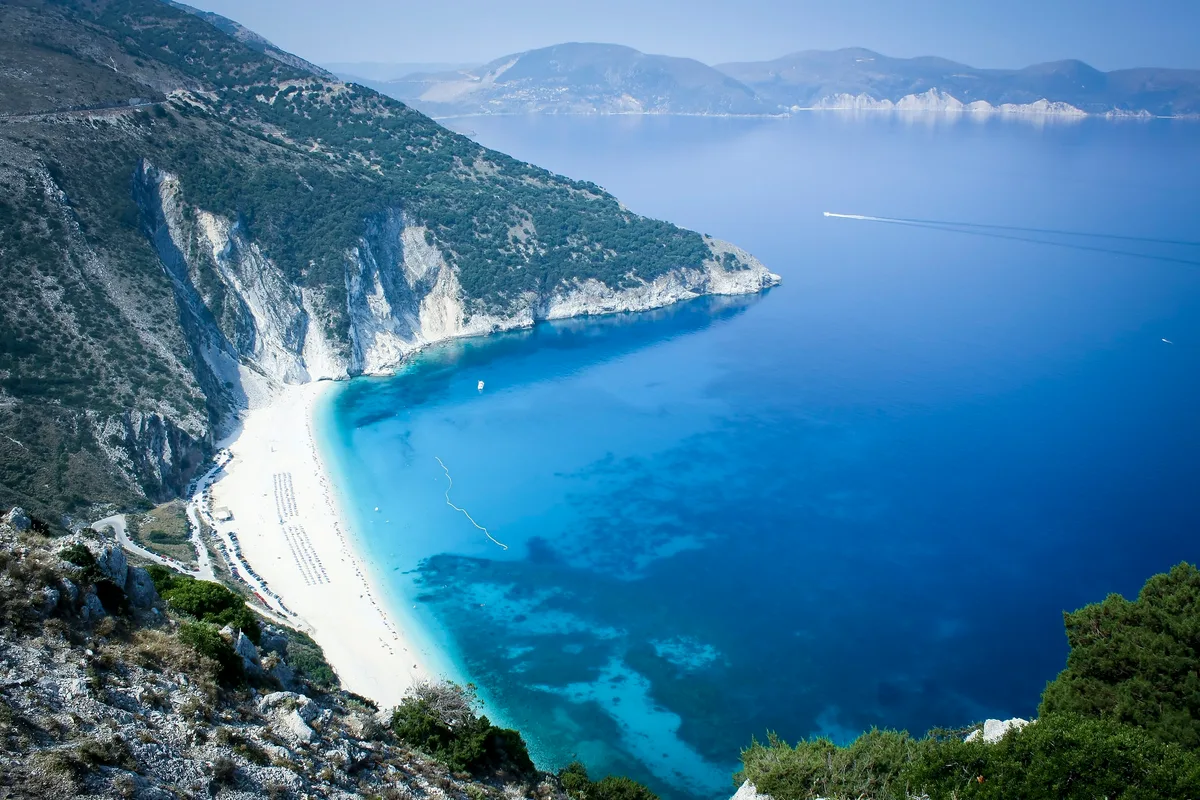
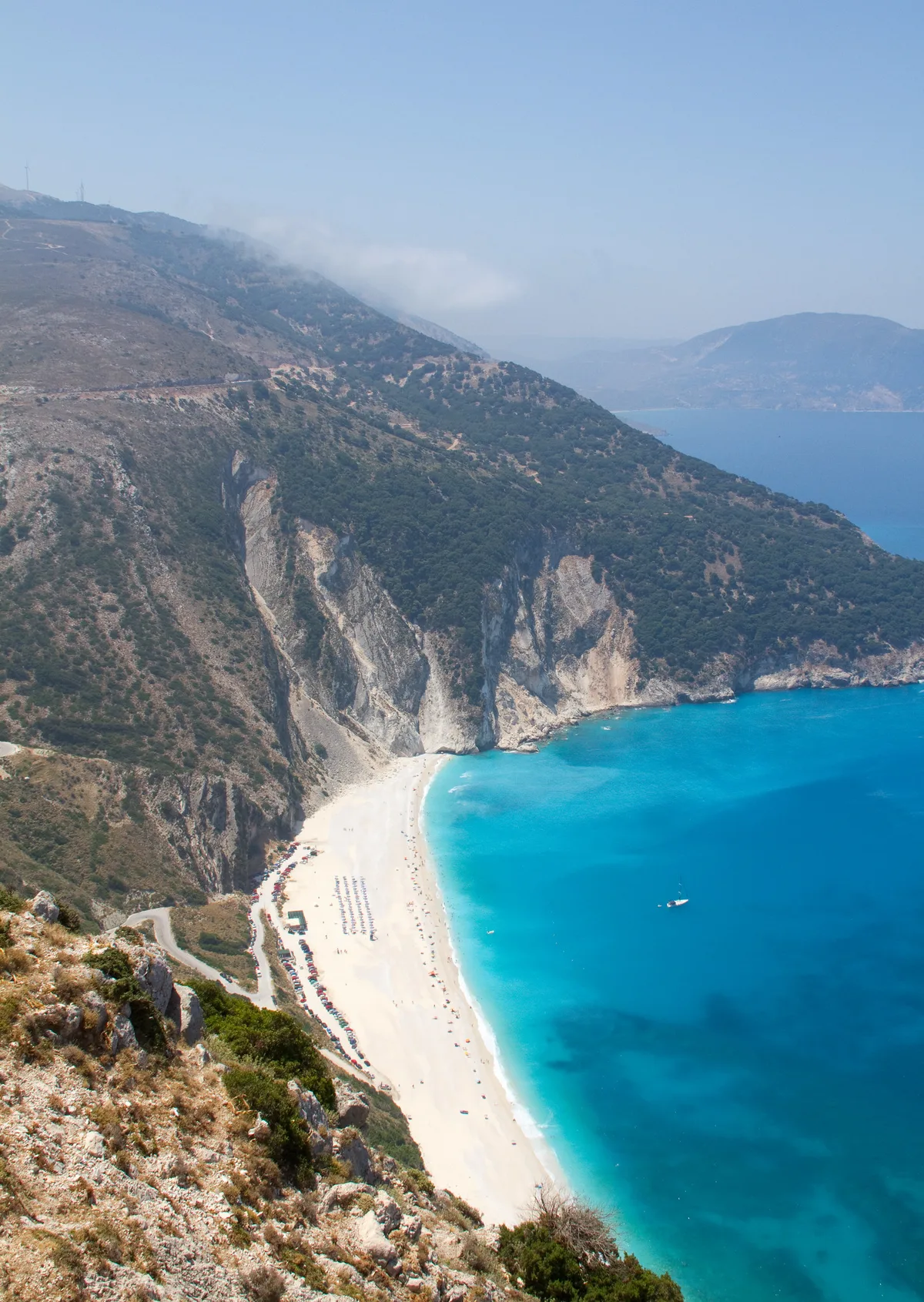
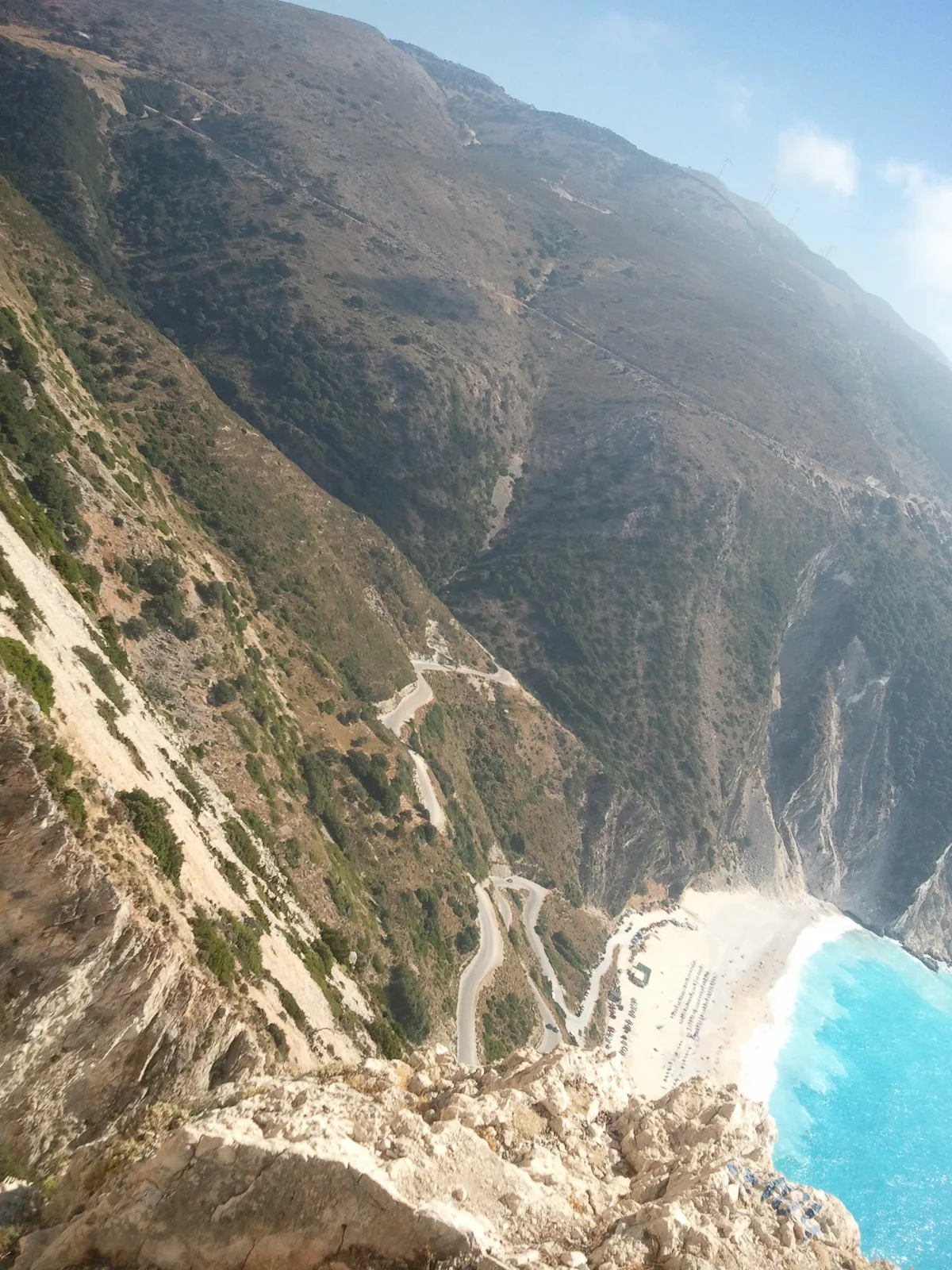
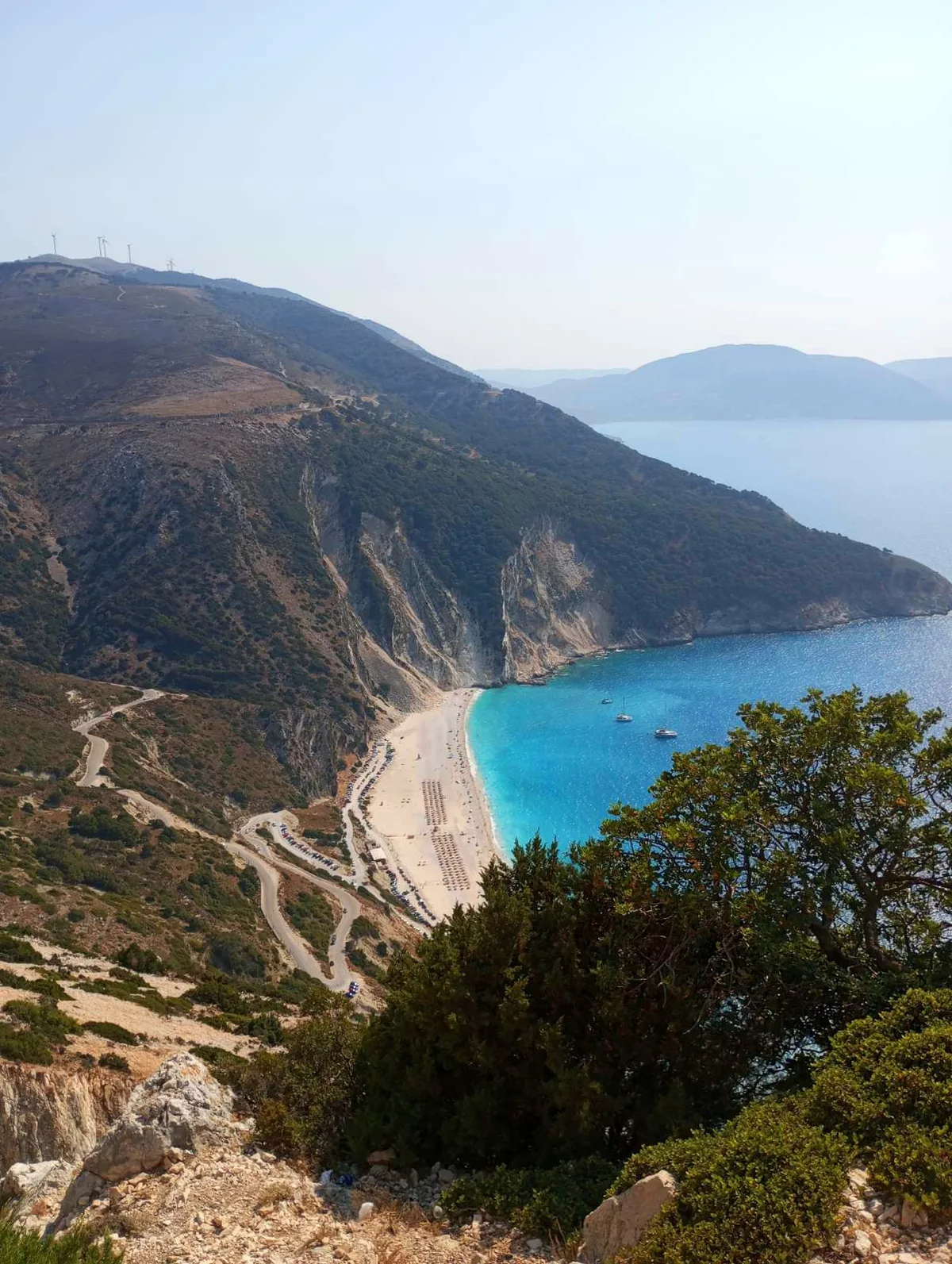
Myrtos is one of Greece's most photographed beaches, and the view from the serpentine cliff road above tells you exactly why: a sweeping white limestone amphitheatre frames roughly 700 metres of white pebbles and some of the most intensely turquoise water in the Ionian. Down at shore level, the drama doesn't soften — the pebbles are sharp underfoot, the sun reflects off pale stone all day, and there is no natural shade anywhere on the beach. Seasonal afternoon winds funnel through the bay, churning the surface and pushing strong currents close to shore. It's wild, it's iconic, and it demands respect.
How to get there
From Argostoli, drive north for about 40 minutes; from Divarata village the beach is just 5 minutes away by car. The cliff road descent is steep and narrow — take it slowly. Free roadside parking is available but extremely limited; in July and August it fills by 10am, causing genuine road chaos, so arrive early or consider visiting in shoulder season. The path down to the beach is steep and unpaved, making it inaccessible for wheelchairs or pushchairs.
Who it's for
For couples
Myrtos rewards couples who come for the scenery rather than the swim — spread out on the white pebbles in the morning calm, then drive up to the viewpoint at golden hour when the turquoise bay turns luminous below the cliffs.
For families
Myrtos is not suitable for young children: the water gets deep immediately from shore, currents are strong, and there is no shade or lifeguard presence. Families with older, confident non-swimmers can enjoy the dramatic setting, but keep everyone well back from the waterline.
Our take
Do not come to Myrtos expecting a relaxed swim. The safety warnings here are real: strong currents, a shore that drops to depth almost immediately, and afternoon winds that make the water rough — this is not a beach for entering the water, full stop. What Myrtos is, unambiguously, is one of the most visually arresting stretches of coastline in Greece: white pebbles, cliffs that rise like theatre walls, and turquoise water of an intensity that seems almost artificial. Come for the view from the cliff road, come for the photographs, come for the sheer geological drama of the place. Skip July and August — parking chaos and afternoon winds make the experience genuinely unpleasant. June or September gives you the same spectacle with a fraction of the visitors and calmer morning conditions.
What to do
The Myrtos Beach viewpoint, just 0.6 km up the cliff road, is the single best vantage point on Kefalonia — arrive before 9am for unobstructed shots. A short drive of 4.4 km brings you to Assos Castle, a Venetian hilltop fortress on a narrow peninsula with panoramic Ionian views worth the detour. Further afield, Melissani Cave (15.6 km) offers a subterranean lake lit by a collapsed roof skylight, and Drogarati Cave (15.2 km) has a concert-quality chamber famous for musical performances.
The serpentine cliff-road viewpoint (0.6 km above the beach) delivers the classic full-bay frame — white limestone walls, turquoise water, white pebbles — best shot in early morning light.
From the beach itself, shooting low along the waterline toward the northern cliff face captures the raw scale of the limestone amphitheatre, especially effective before the afternoon winds disturb the water's surface.
Where to eat
The closest options are clustered about 1.5 km from the beach: Giorgos, Alexandros, and Myrtos Tavern & Cafe all serve the area and are your best bet for a meal before or after your visit. If you're willing to drive a little further, Platanos (3.9 km) offers regional cooking. There is no food or drink sold on the beach itself, so bring supplies.
Where to stay
The nearest accommodation options require a drive: Hotel Olive Bay is 7.2 km away, while Dafnoudi Hotel Apartments (13.1 km) and Villa Delia (13.5 km) offer self-catering alternatives further along the coast. Booking well ahead is essential if you're visiting between June and September.
Photography
The cliff-road viewpoint at 0.6 km is the money shot — shoot in the early morning when the turquoise water glows against the white limestone and the light is soft. Down on the beach, face north toward the cliff walls in the late morning before the afternoon winds roughen the surface and haze builds.
Good to know
No camping and no fires are permitted at Myrtos — these rules are enforced. Bring water shoes: the pebbled shore is hard on bare feet and the water gets deep very quickly from the shoreline. Do not enter the water — strong currents, rapid depth drop-off, and rough afternoon surf make swimming dangerous and unsuitable for children. If you're visiting with a dog, the beach is unmanaged off-season and dogs are generally tolerated, but keep them under control on the steep path.
GAMES
🕹️ Five minutes of sand?
Three daily games — including the UV simulator set to this beach.
Map
Nearby places
Giorgos
Alexandros
Myrtos Tavern & Cafe
Three Wise Monkeys
Platanos
Hotel Olive Bay
Dafnoudi Hotel Apartments
Villa Delia
Villa Annika
Alancia Suites
Things to see around Divarata
Melissani Cave
Subterranean lake cave with a collapsed roof creating a natural skylight over turquoise water
Drogarati Cave
Large stalactite cave with a concert-quality chamber used for musical performances
Assos Castle
Venetian hilltop fortress on a narrow peninsula with panoramic Ionian views
GIFT IDEA · MARCEL ET LES BLONDES
🎁 Give a moment, not a thing


What’s the occasion?

 💑 Dating anniversaryTwo dates, two starry skies
 💍 Wedding anniversaryCotton, silver, golden…
 🎂 BirthdayTheir own newspaper front page
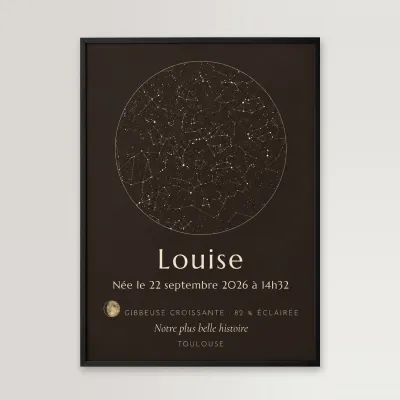 👶 New babyThe stars on the day they were bornValentine’s DayOur two moons, as a print
Shipping €5, free from €49 · made to order, shipped within 48 hAlso: our engraved wooden bracelets, €23.90 →
Frequently asked
The information on this page is provided for guidance only and may evolve. Access conditions, safety and infrastructure can change without notice. Always check official sources before traveling.
Other beaches in the region
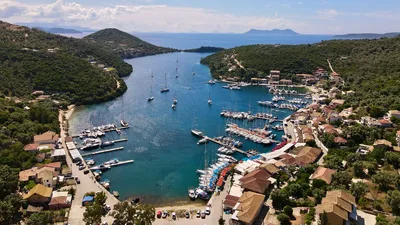
Other wild beaches in Greece
More beaches in Ionian Islands

Reviews of this beach
- No reviews yet, what a shame — leave yours and share your experience.
Photo credits
Sources and licenses for the photos shown above.