Kalalau BeachUnited States Beach Guide
Kauai's wildest shore — earned, not given
About
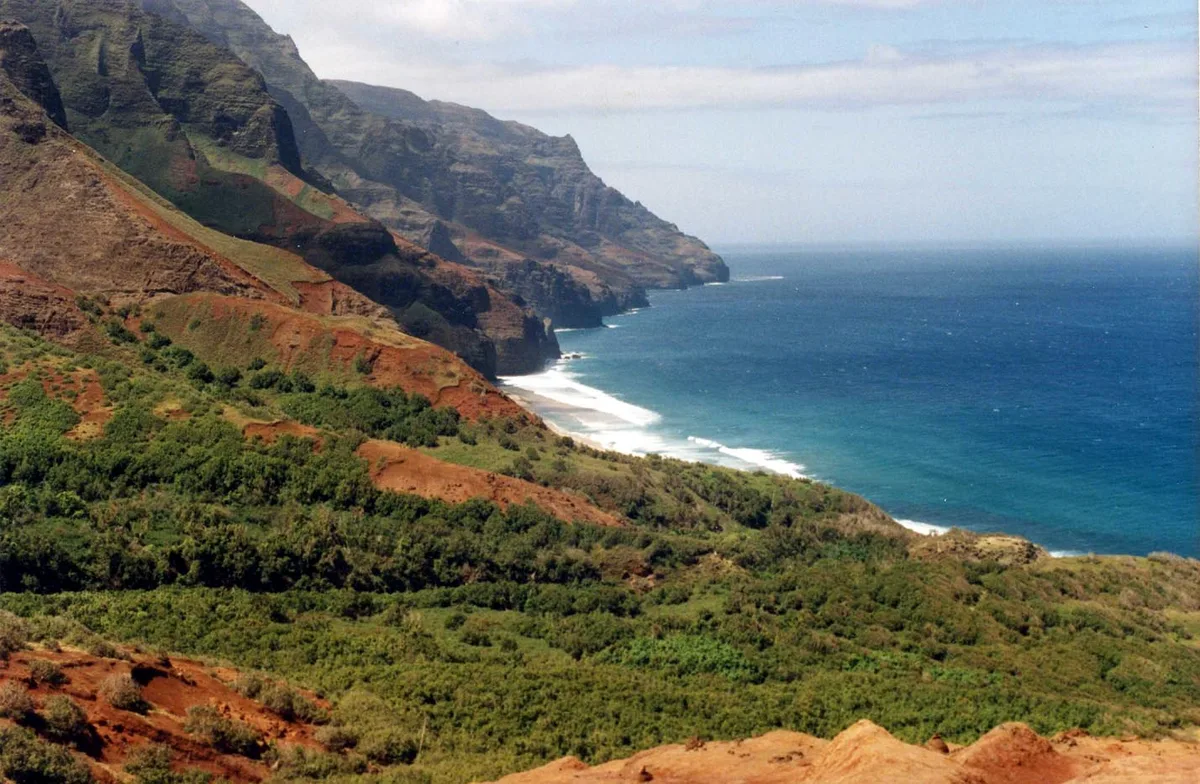
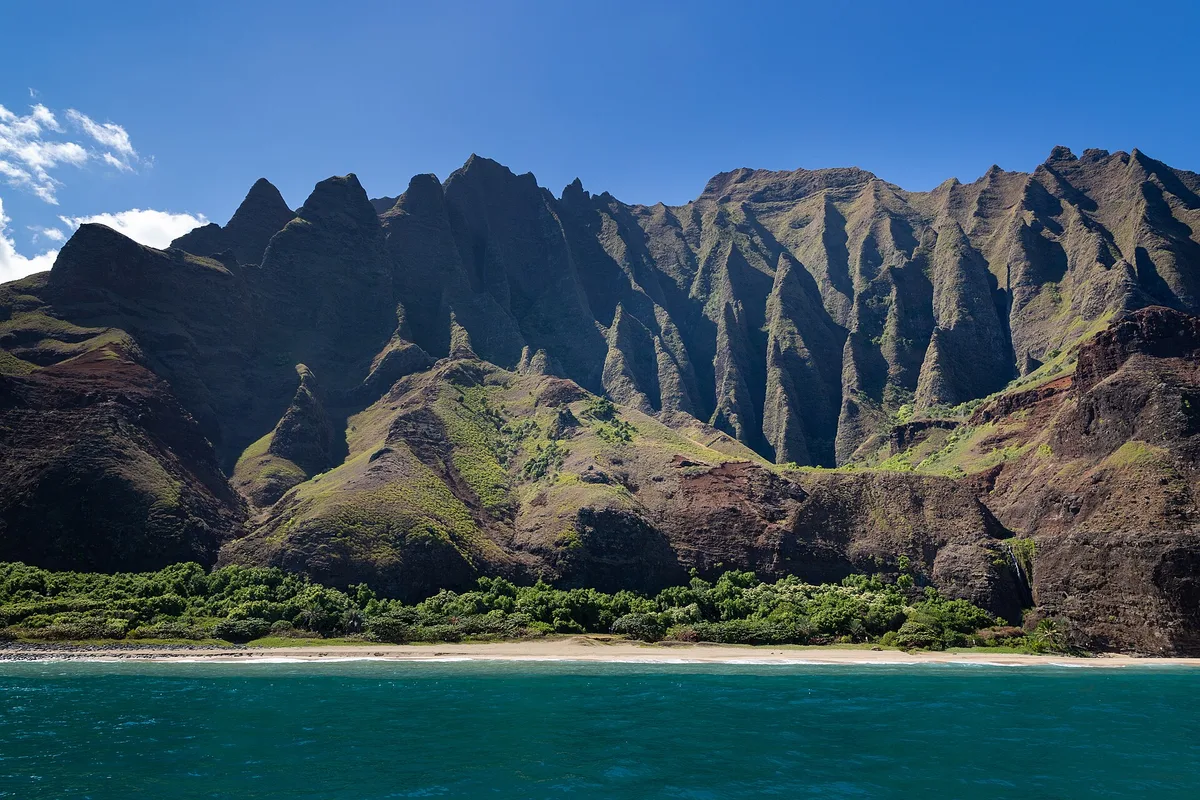
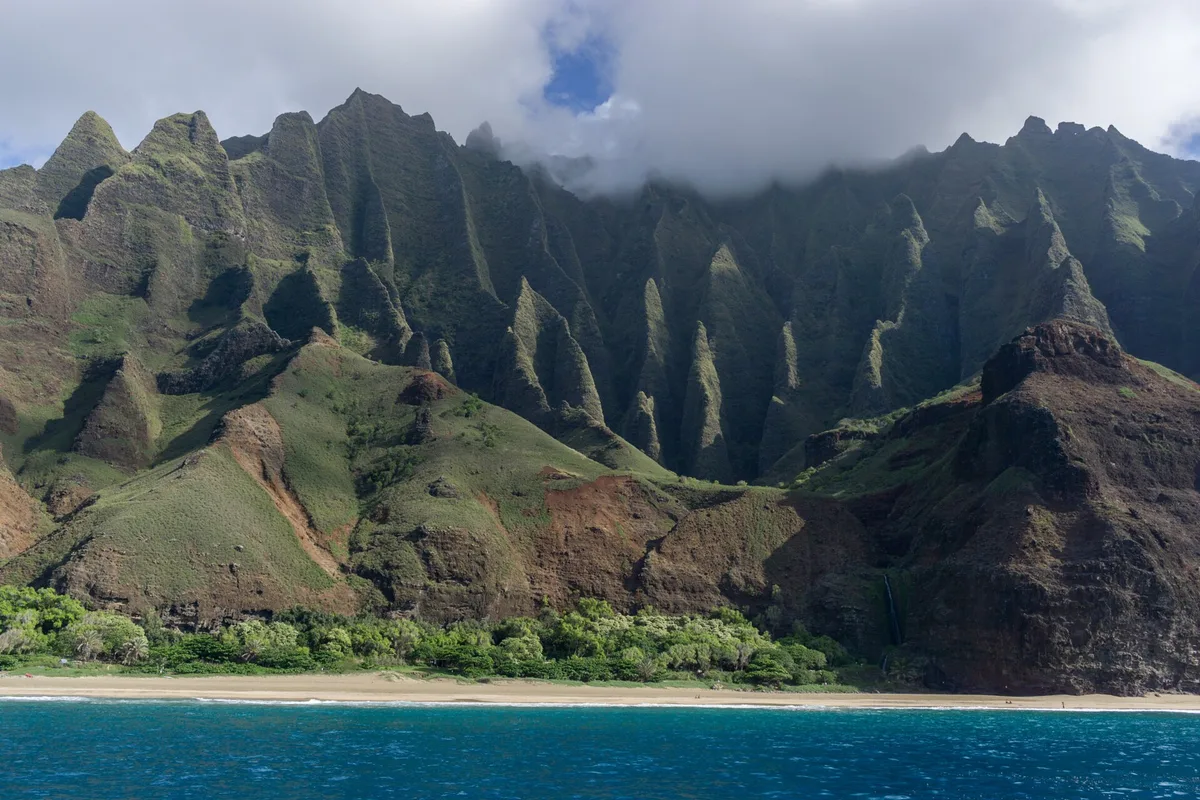
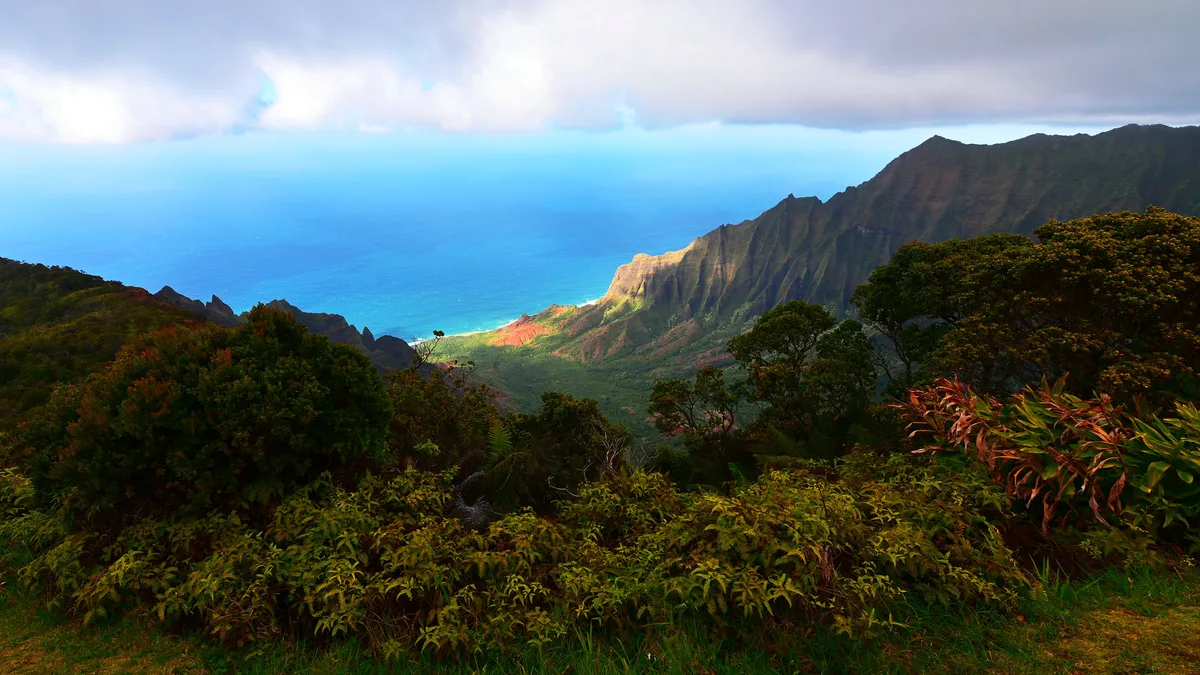
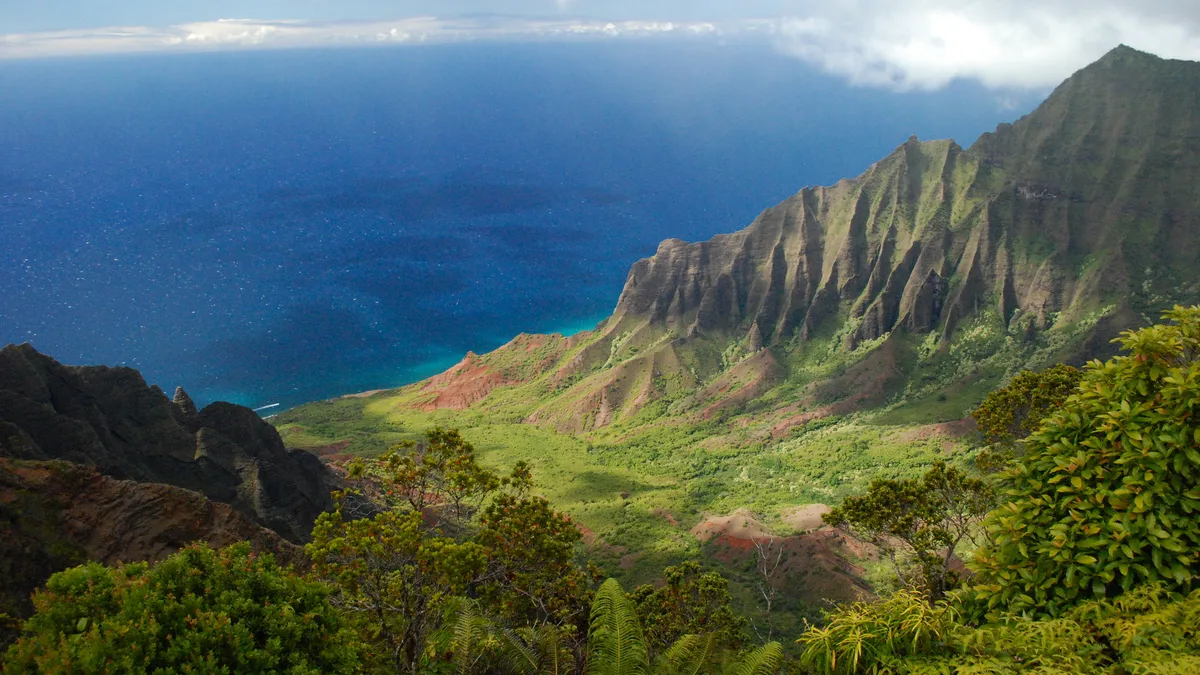
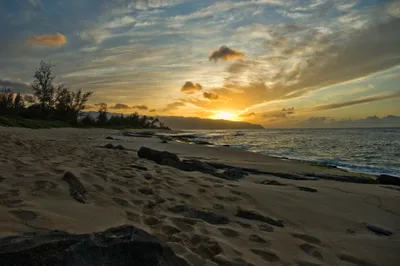
Kalalau Beach sits at the end of the Na Pali Coast on Kauai's remote northwest shore, backed by soaring green cliffs and open to the full force of the Pacific. The golden sand stretches beneath walls of ancient volcanic rock, and the water runs a deep, unfiltered blue — beautiful to look at, genuinely dangerous to enter. Getting here takes real effort: an 11-mile trail or a seasonal boat ride, both requiring a permit. This is one of Hawaii's most remote beaches, and it feels it — no facilities, no services, no signal. The wild vibe is the whole point.
How to get there
There are three ways in, and none of them are easy. The primary route is the Kalalau Trail: an 11-mile hike from Ke'e Beach (Kalalau Trailhead), roughly 7 hours each way, open daily with a valid permit. Between May 15 and September 15, boat access is available from Hanalei Bay and other permitted launch points; kayak access runs May 15 to September 7 from permitted launch points only. All visitors must hold a camping permit for Na Pali Coast State Wilderness Park — $35 per person per night for non-residents, $25 per person per night for Hawaii residents. There is no road to Kalalau and no parking at the beach.
Who it's for
For couples
Kalalau rewards couples who want to earn their solitude — two days of hiking and camping here, with golden sand and towering cliffs to yourselves, is as close to a private Hawaii as you'll find. Just come prepared: this is a wilderness experience, not a resort.
For families
Kalalau is not suitable for young children or families expecting beach amenities — the 11-mile hike, dangerous surf, no lifeguards, and no facilities make it a serious undertaking even for fit adults. Families with older, experienced hikers and campers should assess the trail difficulty honestly before committing.
Our take
Kalalau is not a beach you stumble onto — you plan for it, permit for it, and hike 11 miles for it. The water is dangerous: strong currents, rip currents, and relentless high surf with no reef to soften the blow mean you stay out of the ocean, full stop. That said, the place is extraordinary on its own terms — golden sand, deep blue Pacific, and Na Pali cliffs rising straight from the shore. The permit system exists for good reason and keeps visitor numbers low, which means the beach retains a genuine wildness that most of Hawaii has long since lost. Come in the dry season (May through October) for the most stable trail and weather conditions. Pack everything in, pack everything out, treat your water, and respect the wilderness rules. This is one of the most remote and demanding beaches in the United States — and that is precisely what makes it worth it.
What to do
The hike itself is the main event — 11 miles of Na Pali coastline with dramatic cliff views at every turn. Once at the beach, the Kalalau Lookout sits about 2.7 km away and offers one of the most photographed perspectives on the coast; Pu'u o Kila Lookout is another 4 km out and worth the extra effort. The 7 Miles Point viewpoint, also around 4 km from the beach, rounds out the scenic overlooks accessible from this end of the Na Pali. Camping under the cliffs, stargazing with zero light pollution, and simply sitting with the scale of the place are the real activities here.
The Kalalau Lookout, 2.7 km from the beach, frames the full sweep of golden sand and blue Pacific against the Na Pali cliffs — the single most photogenic angle on this coastline.
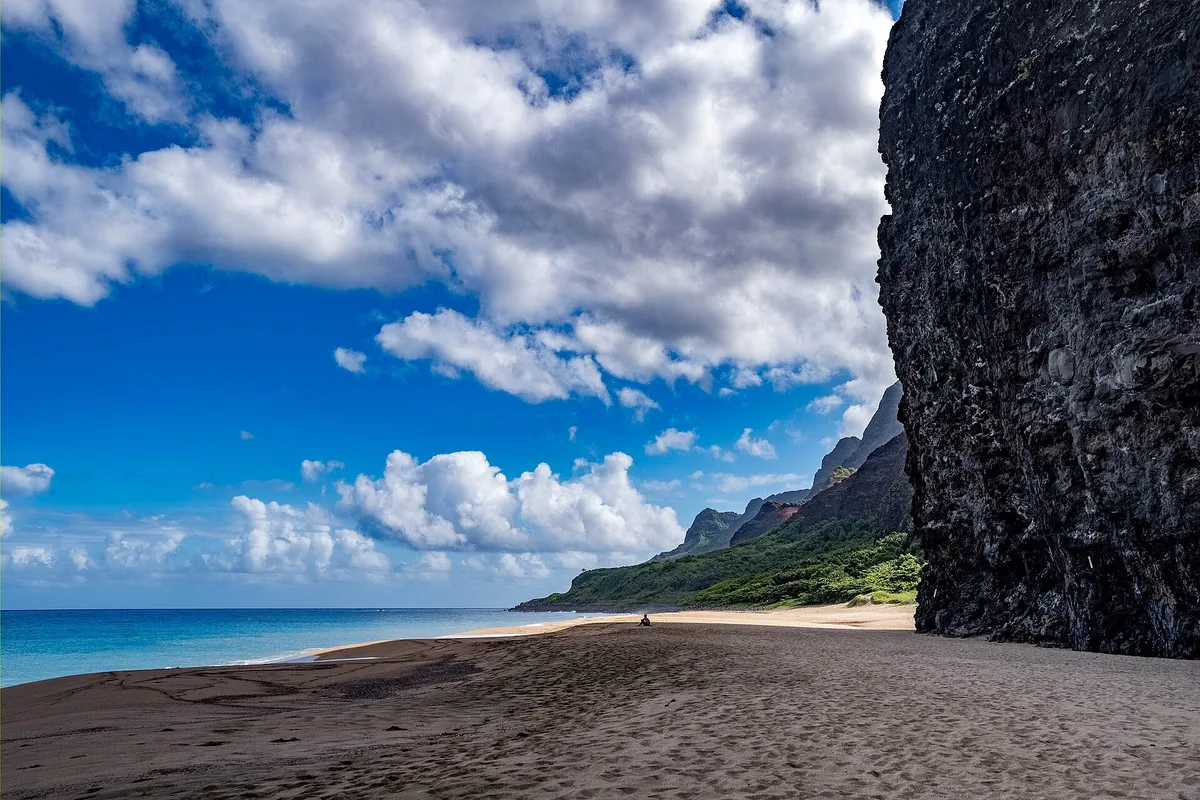
At beach level, the cliff face directly behind the camping area at golden hour gives a scale shot that no filter can improve. Pu'u o Kila Lookout, 4 km out, adds a second elevated perspective with the valley floor visible below.
Where to eat
There are no restaurants, food stalls, or shops at Kalalau Beach — none. Pack everything you need for the full duration of your stay, including all meals and sufficient water (treat any freshwater you collect on-site). Plan your supplies before you leave the trailhead.
Where to stay
The nearest lodging options are Hale Puna at Kokee Lodge Cabins, approximately 4.7 km away, and The Cabins at Kokee, around 4.9 km out — both are rustic mountain-style stays near Kokee State Park rather than beachside. Most visitors who make it to Kalalau camp on the beach itself under their permit.
Photography
Shoot the golden sand against the blue Pacific in the early morning when the cliff shadows are long and the light is soft — the Na Pali cliffs behind the beach are most dramatic at sunrise. The Kalalau Lookout, 2.7 km away, gives an elevated wide-angle view of the entire beach and valley that no ground-level shot can match.
Good to know
Book your permit well in advance — this beach is capped and slots fill fast. Do not drink from freshwater streams without treating the water first; leptospirosis is a documented risk in all freshwater sources here. The ocean at Kalalau is genuinely hazardous: strong currents, rip currents, high surf, and the absence of an offshore reef mean waves hit the shore with full open-ocean force — do not enter the water. There are no lifeguards on site. True digital-detox territory — bring offline books, cell signal fades completely and there is nowhere to plug in a laptop.
Map
Nearby places
Hale Puna, Kokee Lodge Cabins
The Cabins at Kokee
Frequently asked
The information on this page is provided for guidance only and may evolve. Access conditions, safety and infrastructure can change without notice. Always check official sources before traveling.
Nearest beaches
Other wild beaches in Hawaii
More beaches in Hawaii
Reviews of this beach
- No reviews yet, what a shame — leave yours and share your experience.
Photo credits
Sources and licenses for the photos shown above.
- Photo 1 — dmtilley · source · CC BY 3.0
- Photo 2 — dronepicr · source · CC BY 2.0
- Photo 3 — J Doll · source · CC BY-SA 3.0
- Photo 4 — sergejf · source · CC BY 2.0
- Photo 5 — stevehfung · source · CC BY-SA 2.0
- Photo 6 — Mark Roland · source · CC BY-ND 2.0