Camps Bay BeachSouth Africa Beach Guide
White sand, cold Atlantic, and Cape Town's best sunset
About
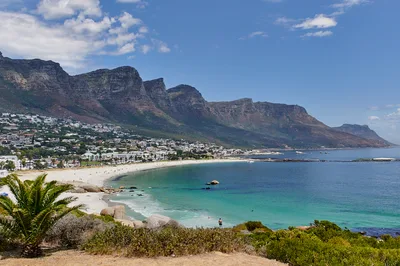
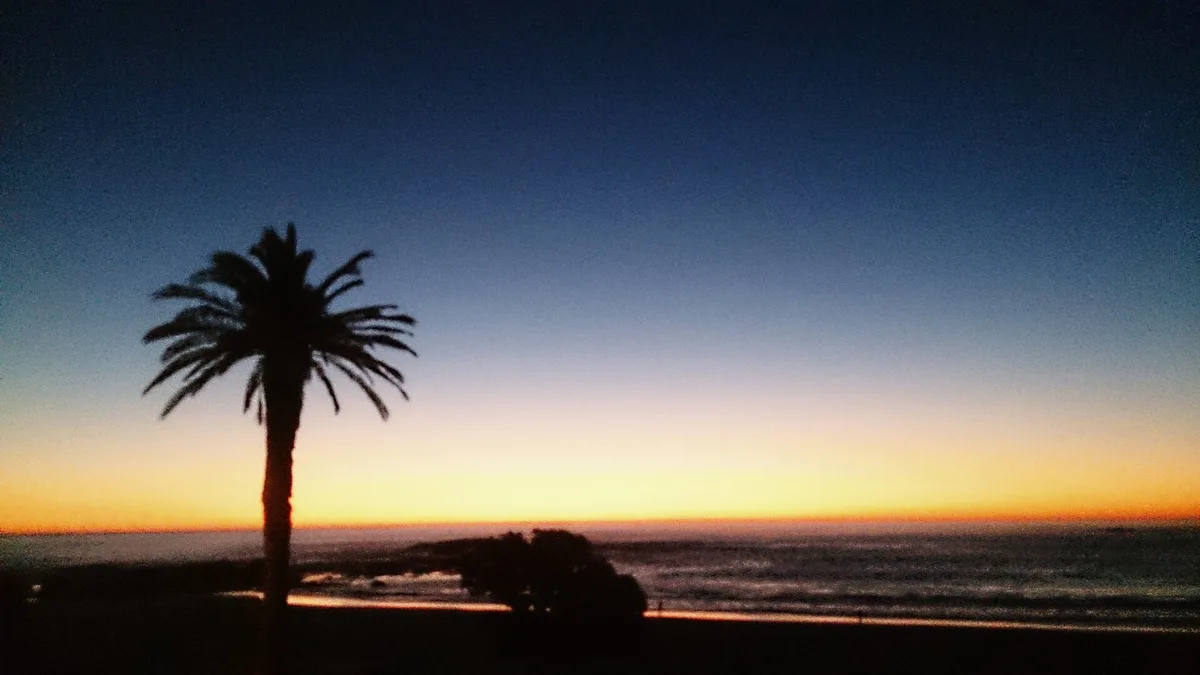
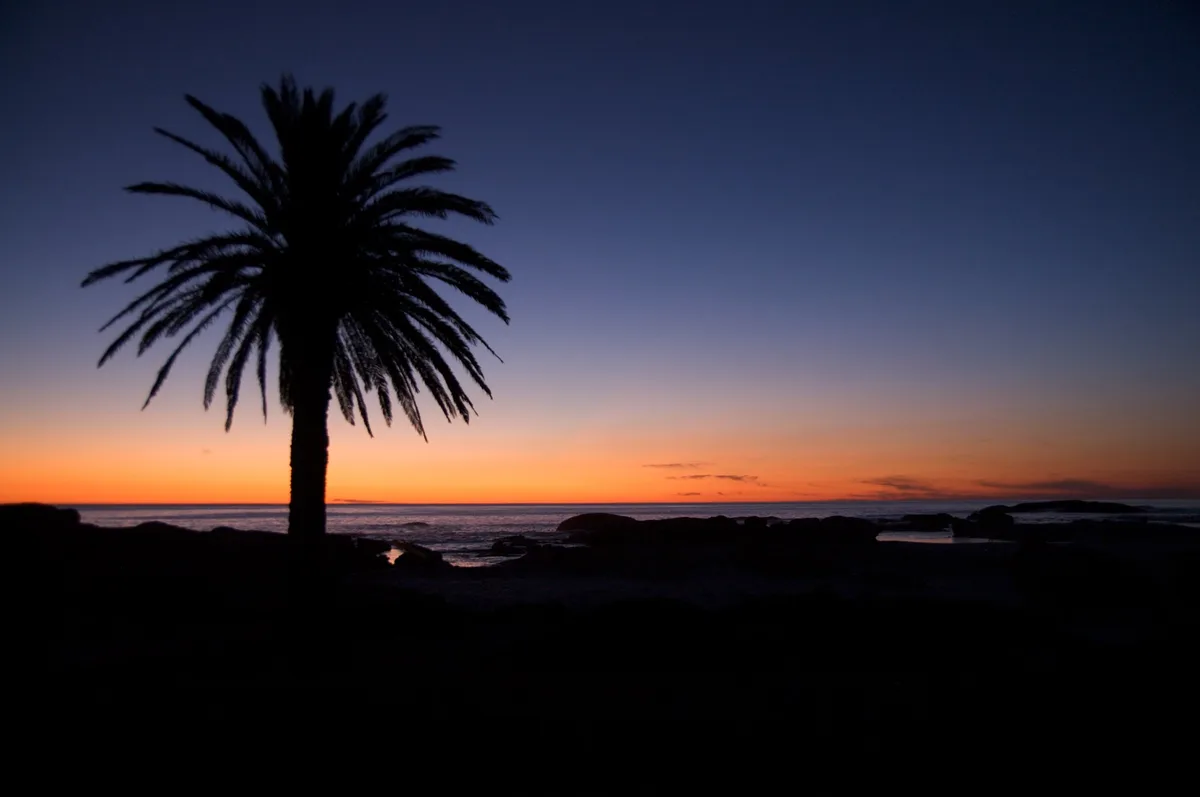
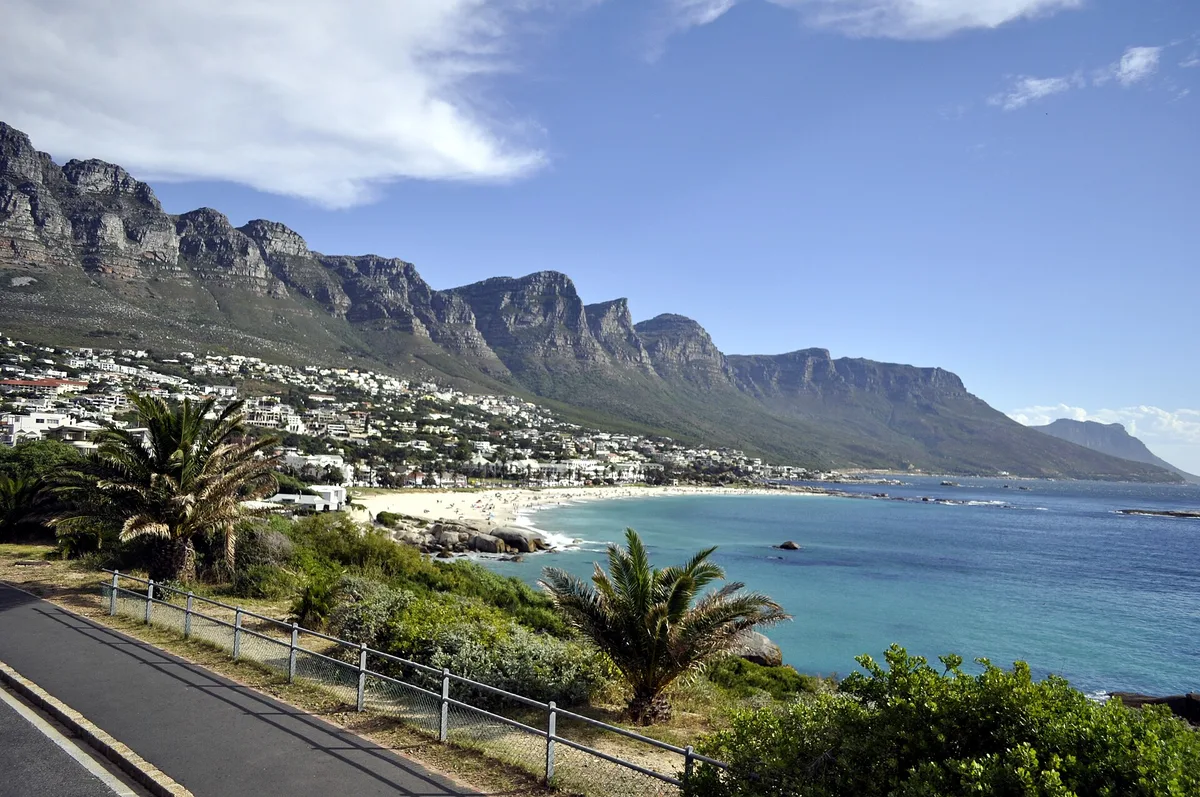
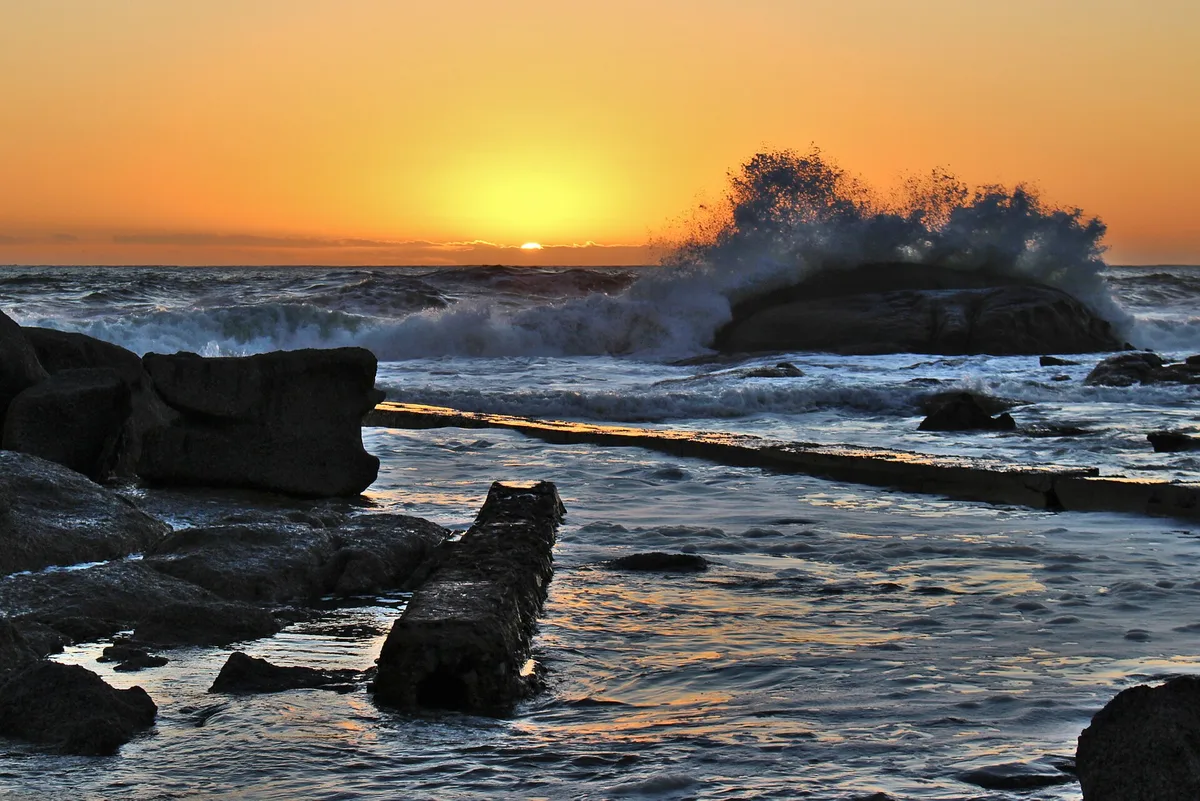
Camps Bay Beach stretches roughly 1,200 metres of white sand along Cape Town's Atlantic Seaboard, with the jagged Twelve Apostles mountain range rising directly behind it and deep blue ocean ahead. The palm-lined promenade running its length gives the whole place a relaxed, open-air energy that draws visitors from across the city. It's a see-and-be-seen kind of beach — lively, photogenic, and unapologetically social. The Atlantic here stays cold year-round, so most people come to lounge and watch the sun drop rather than swim. Sunsets facing west over the open ocean are genuinely spectacular, and that alone makes it worth the trip.
How to get there
Camps Bay is about 15 minutes by car from Cape Town's CBD — a straightforward drive over De Waal Drive or via the coastal road. There's no ferry service worth planning around. Parking is a mix of street bays and a small paid lot, running roughly R20–40 per hour, but be warned: from December through January spaces are extremely scarce, so arriving early or using a rideshare is the smarter call. There's no entry fee for the beach itself.
Who it's for
For couples
The west-facing beach delivers some of Cape Town's most dramatic sunsets, and the palm-lined promenade is an easy, scenic evening walk with the Twelve Apostles as a backdrop — low-effort, high-reward.
For families
The flat, accessible promenade is easy with young children, and the white sand is wide enough to spread out. Lifeguards are on duty in season, but keep kids out of the water — rip currents are possible and the Atlantic is genuinely cold at 14–18°C.
Our take
Camps Bay is one of the most visually striking urban beaches in the world — white sand, a deep blue ocean, and a mountain wall behind you that no postcard fully captures. But go in clear-eyed: the Atlantic here is cold, rip currents are possible, and the southeaster wind can turn a summer afternoon hostile fast. Swim cautiously and respect the lifeguards' flags. The beach is at its best from December to March, and worst from June through August when Cape Town's winter makes it largely unusable. Parking in peak season is a genuine headache — plan for it or skip the car entirely. Come for the sunset, the promenade, and the scene; just don't expect a warm, calm swim.
What to do
Table Mountain National Park is about 5km away — a UNESCO World Heritage Site where the cable car carries you to panoramic views over Cape Town and both coastlines, and it's one of the most rewarding half-days you can spend near the beach. Chapman's Peak Drive, roughly 12km south, is a toll road carved into sheer cliff faces with multiple ocean viewpoints that justify the detour on their own. Closer in, Kloof Corner at 2km is a popular viewpoint that rewards the short walk, and the rocky cove at Bakoven just 1.2km along the coast offers a quieter alternative when Camps Bay itself is packed.
The Twelve Apostles mountain backdrop framing the white sand is the signature shot — best captured from the northern end of the beach in late afternoon light.
The palm-lined promenade offers a clean, graphic composition at golden hour with the deep blue Atlantic behind it. For a wider perspective, the Kloof Corner viewpoint at 2km puts both the beach and the mountain in the same frame.
Where to eat
Right on the strip, Col'Cacchio Pizzeria is just 0.1km away for a reliable post-beach pizza. For seafood, Codfather at 0.4km is a local favourite for fish and sushi, while Cape Town Fish Market at 0.3km covers similar ground with a broader menu. The Hard Rock Cafe Cape Town, also 0.3km away, is there if you need something familiar and filling.
Where to stay
The Bay Atlantic Guest House at 0.4km is the closest option to the sand and suits those who want to walk to the beach in minutes. Further afield, Cape Cadogan at 3.5km and Mojo Hotel at 3.5km offer a bit more distance from the summer noise while keeping you well within reach of the Atlantic Seaboard.
Photography
The best shots come in the hour before sunset when the Twelve Apostles catch warm light and the white sand glows against the deep blue Atlantic — position yourself at the southern end of the promenade for the full mountain-meets-ocean frame. For sunrise and early-morning portraits, the palm-lined promenade is at its quietest and most photogenic before the daytrippers arrive.
Good to know
No alcohol is permitted on the beach — it's enforced, so leave the wine in the cooler back at your accommodation. Dogs are not allowed during peak season hours, so check restrictions before bringing a pet. Lifeguards are on duty in season, but rip currents are possible and the Atlantic water sits at just 14–18°C year-round — cold enough to cause cold-water shock quickly, so wade carefully and never underestimate it. Summer afternoons bring strong southerly southeaster winds that can whip sand and make conditions uncomfortable; mornings are calmer and the light is better anyway.
GAMES
🕹️ Five minutes of sand?
Three daily games — including the UV simulator set to this beach.
Map
Nearby places
Col'Cacchio Pizzeria
Cape Town Fish Market
Hard Rock Cafe: Cape Town
Codfather
The Bungalow
The Bay Atlantic Guest House
The Amalfi Hotel
Cape Cadogan
Mojo Hotel
Cloud 9 Boutique Hotel & Spa
Things to see around City of Cape Town
Table Mountain National Park
UNESCO World Heritage Site; cable car to summit with panoramic views over Cape Town and both coastlines.
V&A Waterfront
Historic working harbour redeveloped into Cape Town's premier retail, dining, and cultural precinct.
Chapman's Peak Drive
Spectacular toll road carved into the cliff face of Chapman's Peak with multiple ocean viewpoints.
GIFT
🎁 Gift this beach
Its exact coastline, your date, your words — on a print or a PDF you print yourself.
Camps Bay Beach
THAT DAY
Camps Bay Beach, Western Cape
© OpenStreetMap contributors
Clean & decorative, or “That day” with the real sky of your date.
Shipping included 3-6 business days
A question before you order? Contact us
Delivered within minutes on the confirmation page and by email: a ZIP with all 4 print sizes (30×40 cm, 12×16″, 50×70 cm, 18×24″), each as a high-resolution PDF and PNG (300 dpi), plus a screen version. Print at home or at any print shop.
Please complete the delivery address.
Please accept the Terms of Sale.
Almost there — the shop opens very soon.
Secure payment · Printed locally in 30+ countries · 7 languages
Frequently asked
The information on this page is provided for guidance only and may evolve. Access conditions, safety and infrastructure can change without notice. Always check official sources before traveling.
Nearest beaches
Reviews of this beach
- No reviews yet, what a shame — leave yours and share your experience.
Photo credits
Sources and licenses for the photos shown above.
- Photo 1 — Meditec2000 · source · CC BY-ND 2.0
- Photo 2 — Lawrence W.K · source · CC BY-SA 3.0
- Photo 3 — reivax · source · CC BY-SA 2.0
- Photo 4 — Darren Glanville from Acle, Norfolk, UK · source · CC BY-SA 2.0
- Photo 5 — Matt Mundell · source · CC BY 3.0