Ramanagar Beach
India's wildest turtle beach, where nature sets the rules
About
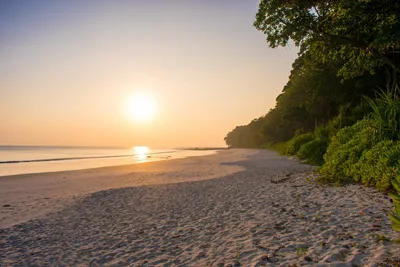
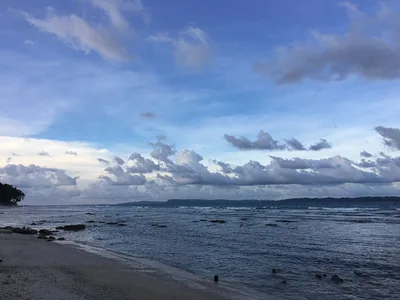
Ramnagar Beach stretches along the remote northern tip of North Andaman Island, a narrow strip of yellowish sand pressed between dense tropical forest and turquoise water. This is one of India's most critical Leatherback sea turtle nesting sites, and the Forest Department keeps it that way — rangers monitor the beach year-round, and access is tightly controlled. The vibe is wild and unhurried: no vendors, no sunbeds, no noise except the surf and the occasional rustle from the tree line. During nesting season, guided night visits offer a rare, humbling encounter with these ancient reptiles. Getting here takes real effort, which is exactly why the beach remains empty.
How to get there
From Diglipur town, it's roughly a 30-minute drive by car on roads that can be rough, especially after dark — plan to arrive well before sunset. You can also reach Diglipur from Port Blair by road along the Andaman Trunk Road (around 8 hours) or by ferry from Port Blair, a journey of about 10 hours on limited schedules running roughly twice a week. A Forest Department permit is required to visit — secure this before you travel, as access is restricted and guided groups only are allowed during nesting season. Informal parking exists near the ranger post, but there is no formal facility.
Who it's for
For couples
Couples who share a genuine interest in wildlife conservation will find Ramnagar quietly extraordinary — a guided night on the beach watching Leatherback turtles nest is an experience that needs no embellishment. The isolation and the wild, unhurried atmosphere make it feel genuinely remote, not performatively so.
For families
Families with older children who can follow strict conservation rules — no noise, no torches, no flash — will find the turtle nesting visits educational and memorable. Young children and those who need beach amenities should note there are none here: no facilities, no shade structures, and a difficult approach road.
Our take
Feet in the sand, eyes on the screen
Ramnagar is not a beach you visit for a swim or a lazy afternoon — and that's the point. The safety picture here is real: strong currents and sharp corals mean the water demands respect, the approach road is rough, and after dark the isolation is total with no mobile signal and no medical help nearby. Go in daylight, go prepared, and go with a permit. What you get in return is access to one of India's most important Leatherback sea turtle nesting sites, monitored by Forest Department rangers who take their work seriously. The beach is empty not because it's undiscovered but because the rules keep it that way — and those rules exist for good reason. Best visited between November and April, with December to March the window for guided turtle nesting visits. True digital-detox territory: the signal fades on the road in, and there's nowhere to plug in a laptop even if you wanted to.
What to do
The Ramnagar Turtle Sanctuary, just steps from the beach, is the centrepiece — a guided night visit during nesting season to witness Leatherback turtles is unlike anything else in India. About 10 km away, Saddle Peak National Park offers trekking through tropical rainforest to the highest point in the Andaman Islands. Further along, Ross and Smith Islands — twin islands joined by a tidal sandbar — are worth the extra 23 km if you have the time. This is a place for slow, attentive travel, not a checklist.
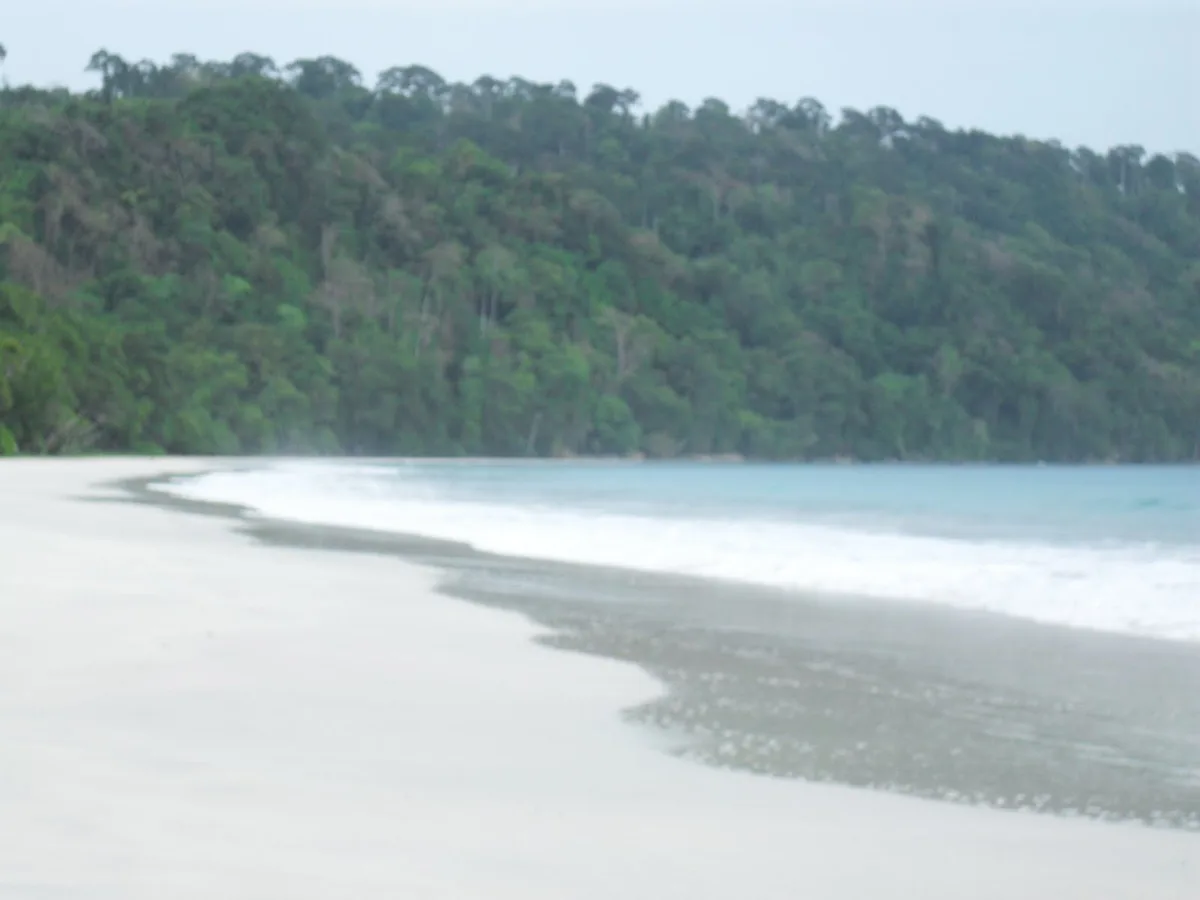
The narrow band of yellowish sand with the turquoise water on one side and the forest wall on the other is the defining shot — best captured at first light before the heat haze builds.
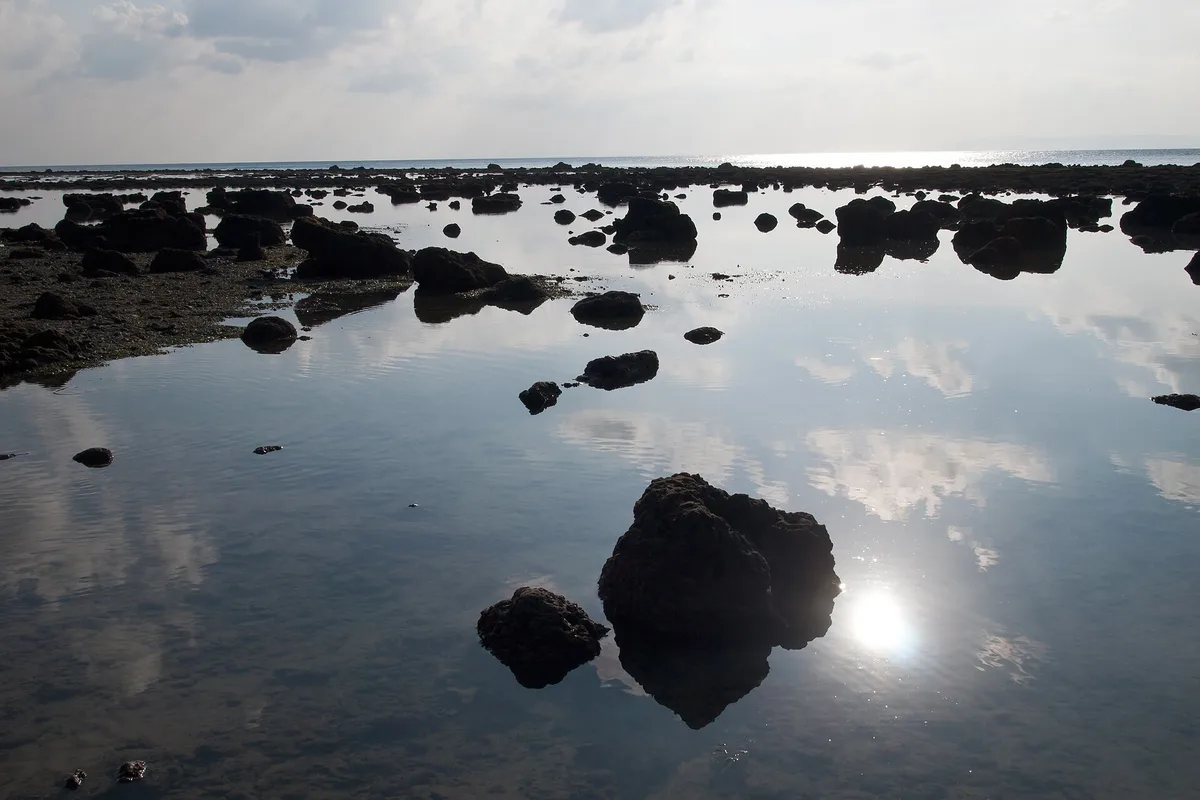
The ranger post at the beach entrance, framed against the tree line, gives a sense of the conservation context that makes this place significant. During nesting season, the silhouette of a Leatherback turtle on the sand — photographed without flash, as the rules require — is the image that defines Ramnagar.
Where to eat
There are no restaurants at or near the beach — bring all food and water from Diglipur before you set out. Nabagram, a local eatery in Diglipur about 12 km away, is the closest option with a modest but solid reputation among visitors passing through. Plan your meals around town before making the drive out.
Where to stay
There is no accommodation at the beach itself. Diglipur town, roughly 21 km away, is your base — book ahead, as options in this remote corner of North Andaman are limited and fill up during nesting season.
Photography
The narrow sand corridor between the forest edge and the turquoise water makes for a striking frame at dawn, when the light is soft and the beach is at its most empty. During nesting season, the ranger-led night visits are the defining photographic moment — but flash photography is strictly prohibited, so bring a camera capable of shooting in very low light without it.
Good to know
Obtain your Forest Department permit in advance — without it, you will not be allowed onto the beach, full stop. During nesting season (December–March), access is restricted after 5 PM: no torches, no flash photography, and absolutely no noise near nesting sites — these rules are enforced by rangers on the ground. The location is remote with no mobile network coverage and no medical facilities nearby, so carry a first-aid kit and inform someone of your plans. Sharp corals and strong currents make swimming challenging, particularly for beginners — enter the water with caution and never swim alone. Skip the months of June through September entirely: monsoon seas and rough roads make the journey dangerous and the beach inaccessible.
Map
Nearby places
Nabagram, Diglipur, North and Middle Andaman
Things to see around Diglipur
Saddle Peak National Park
Highest peak in the Andaman Islands; trekking through tropical rainforest.
Ross and Smith Islands
Twin islands connected by a tidal tombolo sandbar.
Diglipur Beach
Remote grey-sand beach near Diglipur town, gateway to Saddle Peak trek.
Frequently asked
The information on this page is provided for guidance only and may evolve. Access conditions, safety and infrastructure can change without notice. Always check official sources before traveling.
Other wild beaches in India
More beaches in Andaman and Nicobar Islands
Reviews of this beach
- No reviews yet, what a shame — leave yours and share your experience.
Photo credits
Sources and licenses for the photos shown above.
- Photo 1 — Vikas.chourasia · source · CC BY-SA 4.0
- Photo 2 — Vyacheslav Argenberg · source · CC BY 4.0
- Photo 3 — Vikas.chourasia · source · CC BY-SA 4.0