Red Beach
Santorini's red volcanic shore — dramatic, raw, restricted
About
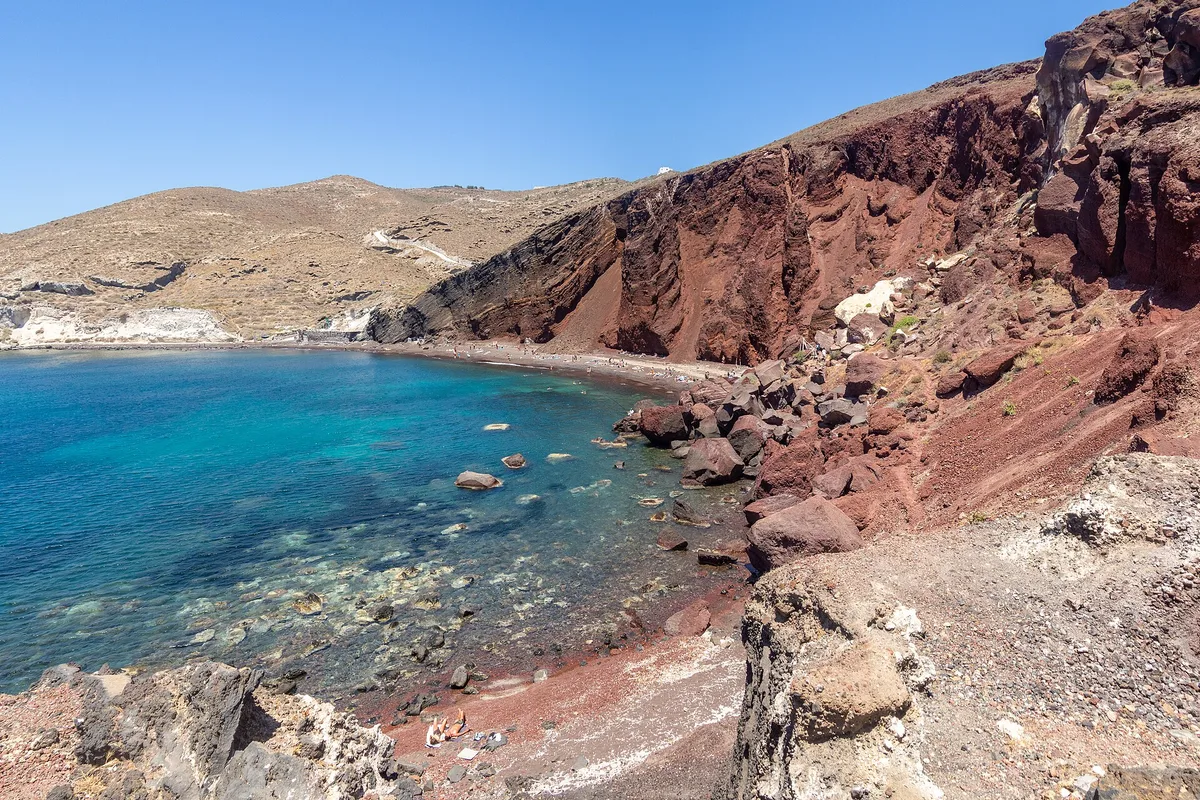
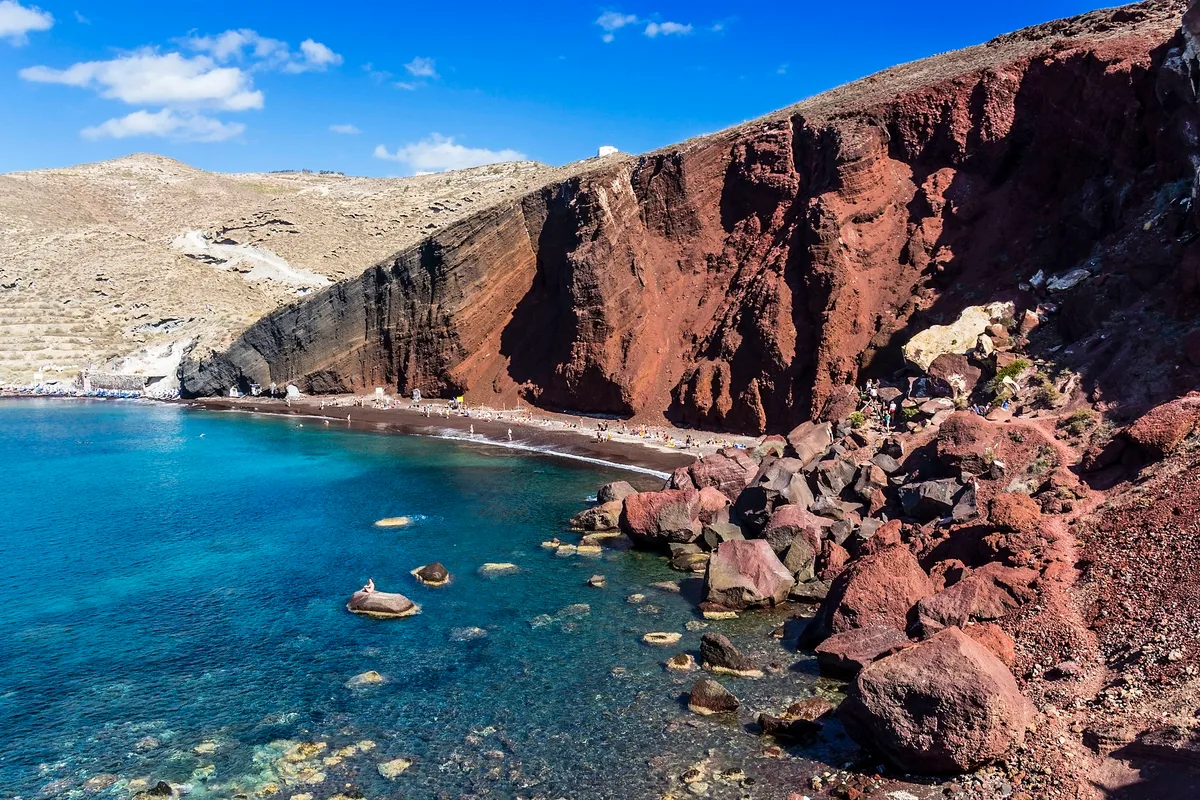
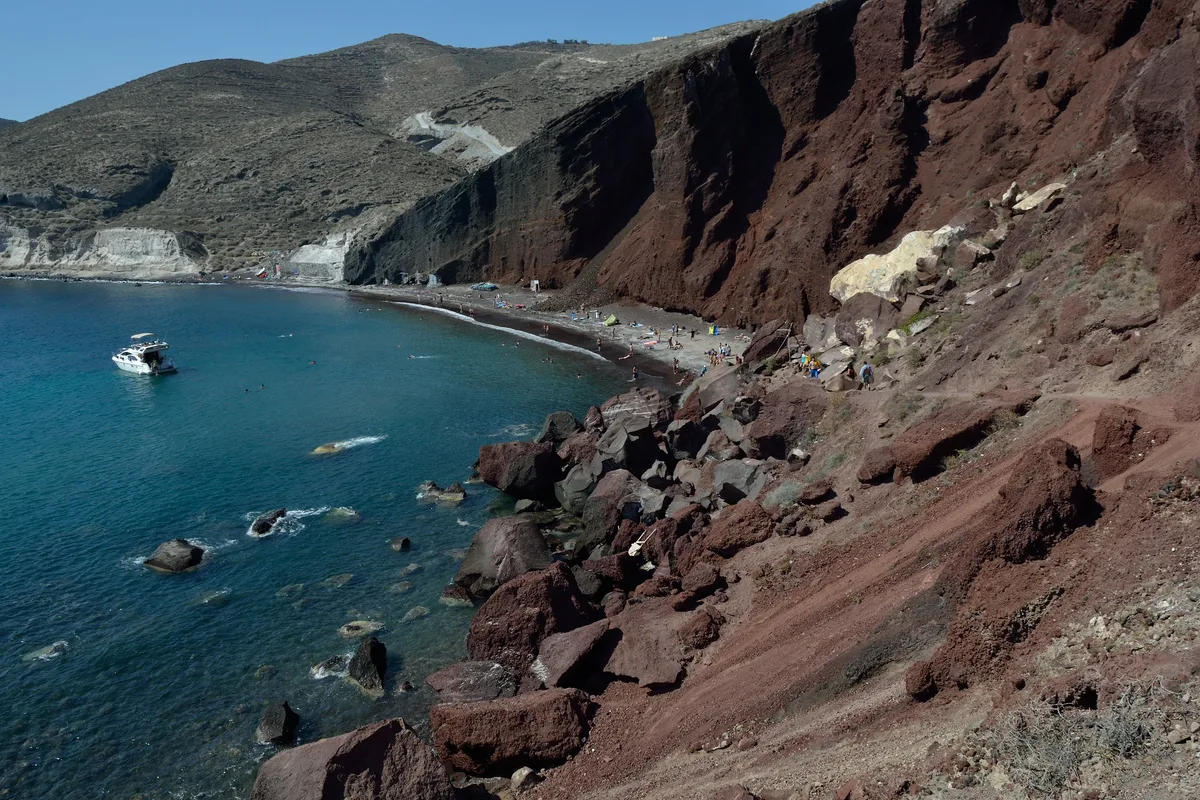
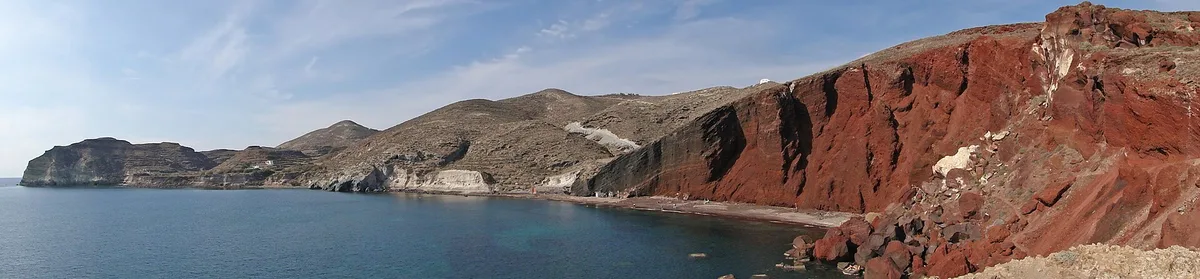
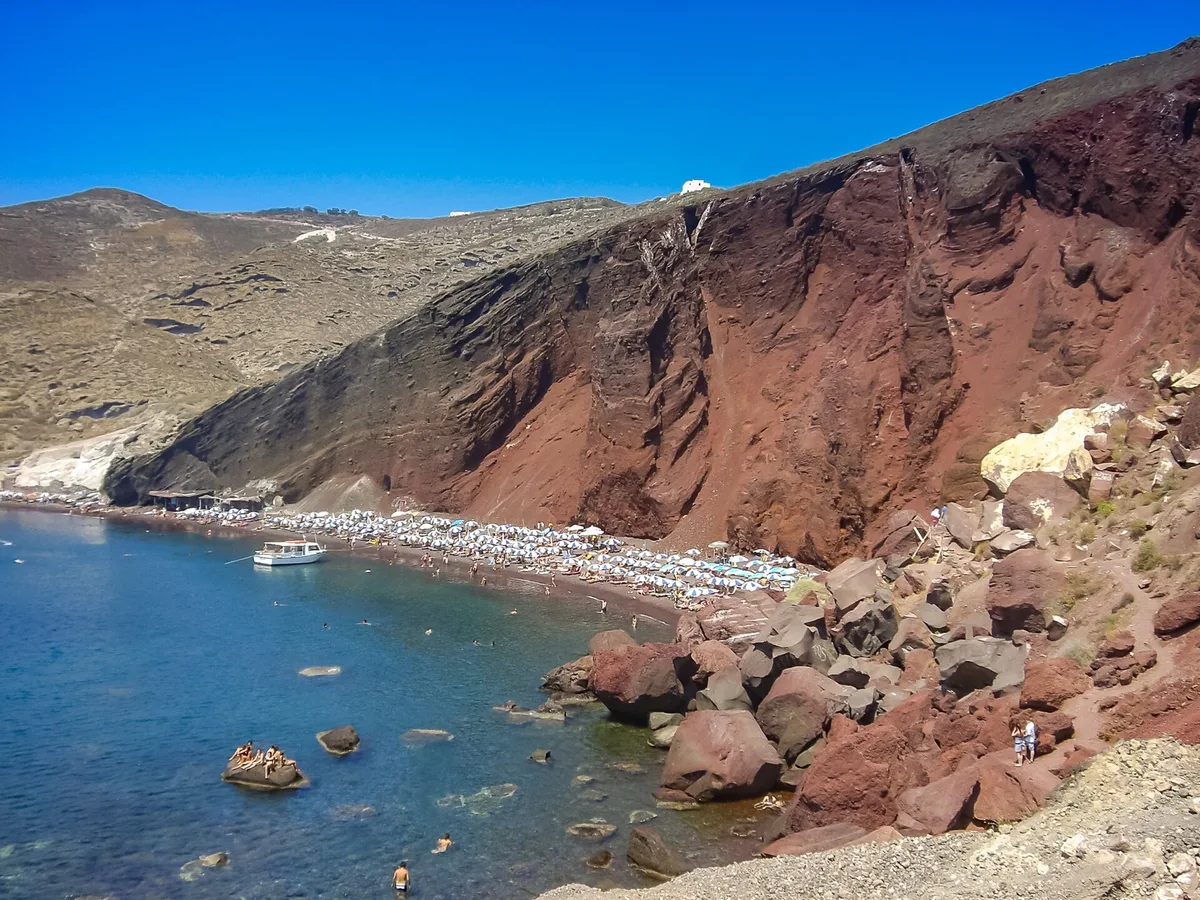
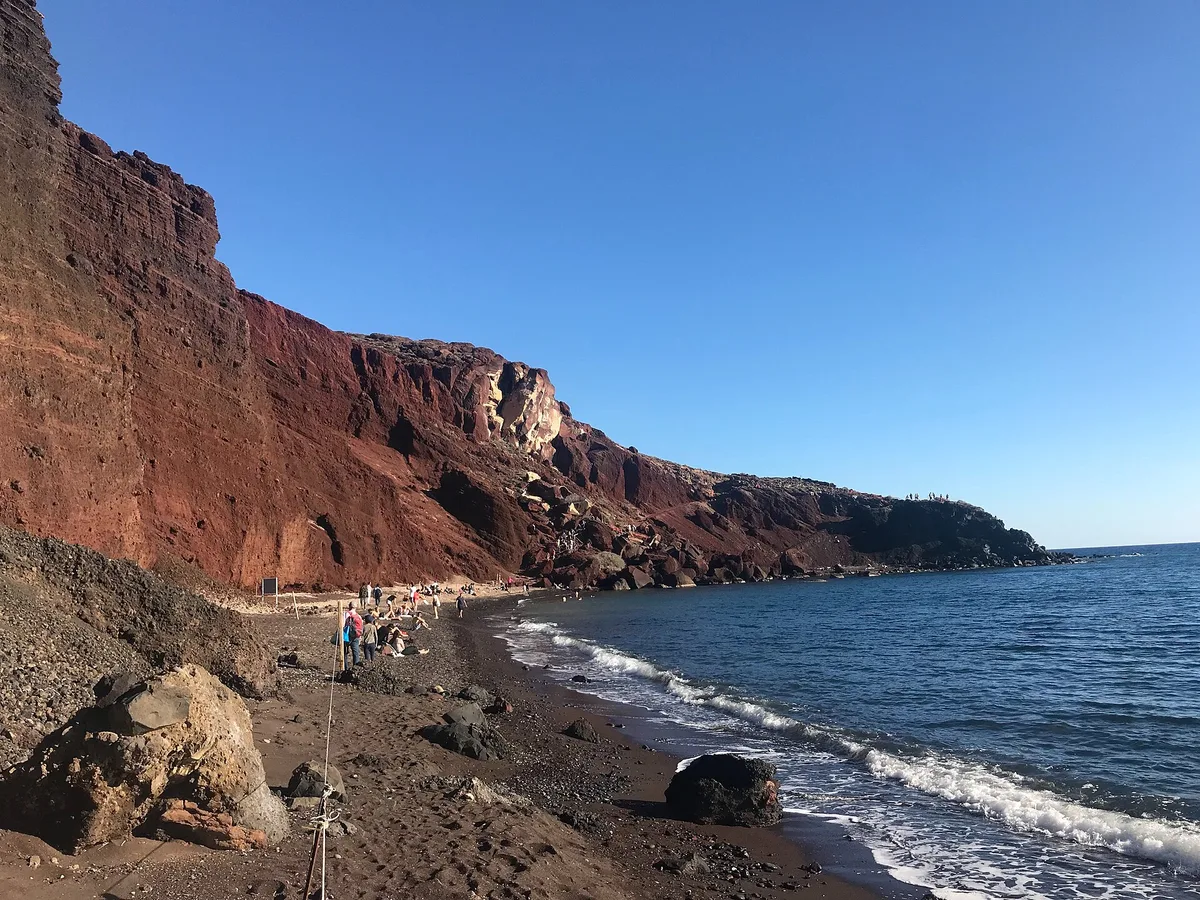
— Red Beach — is one of the Aegean's most visually striking geological formations, where rust-red volcanic cliffs tower over a shore of red-ochre and dark mixed pebbles lapped by turquoise water. The contrast is stark and immediate: deep crimson rock faces scarred by millennia of volcanic activity drop sharply to the sea, making every angle feel like a frame from another planet. It's a short stretch of coastline, roughly 150 metres, and the wild, unmanicured character is part of the draw — no sunbeds, no beach bars, nothing softening the raw landscape. Access is either a 15-minute footpath from the Akrotiri car park or a 10-minute boat ride from Akrotiri port, and the beach sits firmly within a rockfall hazard zone that authorities take seriously. Come for the geology and the colour; come prepared for the reality.
How to get there
Reach Red Beach by boat from Akrotiri port — the crossing takes around 10 minutes and runs seasonally — or on foot via the narrow, uneven footpath from the Akrotiri car park, a 15-minute hike. There is no road to the beach itself and no parking on the beach side; the footpath is the only land route. The path is steep and rocky in places, completely inaccessible by wheelchair, and should not be attempted in poor footwear. No entry fee is documented, but check local notices at the trailhead before setting out — the path is subject to closure when rockfall risk is elevated.
Who it's for
For couples
The raw, otherworldly colour palette — crimson cliffs, dark mixed pebbles, turquoise sea — makes this a genuinely striking place to visit together, best appreciated on the footpath above the shore rather than on the restricted beach itself. Go early, before the day fills up, and pair it with a boat trip to White Beach for the full contrast.
For families
Red Beach is not well-suited to families with young children: swimming is dangerous, there is no shade or facilities, the footpath is narrow and uneven, and the rockfall hazard is real and ongoing. Older children interested in geology or archaeology might appreciate the dramatic landscape from the viewpoint above, combined with a visit to the Akrotiri Archaeological Site nearby.
Our take
Feet in the sand, eyes on the screen
Let's be direct: the beach itself is officially off-limits due to a severe and ongoing rockfall risk, and swimming is dangerous. That is not a technicality — it is the defining fact about Red Beach, and it shapes how you should plan your visit. What remains is still worth the trip: the view from the footpath above is one of the most geologically dramatic on any Greek island, with rust-red volcanic cliffs dropping to a red-ochre and dark pebble shore against genuinely turquoise water. Come for the spectacle, not for a beach day. Avoid July and August — the combination of extreme visitor numbers and peak rockfall risk makes those months the worst time to go. Pair it with the Akrotiri Archaeological Site and a boat trip to White Beach, and you have a half-day itinerary that makes full sense of this extraordinary corner of Santorini.
What to do
The Akrotiri Archaeological Site, roughly 2km away, is the obvious companion stop — a Minoan Bronze Age settlement preserved under volcanic ash and often called the 'Greek Pompeii', it gives the landscape around Red Beach an extra layer of meaning. White Beach, about 1km away, is accessible by boat and offers a striking colour contrast with its white pumice pebbles set against the same turquoise water. Akrotiri Lighthouse, 3km southwest, is a 19th-century beacon at the tip of the island with caldera views worth the short detour. Akrotiri Castle is also within easy reach at 1.1km.
The classic frame is from the footpath overlooking the beach: rust-red cliffs plunging to red-ochre pebbles and turquoise water, best shot in the golden hour before 9am when the volcanic rock glows.
From the water on the boat approach, the full vertical scale of the crimson cliff face is visible without obstruction — a completely different composition that shows just how geologically extreme this place is.
Where to eat
The nearest options are clustered around Akrotiri village: The Dolphins and Asterias, both around 0.4km away, are the closest, with Asterias specialising in seafood. Wave Tavern is a short walk further at 0.5km, and Taverna Misteli and Portobello are both around 1km out. There is absolutely nothing to eat or drink on the beach itself, so sort out supplies before you head down.
Where to stay
Akrotiri Hotel is the closest base at 0.7km from the beach, keeping you well-positioned for an early-morning visit before the day-trippers arrive. A cluster of options — Best Western, Carlos, Adamastos, and Paradise Resort — sit around 1.1km away and give you a range of styles without straying far from the southern tip of the island.
Photography
The best shot is from the footpath above the beach, looking down at the red-ochre pebble shore against the turquoise water with the rust-red cliffs framing the scene — early morning light before 9am gives the warmest tones on the rock face. For a different perspective, the boat approach from Akrotiri port puts the full height of the volcanic cliffs in frame with no other visitors in the foreground if you go at the start of the day.
Good to know
Access to the beach itself is officially prohibited due to severe and ongoing cliff rockfall risk — check local notices for any path closure before you leave Akrotiri, and take posted warnings seriously. Do not swim here: swimming is dangerous and should be avoided entirely. Arrive before 10am or after 4pm in summer to avoid the worst of the peak-hour rush; July and August bring extreme overcrowding and the highest rockfall risk of the year — skip those months if you can. There is no shade and no facilities whatsoever on the beach, so bring water, sun protection, and everything else you'll need.
Map
Nearby places
The Dolphins
Asterias
Wave Tavern
Taverna Misteli
Portobello
Akrotiri Hotel
Best Western
Carlos
Adamastos
Paradise Resort
Things to see around Akrotiri
Akrotiri Archaeological Site
Minoan Bronze Age settlement preserved under volcanic ash, often called the 'Greek Pompeii'.
Akrotiri Lighthouse
19th-century lighthouse at the southwestern tip of Santorini with caldera views.
White Beach
Adjacent white pumice pebble cove accessible by boat, offering stark colour contrast.
Frequently asked
The information on this page is provided for guidance only and may evolve. Access conditions, safety and infrastructure can change without notice. Always check official sources before traveling.
Nearest beaches
Other wild beaches in Greece
More beaches in Cyclades
Reviews of this beach
- No reviews yet, what a shame — leave yours and share your experience.
Photo credits
Sources and licenses for the photos shown above.
- Photo 1 — C messier · source · CC BY-SA 4.0
- Photo 2 — guillenperez · source · CC BY-ND 2.0
- Photo 3 — Cha già José · source · CC BY-SA 2.0
- Photo 4 — Bernard Gagnon · source · CC BY-SA 3.0
- Photo 5 — dronepicr · source · CC BY 2.0
- Photo 6 — Rt44 · source · CC BY-SA 4.0